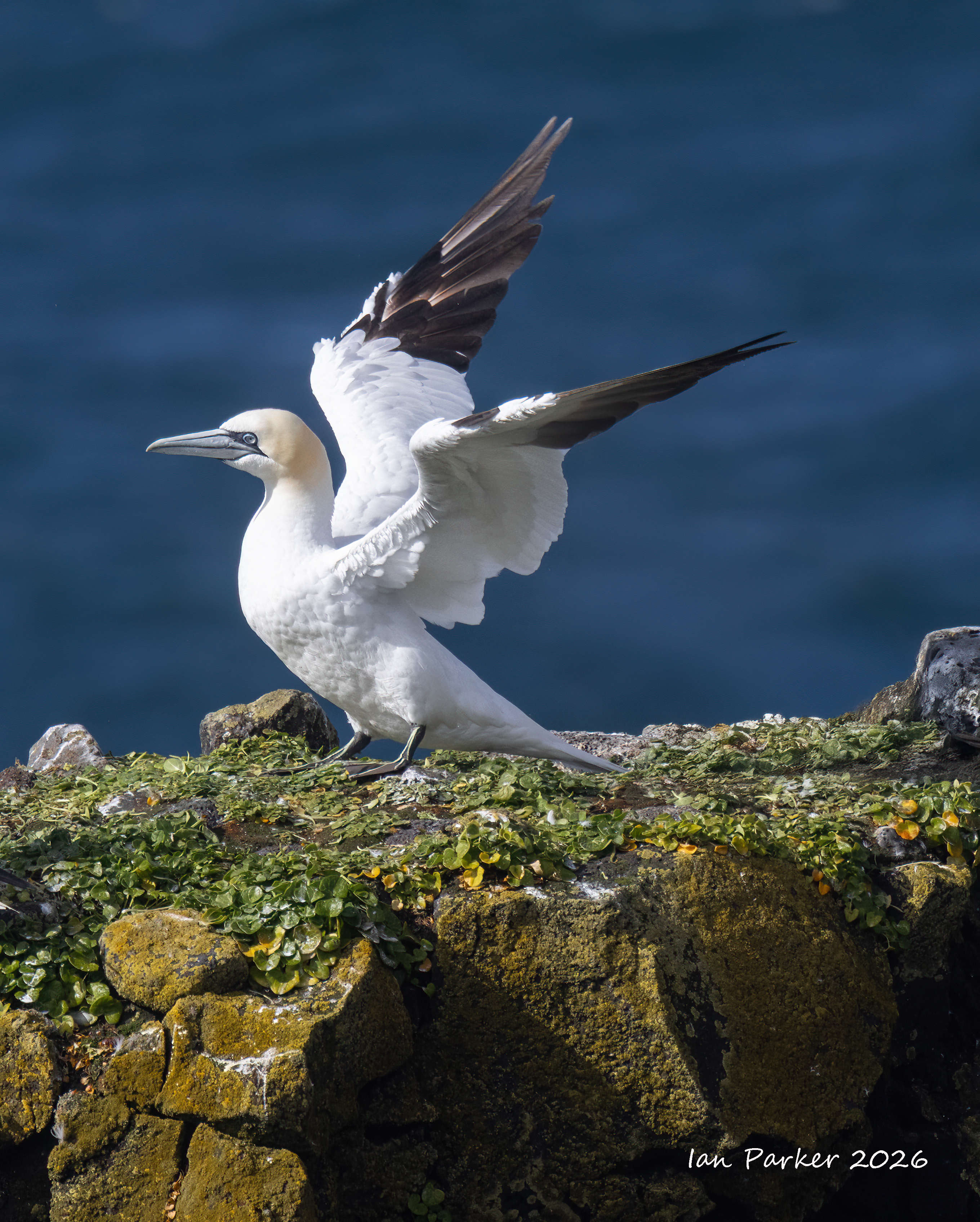
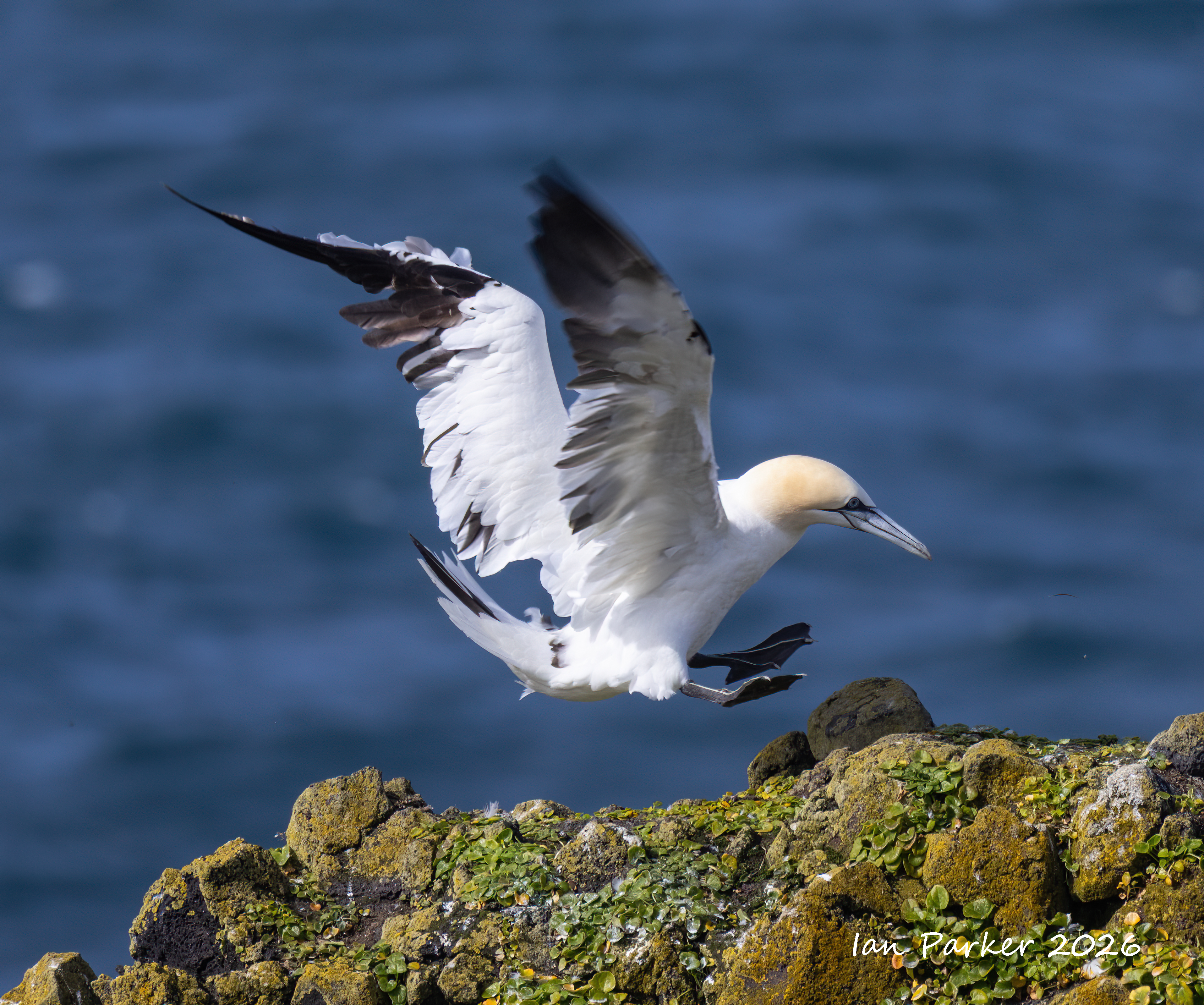
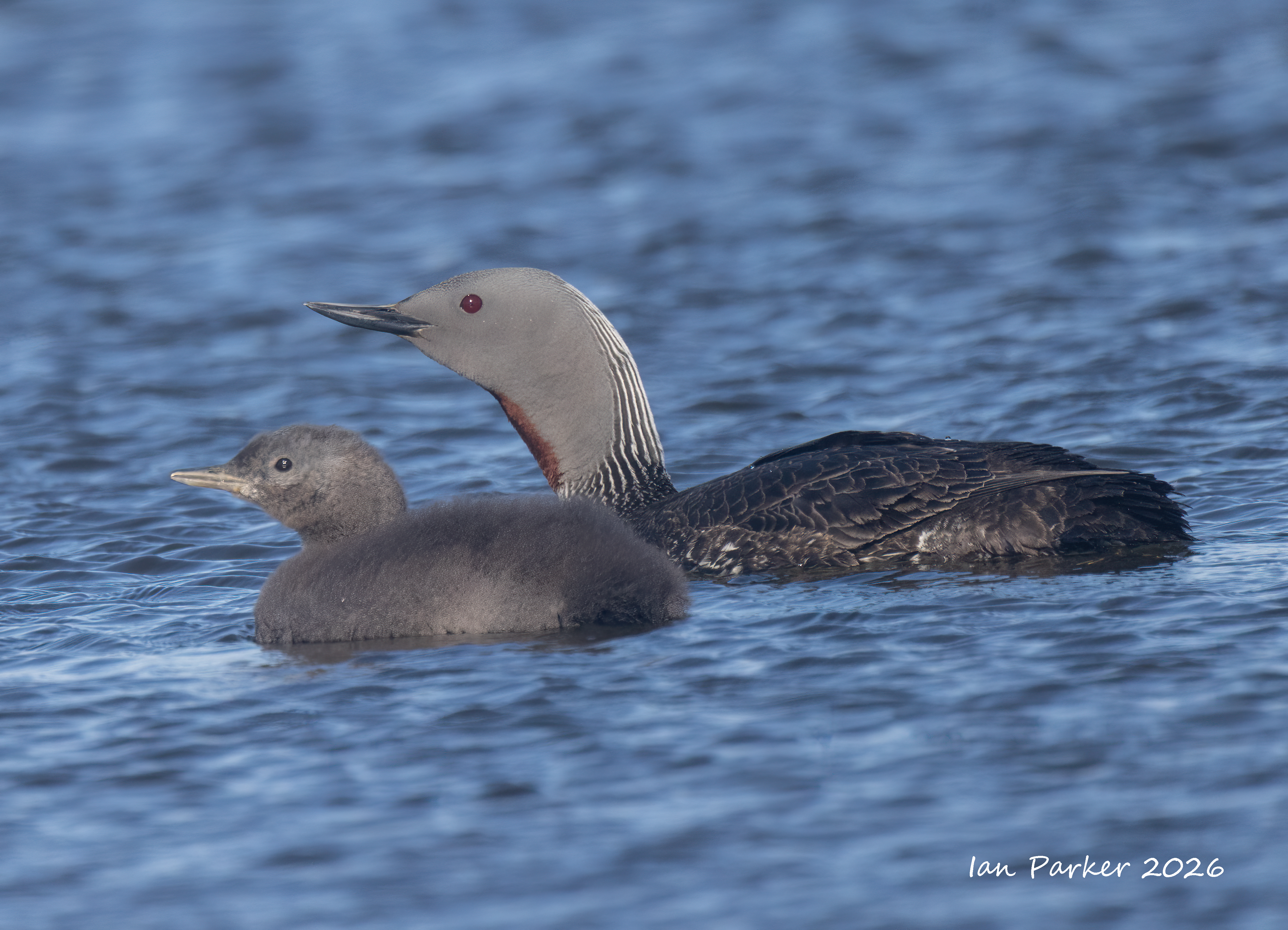
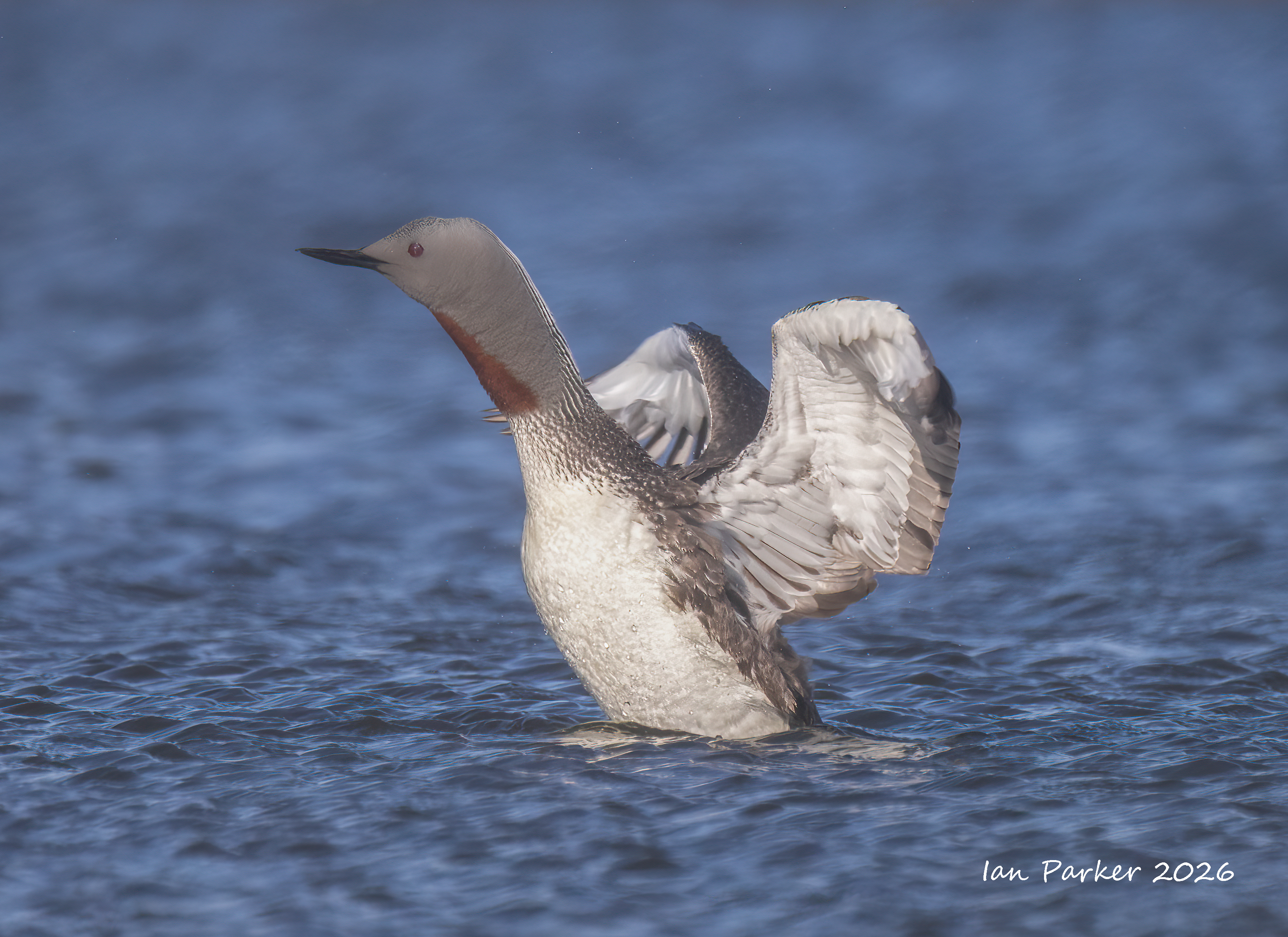
A couple of hours at Garður Point after amorning landing at KEF while waiting to check into our excellent, quirky guesthouse.
Gannet colony at Rauðinúpur
Birds on the mainland and on Grimsey
|


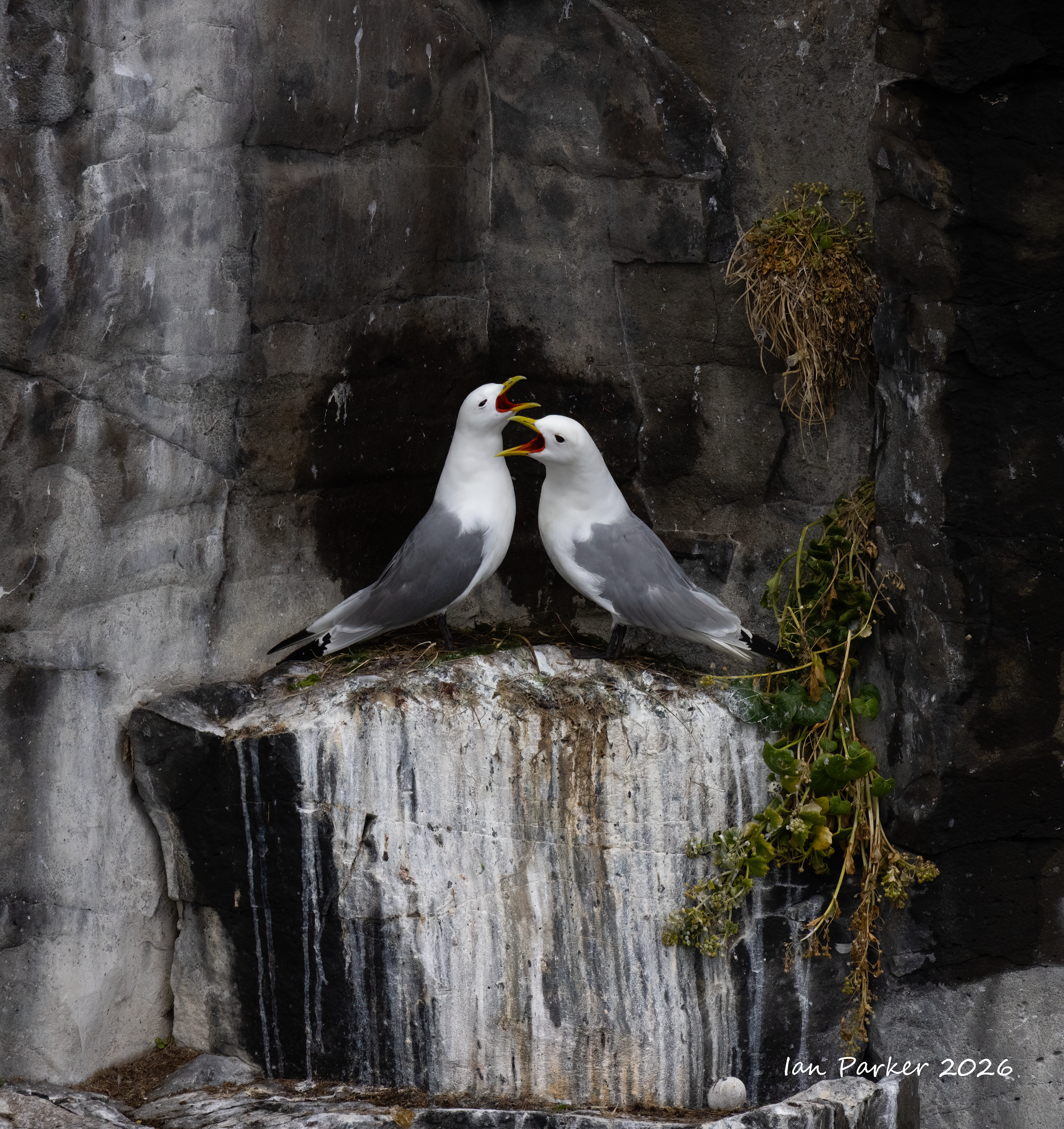

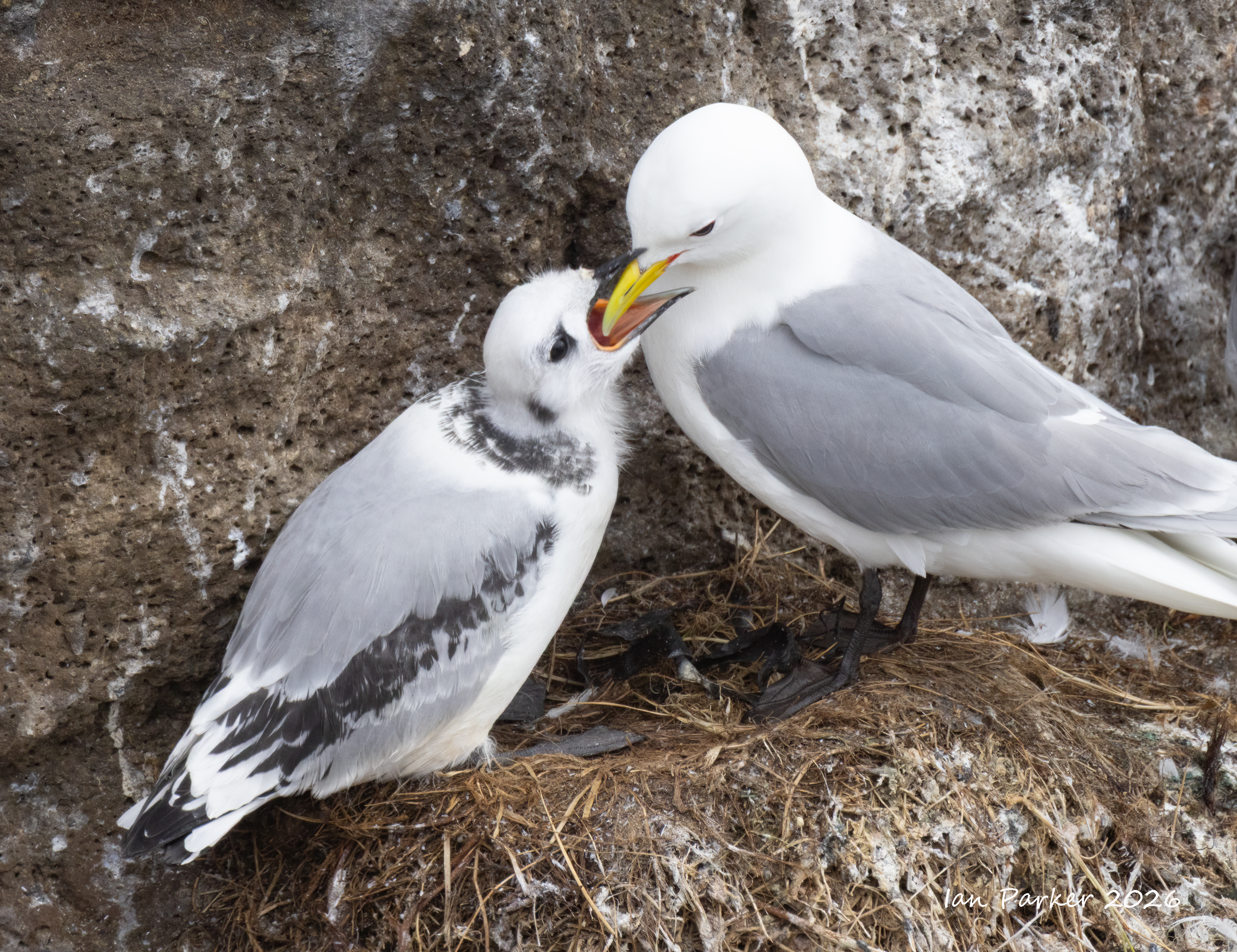

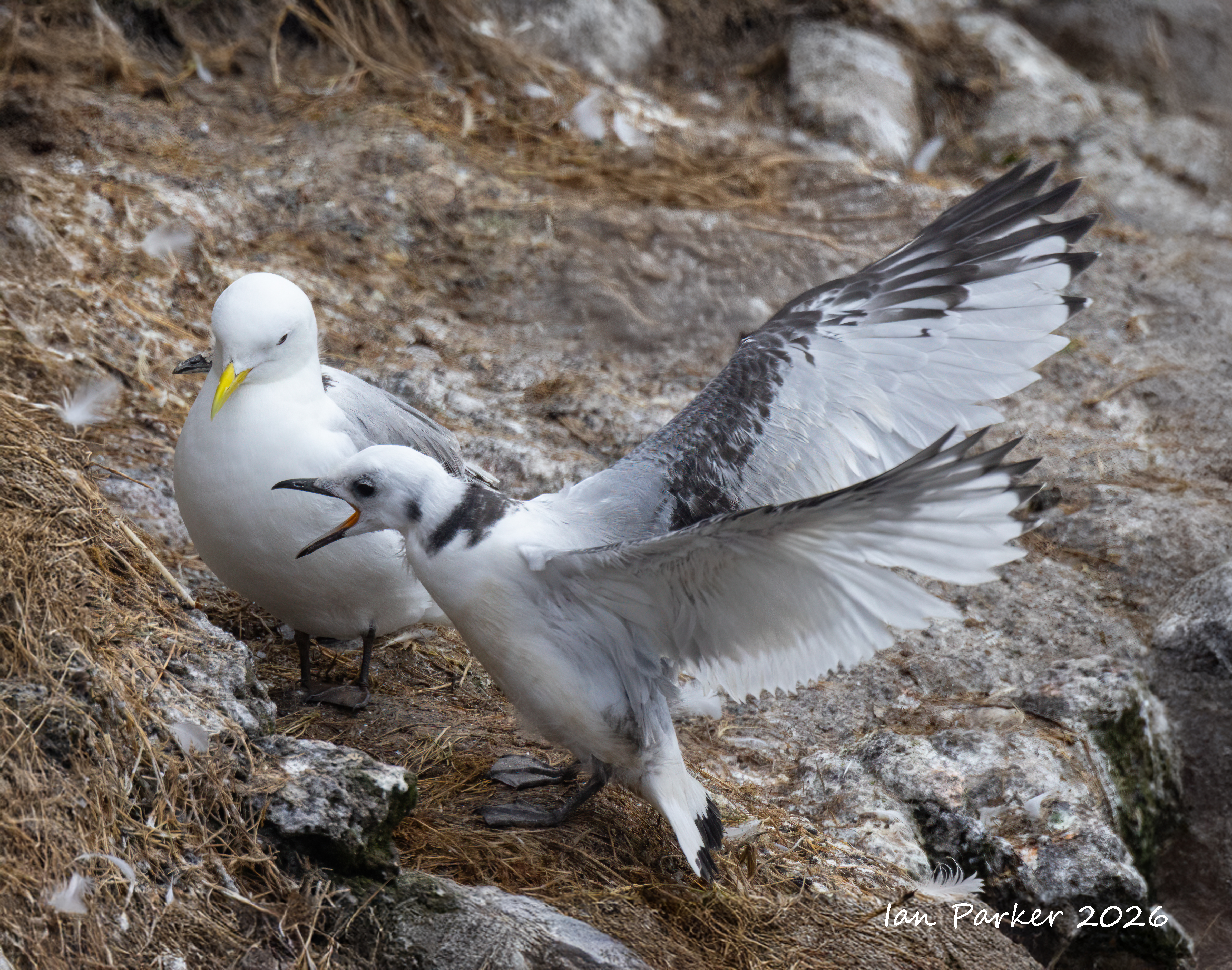
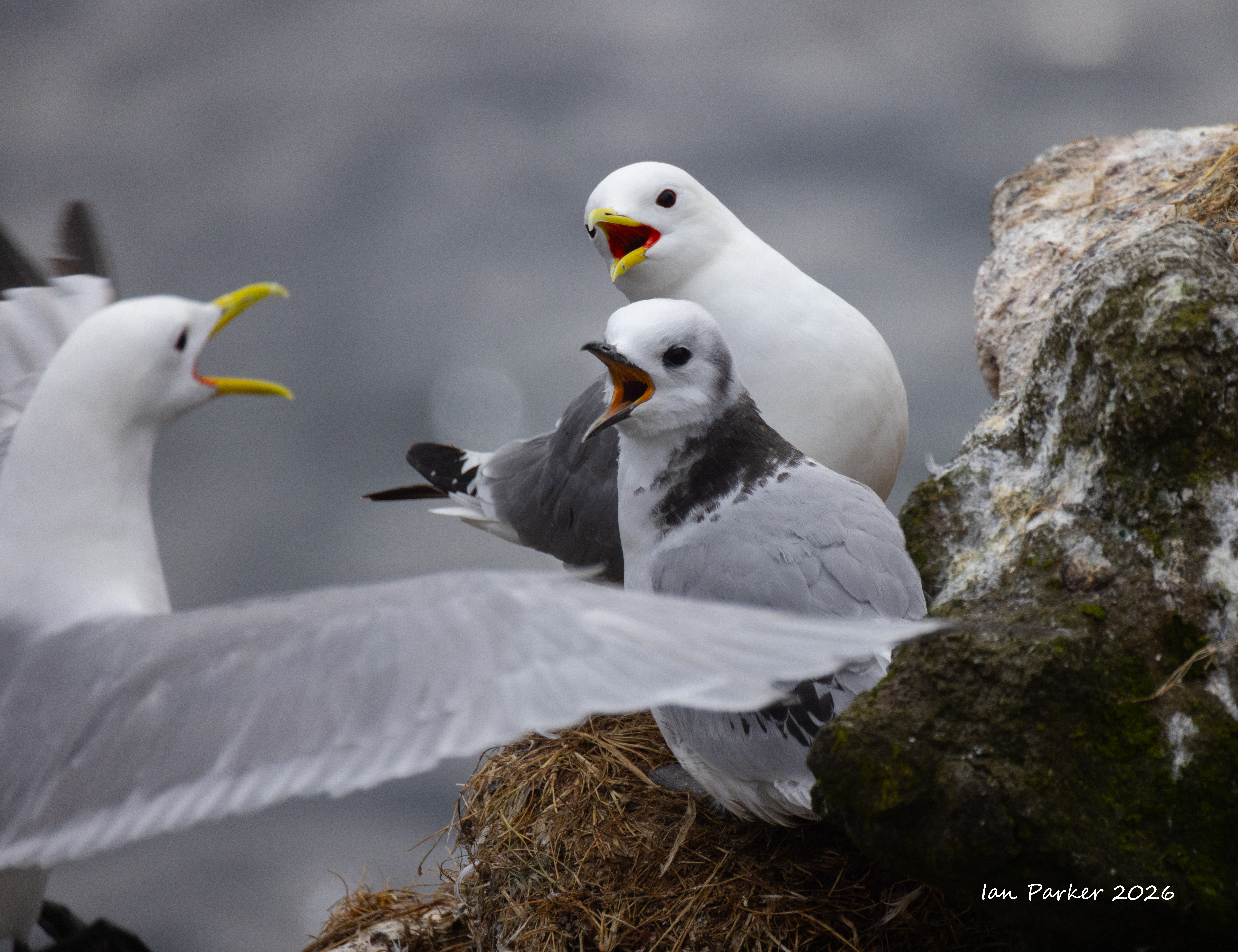
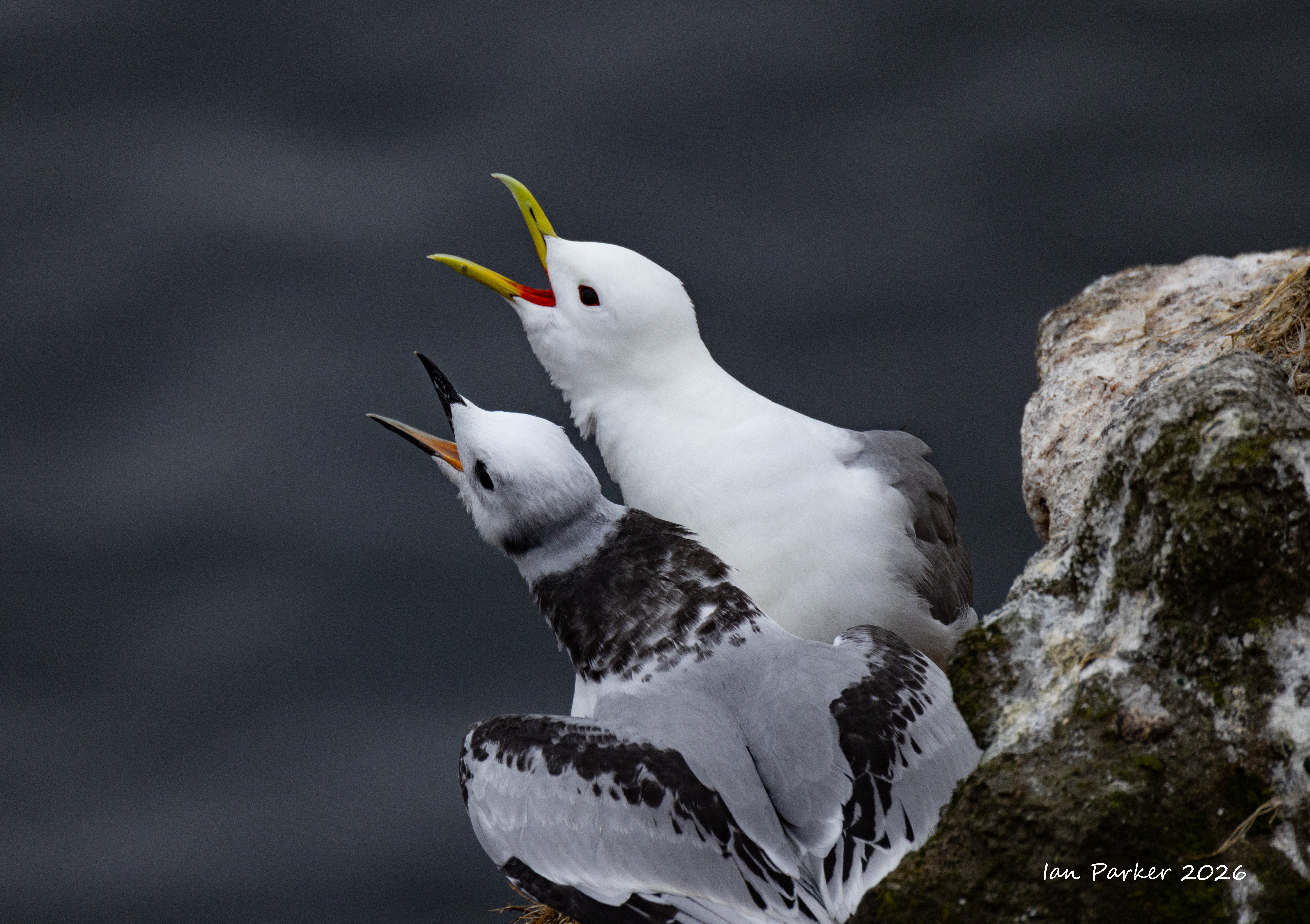
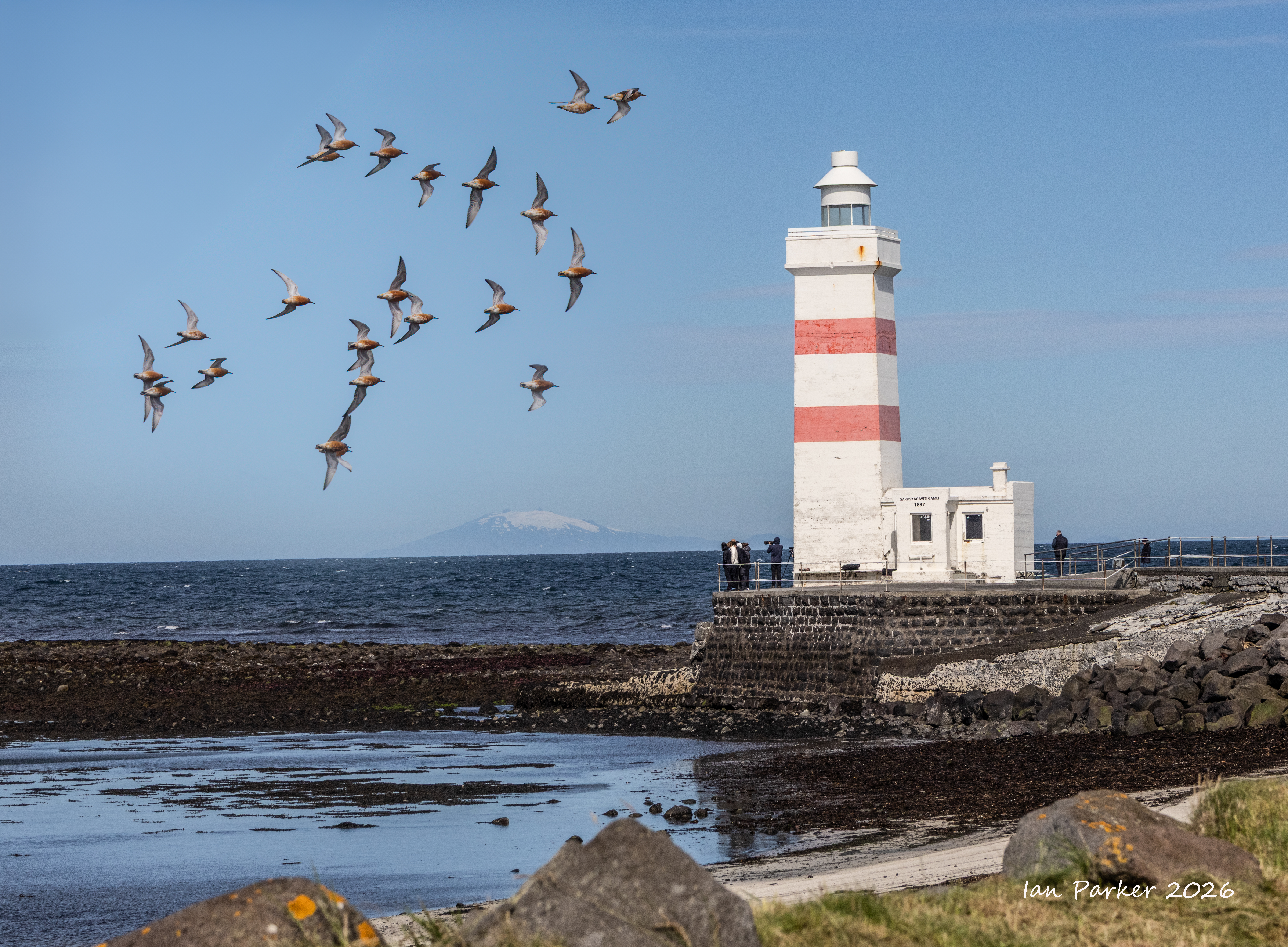
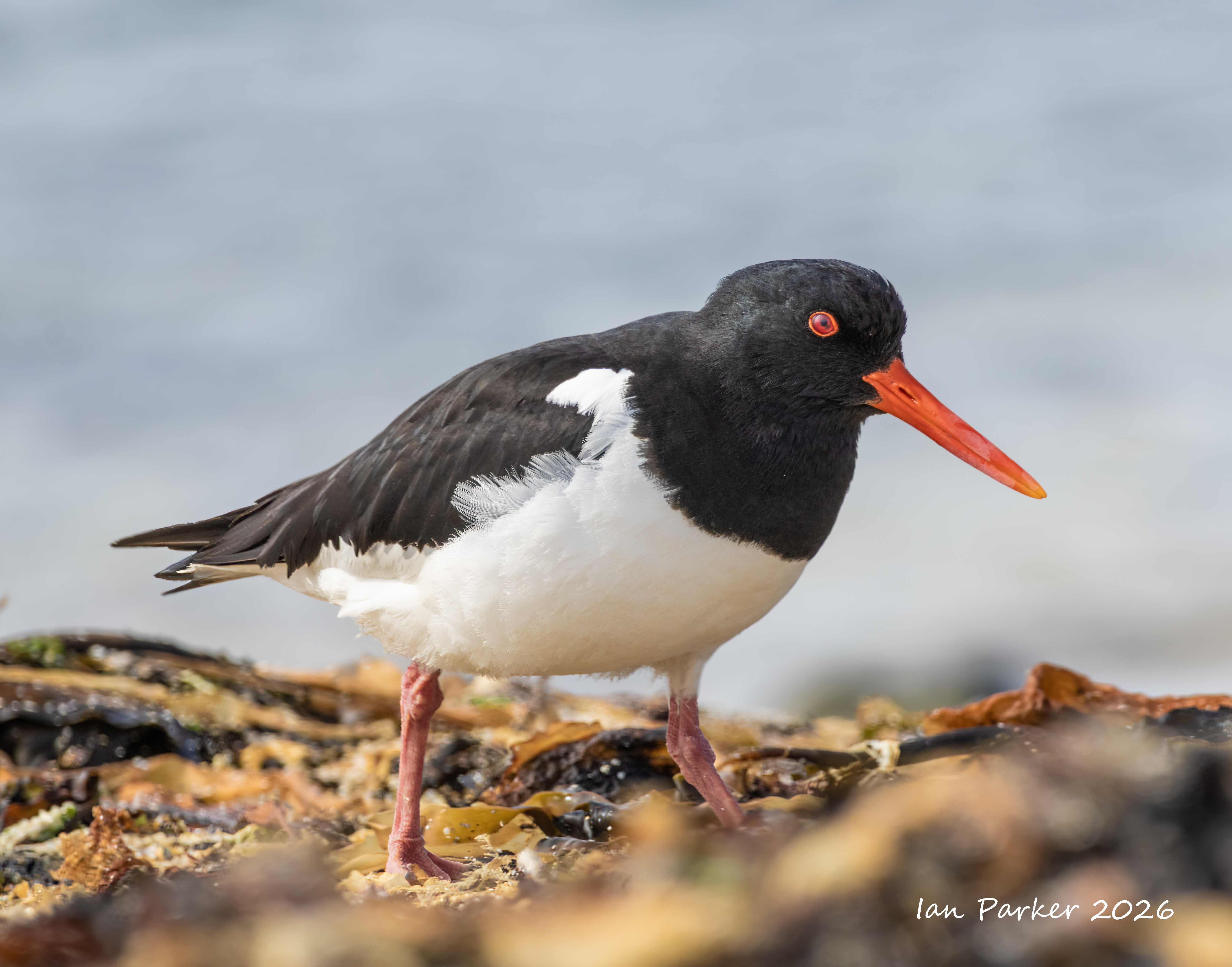
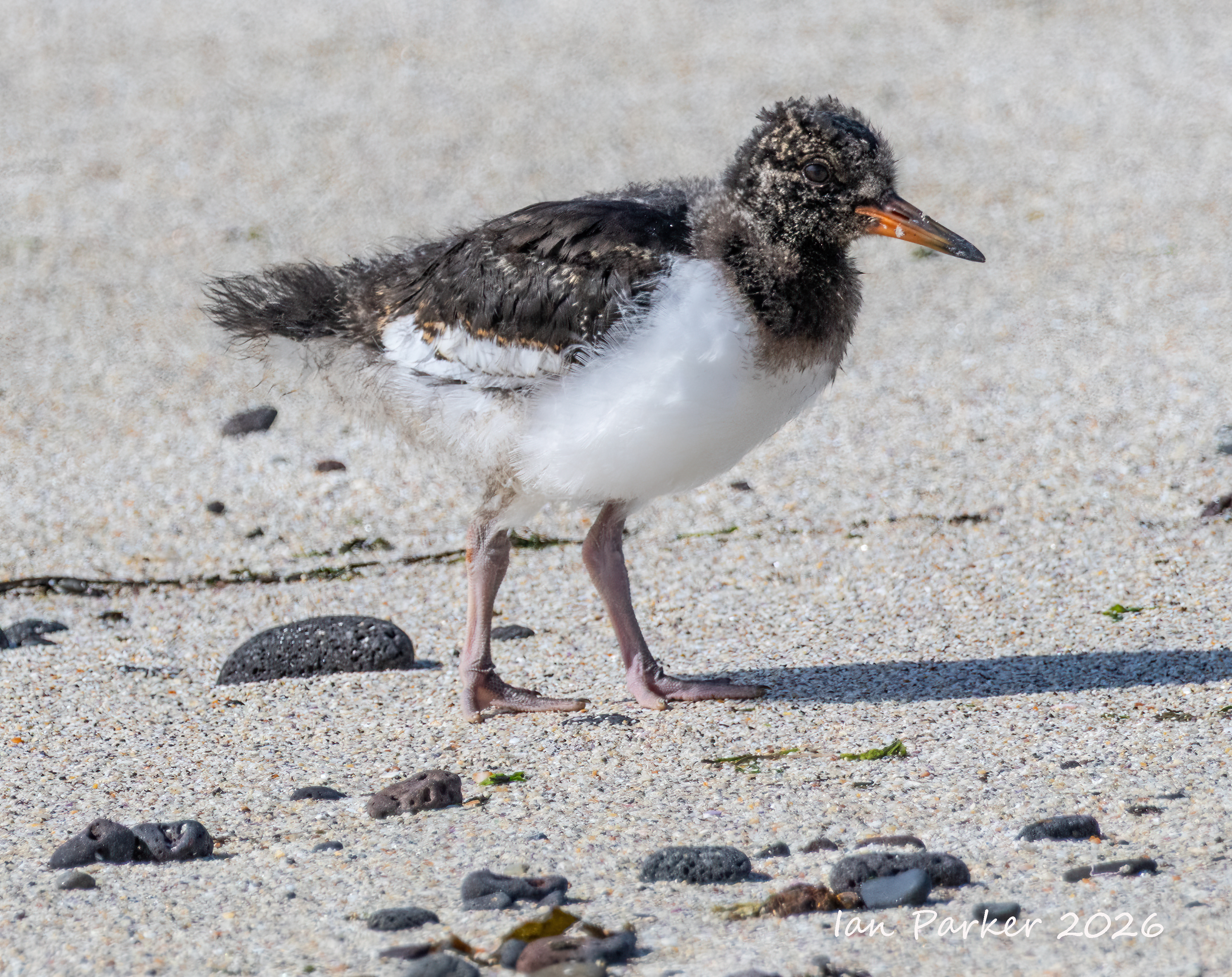

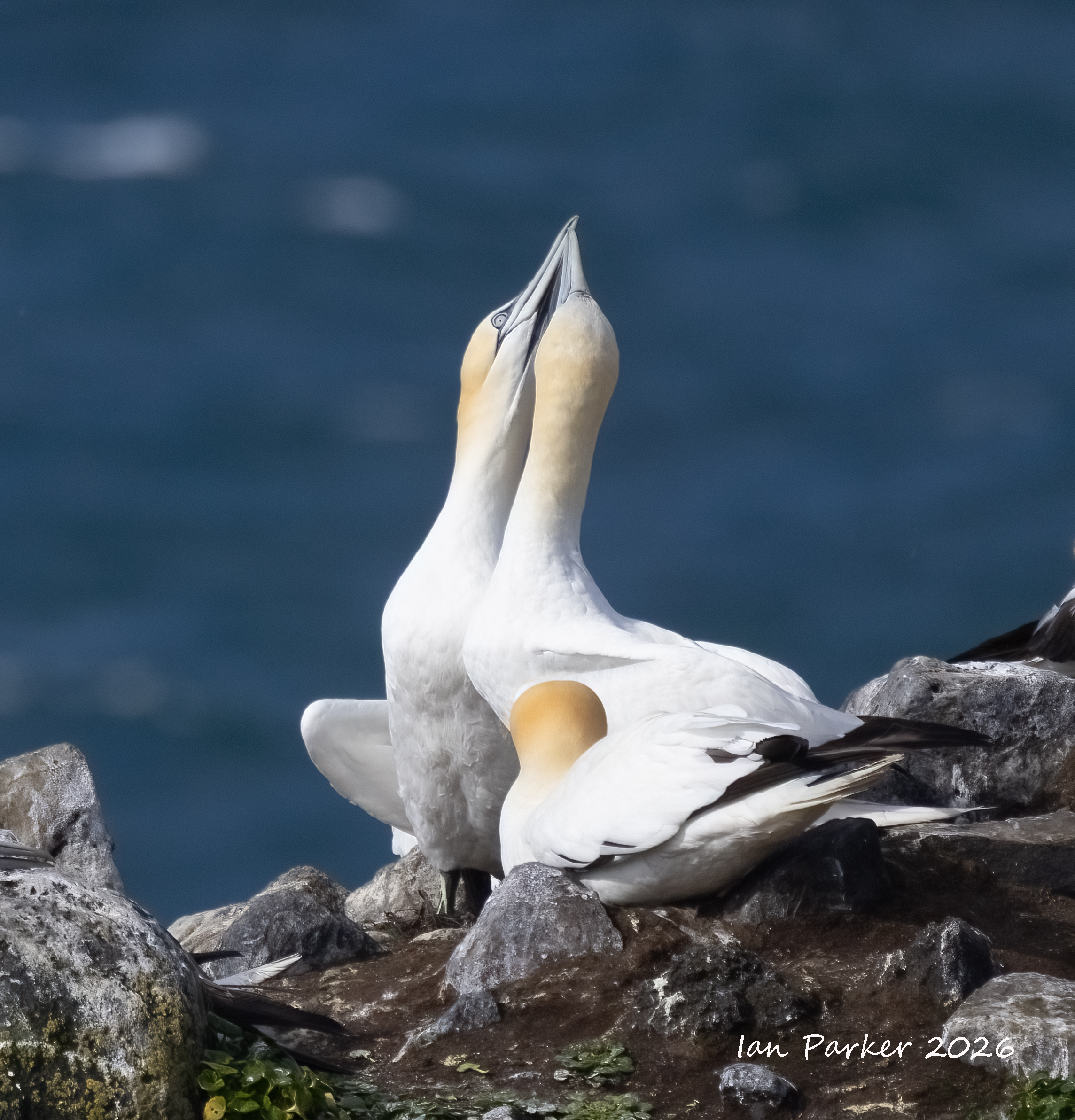
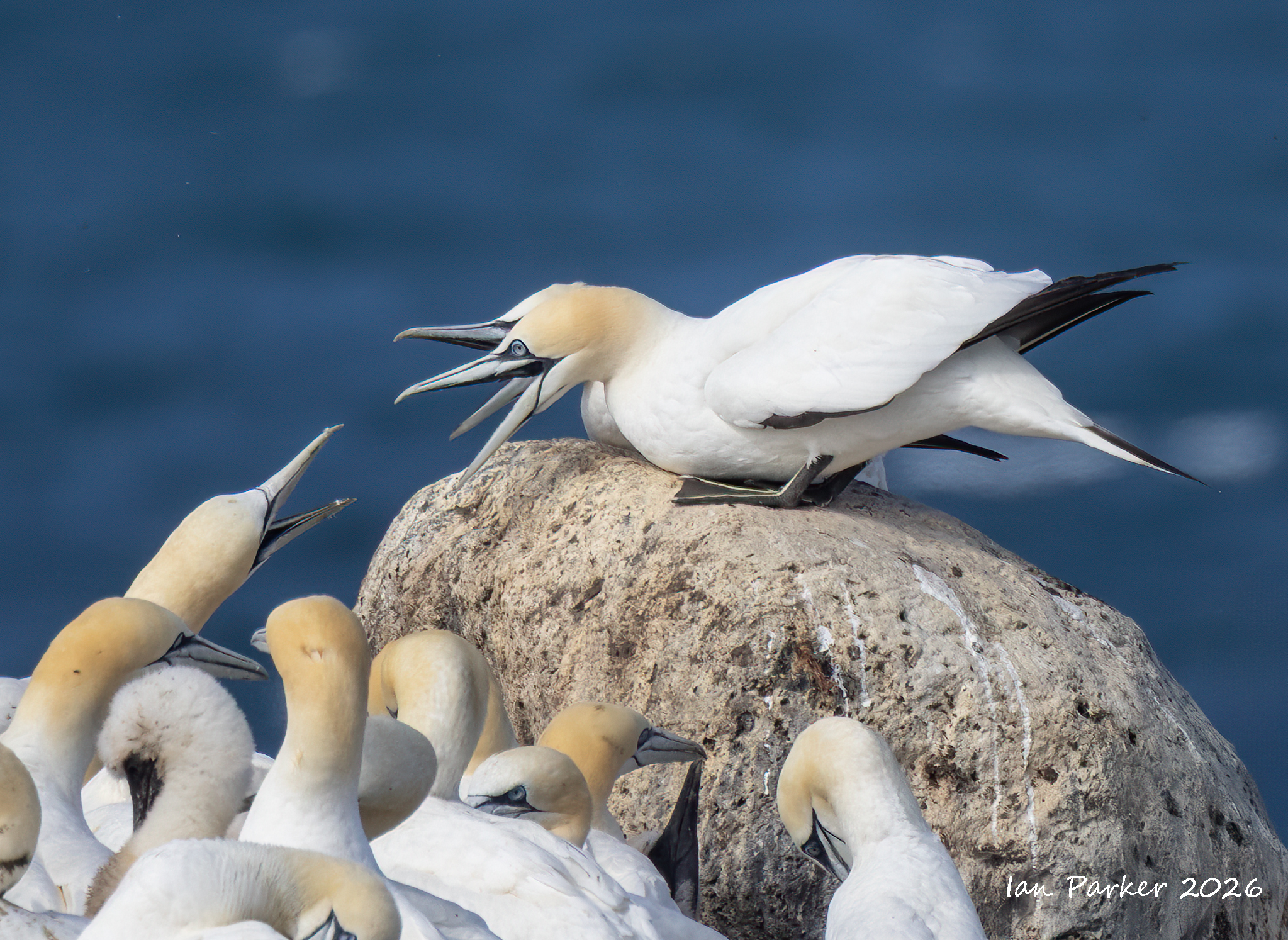
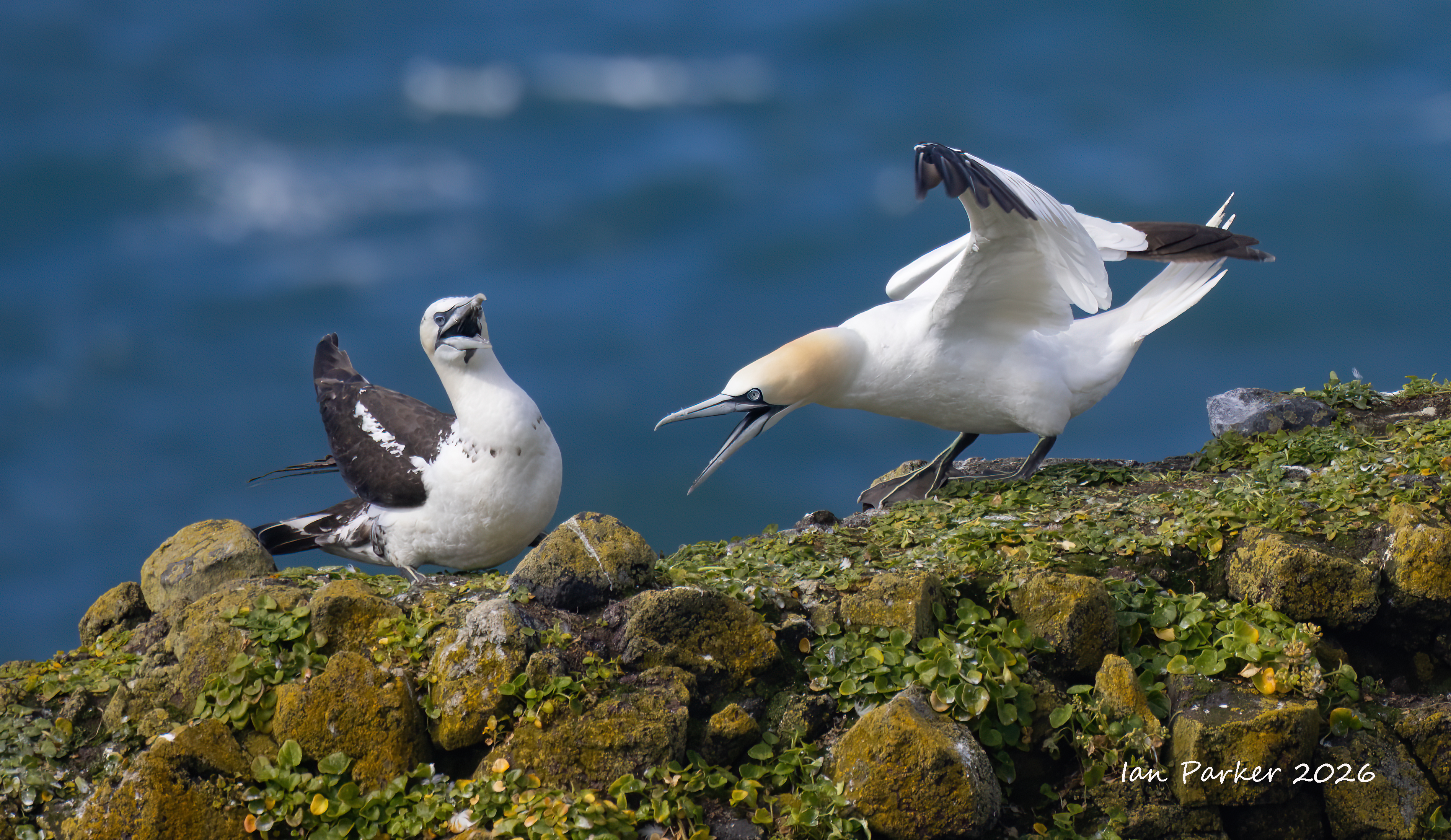
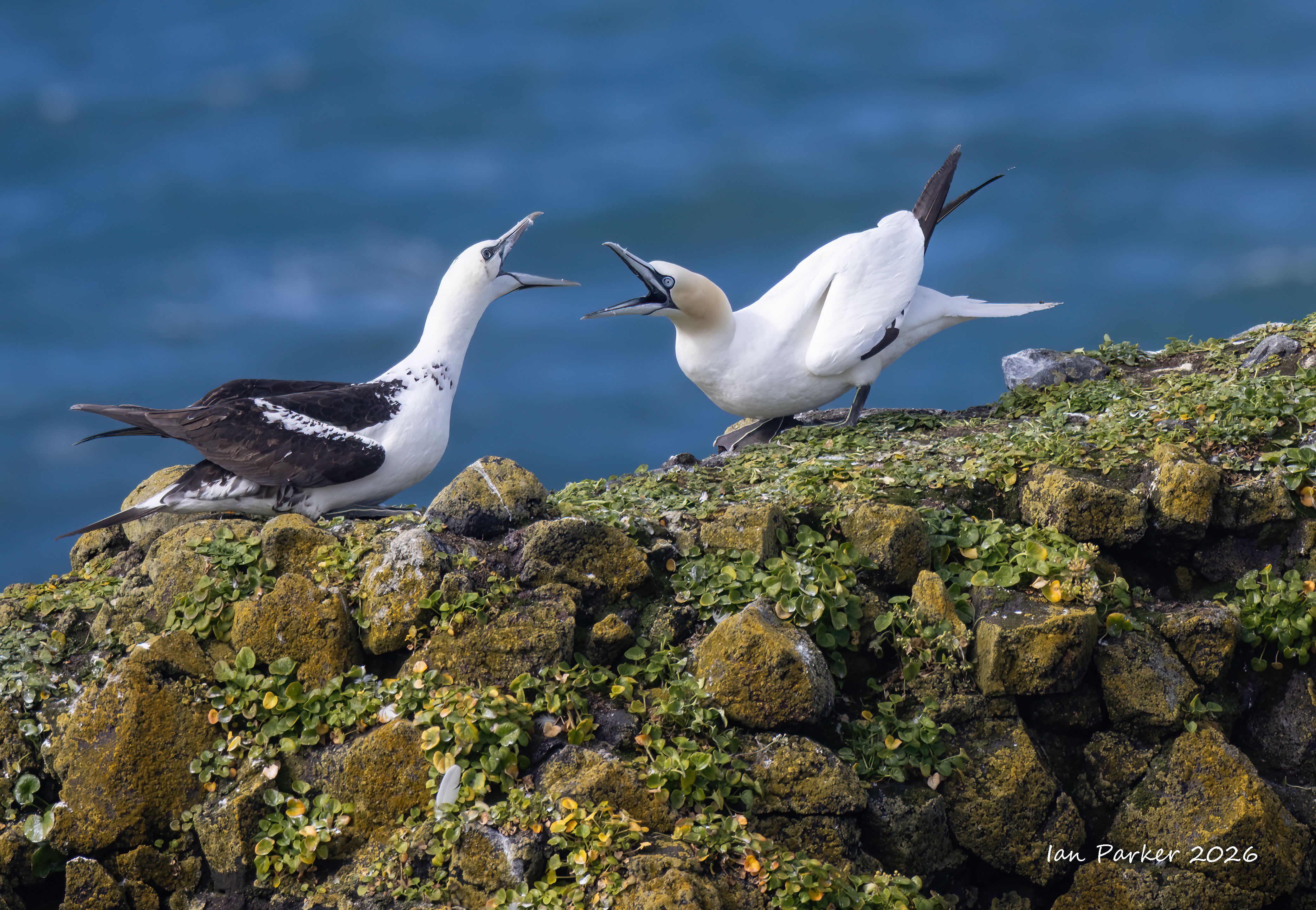


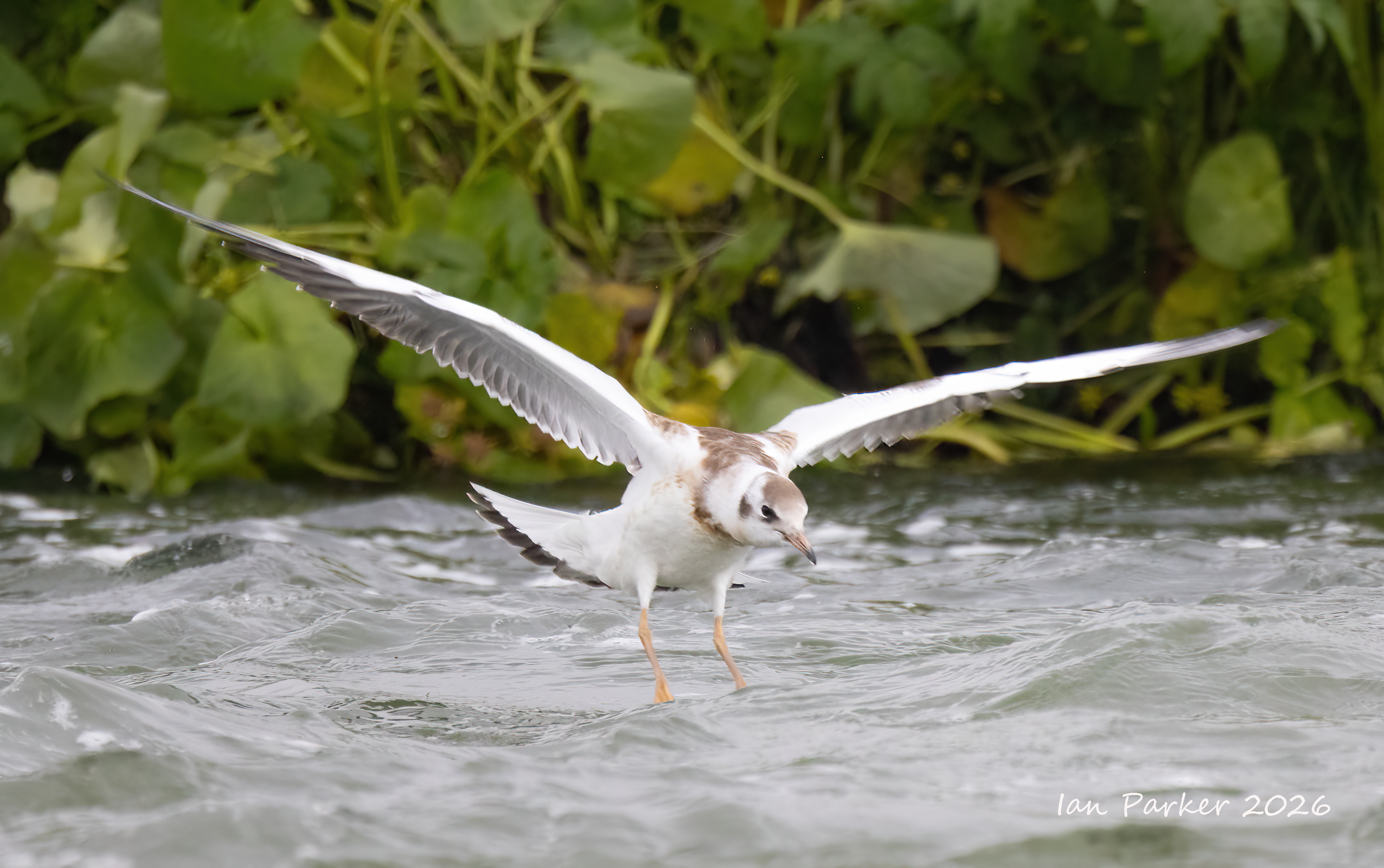
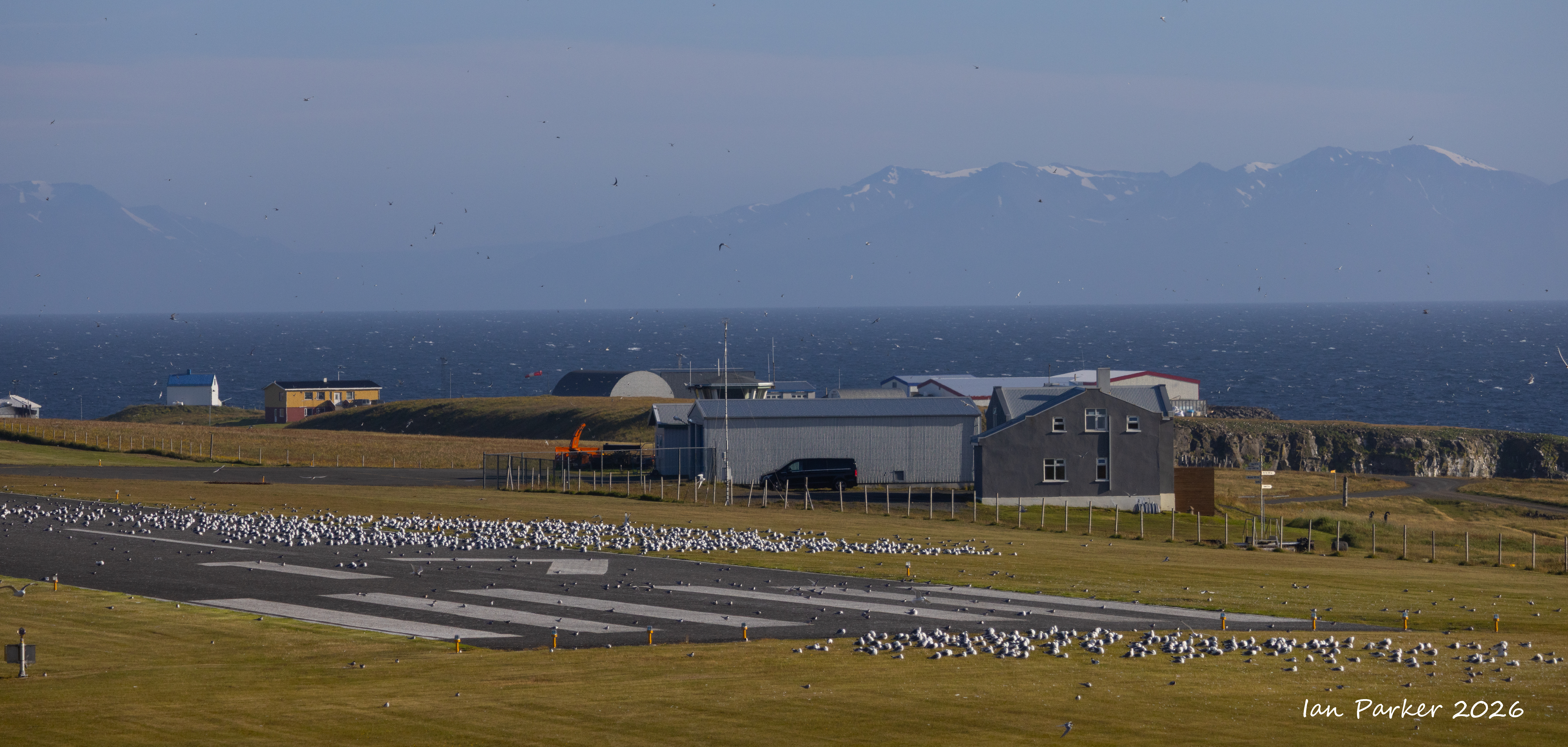
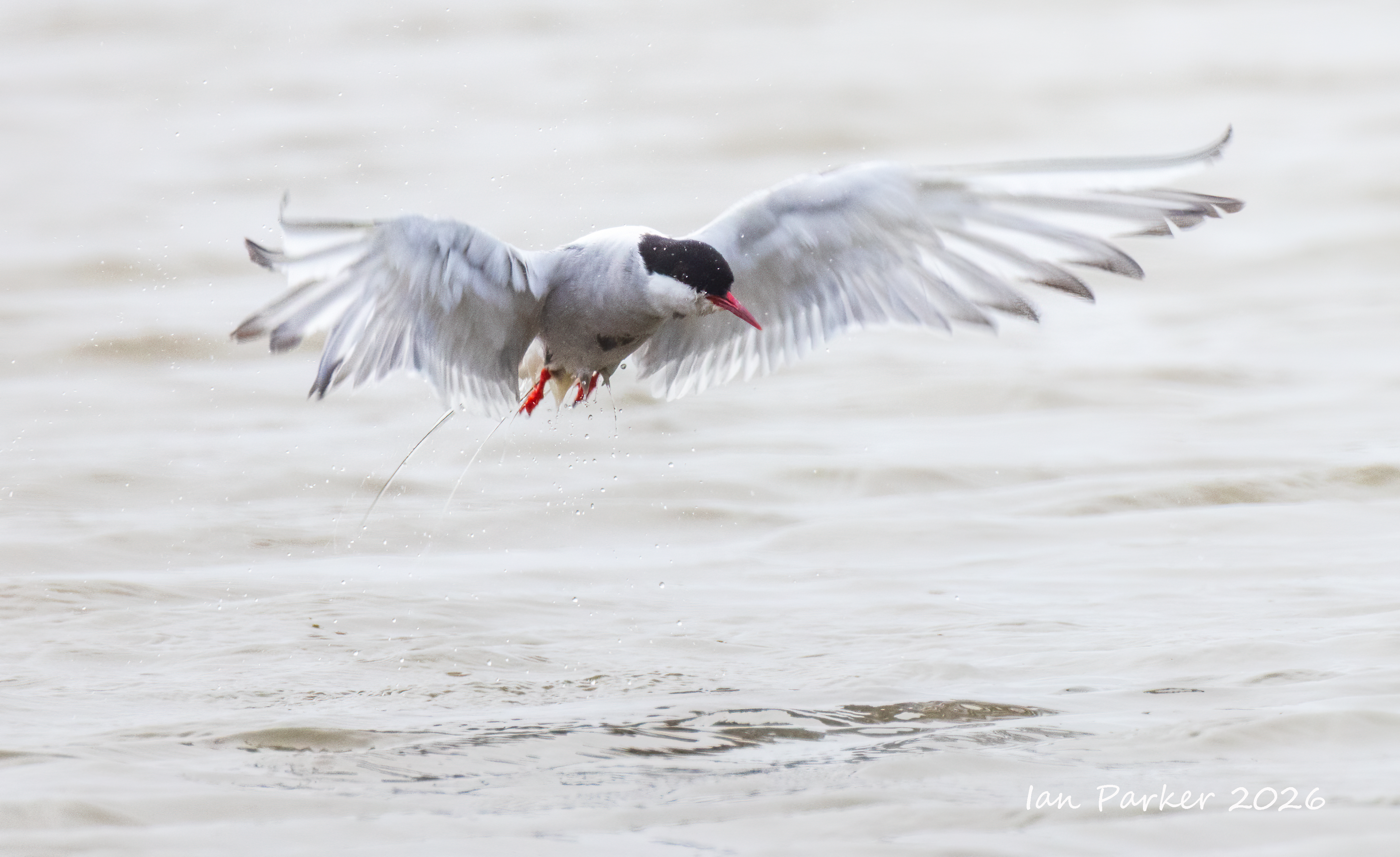
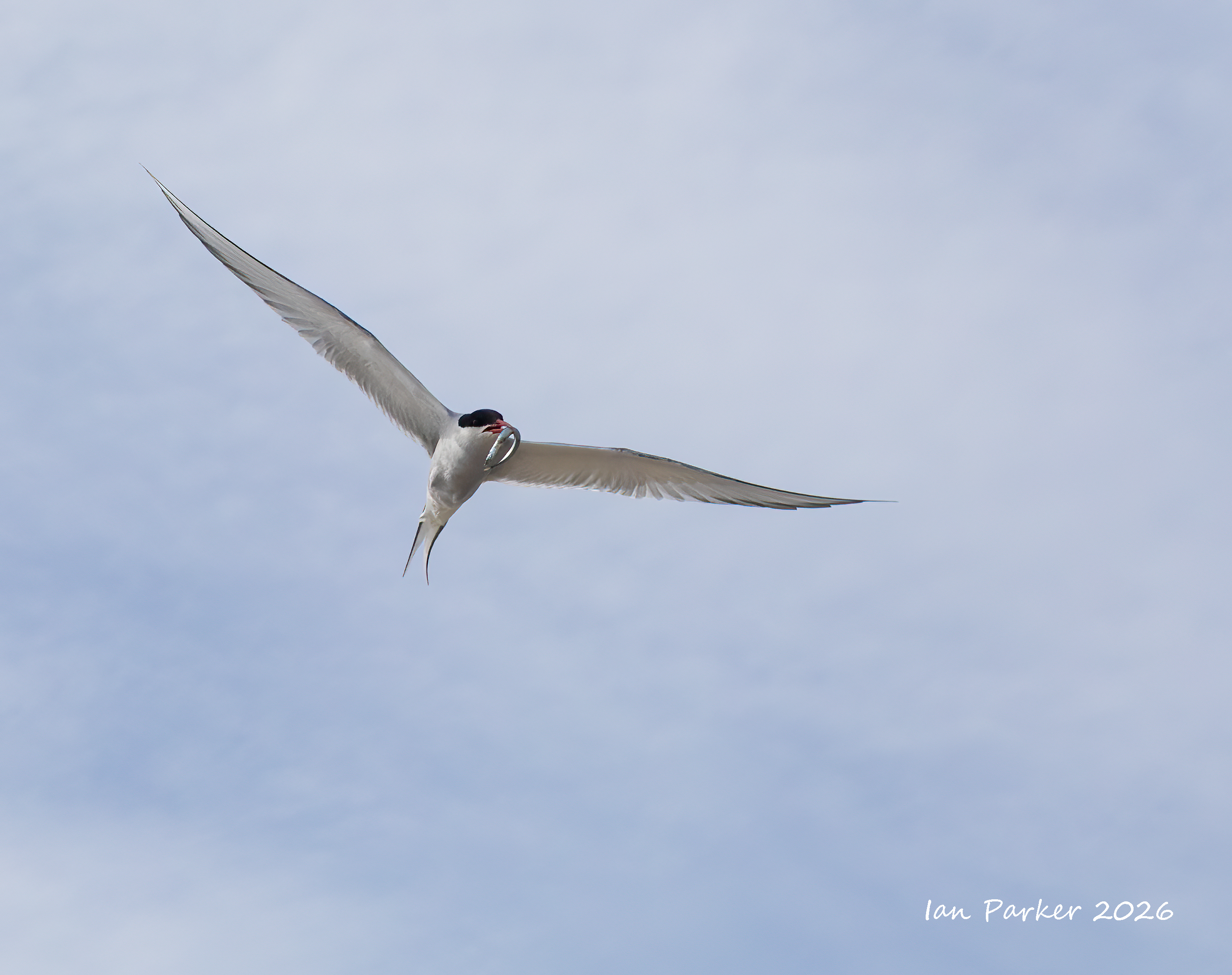
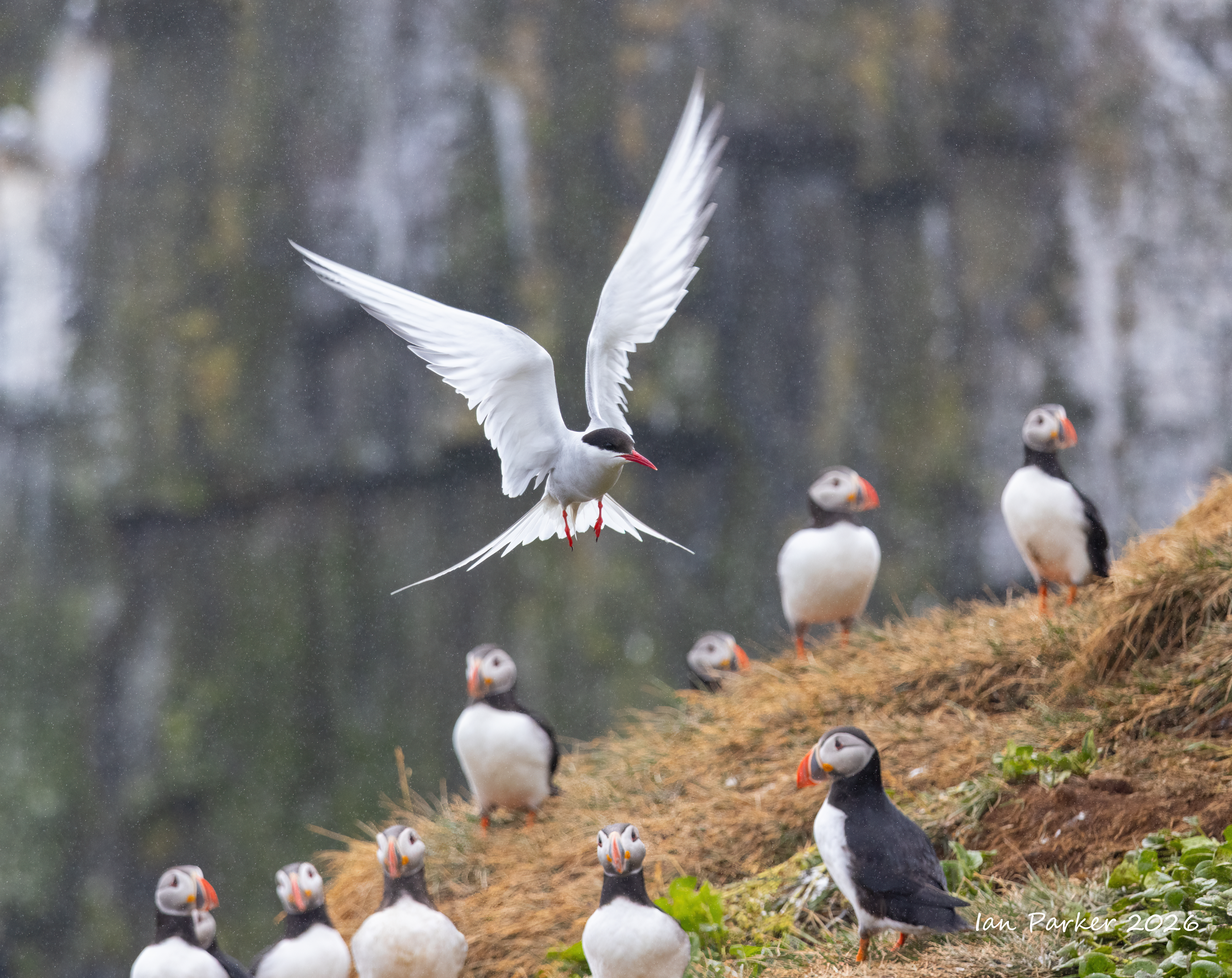

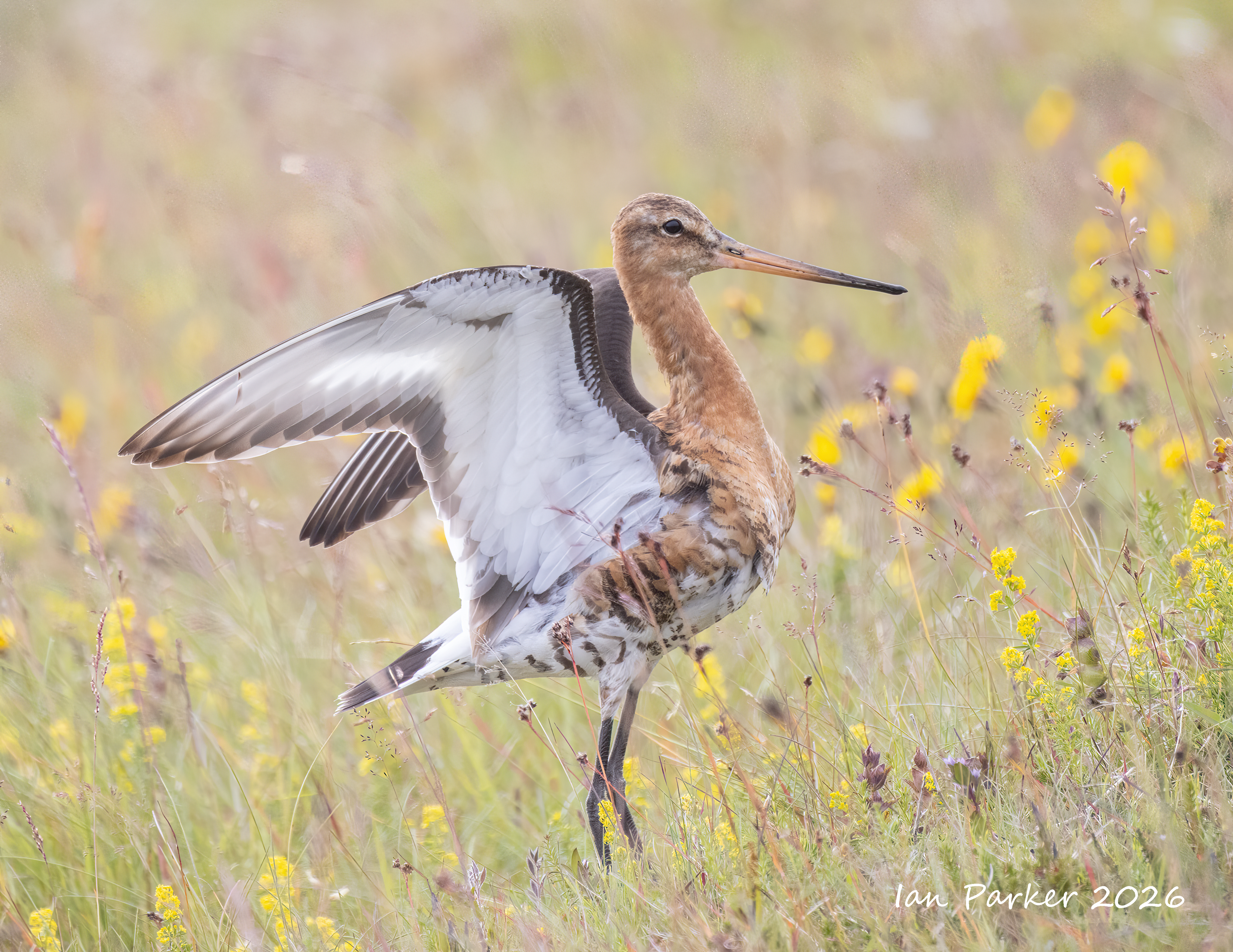
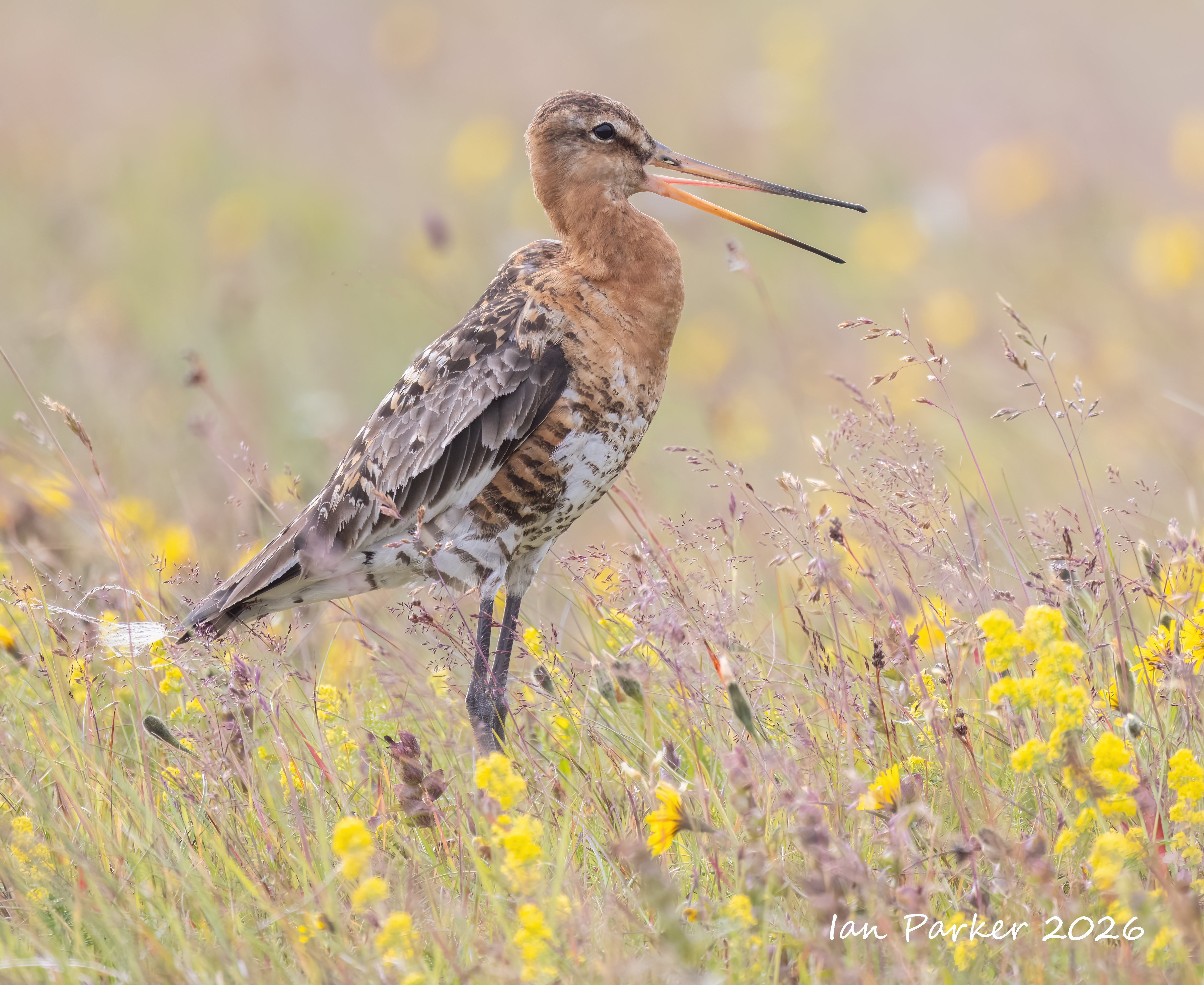
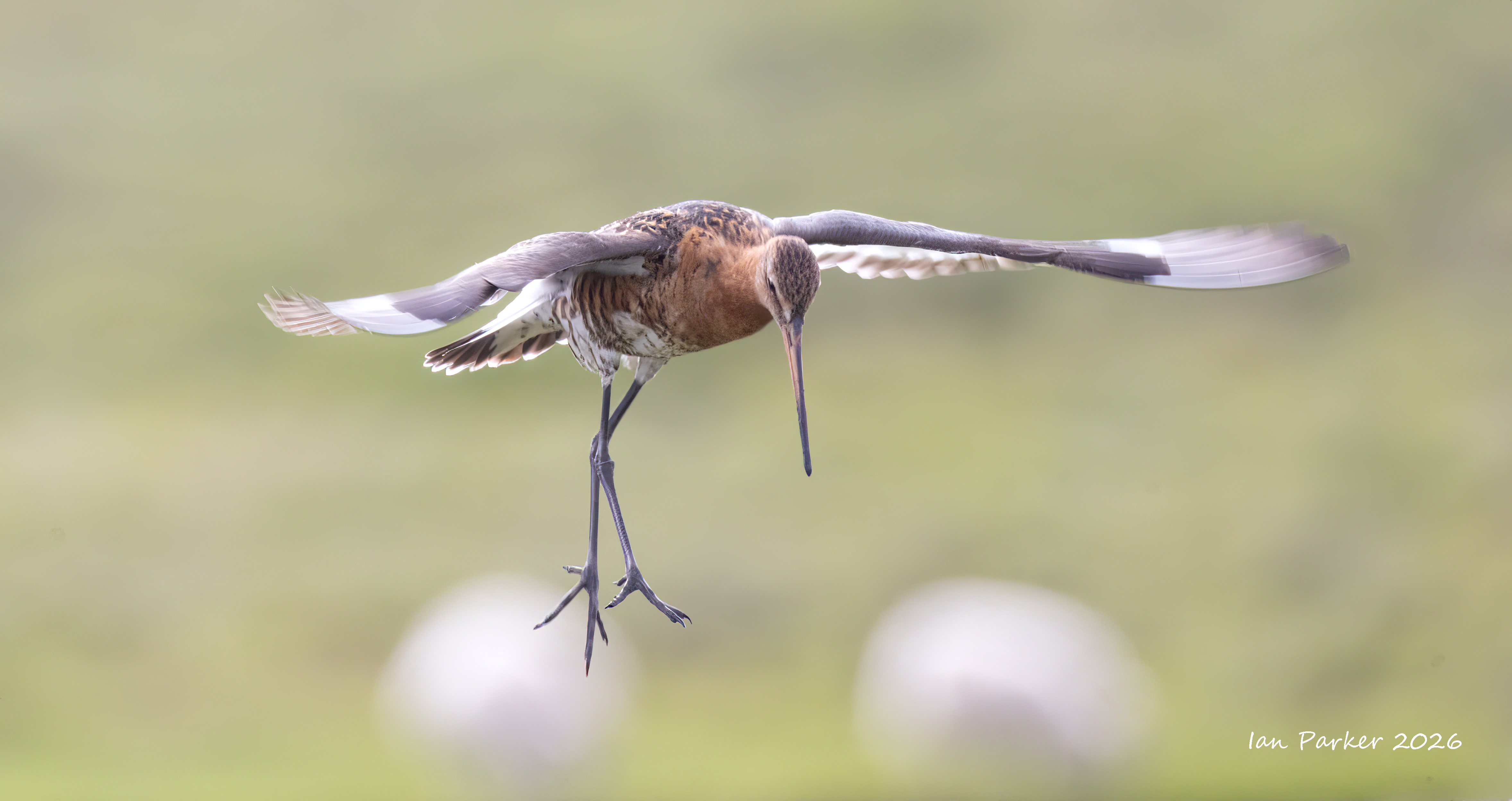
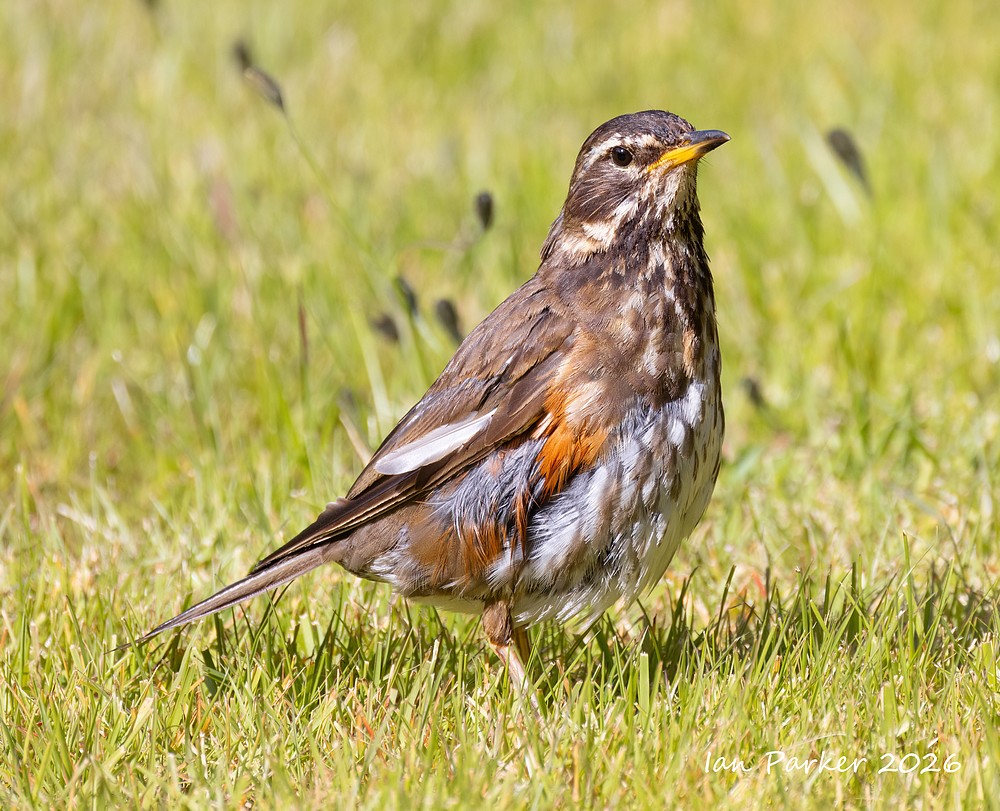


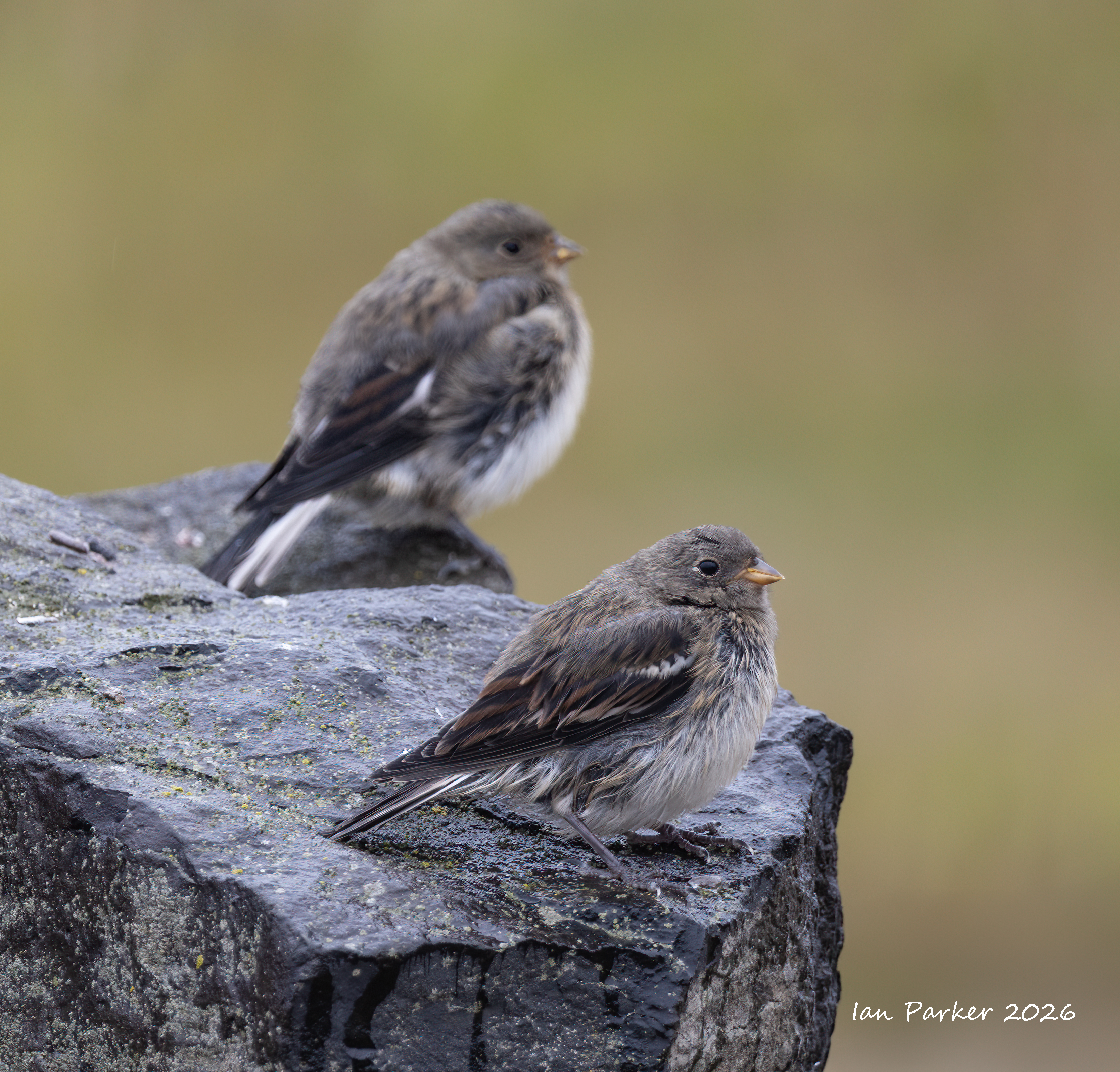
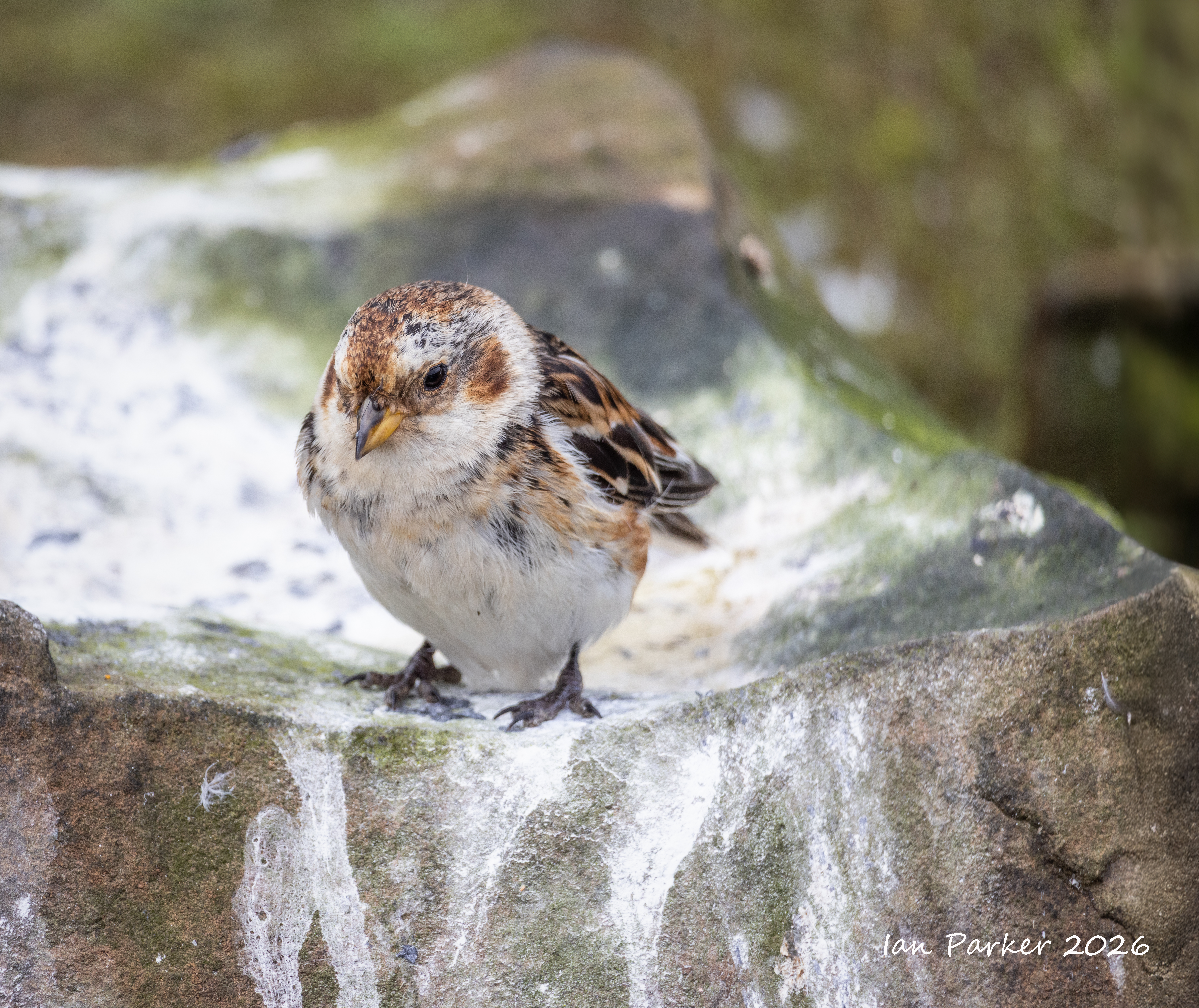
July 27-30 - Grimsey Island, Iceland
We stayed for four nights on Grimsey at Básar guesthouse. Highly recommended! Spacious, comfortable accomodation with a large well-equipped kitchen; good breakfast provided; the family who own the guesthouse (Gagga and her daughter) are incredibly friendly and helpful. Although about a mile walk from the village and restaurant, the closest puffin cliffs are only 100 yards away!
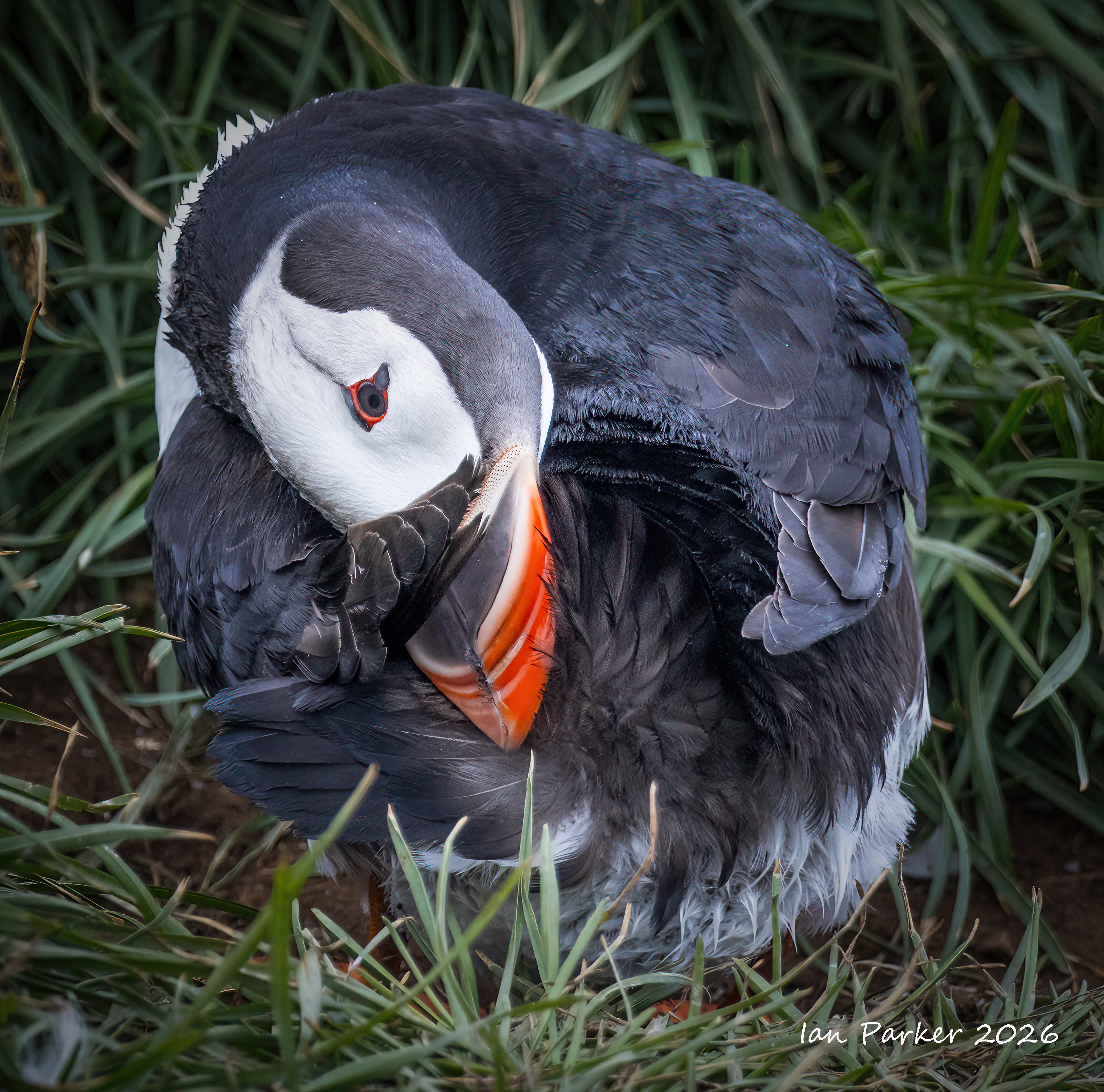
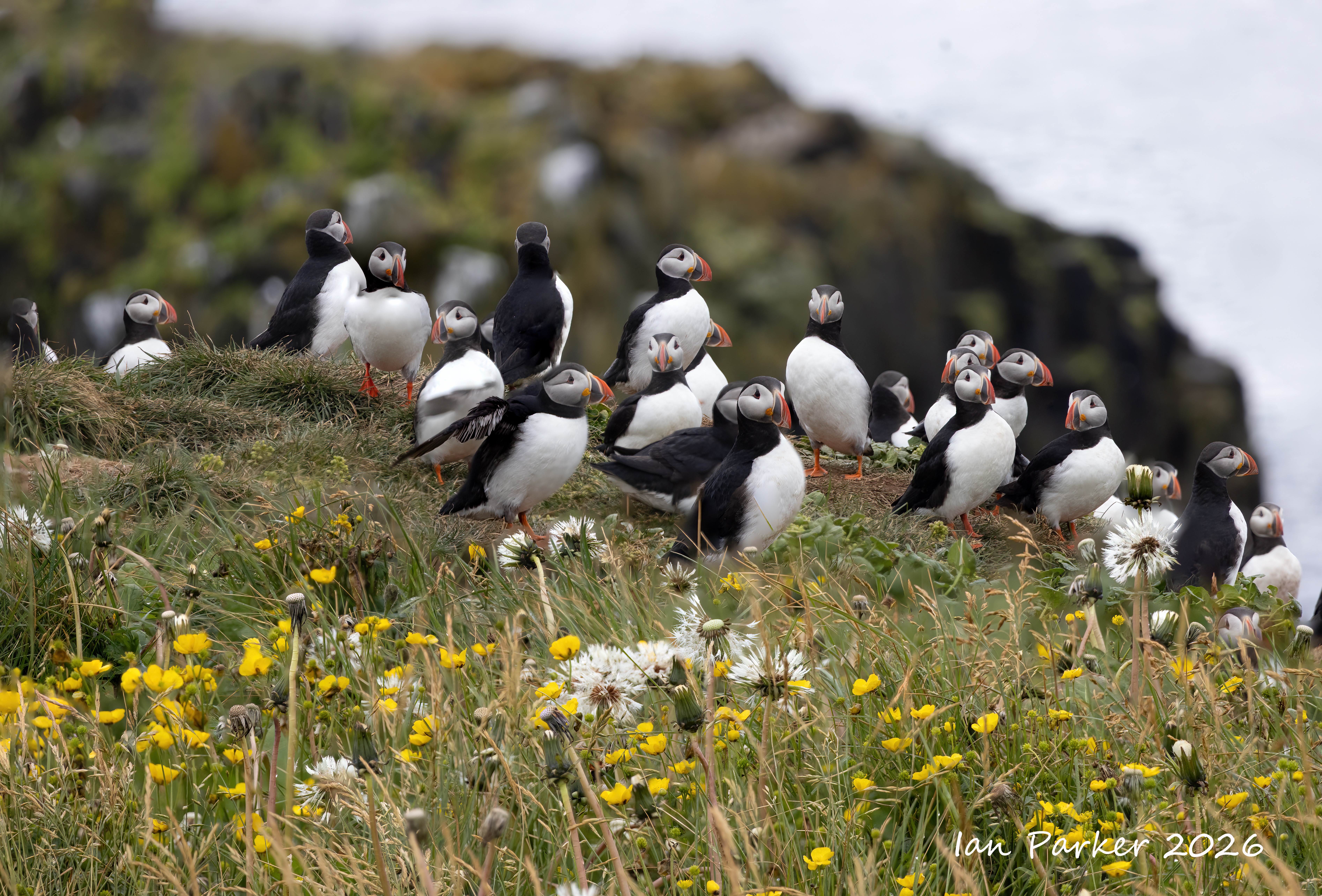
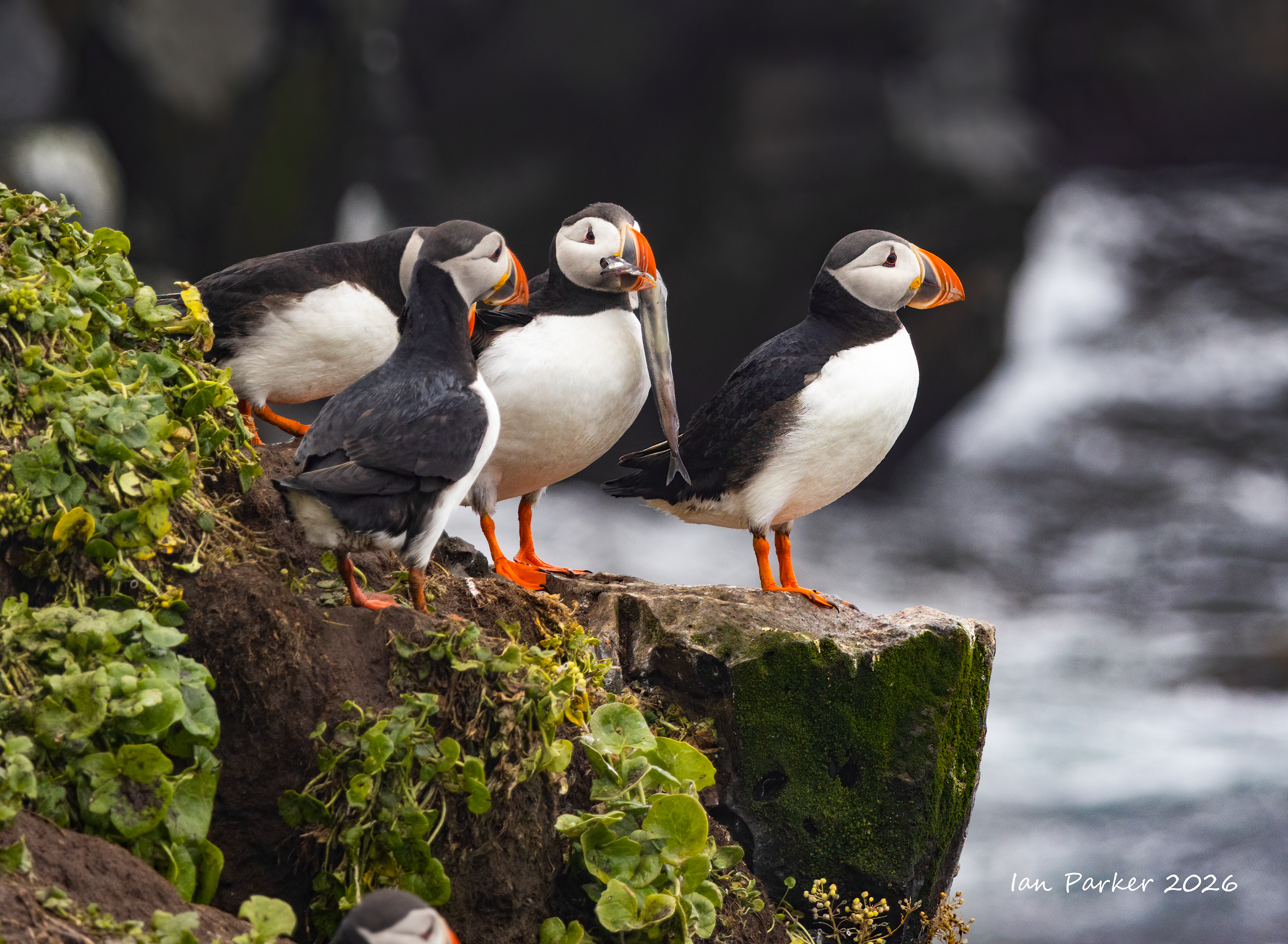
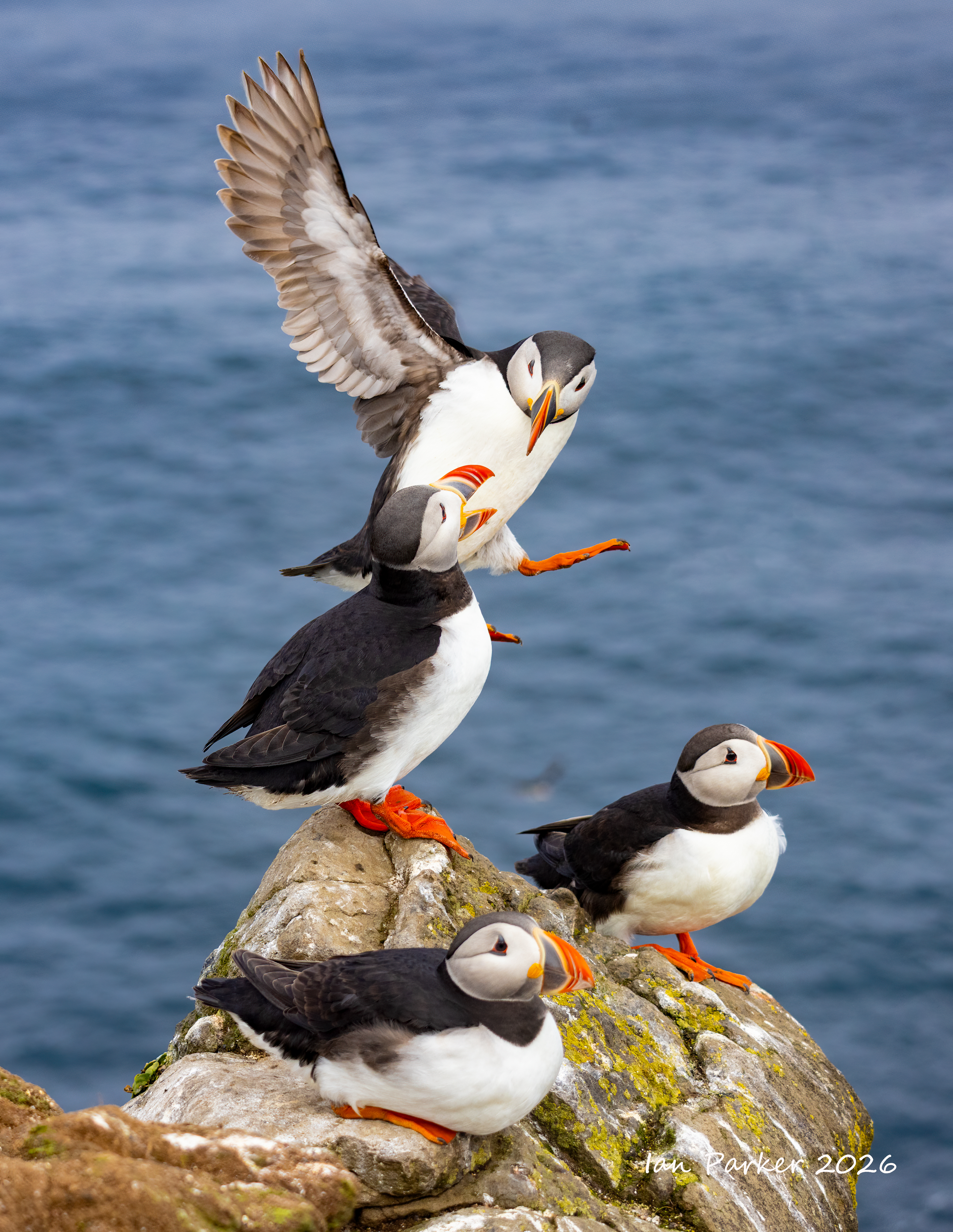
Puffin Portraits.

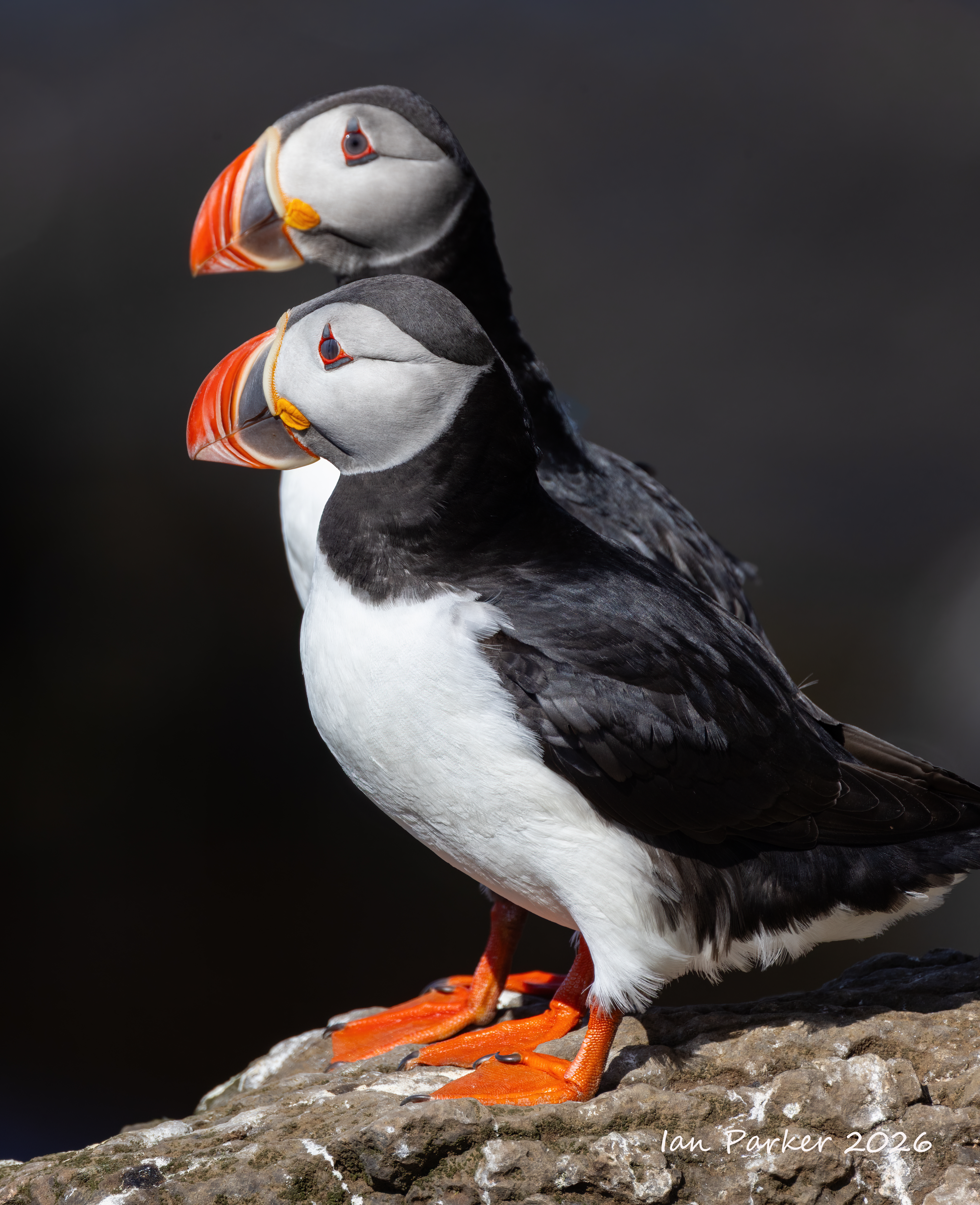

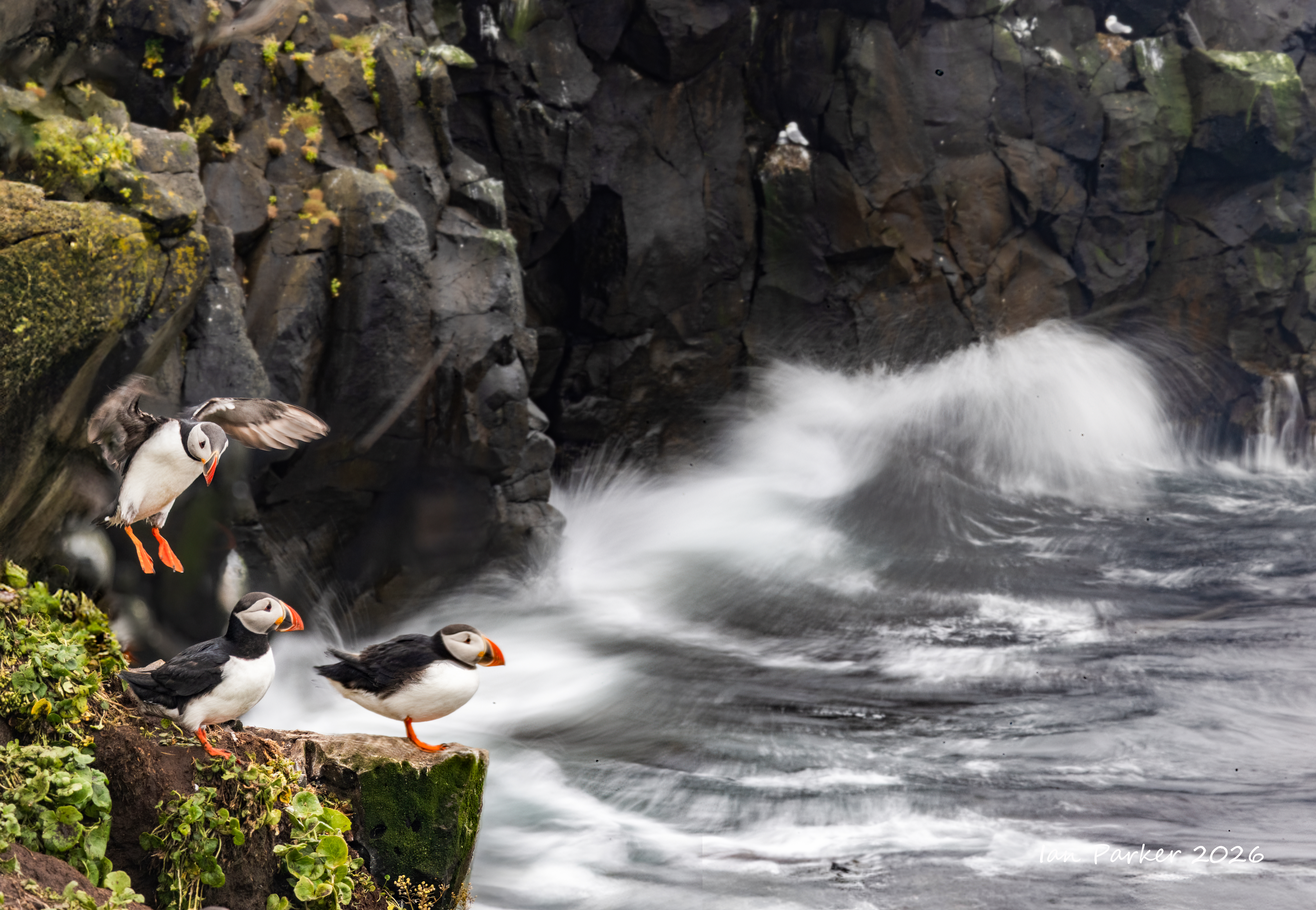
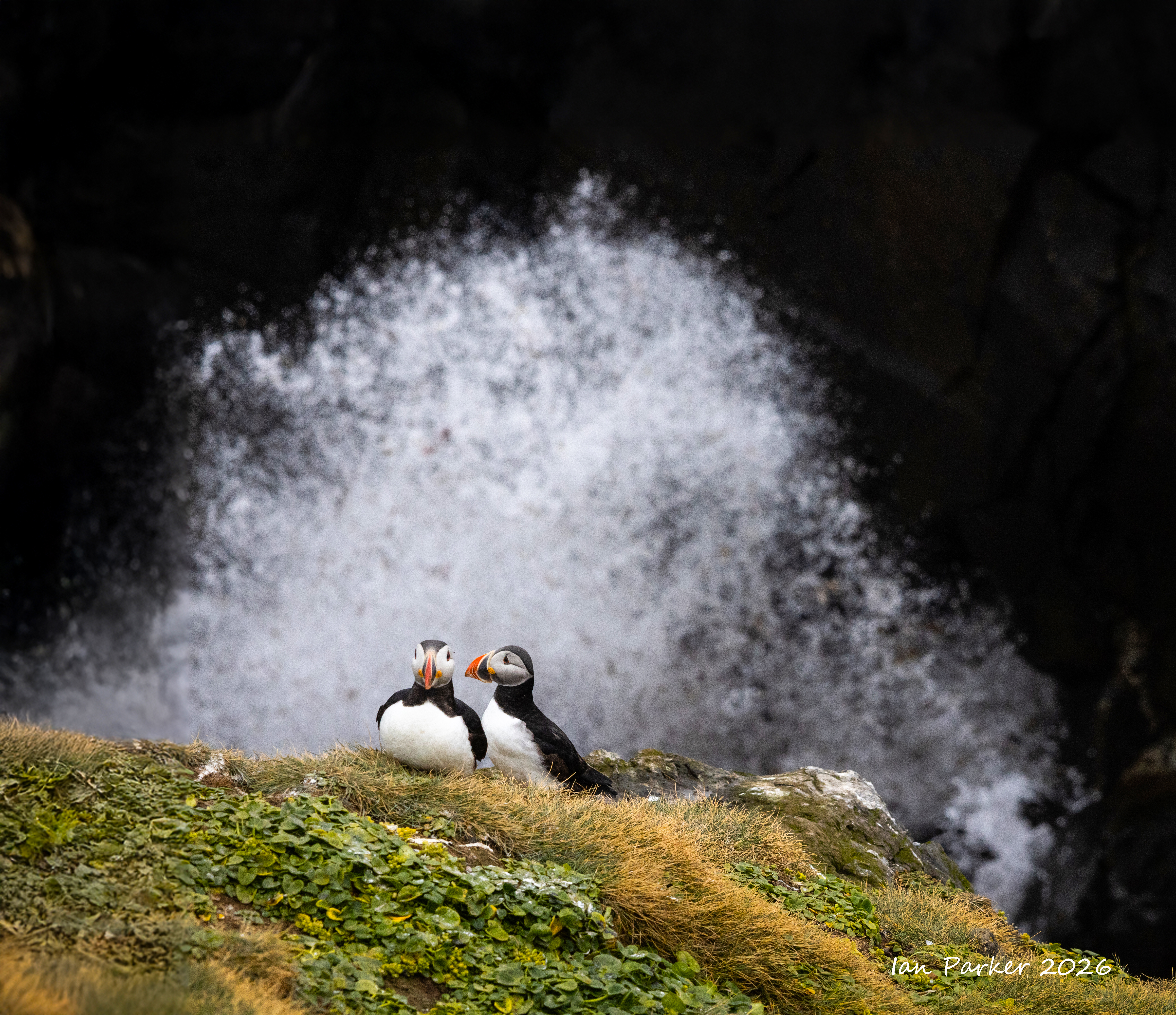
Puffins in Flight.
Puffins fly fast! I foud it too difficult to track puffins with my 800mm lens, both because of the narrow field of view and because the autofocus works only over a narrow, central window. I had better luck using my 100-400 zoom, mostly set at 300 or 400mm, and finding locations where the birds were flying close to me.
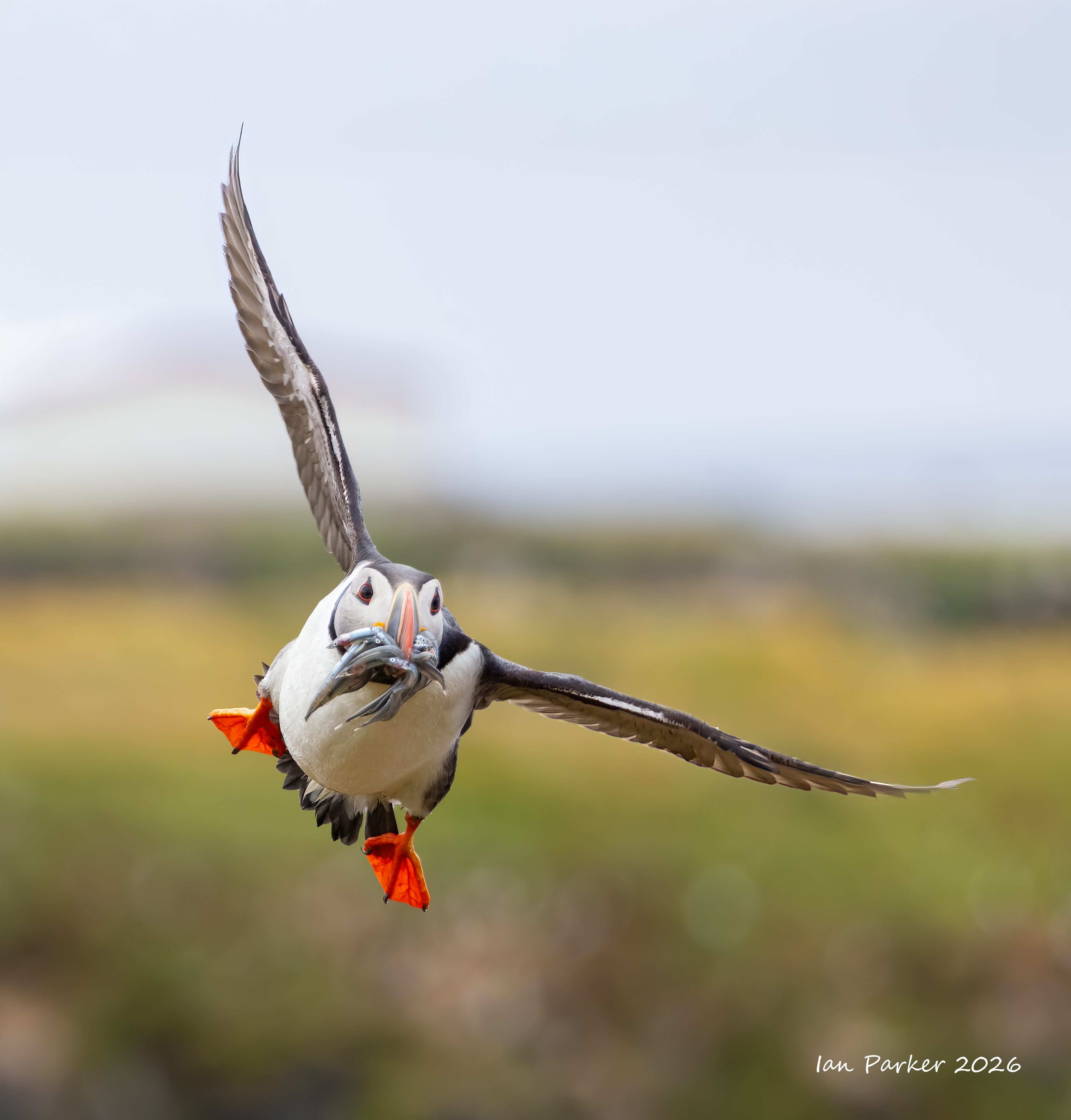
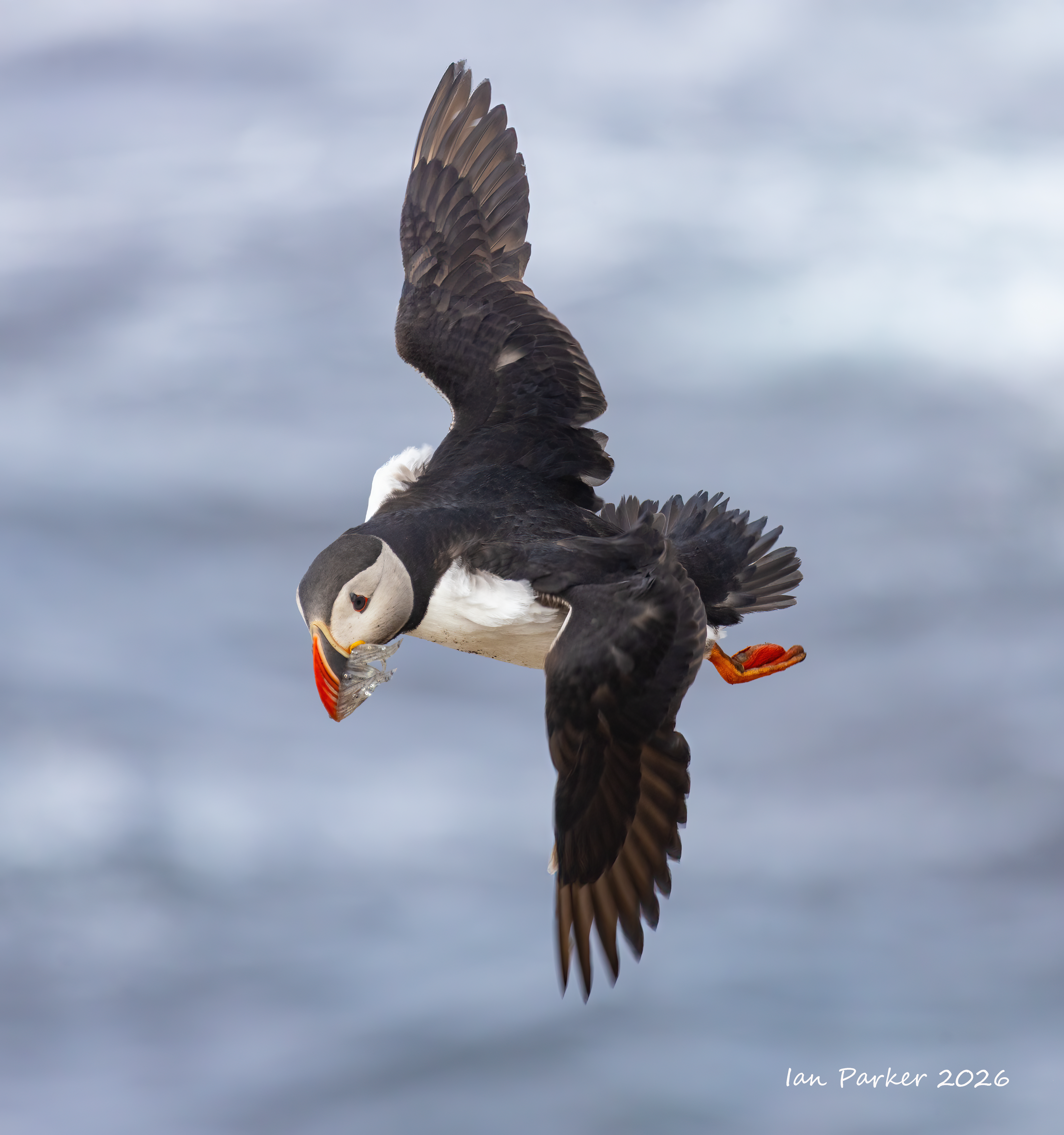
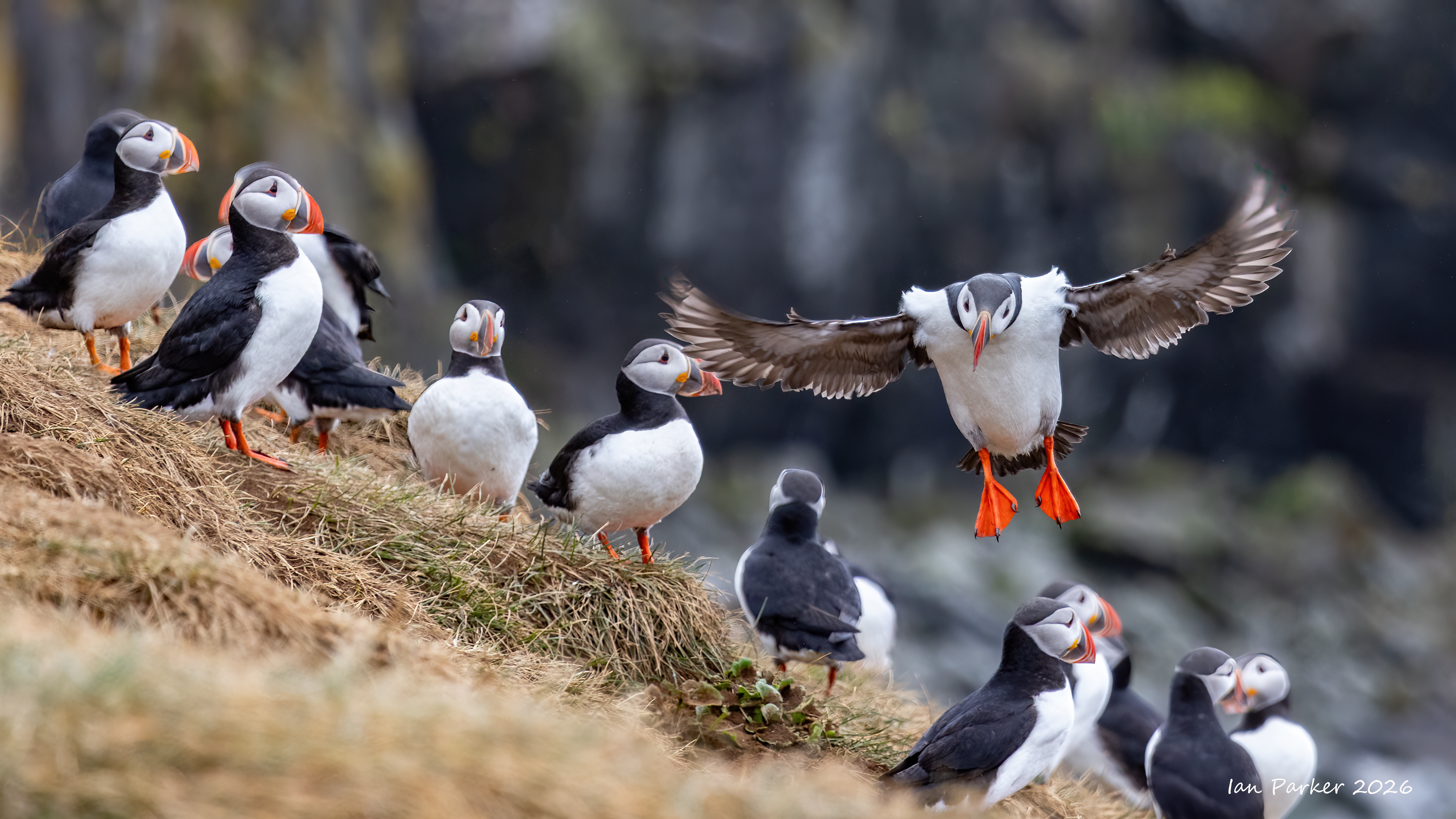
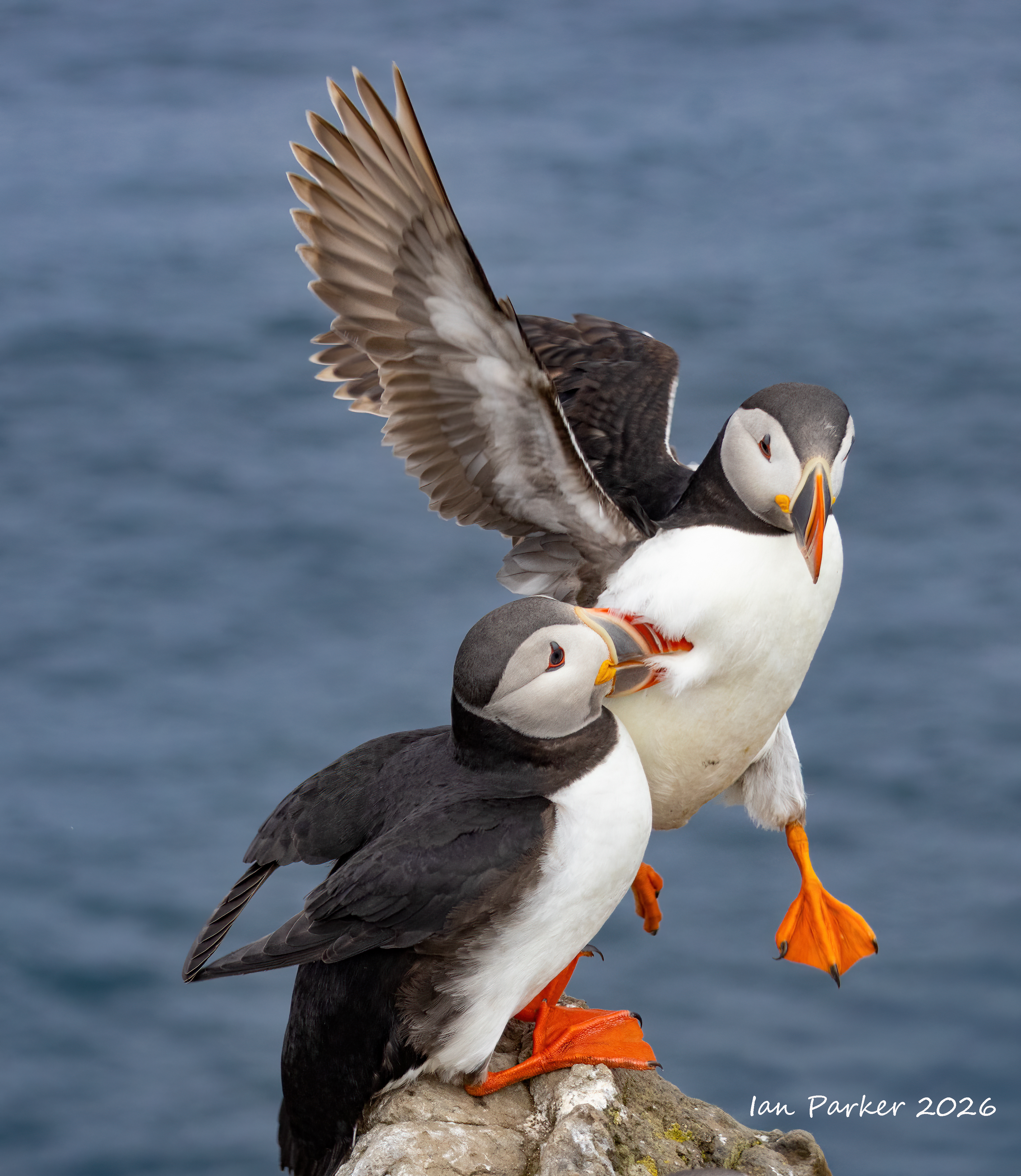
Puffins struggle to land
because they fly at high speeds (up to 40 mph) with very small wings and barely enough surface area to stay aloft
. They frequently miscalculate and tumble or crash into the ground other puffins standing in the colony.
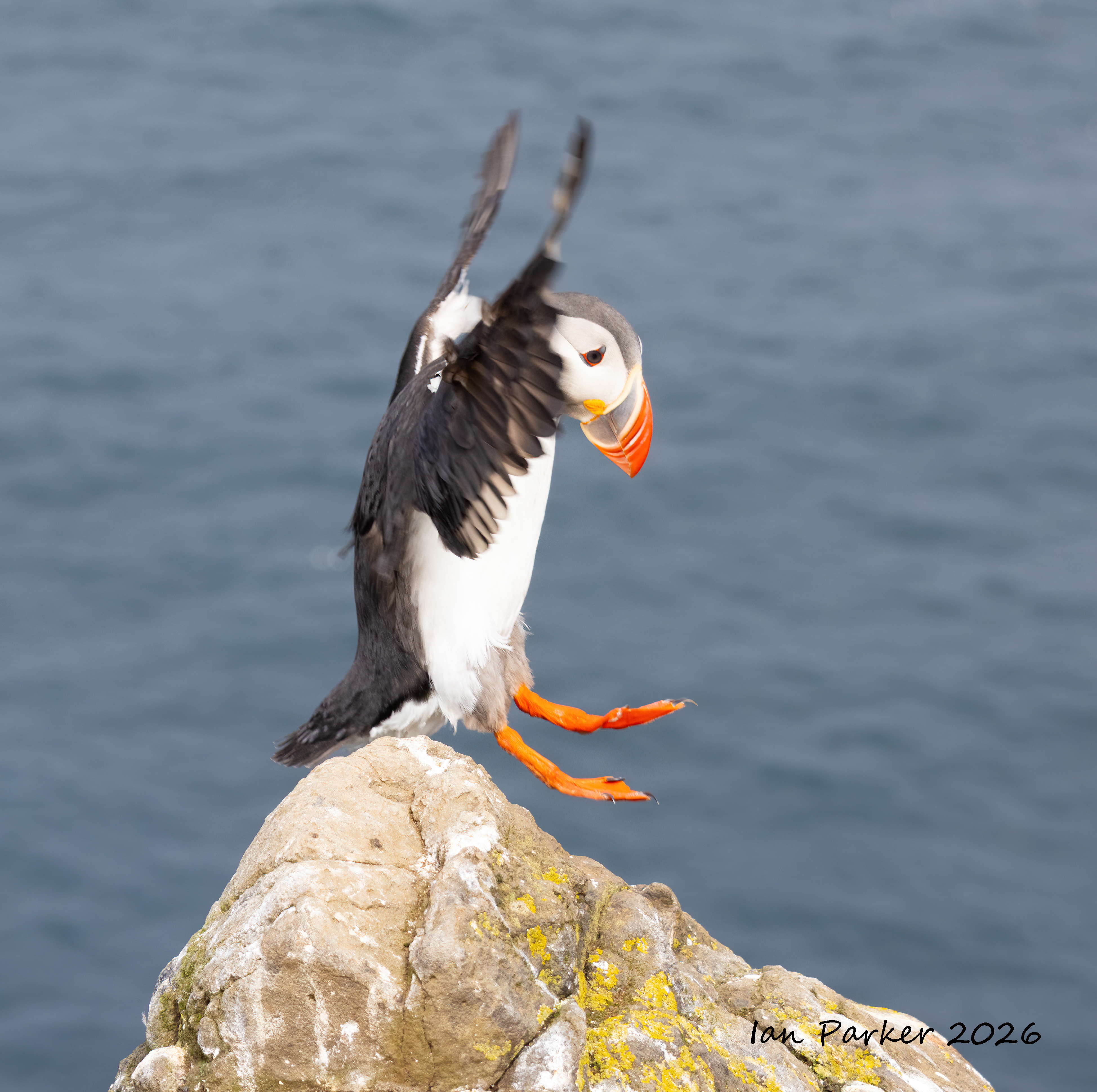
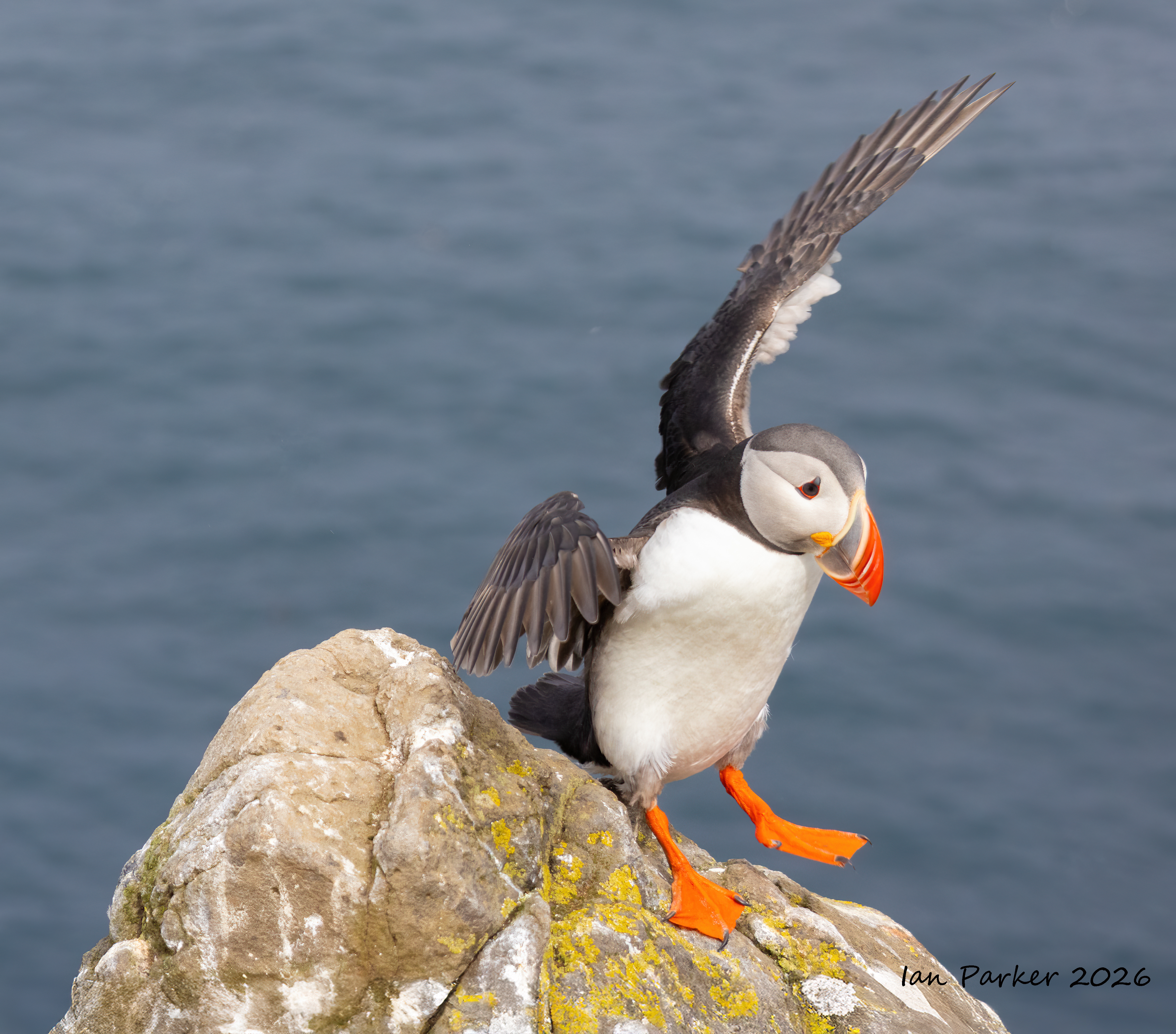
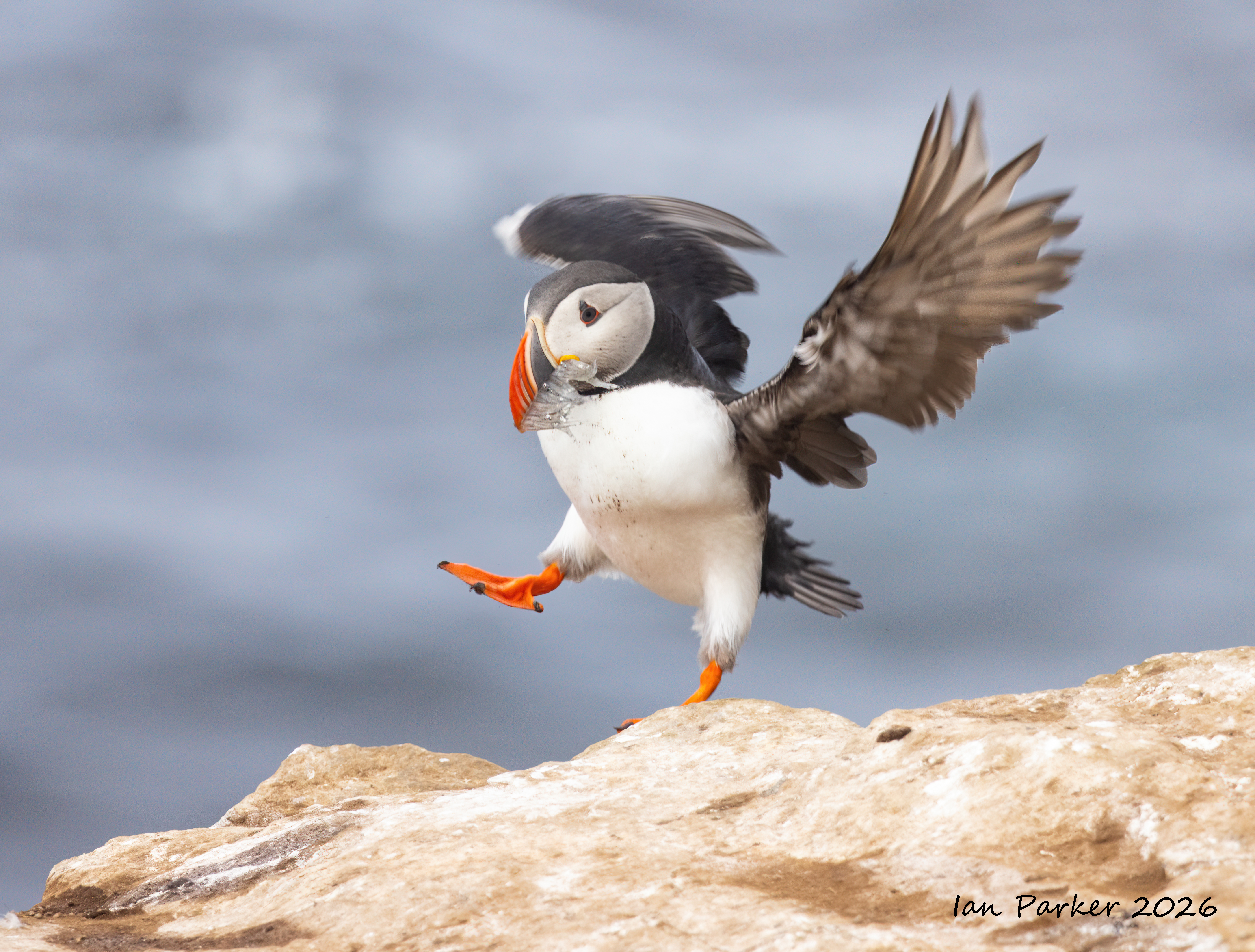
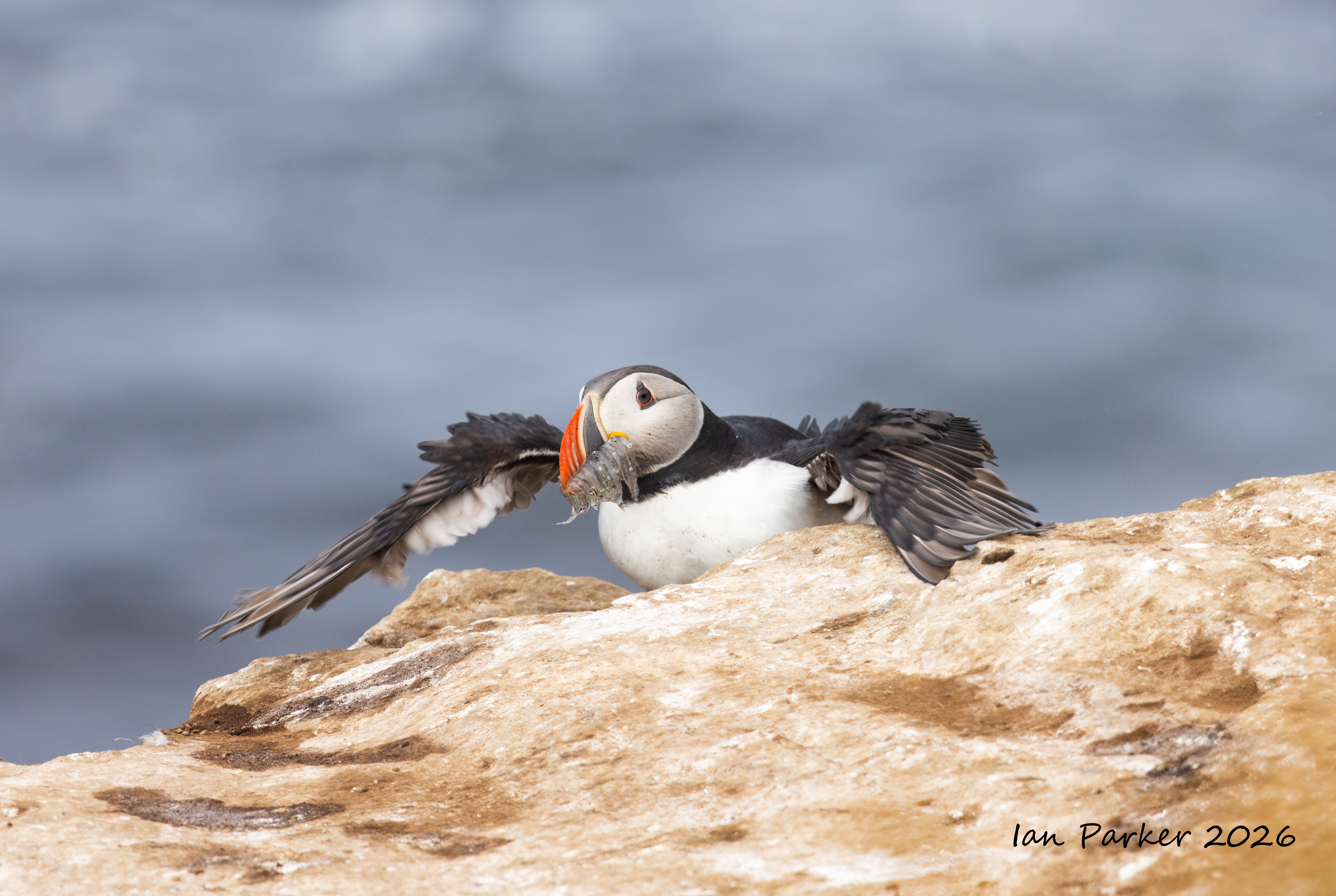
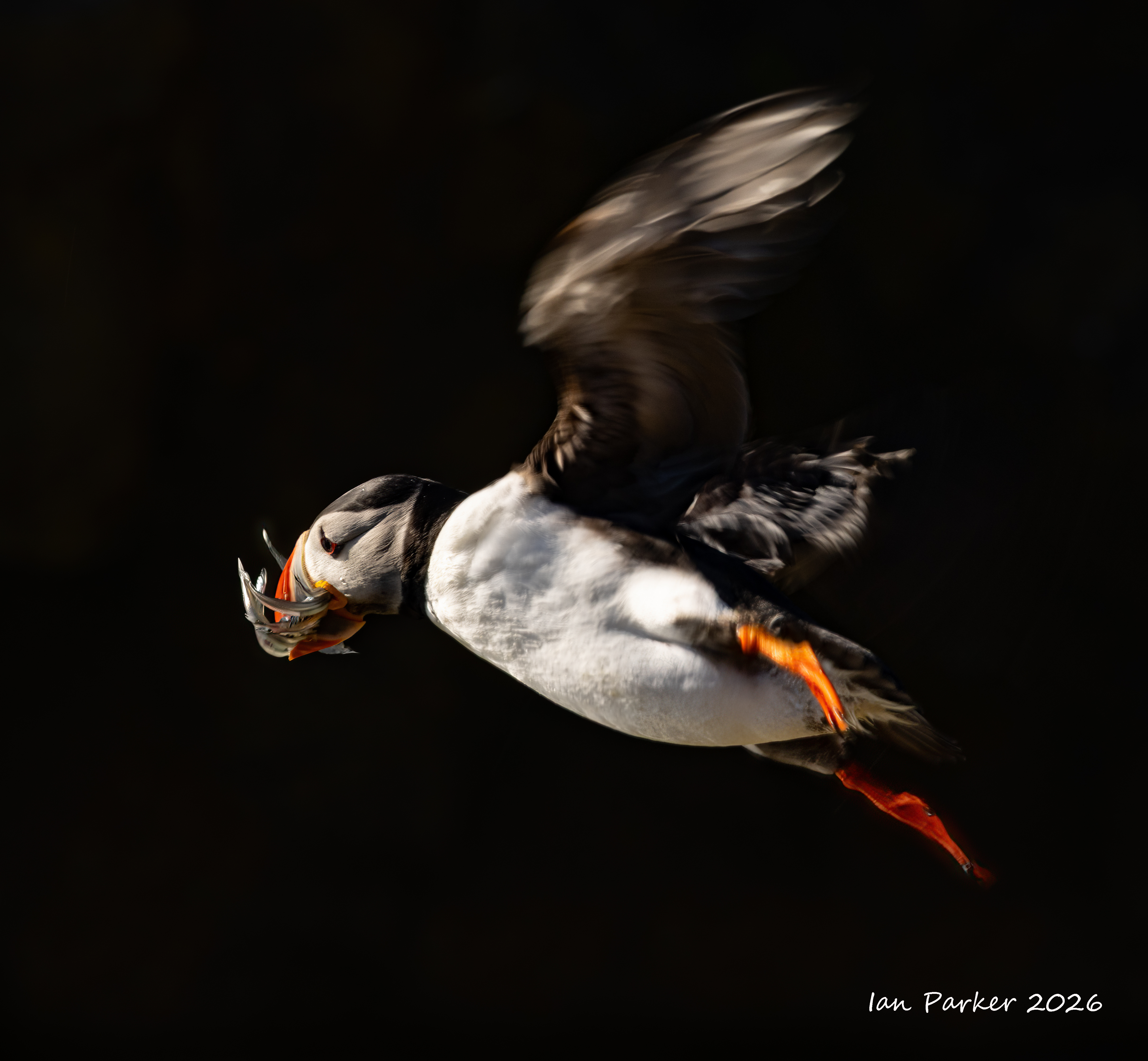
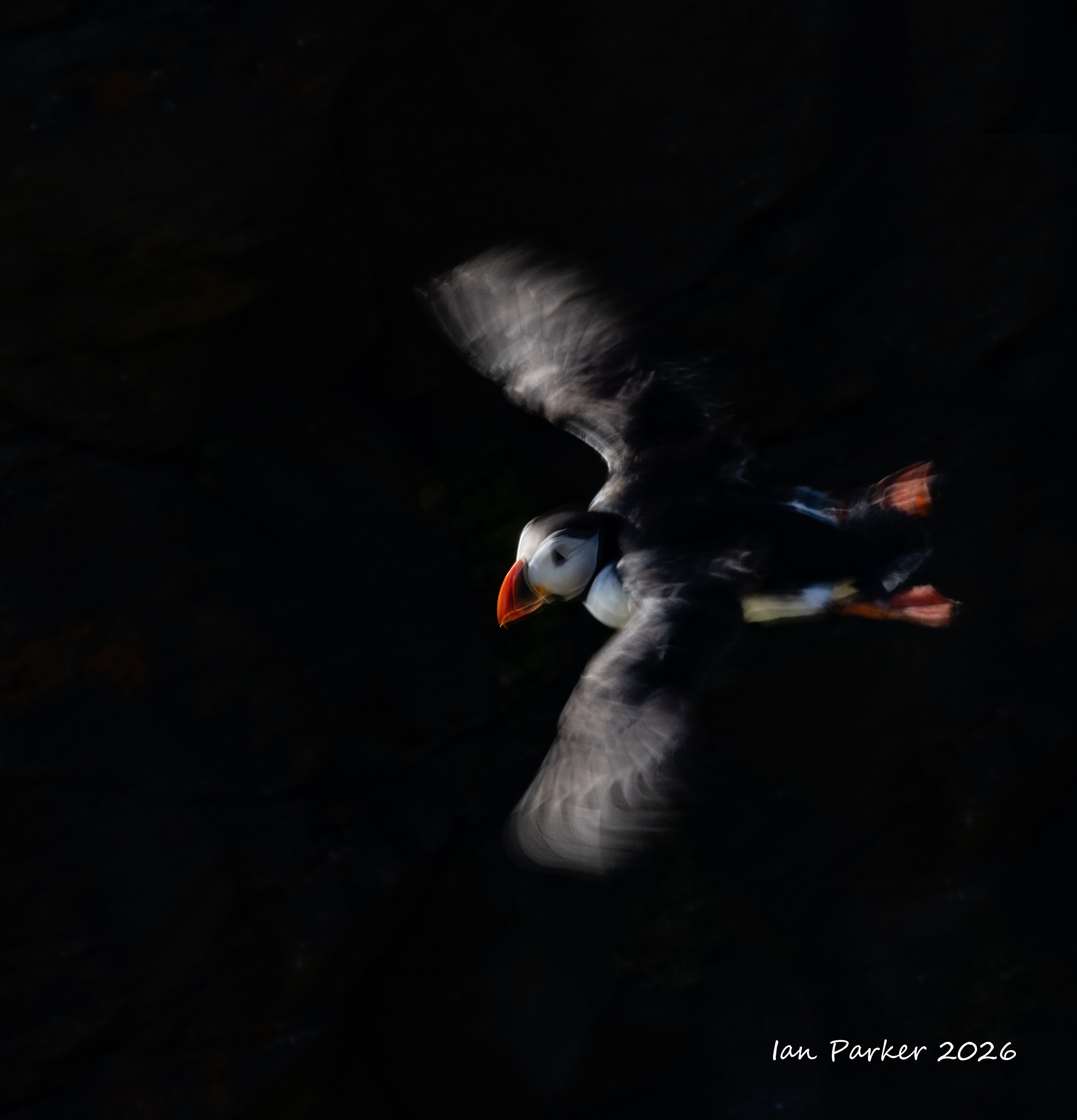
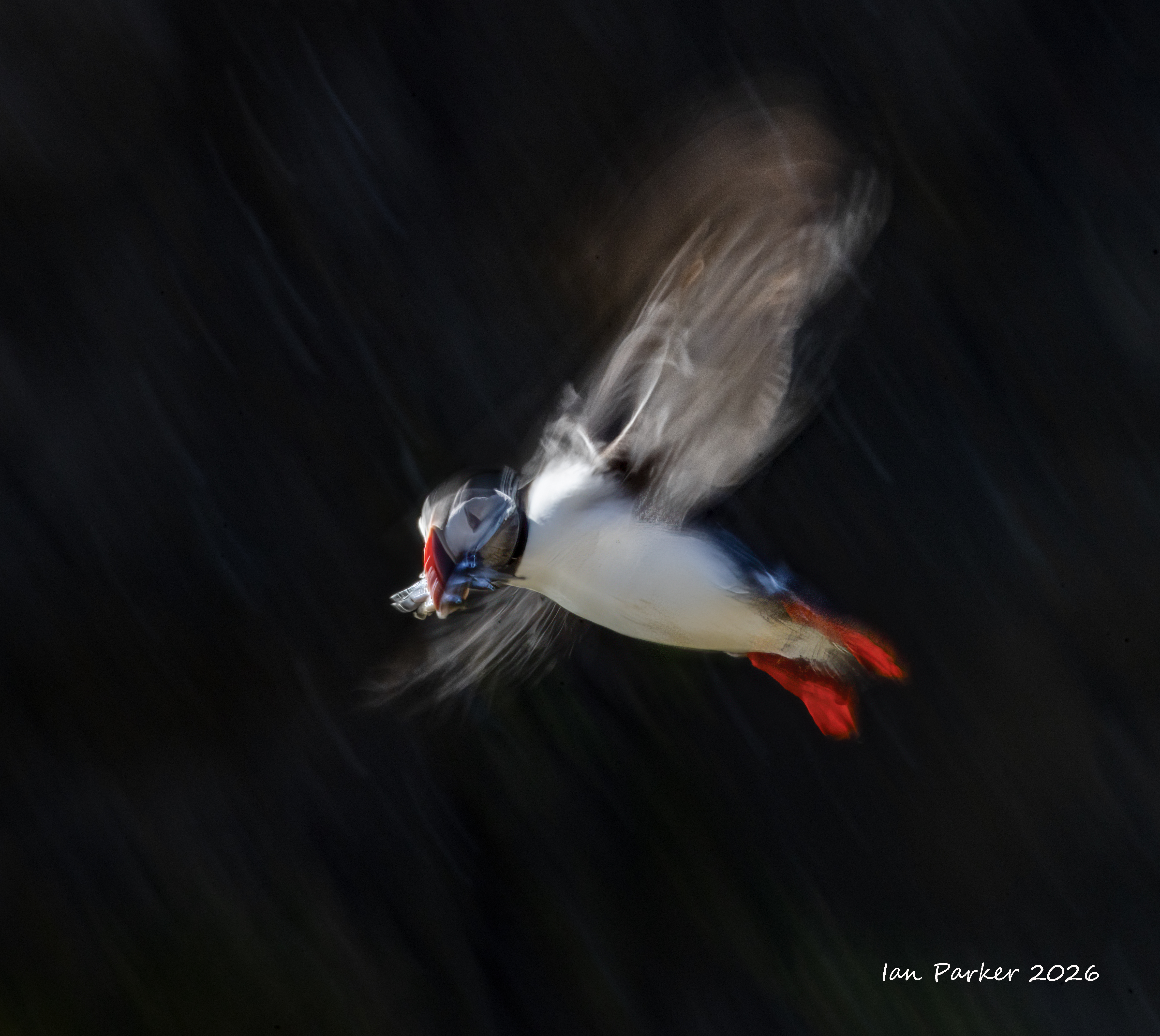
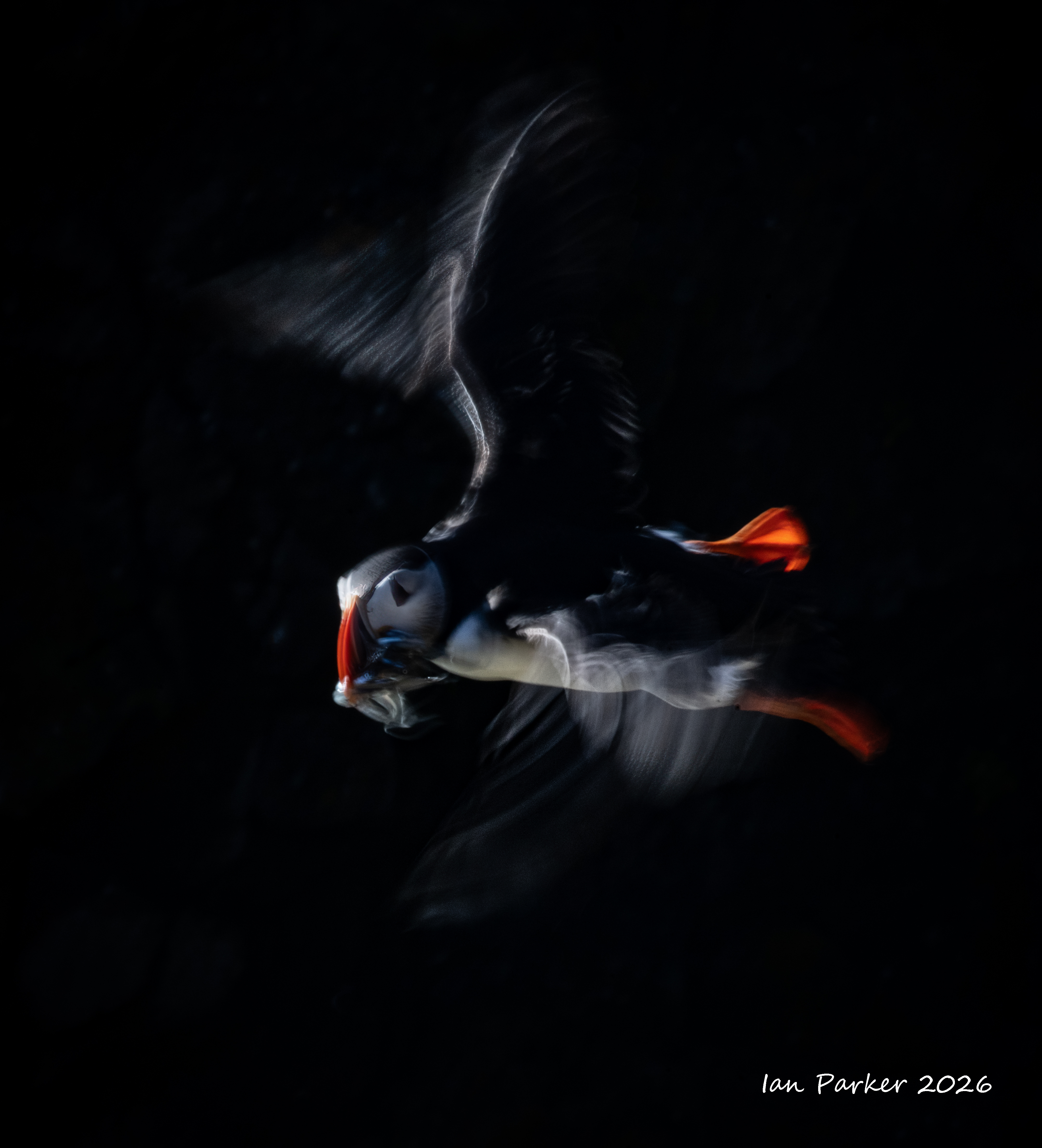
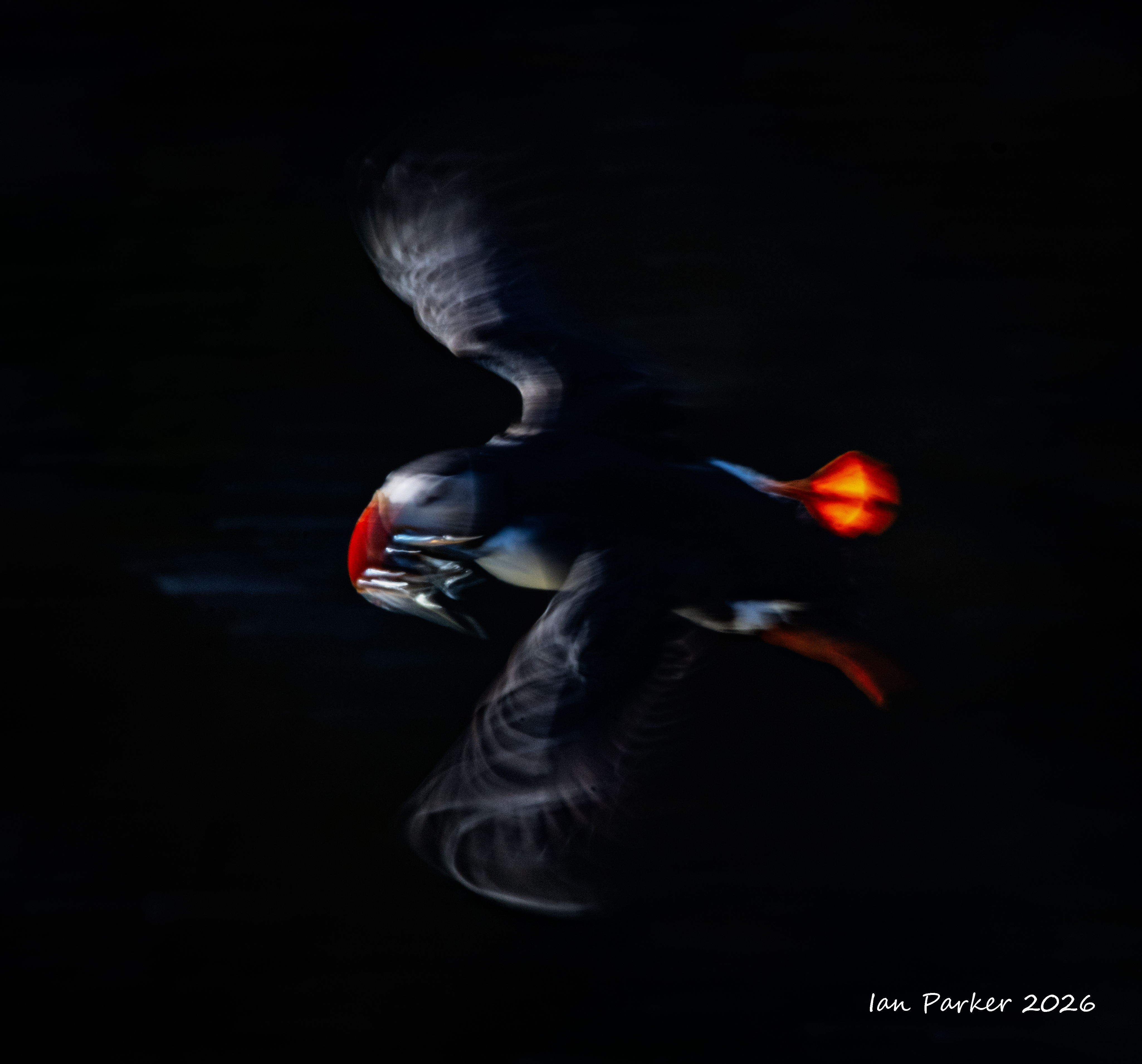
Puffins in Flight on Black.
During a rare period of sunshine I moved to photograph across a rock cleft where the far wall was in deep shade, capturing puffins as they flew across the cleft into the light.
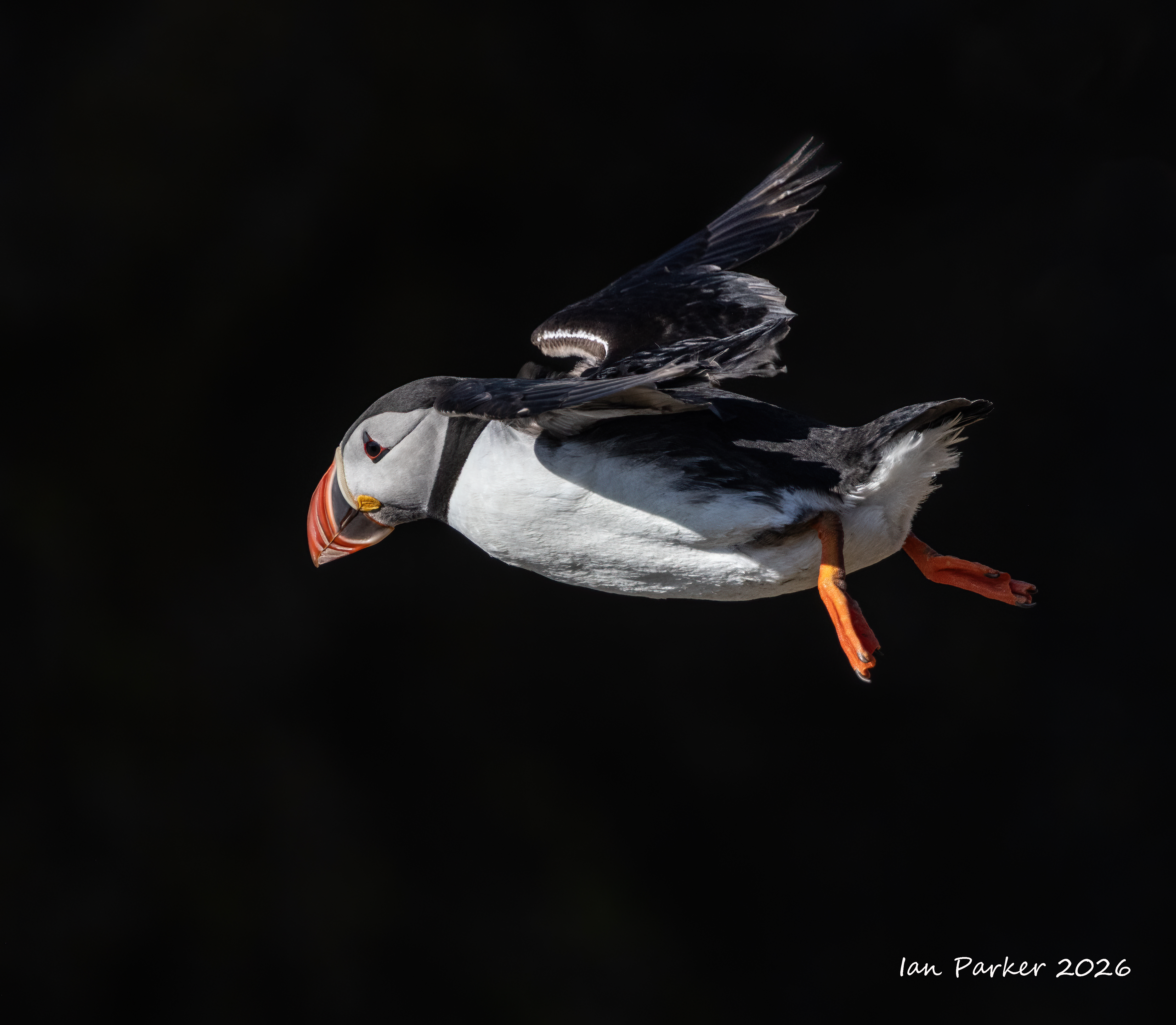

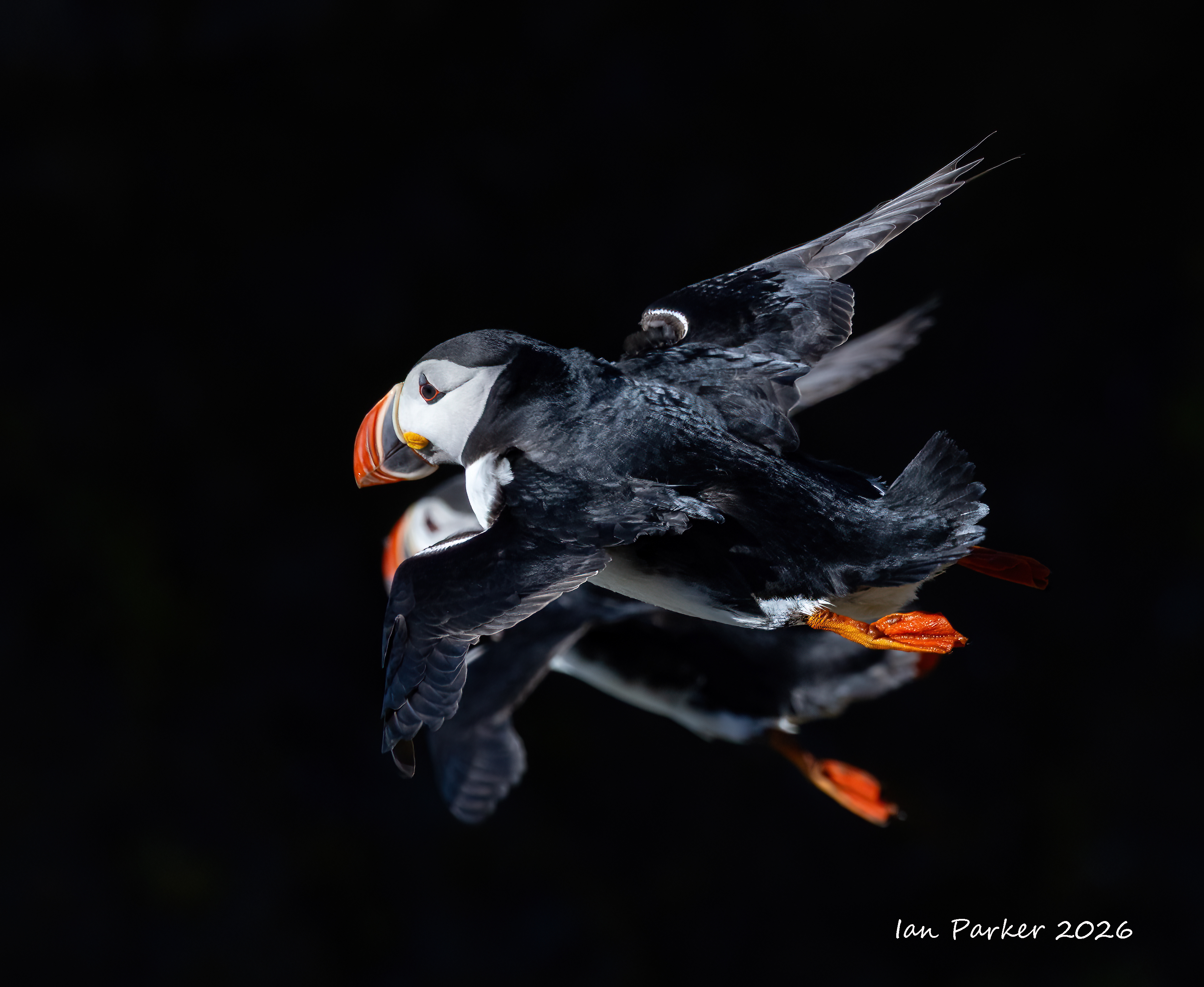
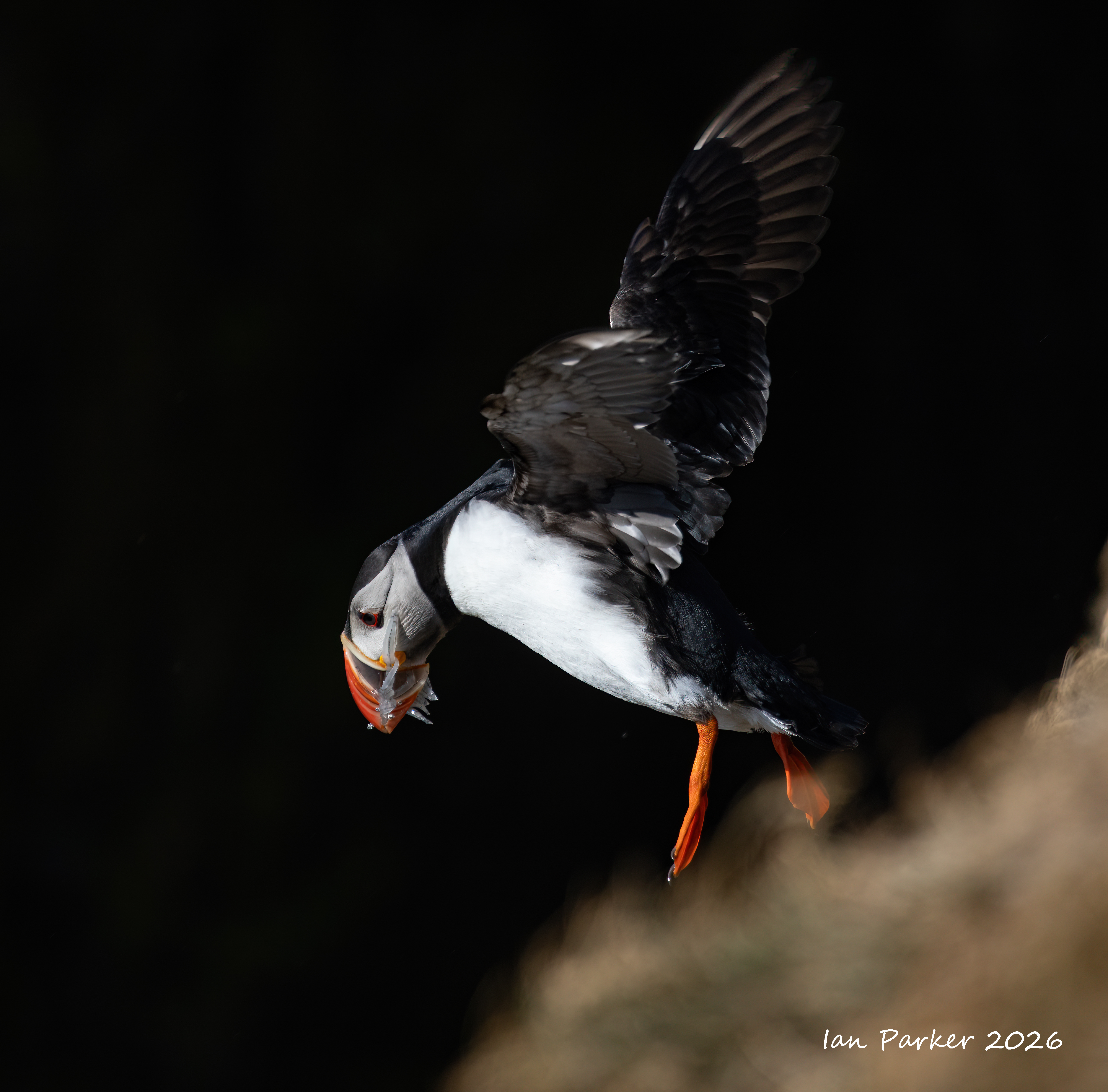
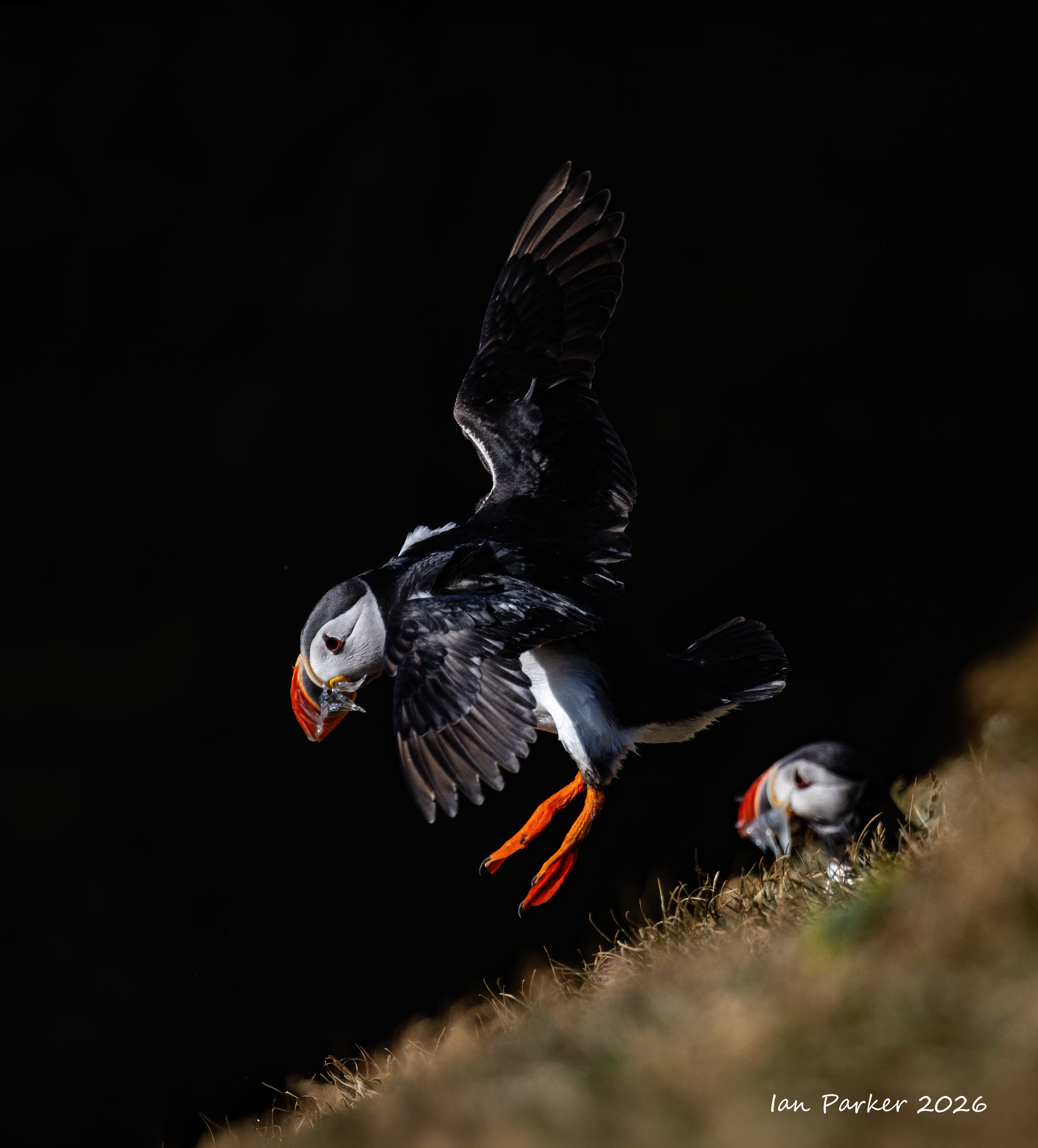
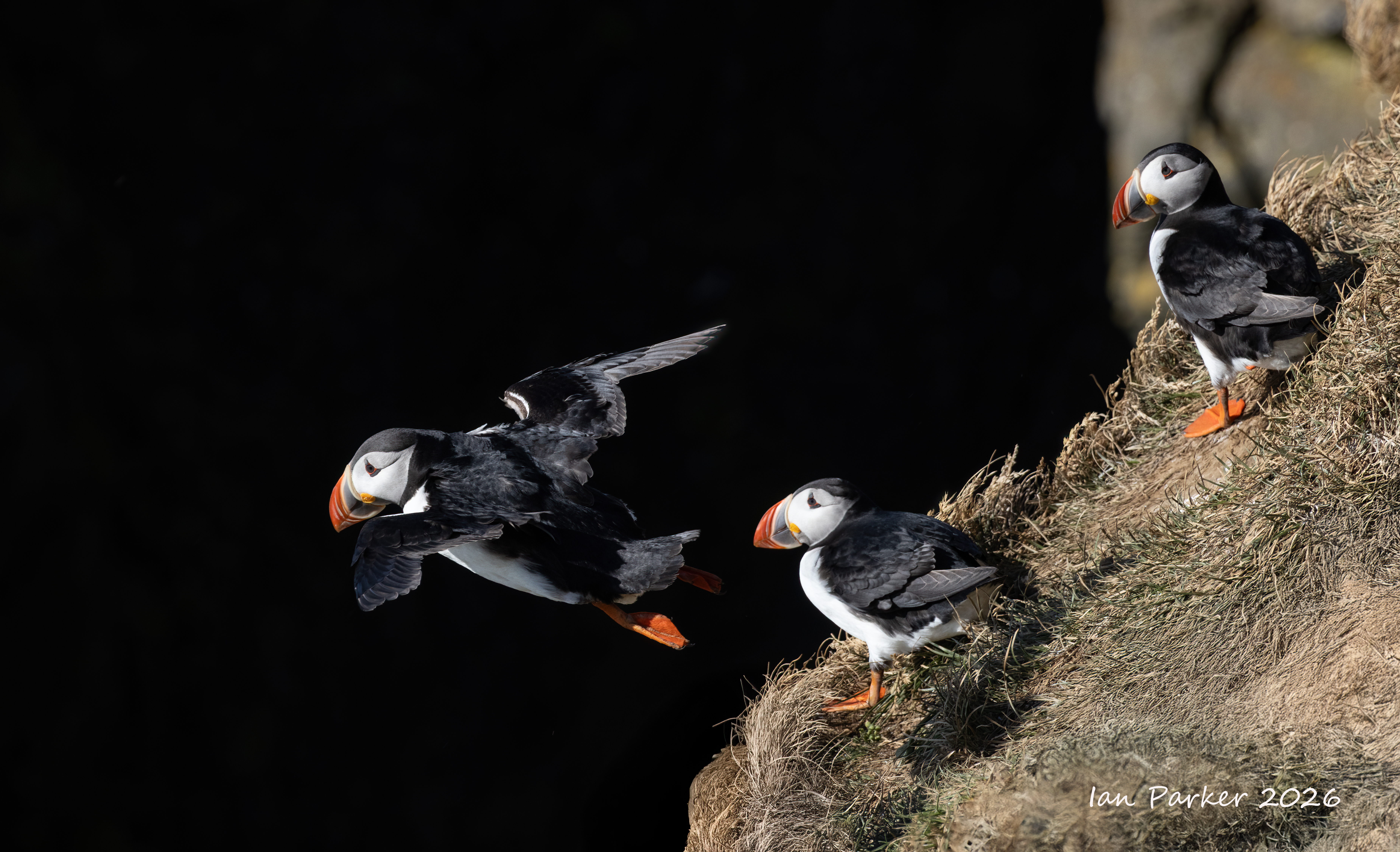
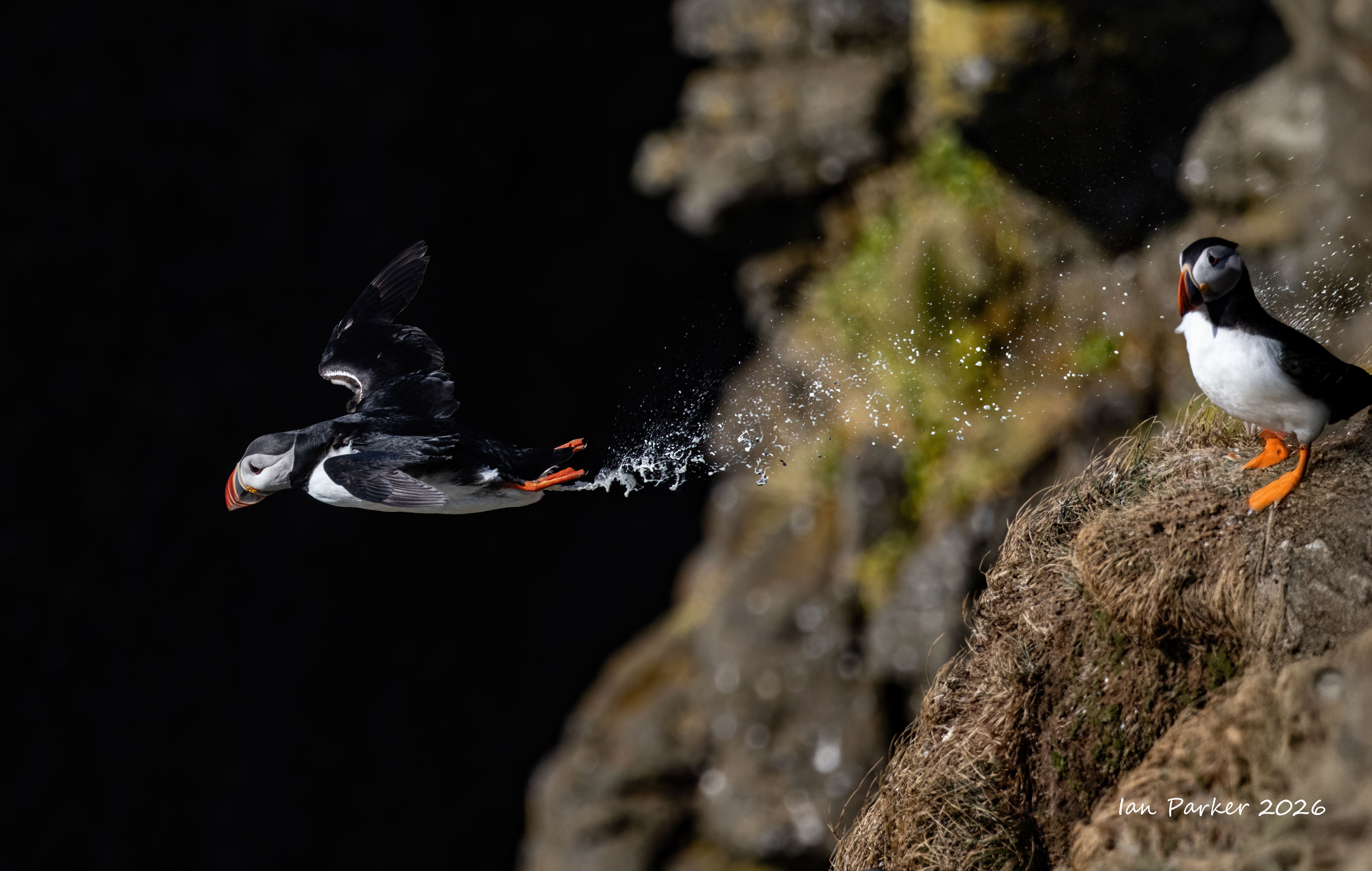
Trying for 'artistic' blurs of puffins flying againt black background using different slow shutter speeds.

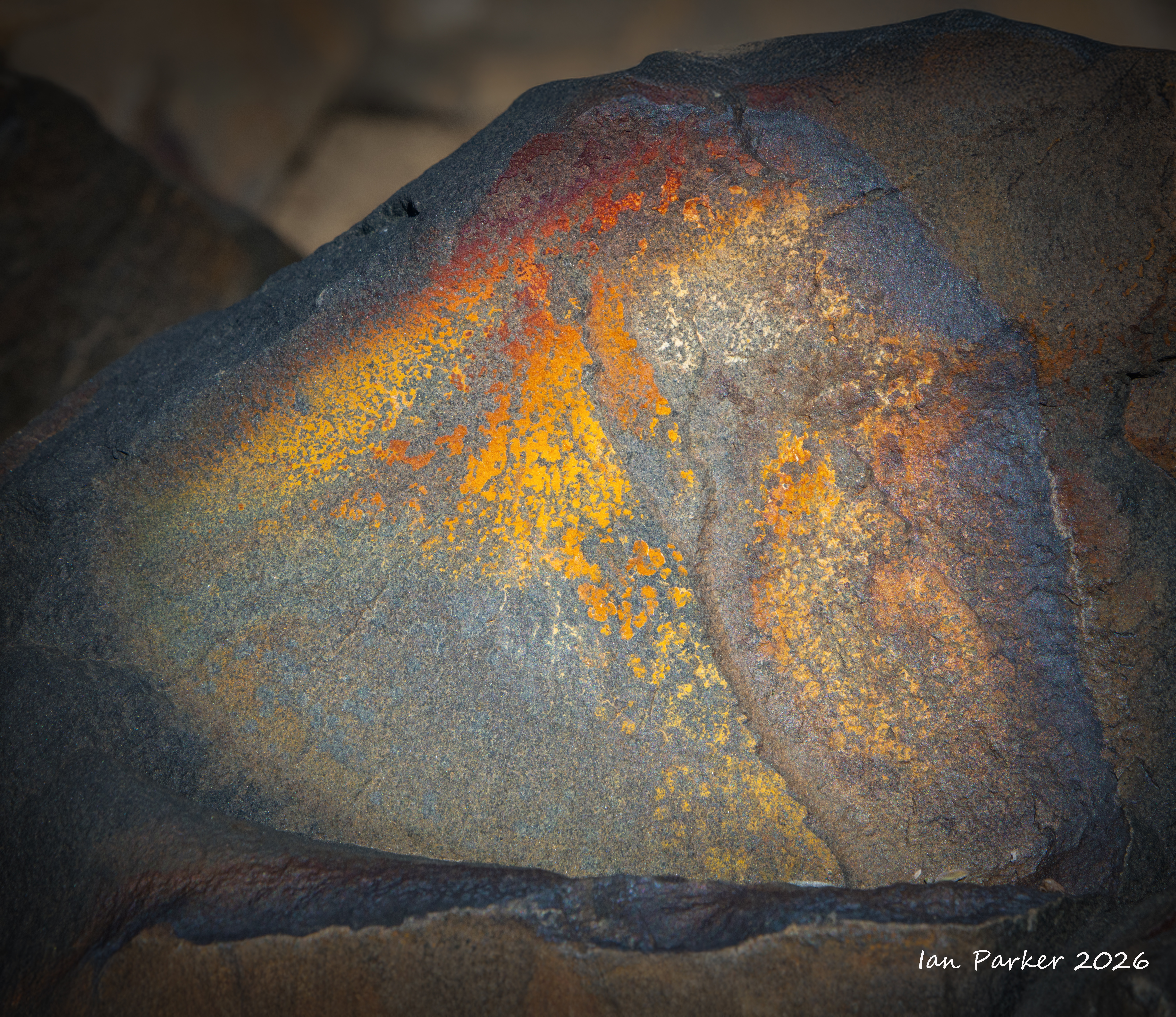
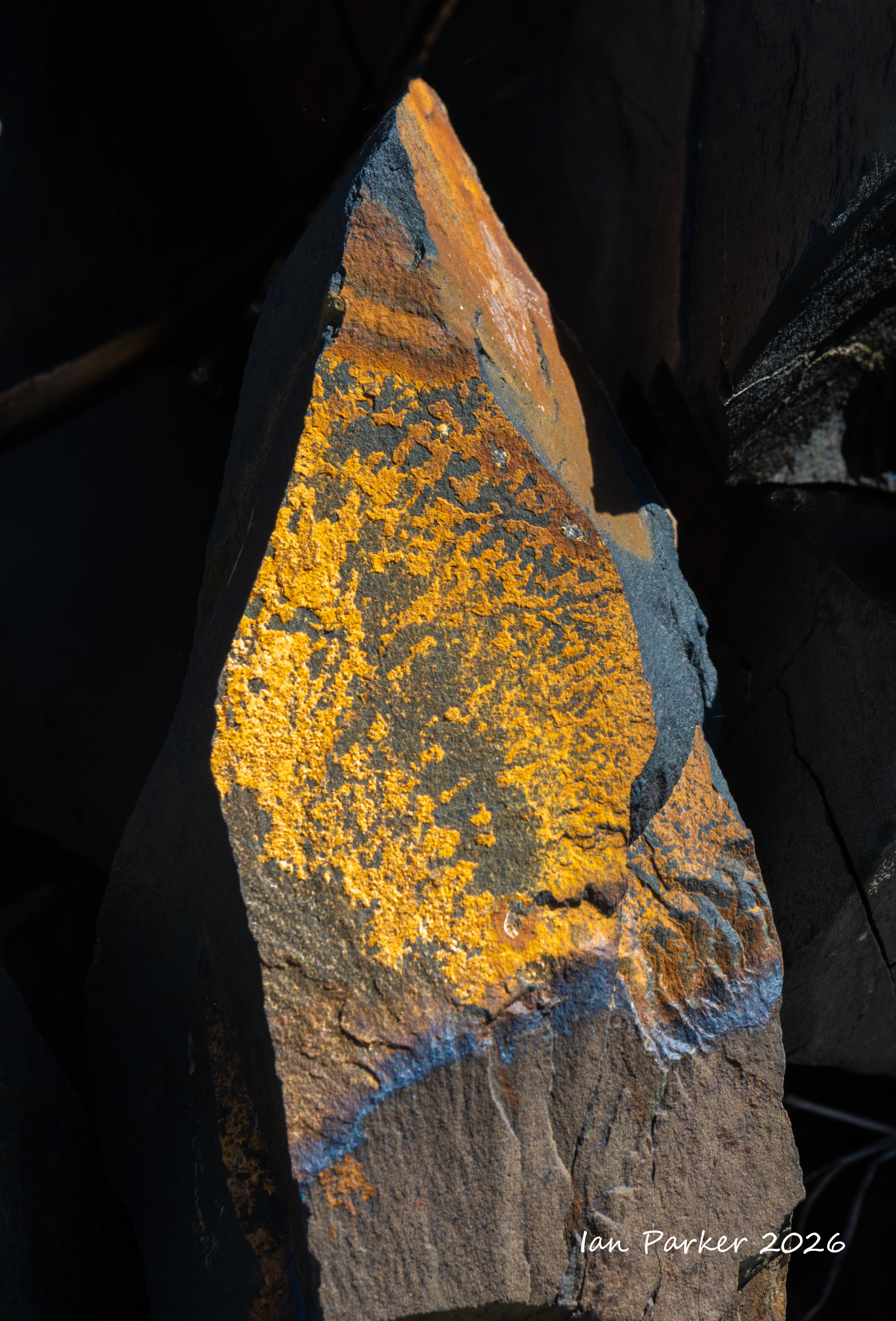
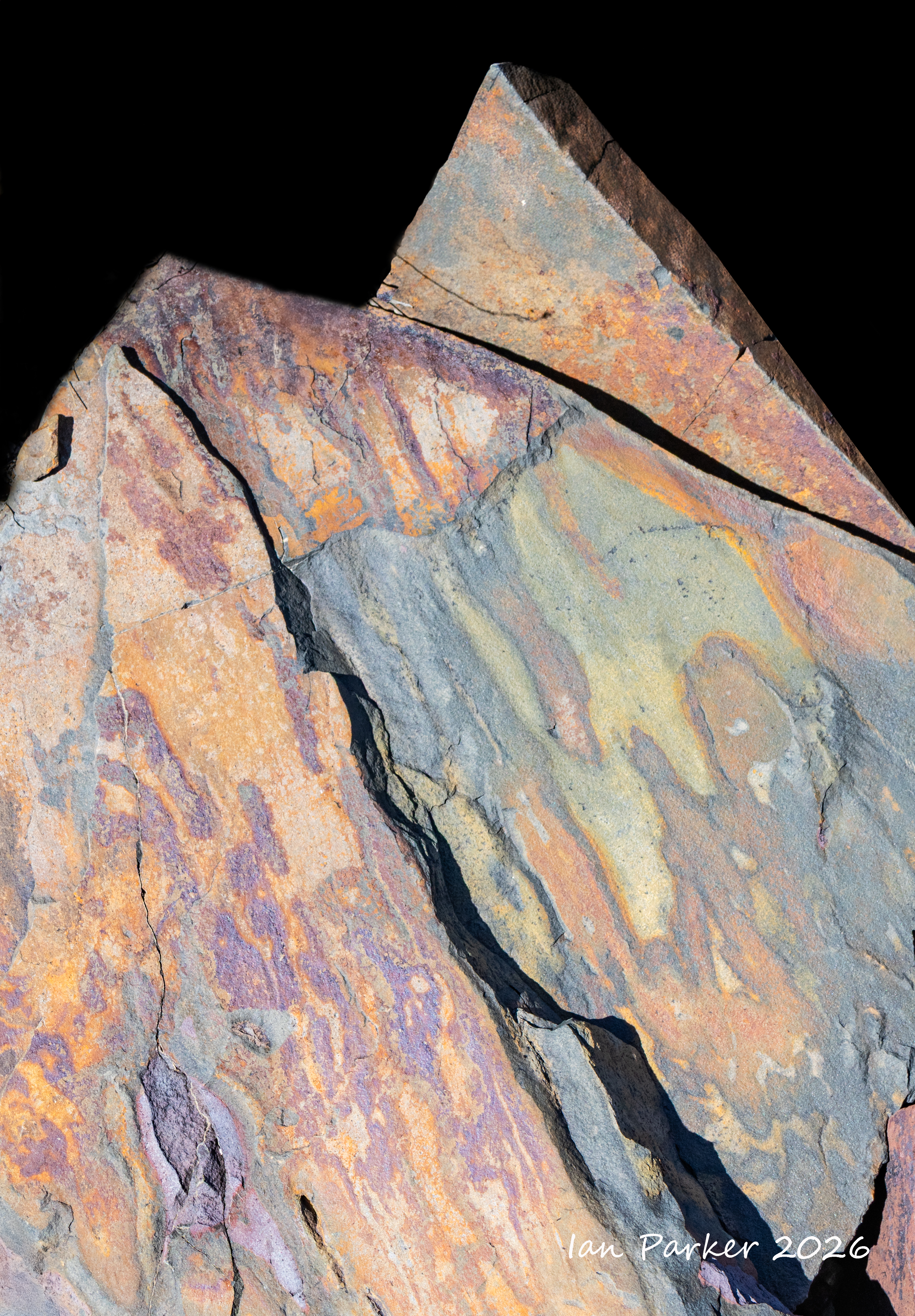
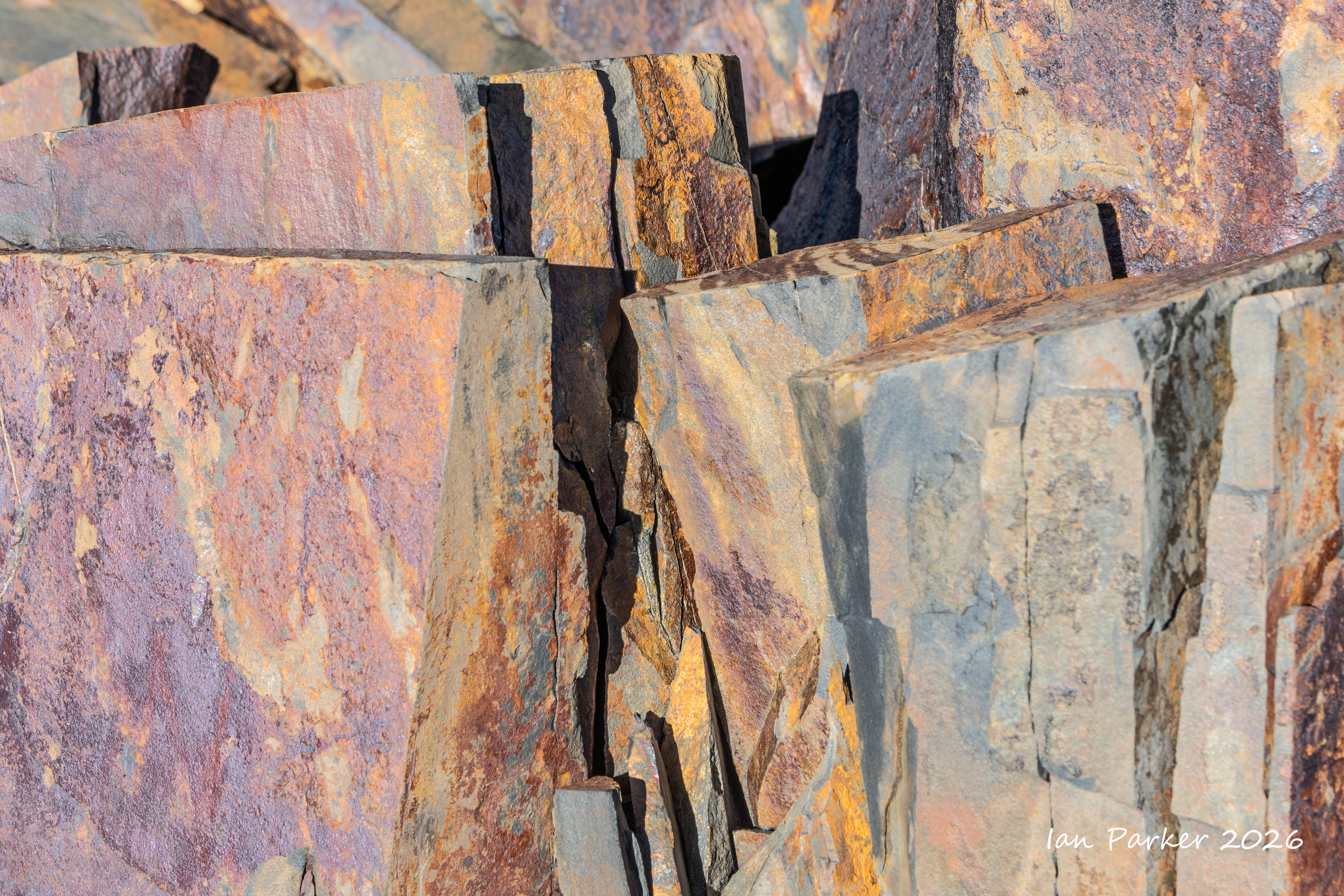
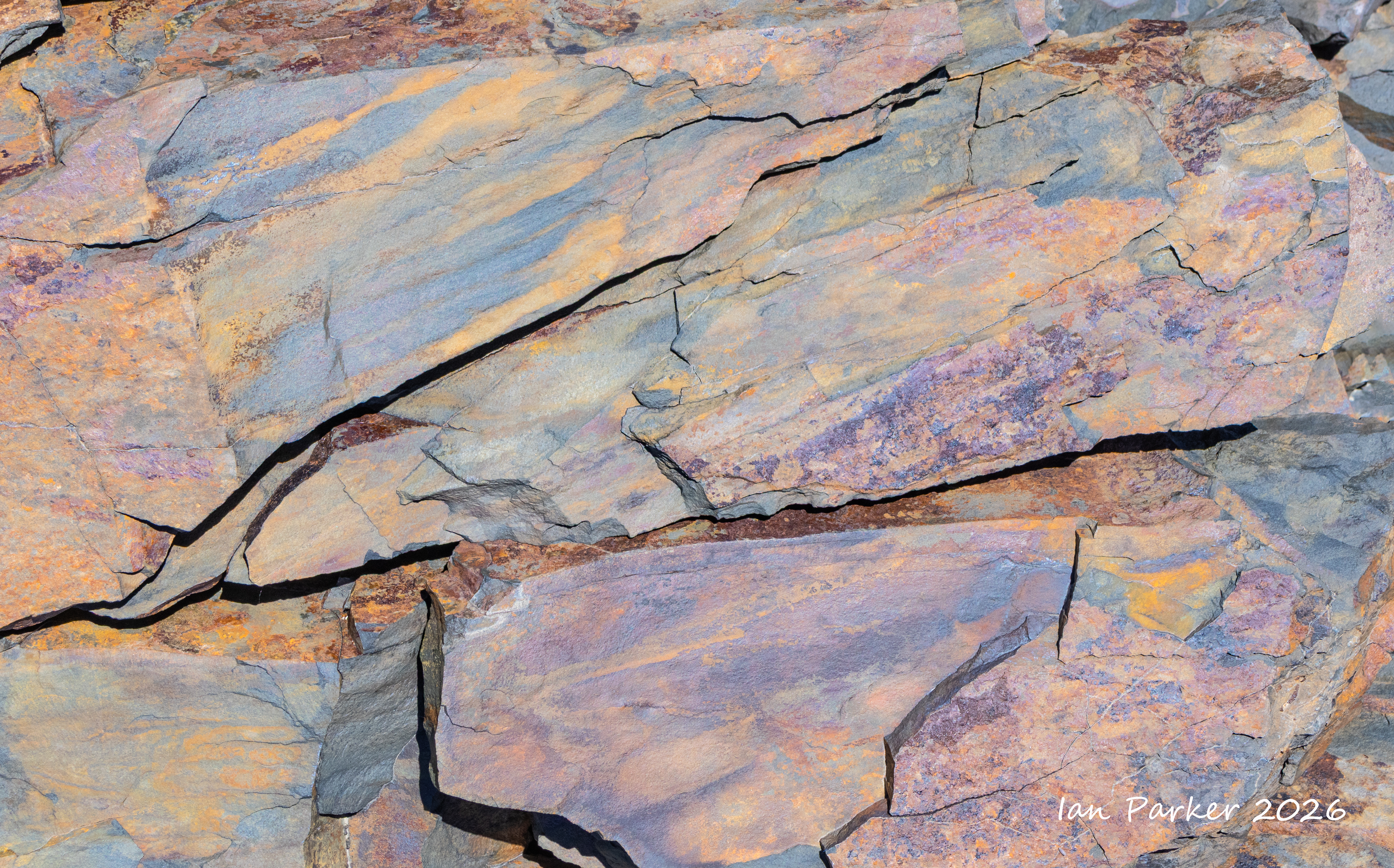
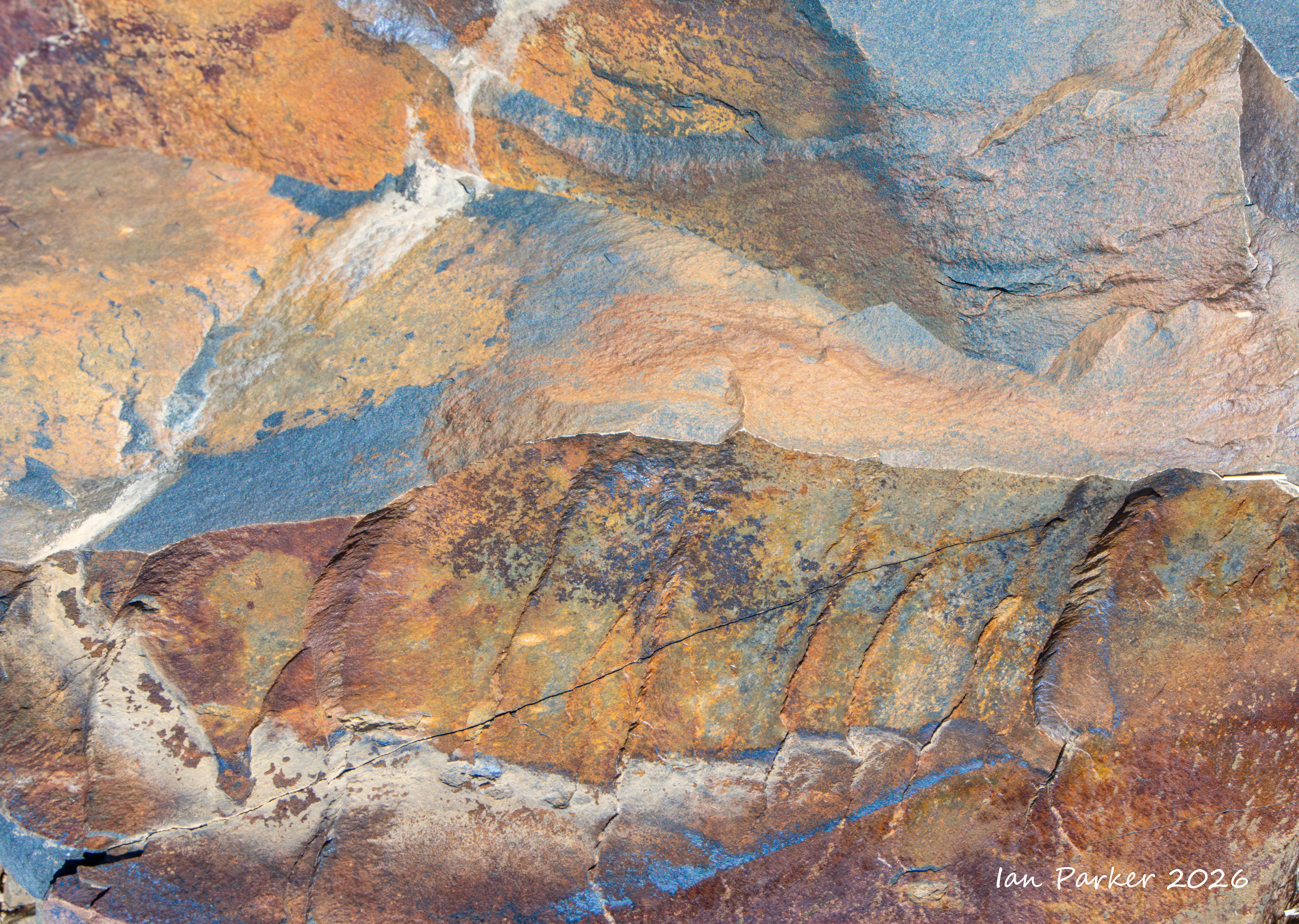
Jun 12 - Colorful rocks on the summit of Mazourka Peak


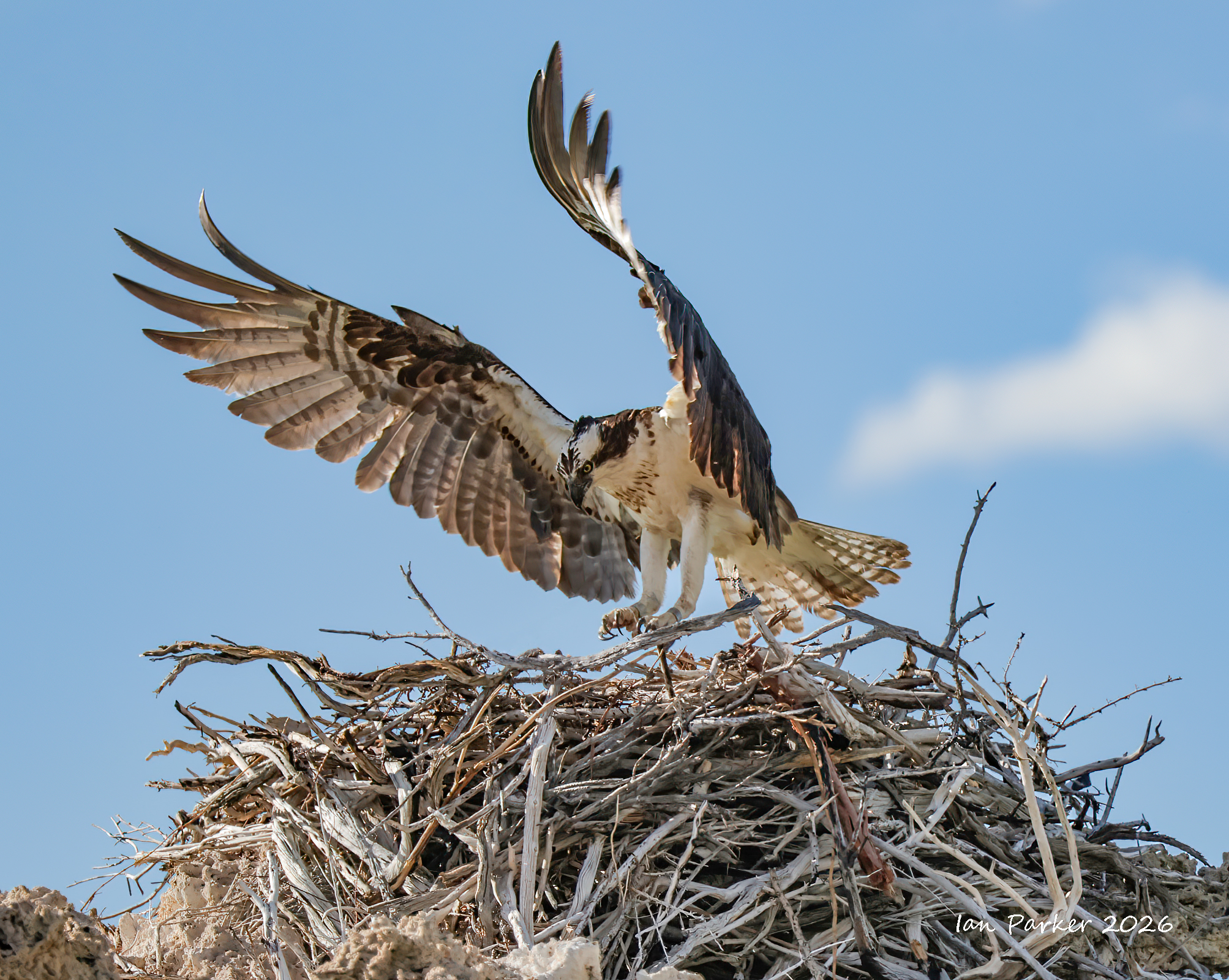
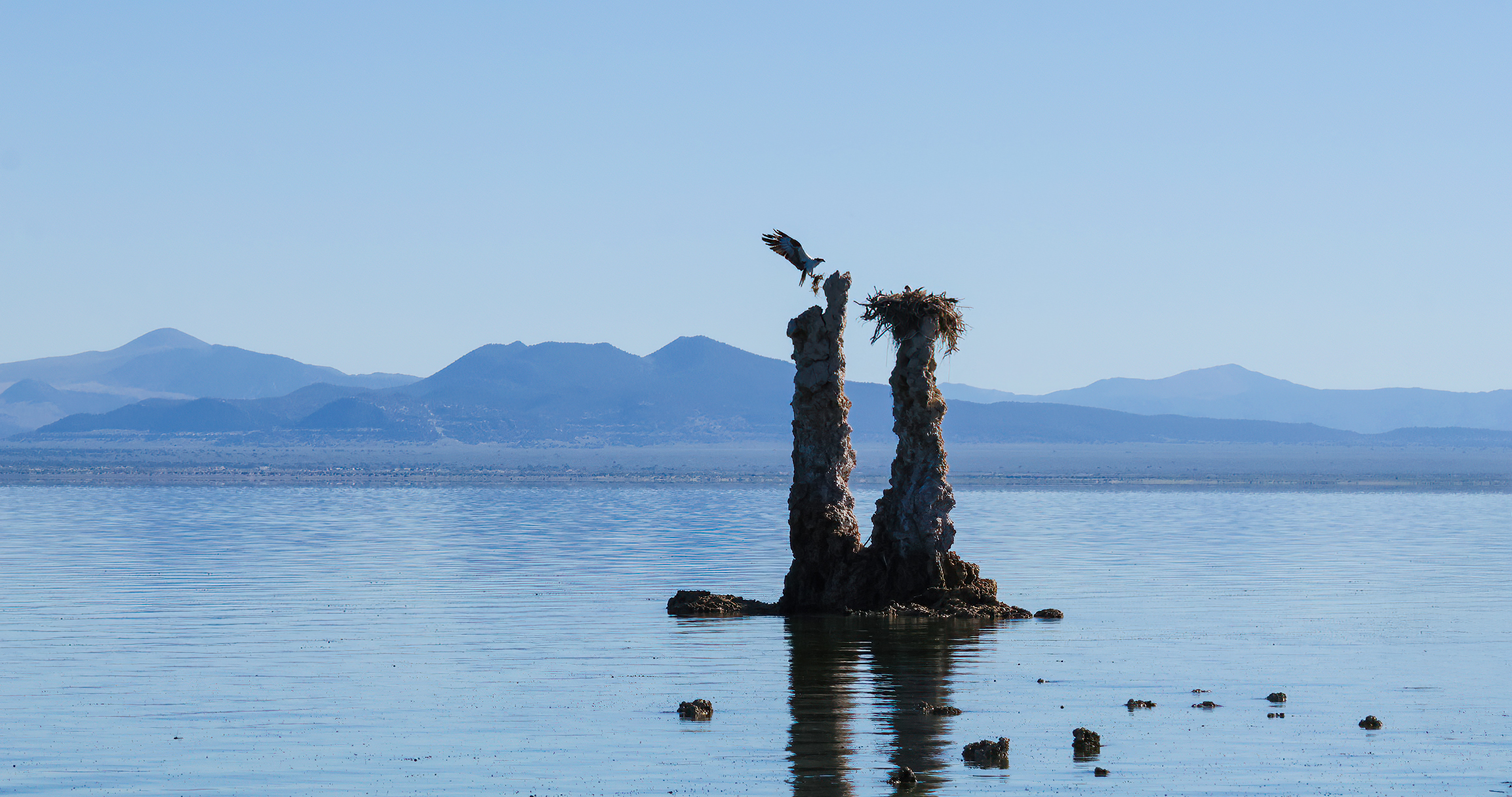
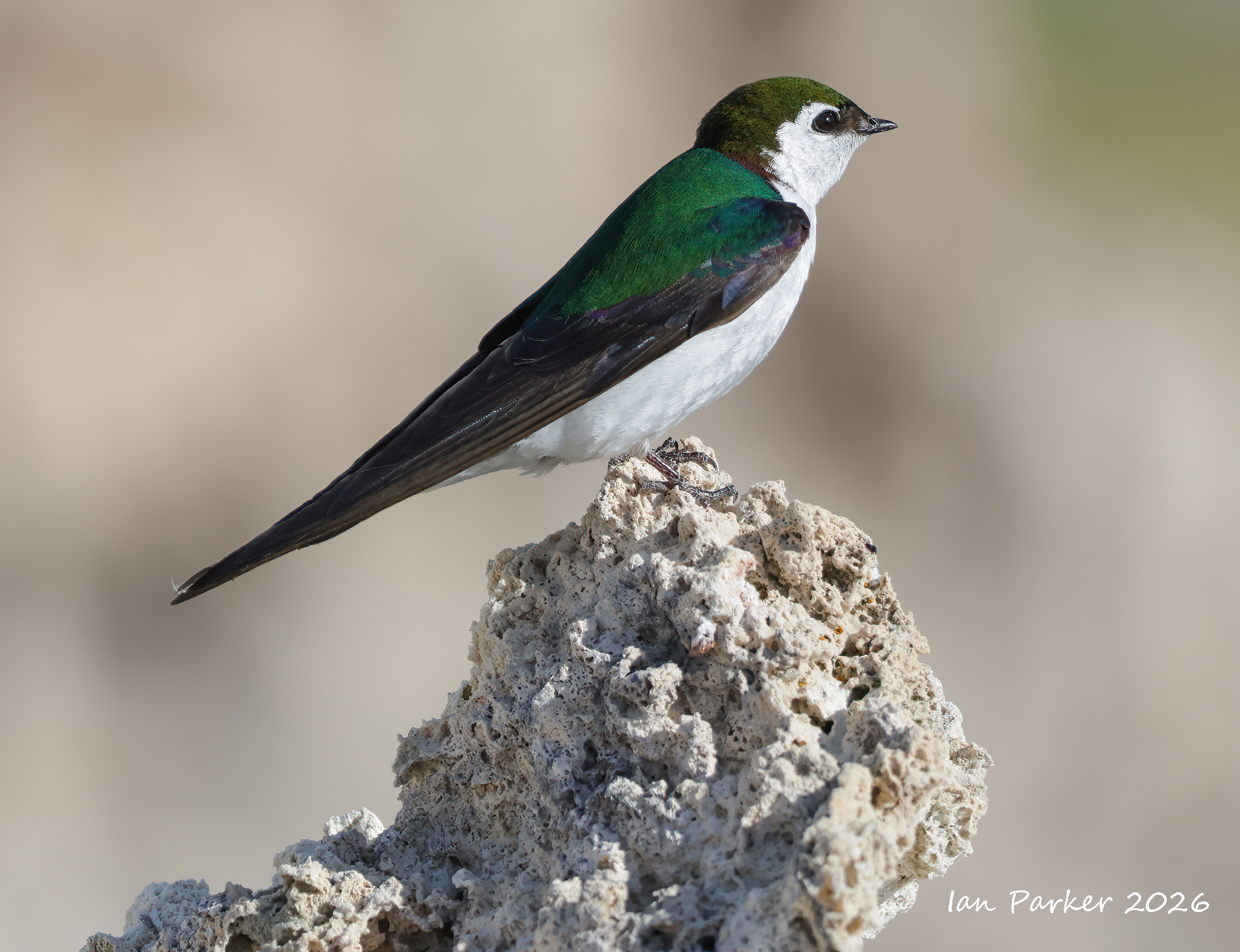
June 11 - Osprey and Violet-green Swallows at Mono Lake
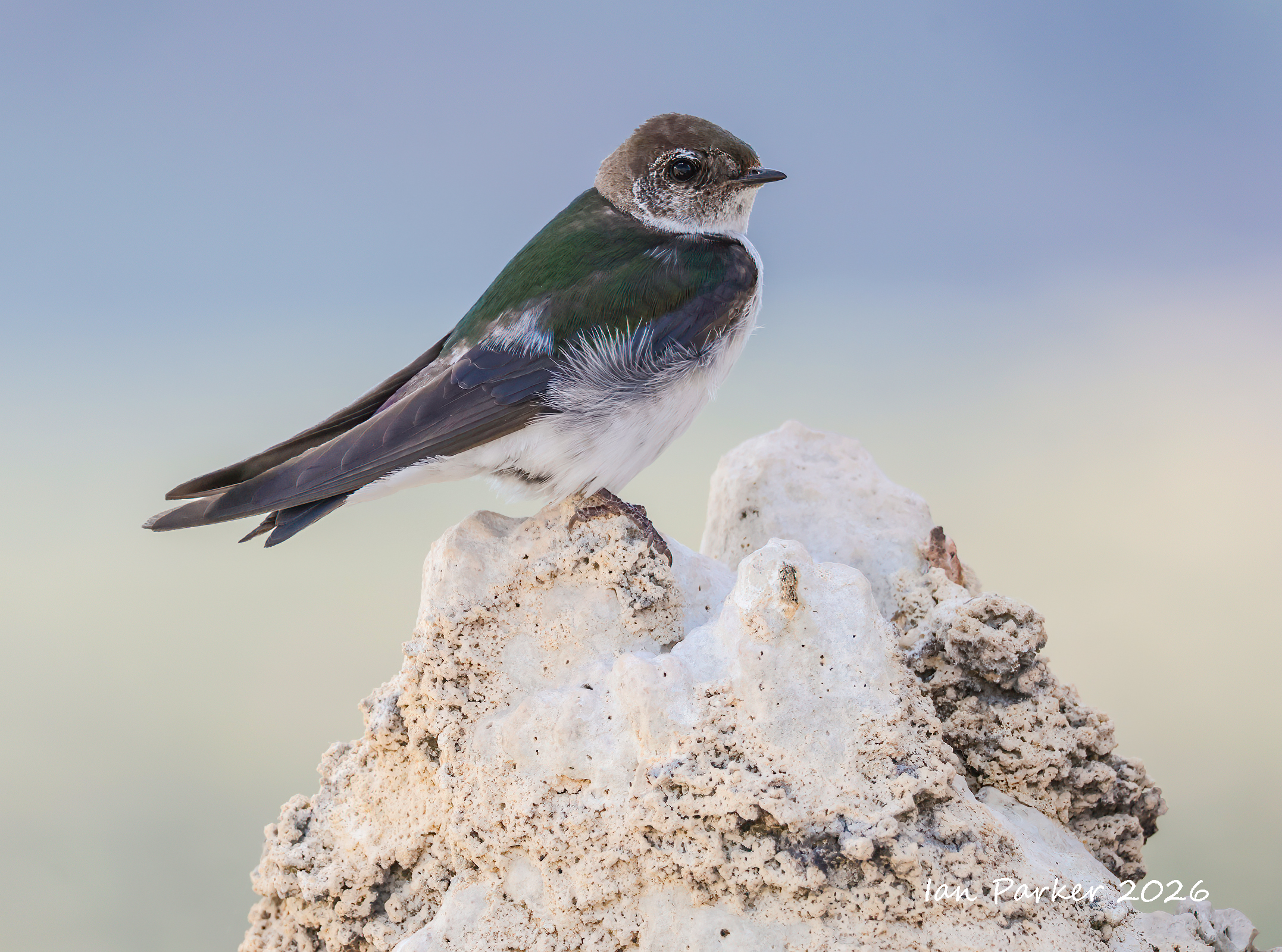
June 11 - A return to Obsidian Dome
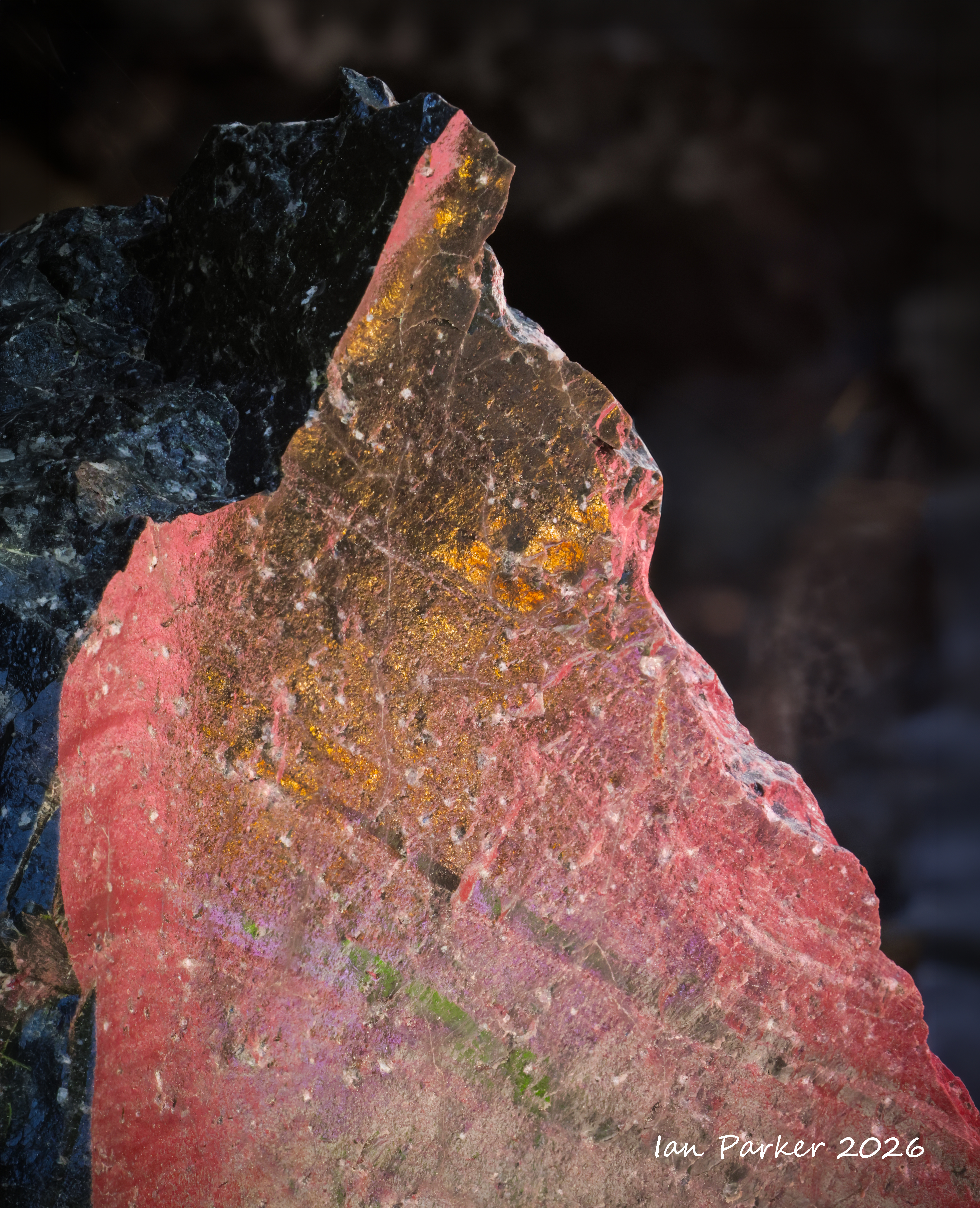
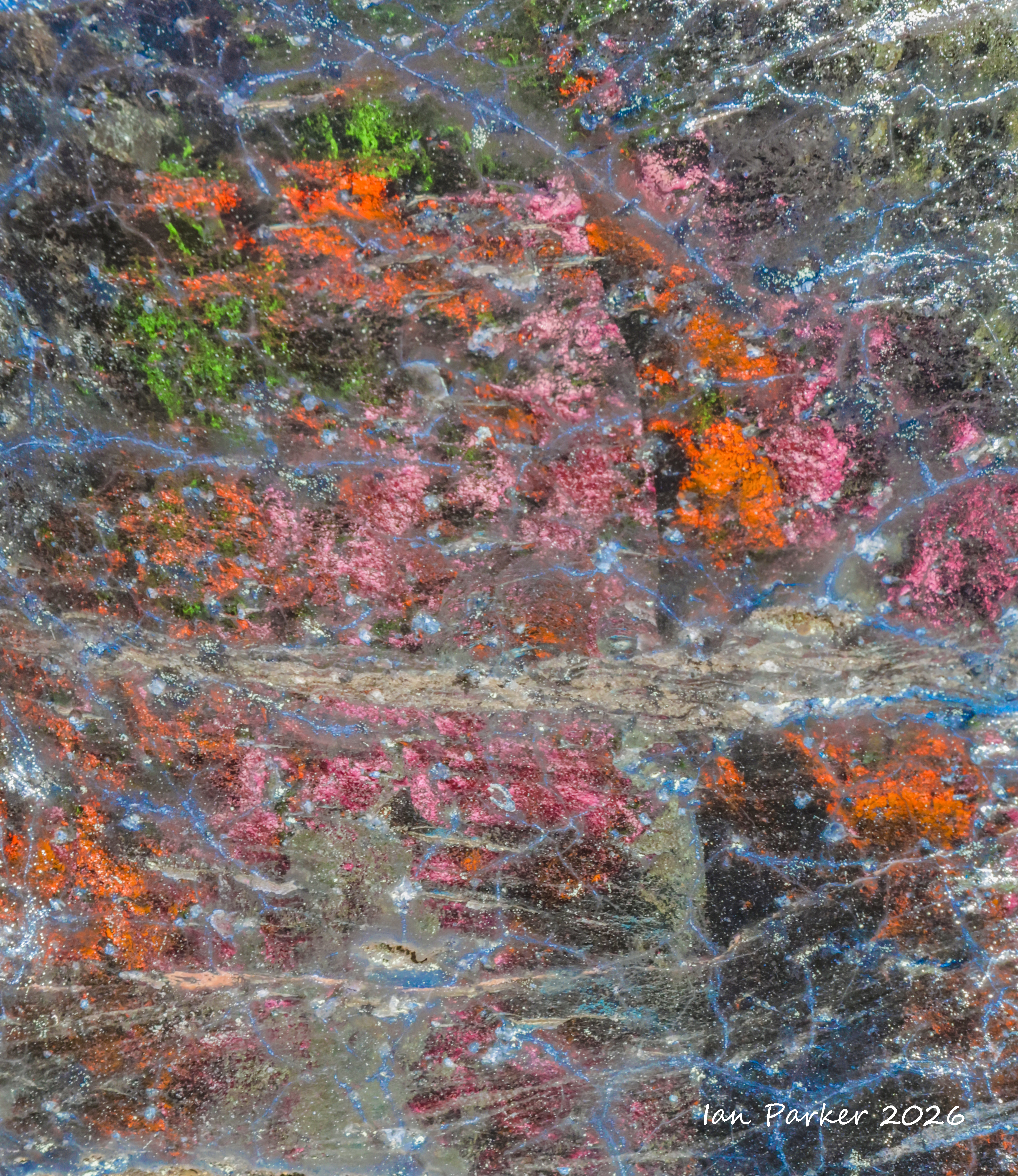
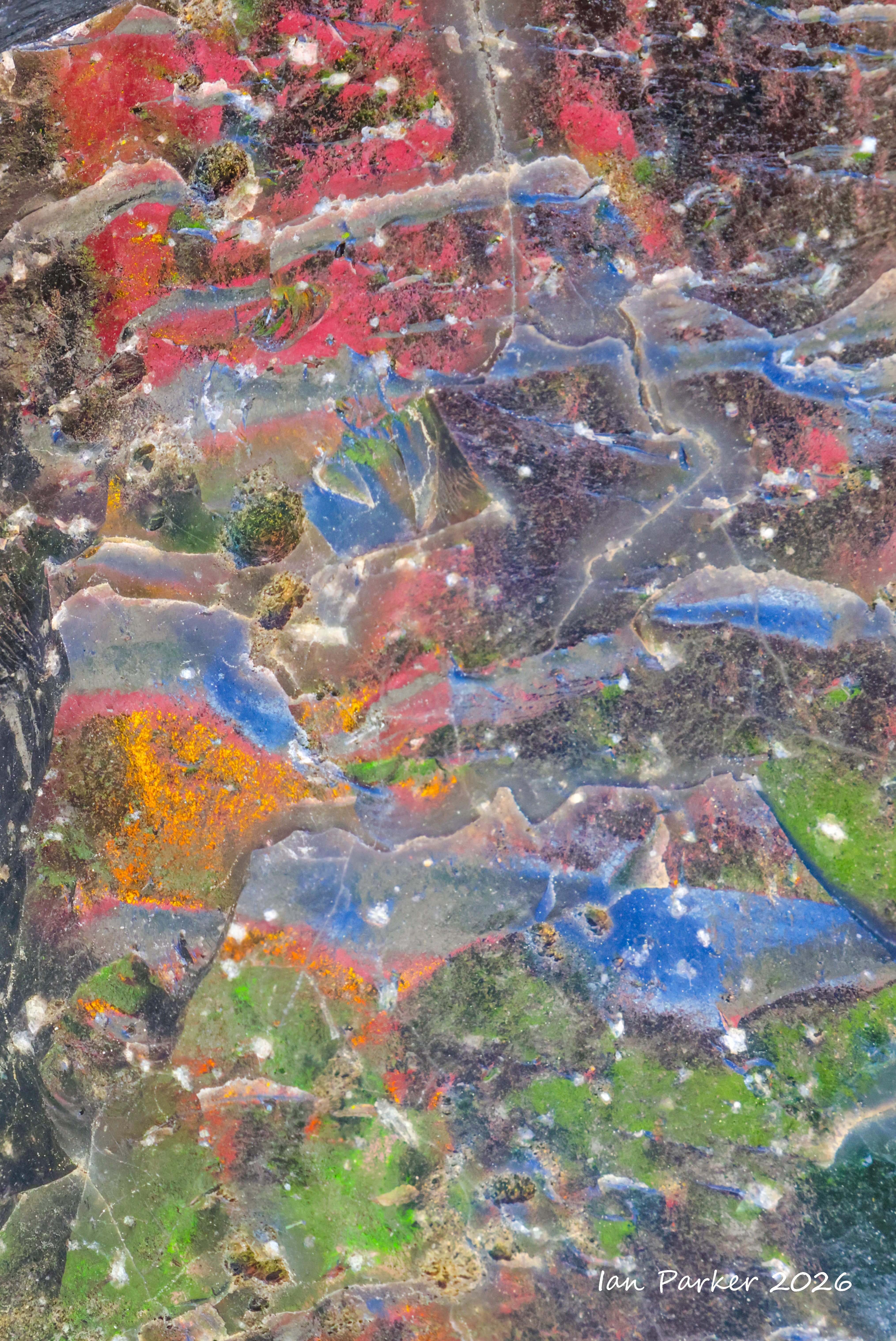
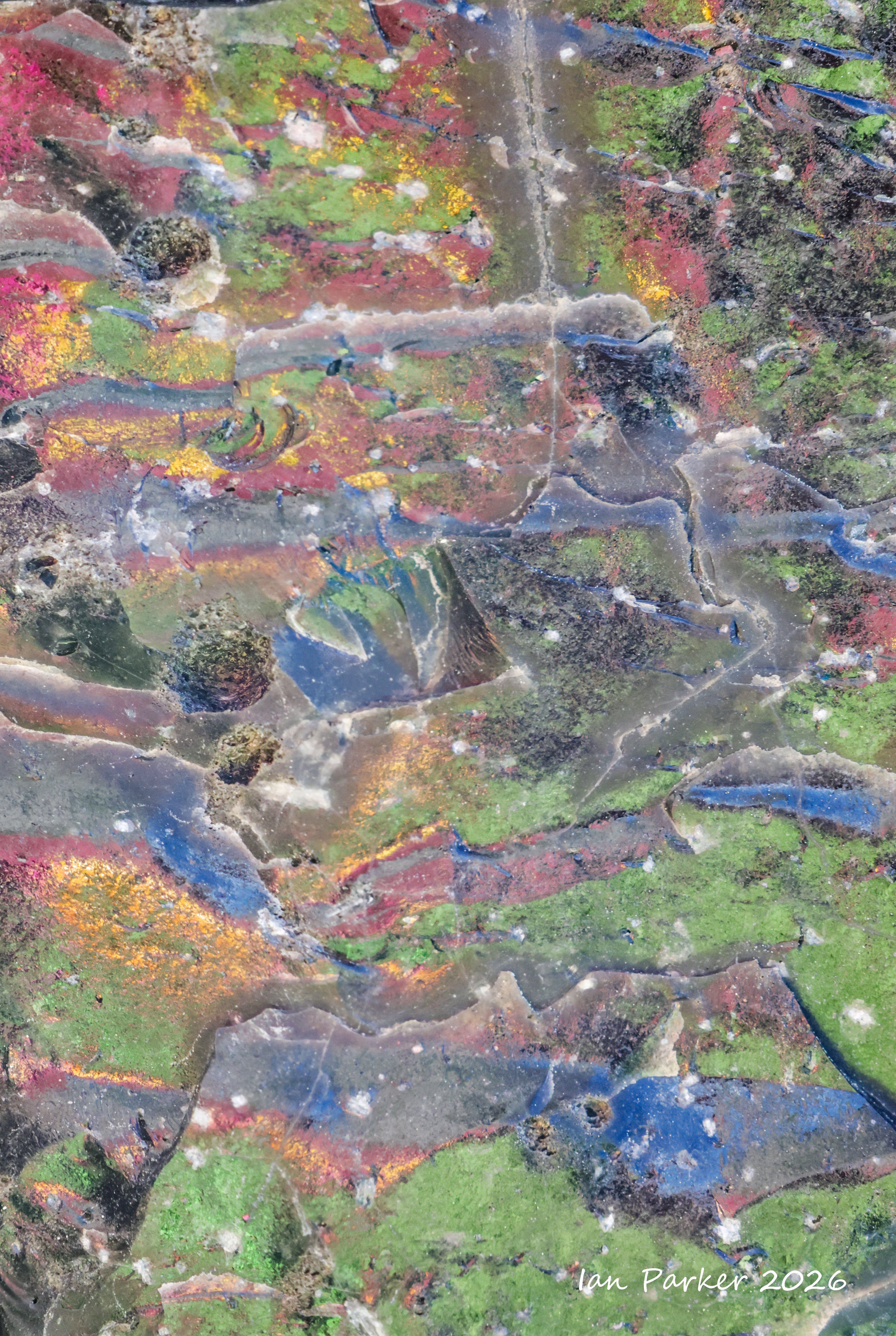
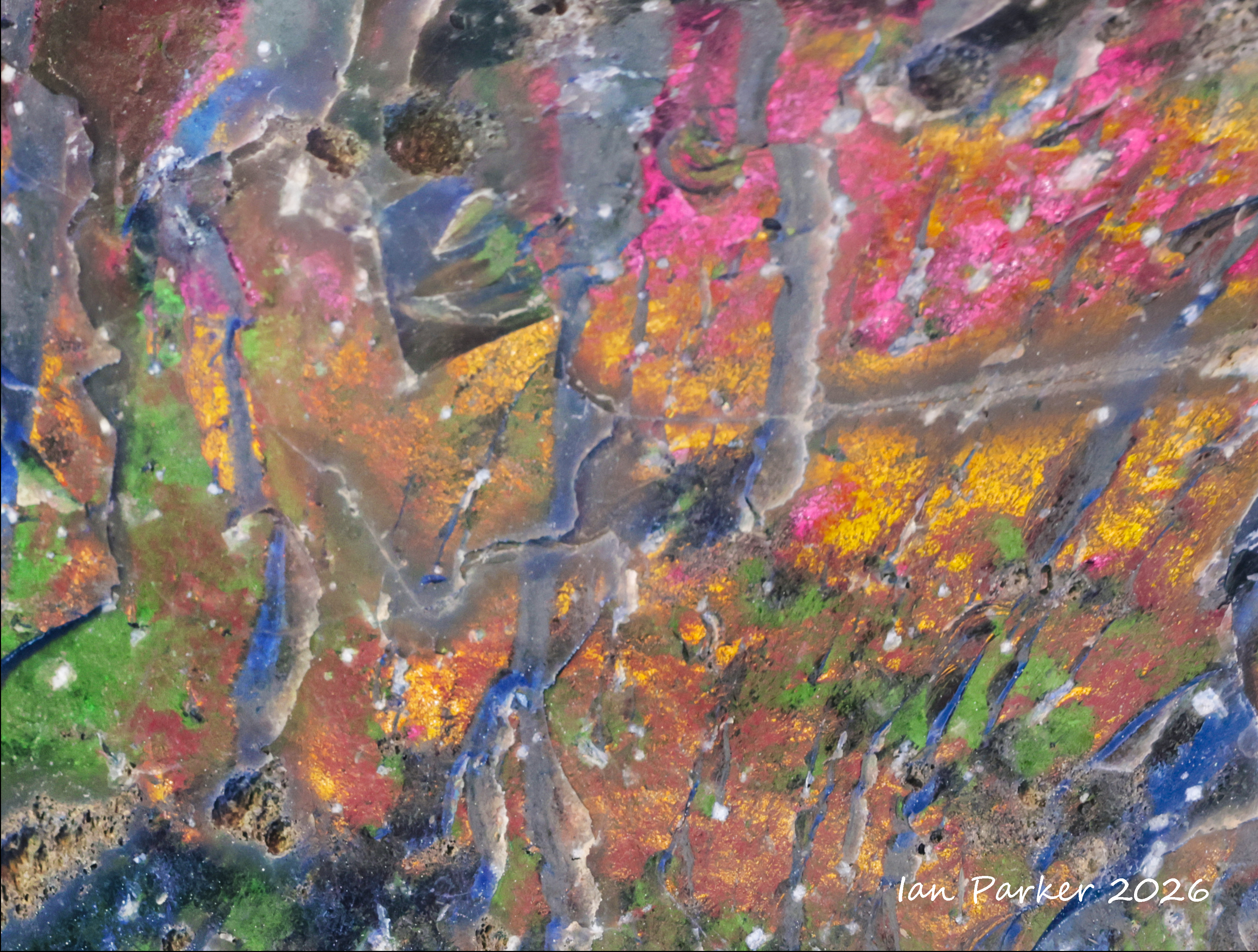
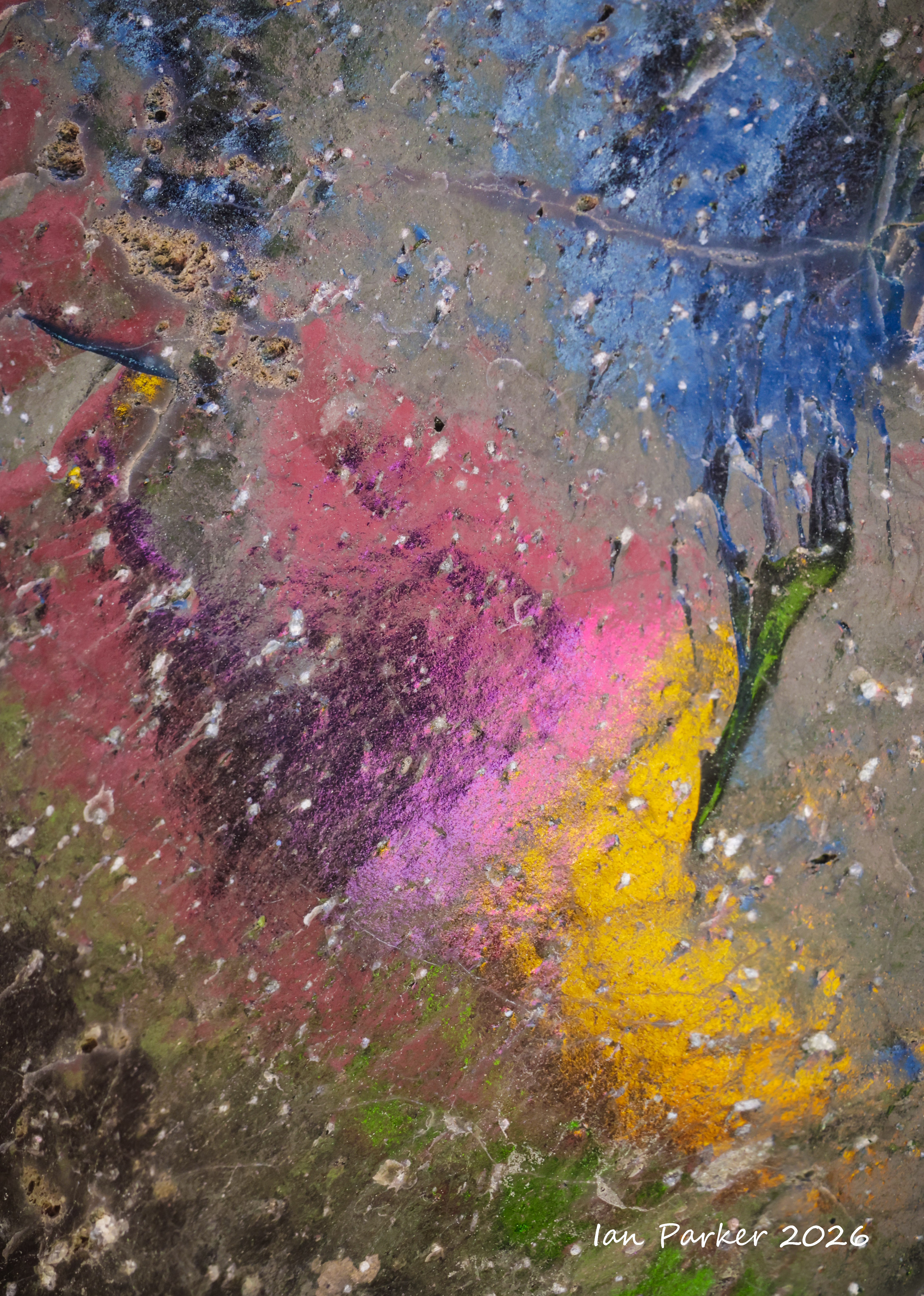
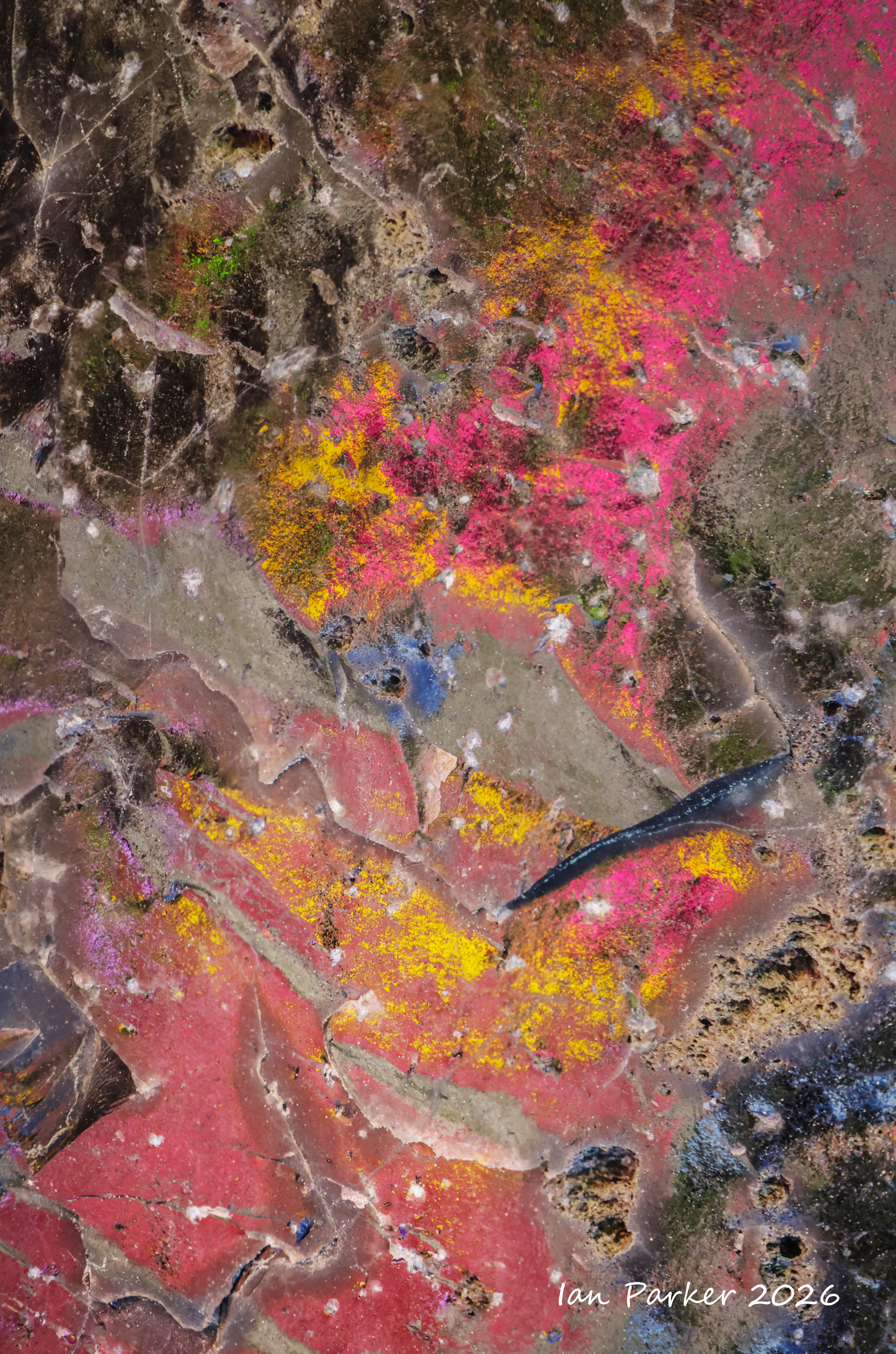
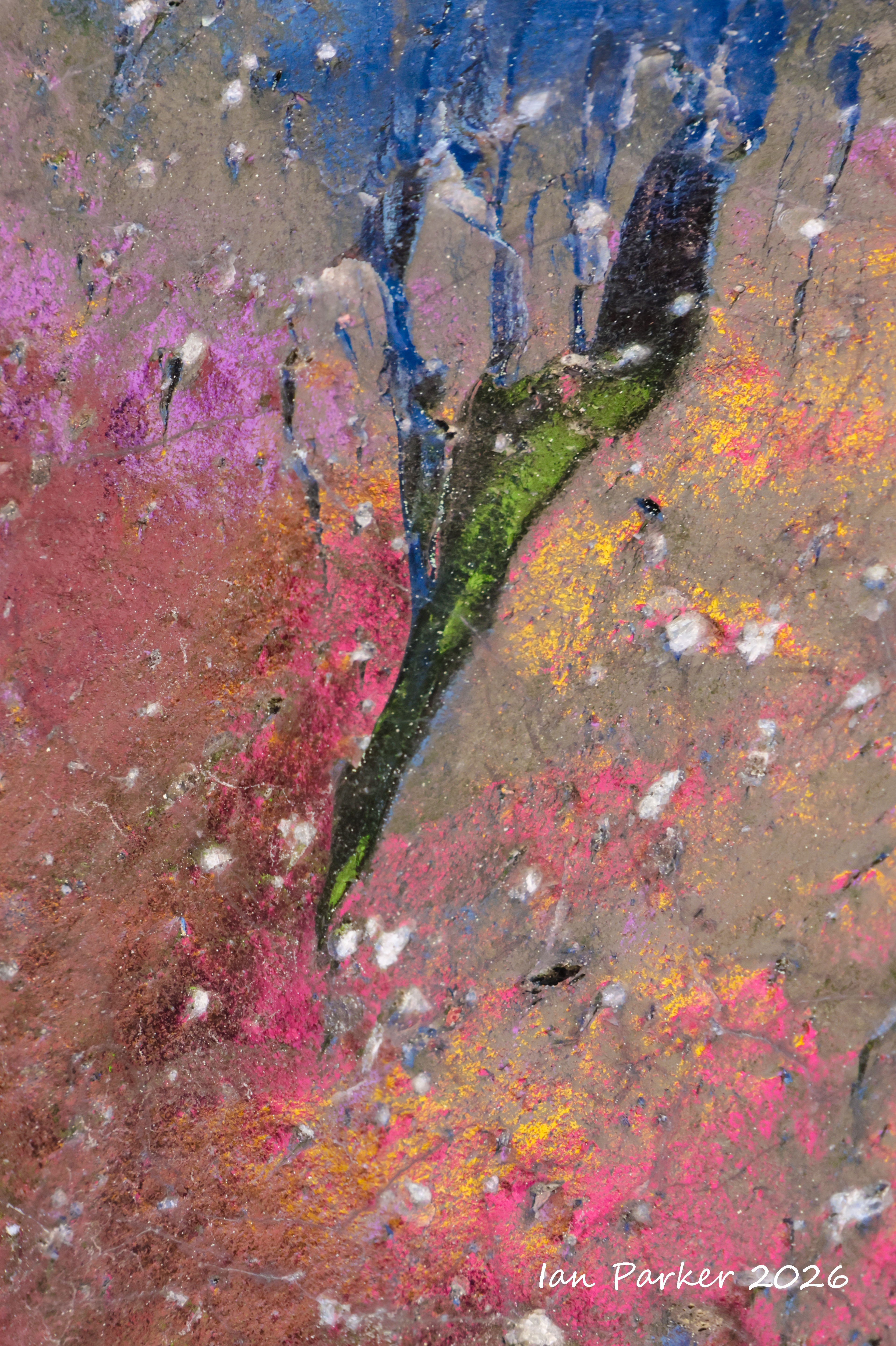
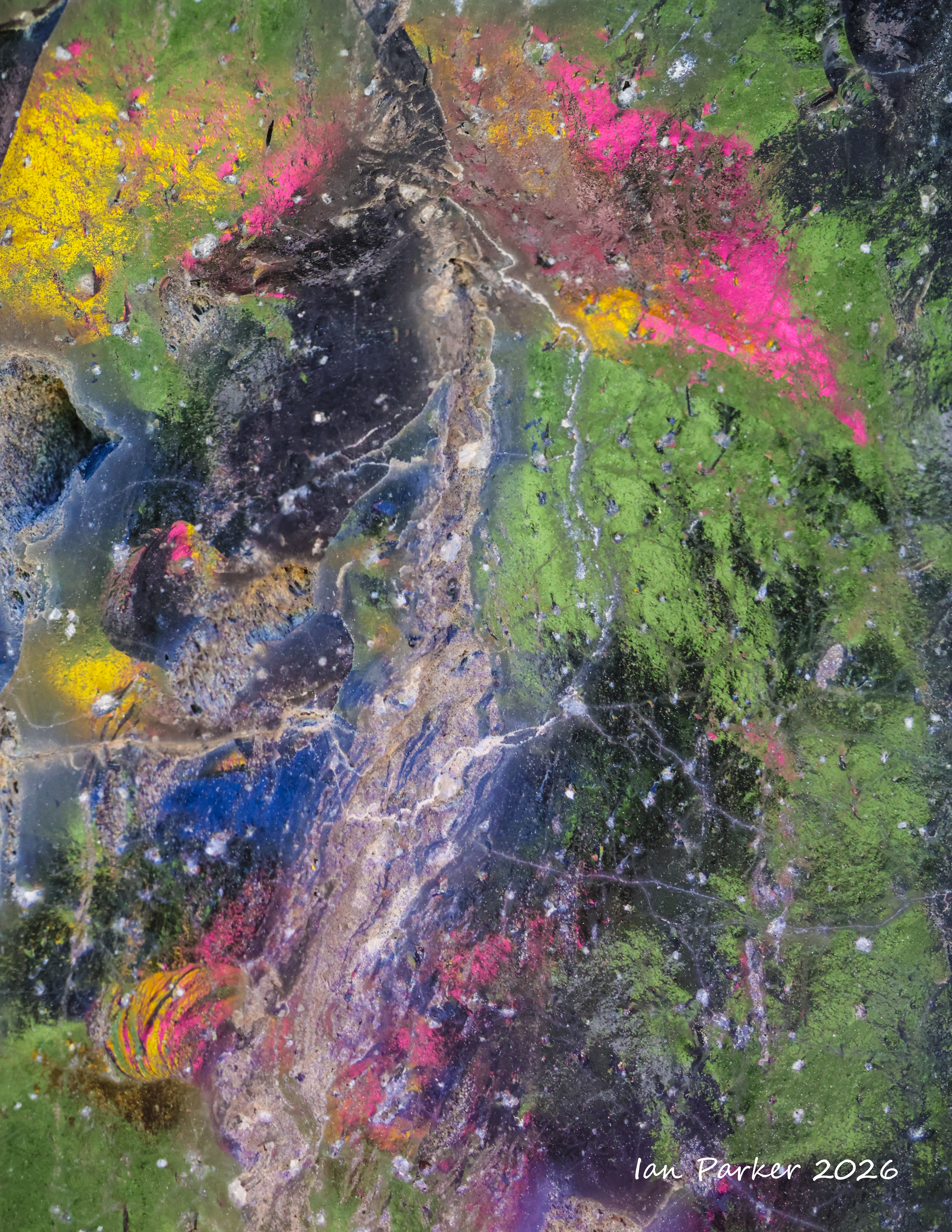
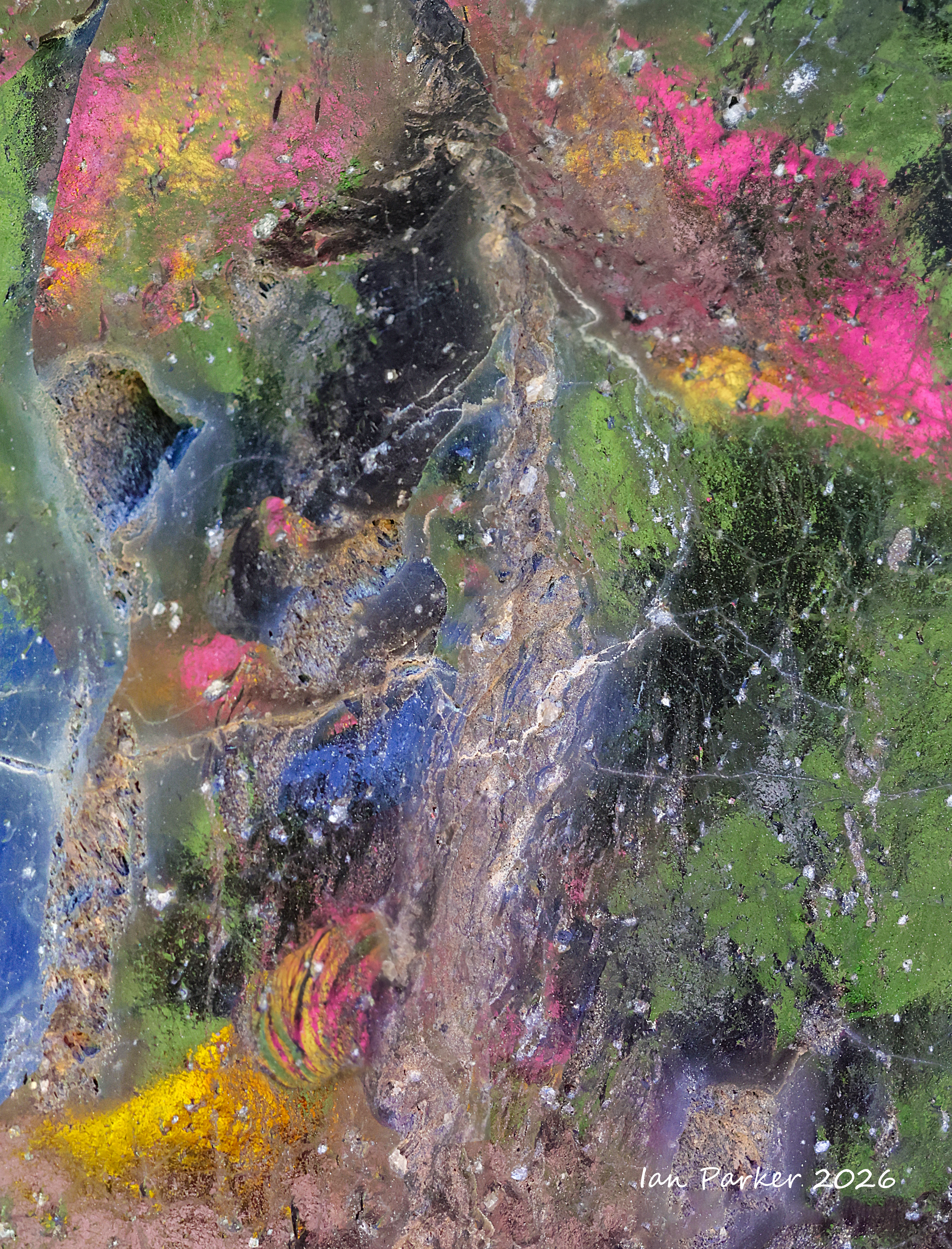
OBSIDIAN - CERAMIC FLOWER REFLECTIONS
Photos from another visit in June 2026, this time exploring the obsidian boulders around Glass Creek Dome, just across the creek from our usual parking spot by Obsidian Dome.
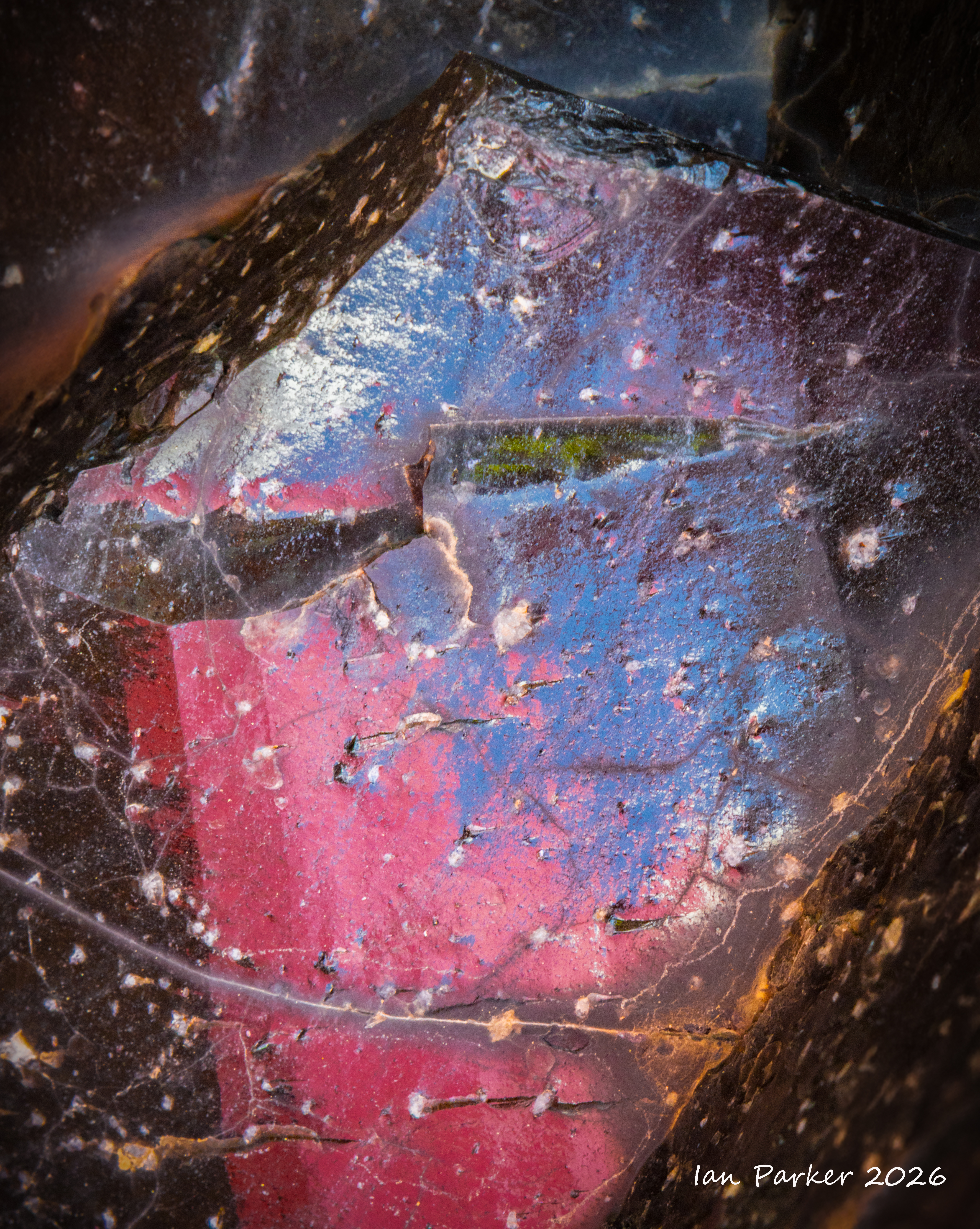
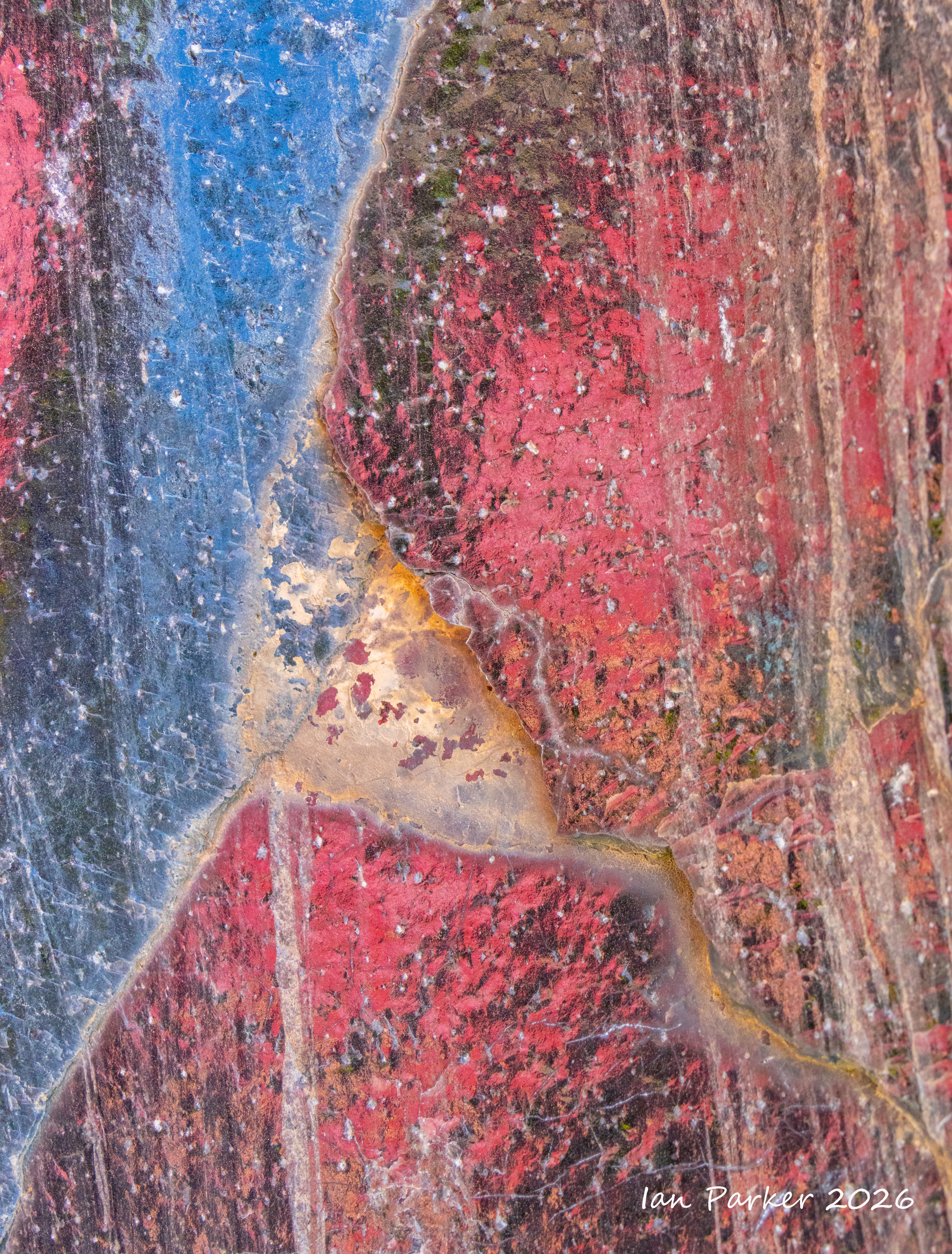
To increase the repertoire of colors, I brought a few decorative ceramic flowers. These are small (flower heads 1-2 inch), so I searched out facets of naturally polished obsidian of matching size that were shaded from direct sunlight.
May 20-25.
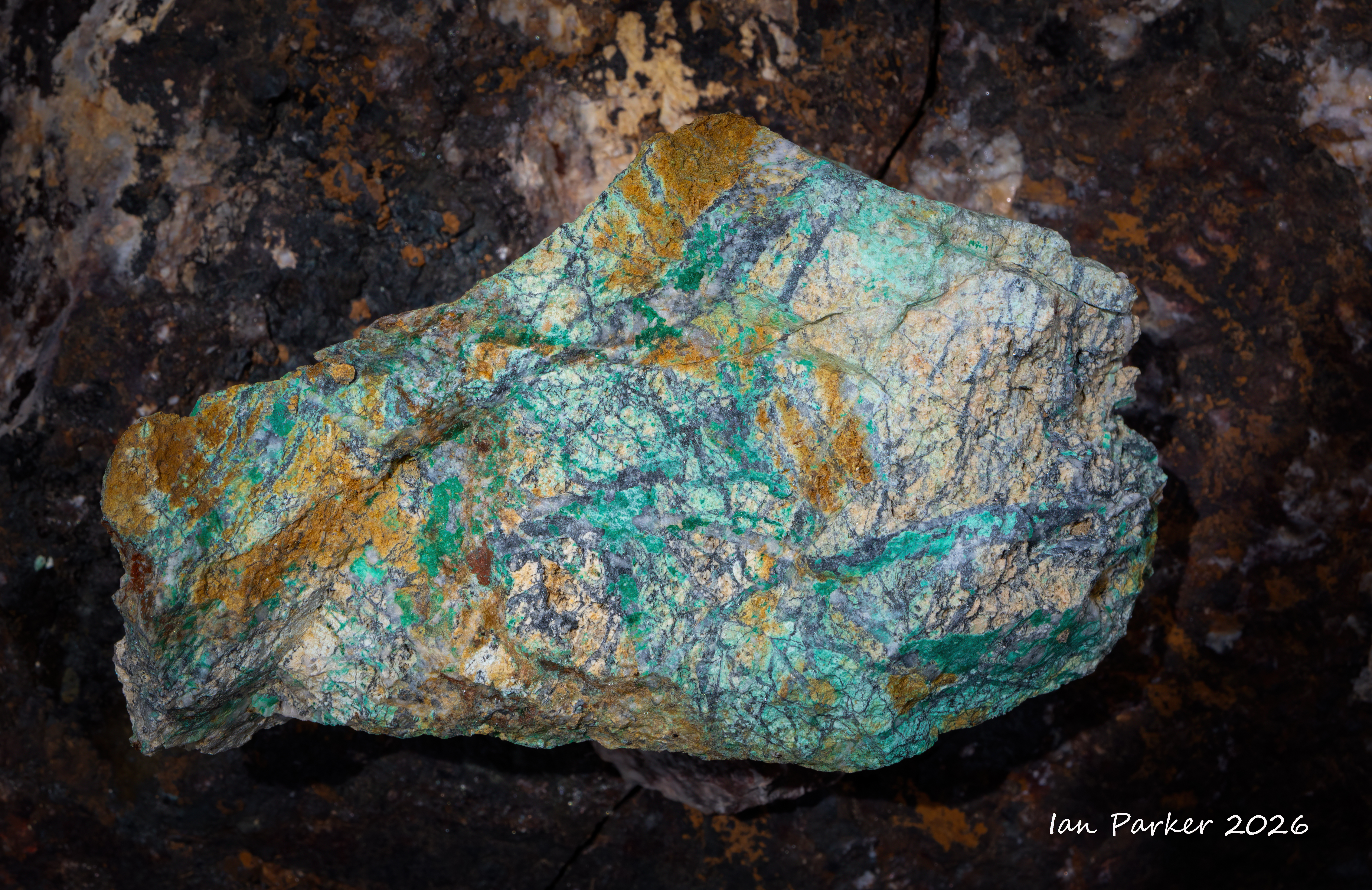
Inyo mountains, Eureka Valley and Obsidian Dome
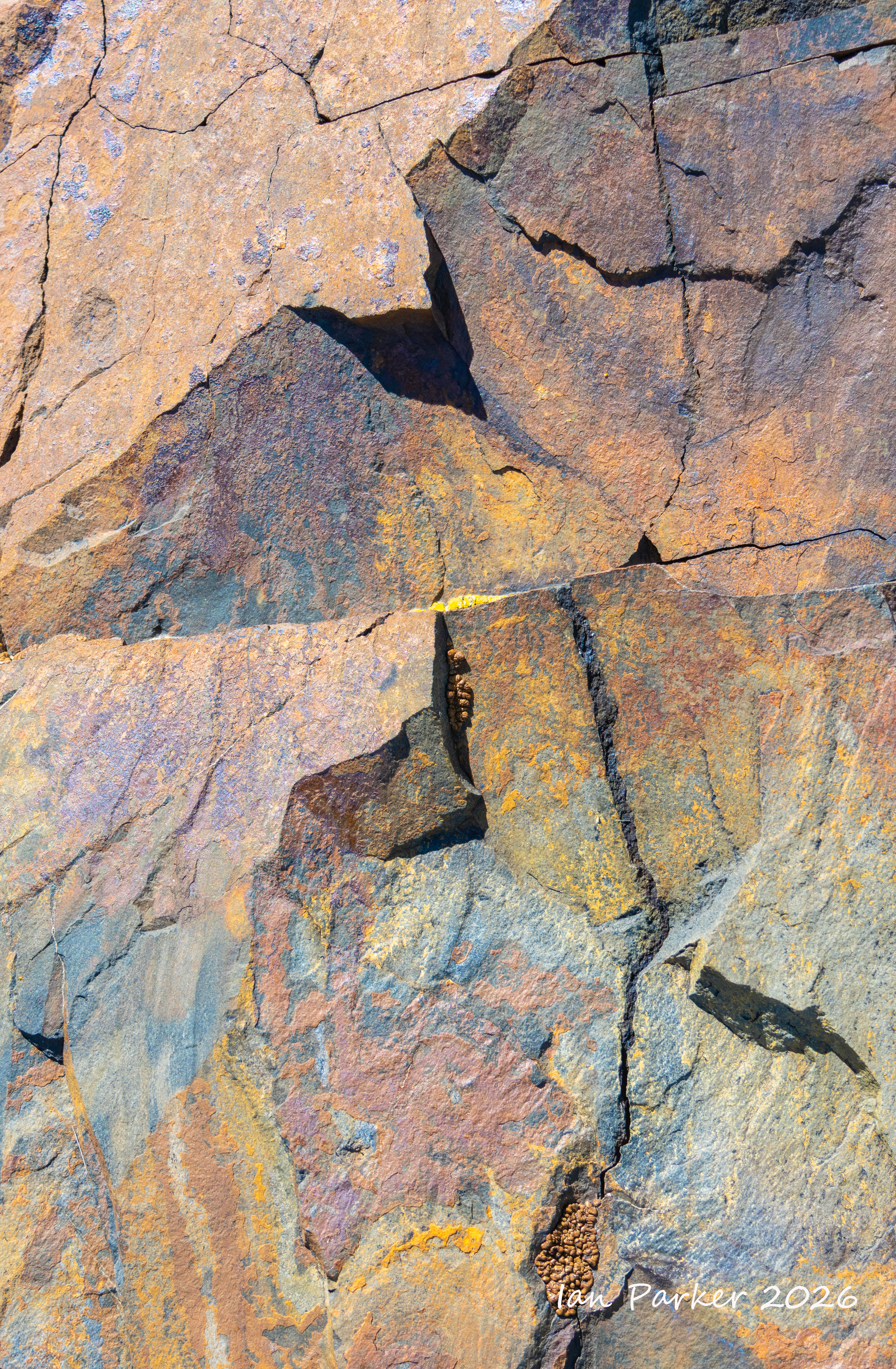
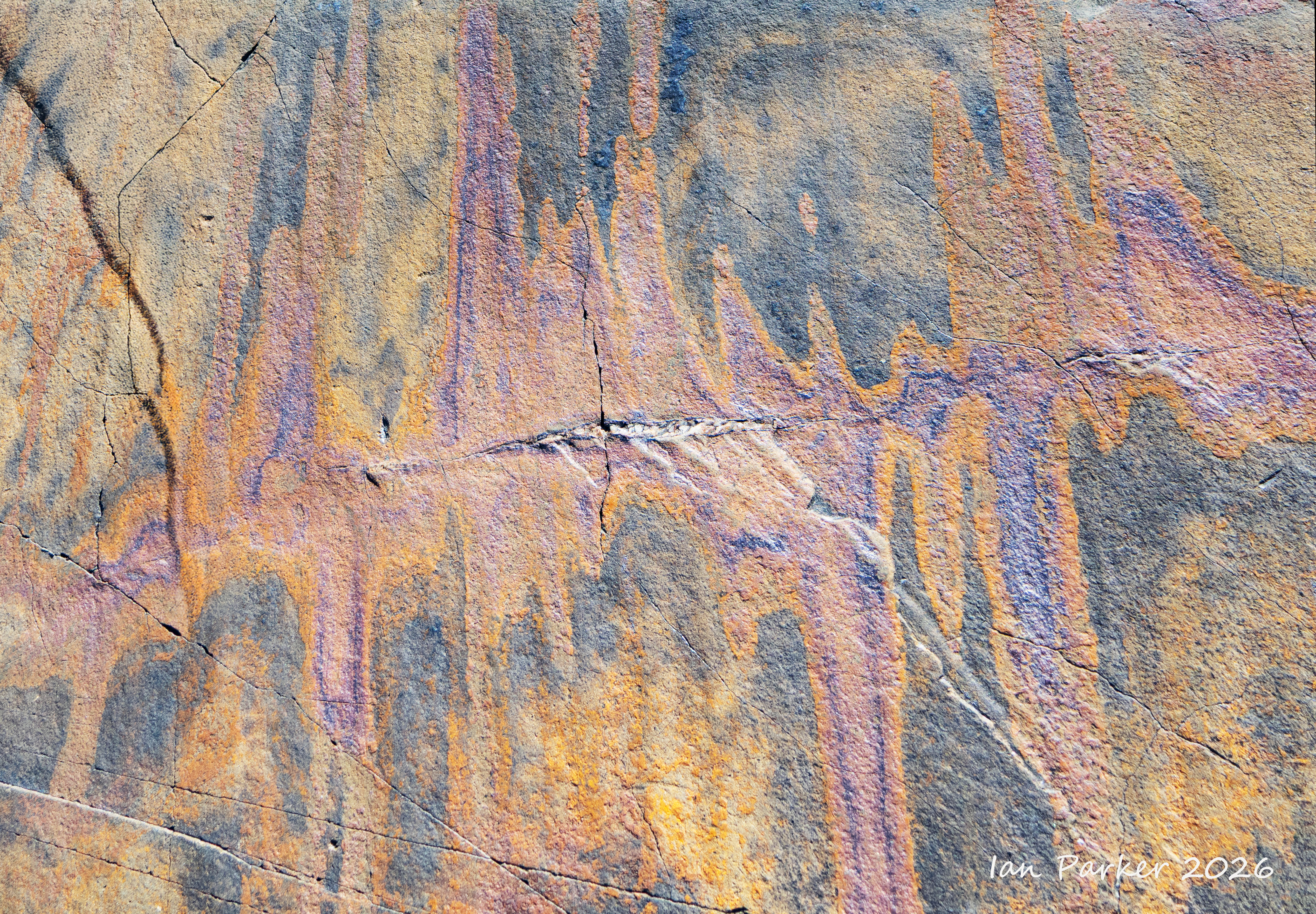
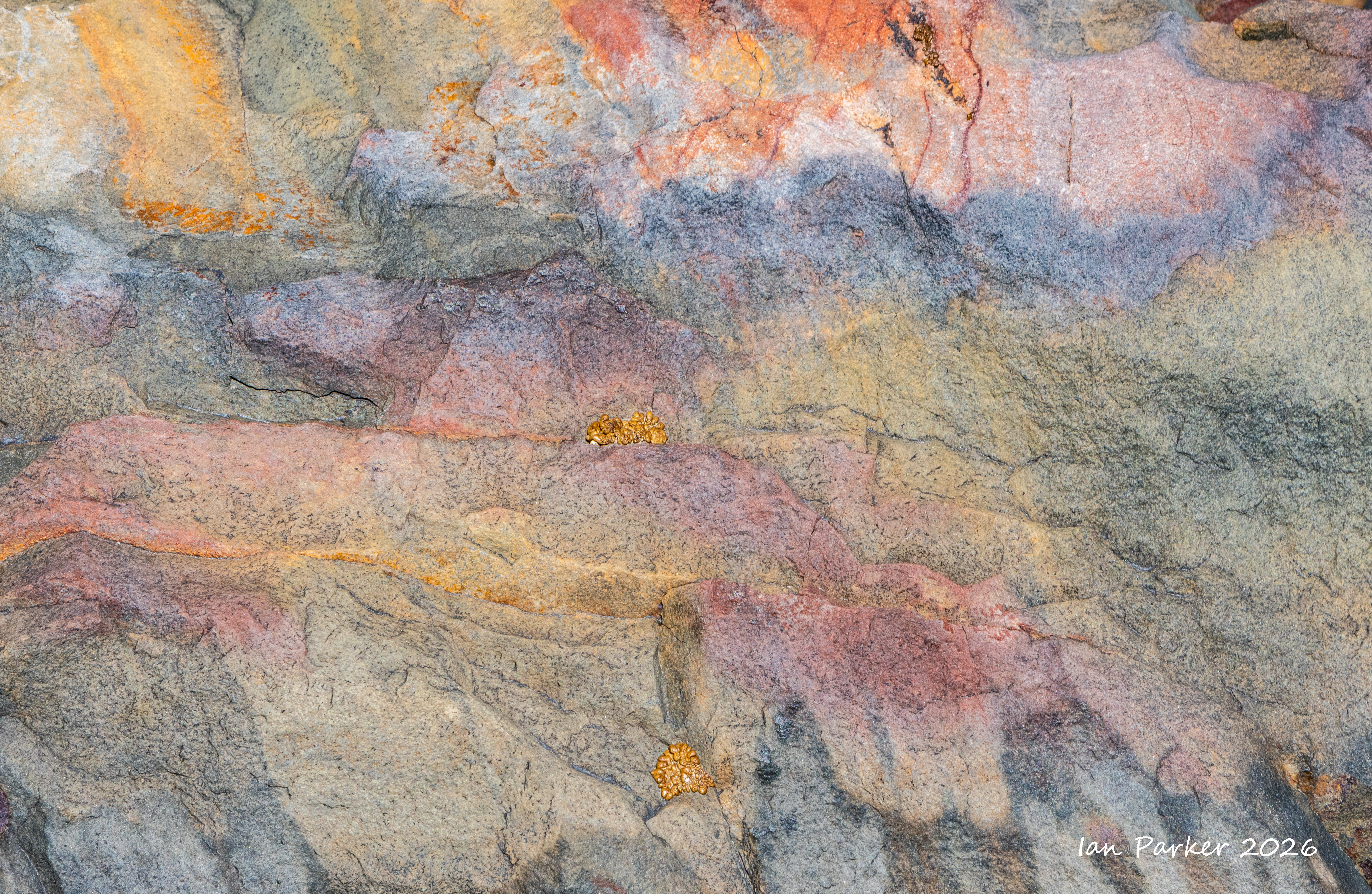
Mazourka Peak rocks
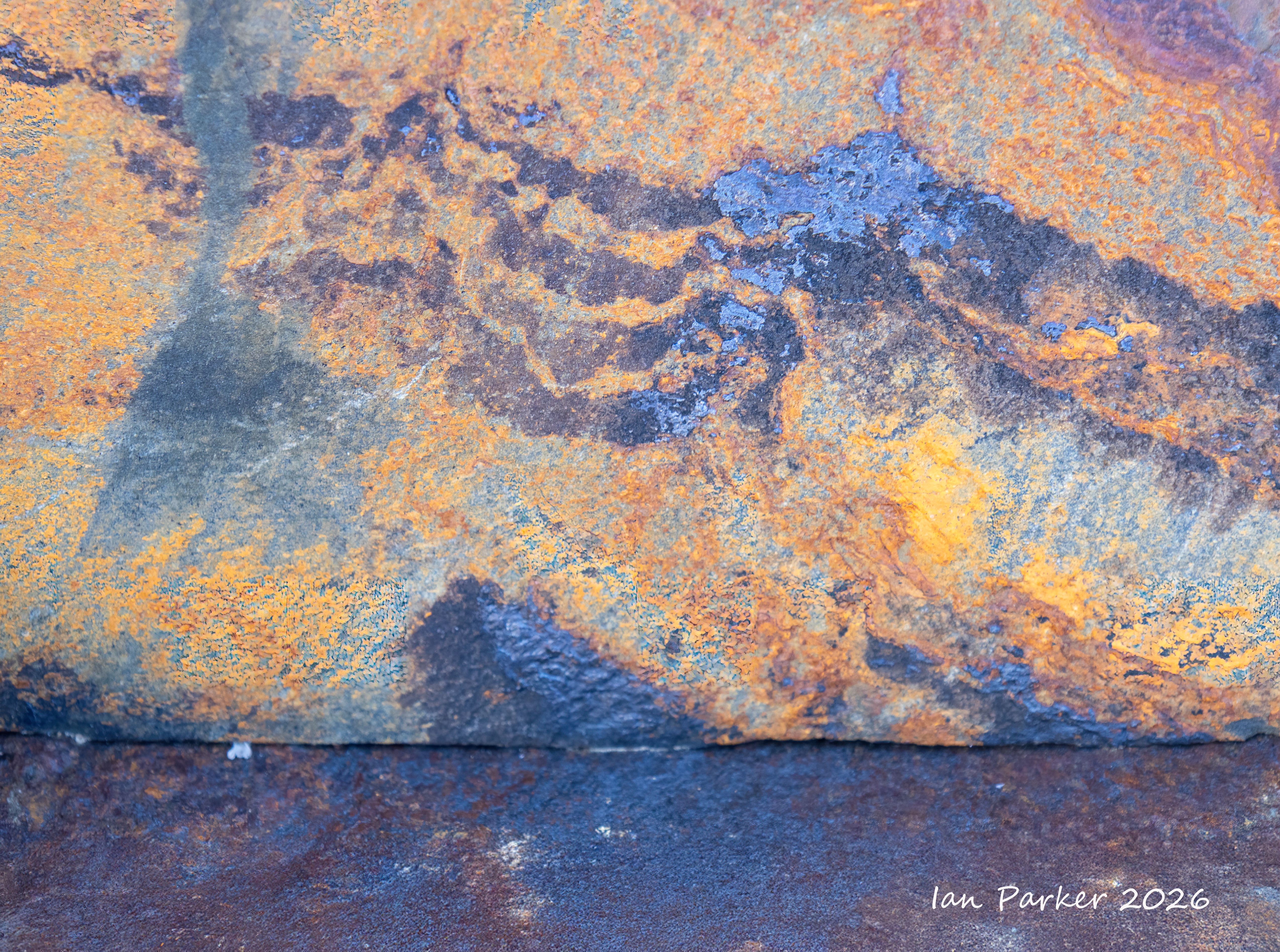
Obsidian reflections.
Colors are from the sky, my green T shirt I was wearing, and our dog's red plastic water bowl!
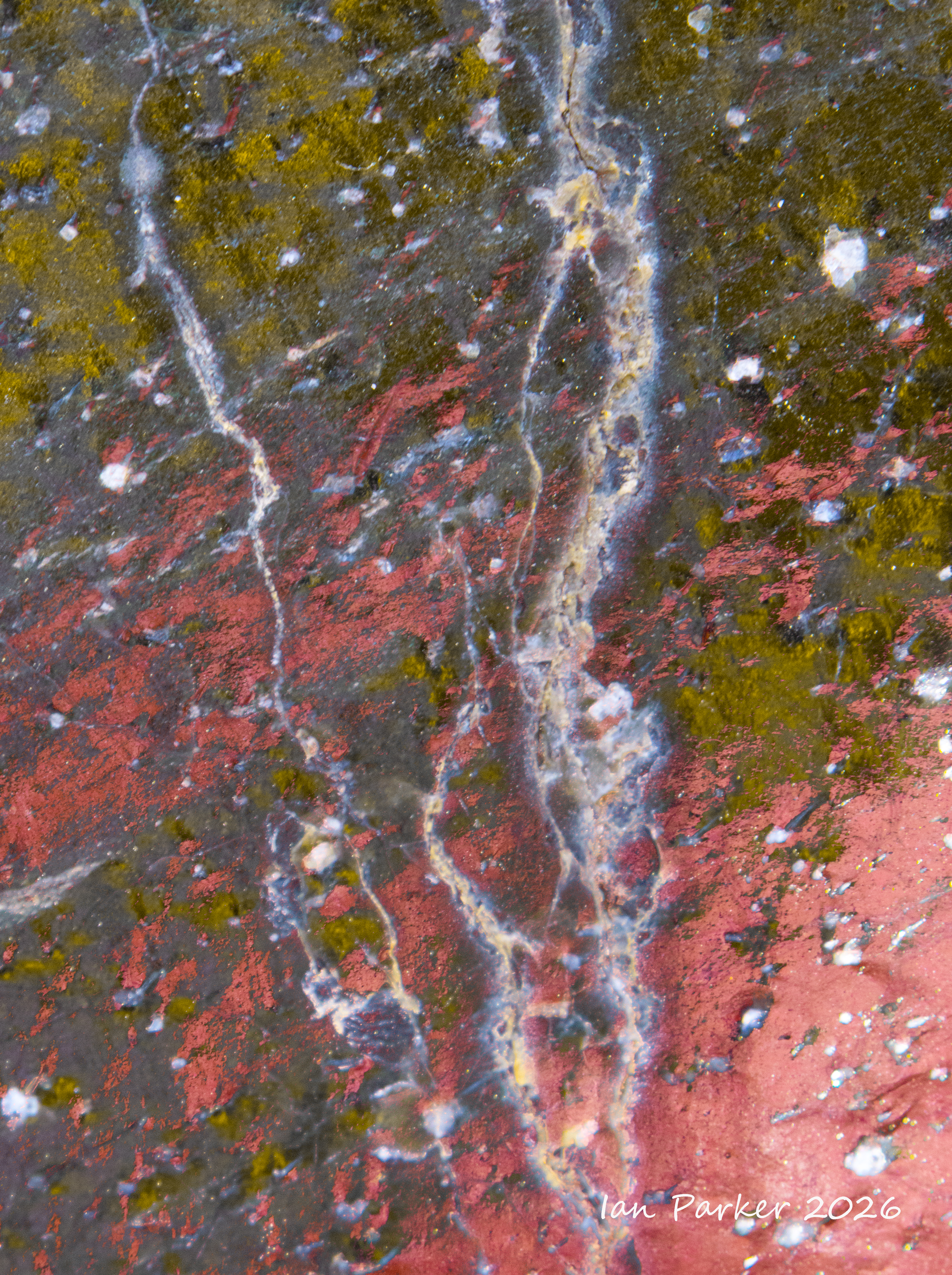
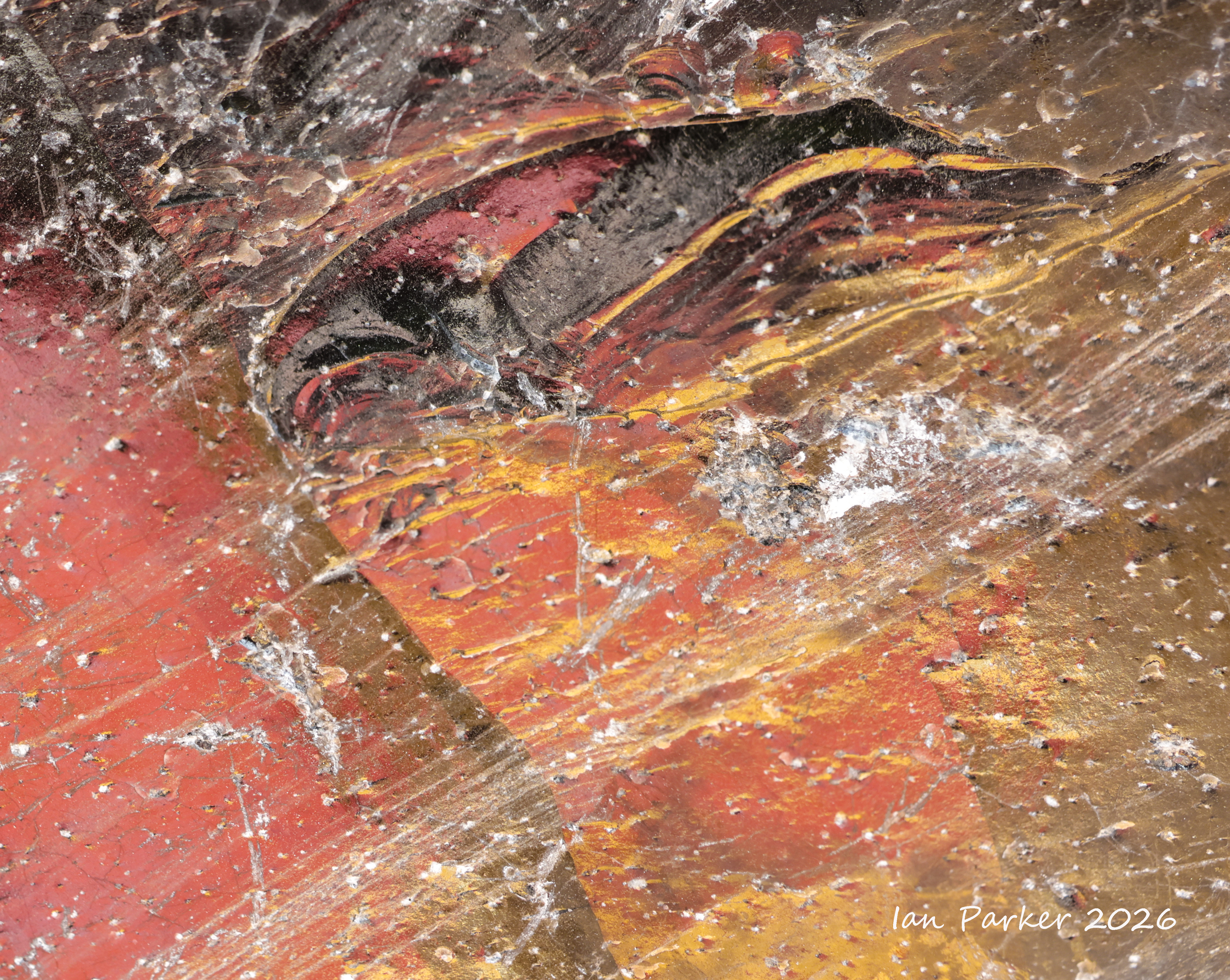
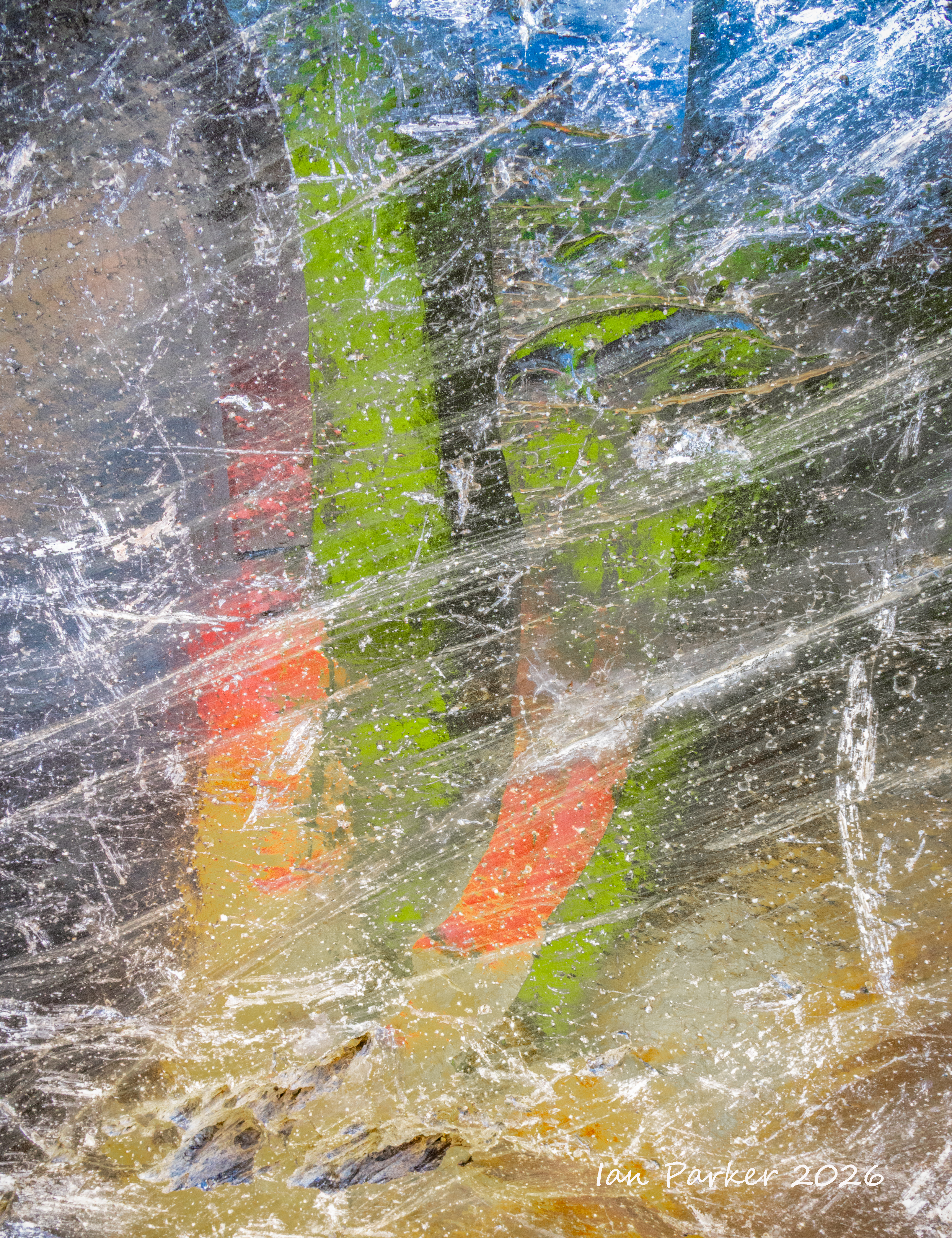
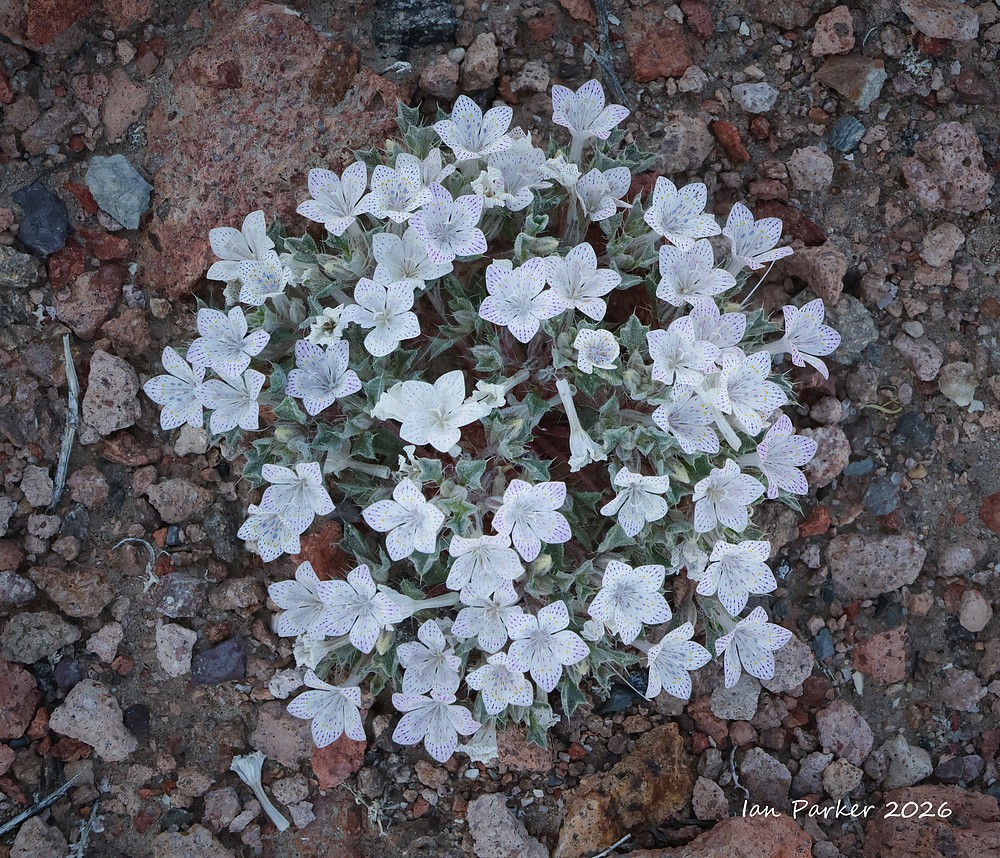
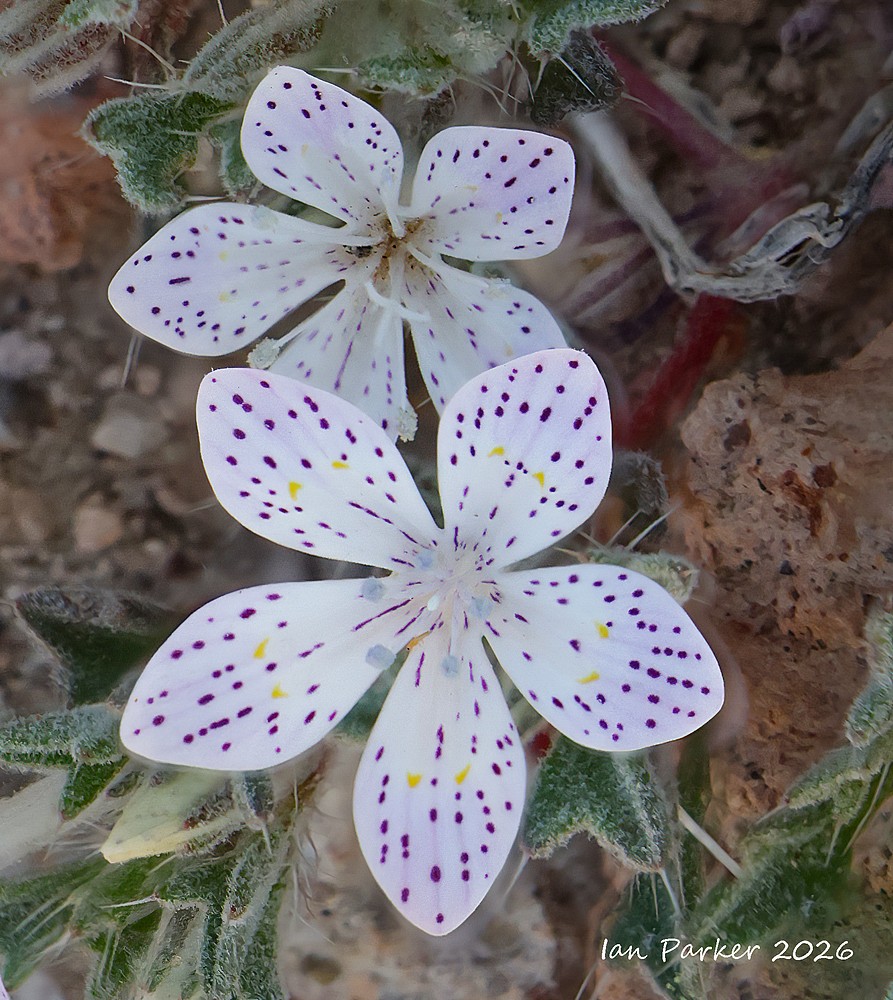
Desert flowers by old mine road descending into Eureka Valley
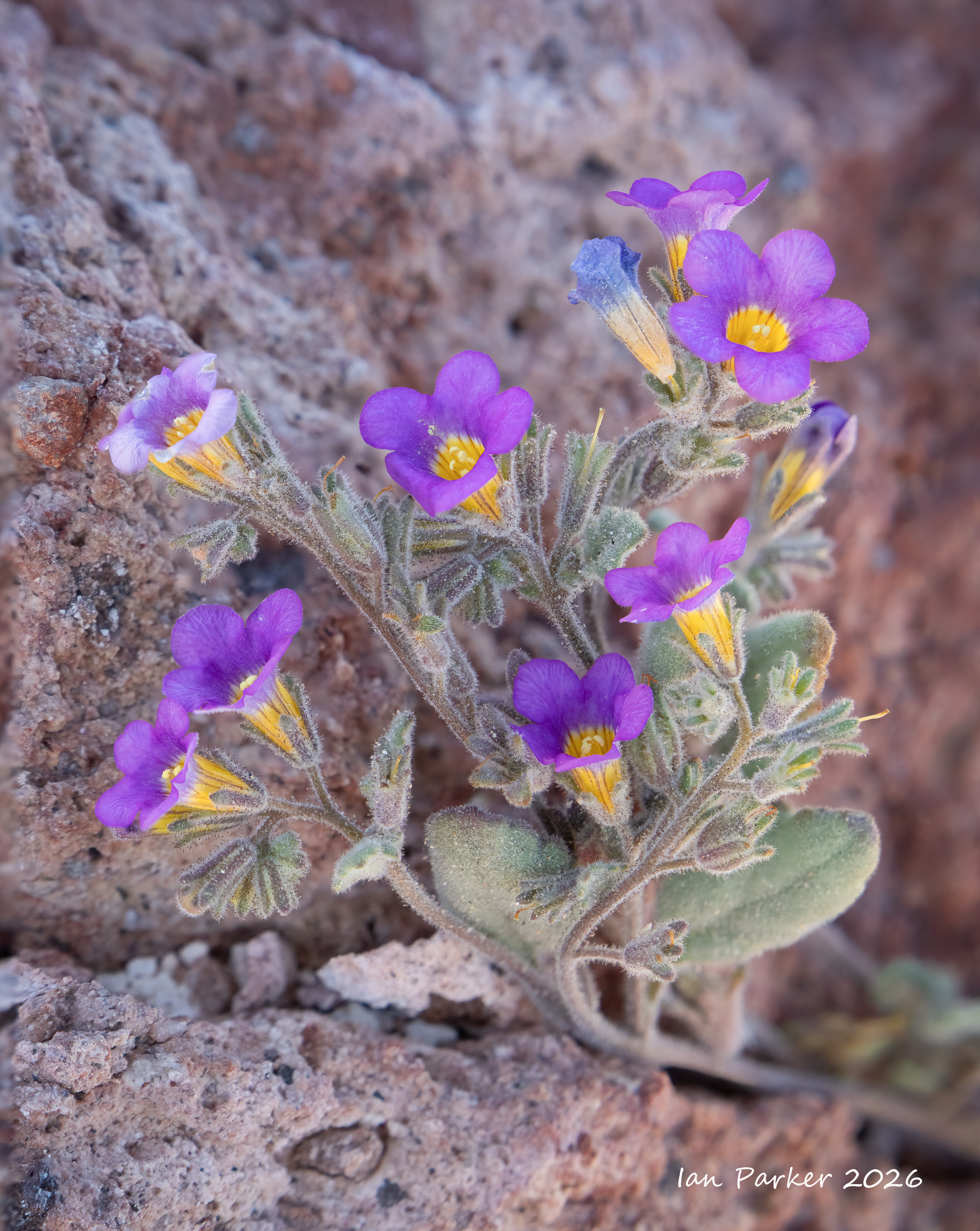
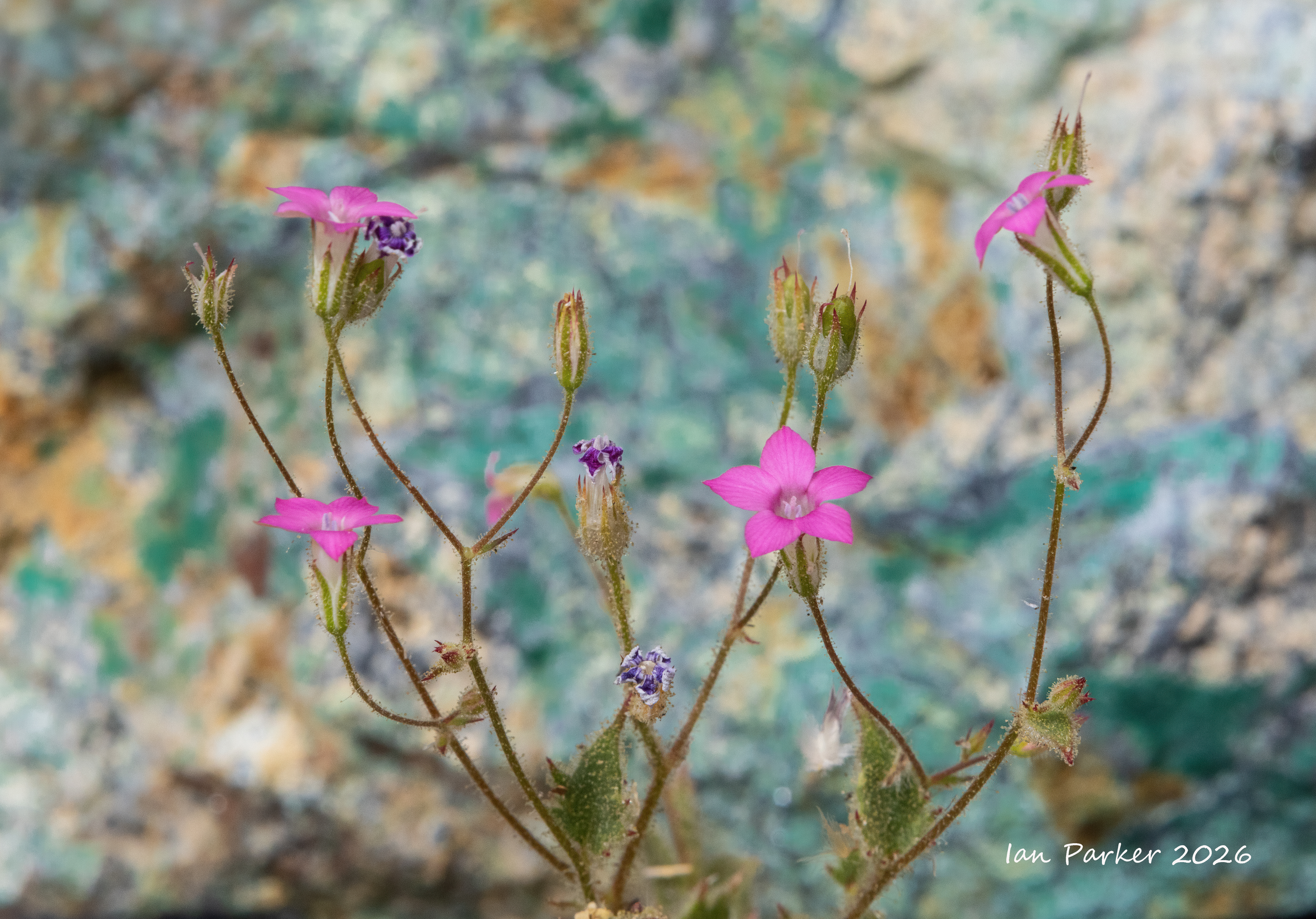
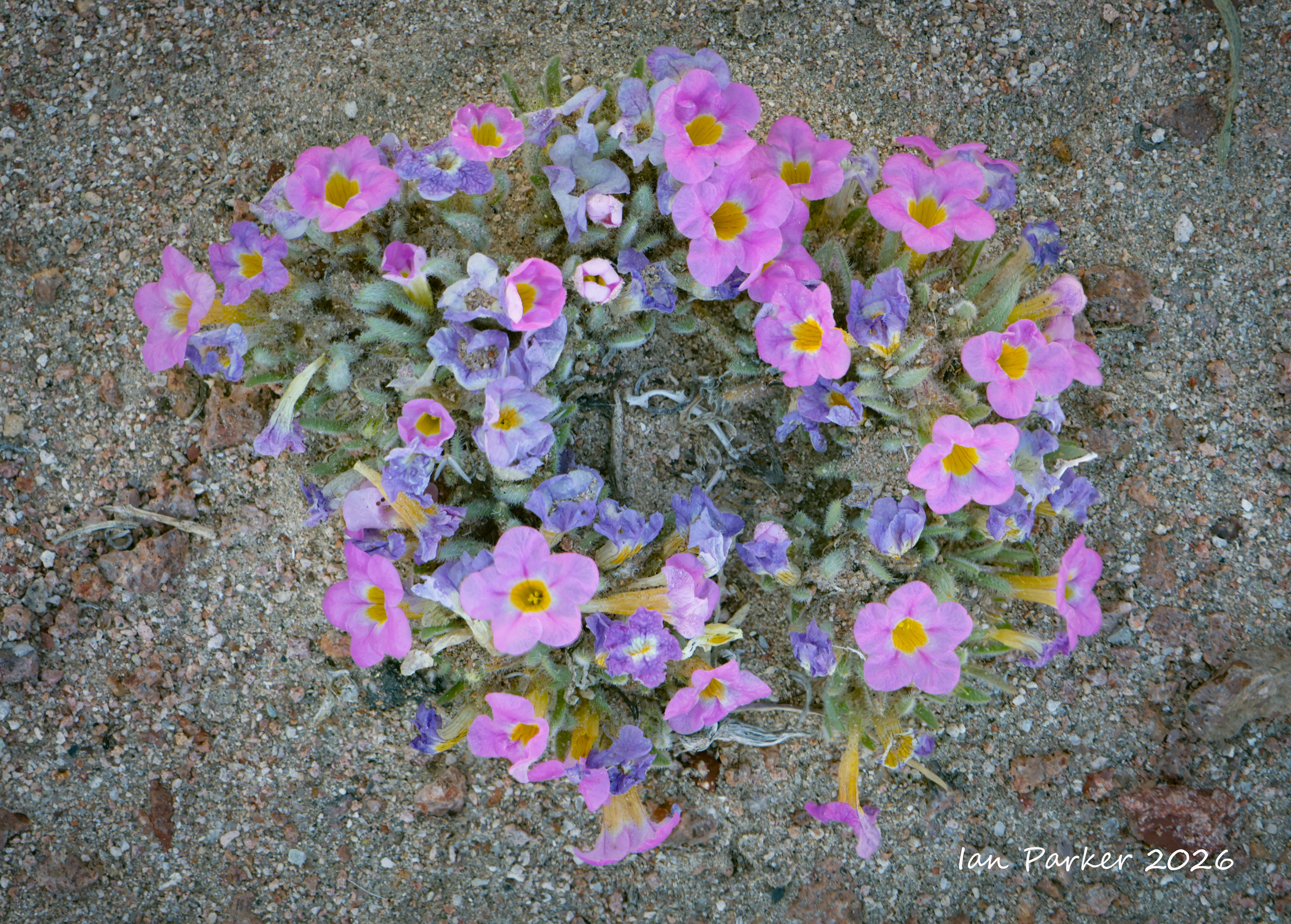
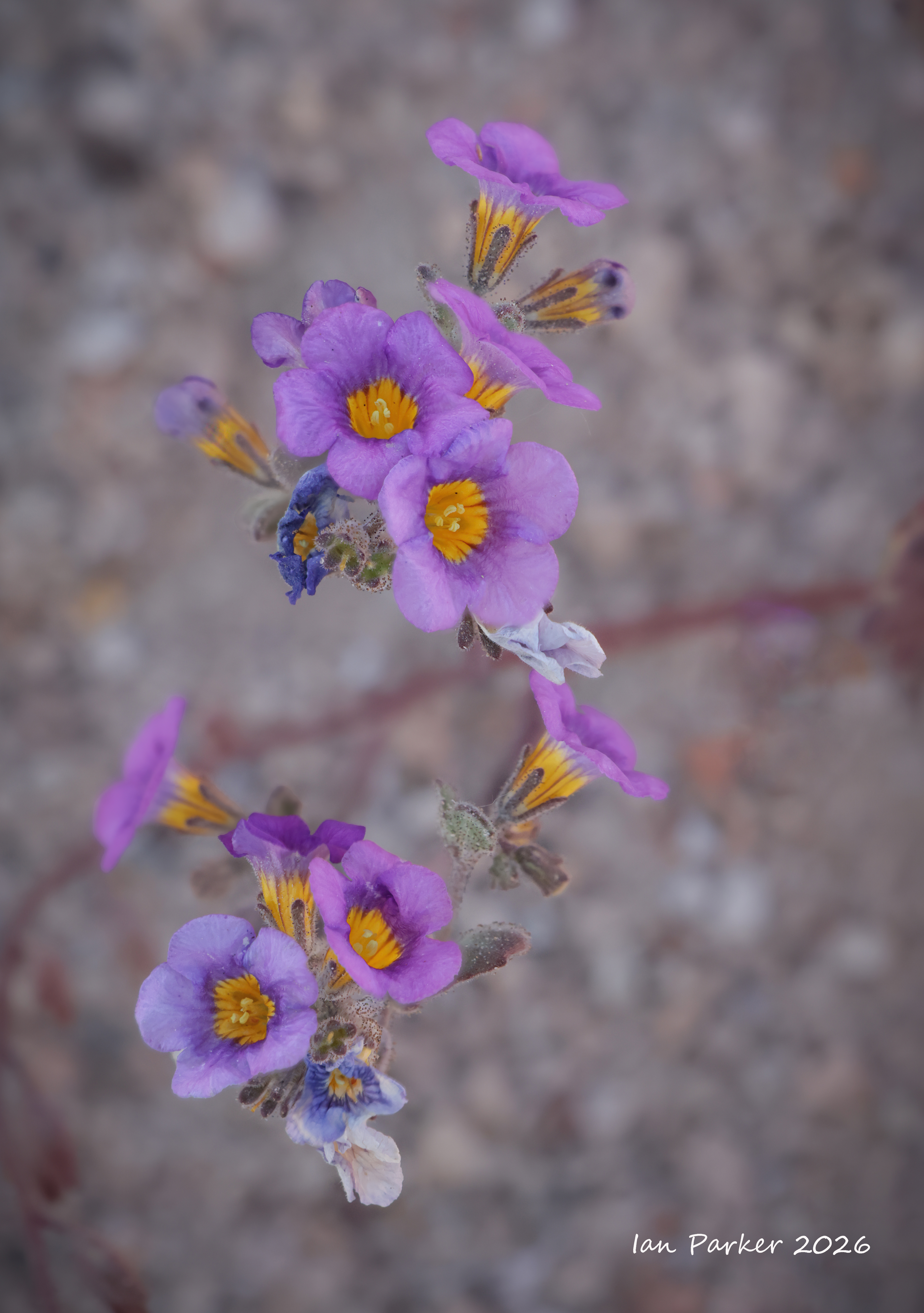
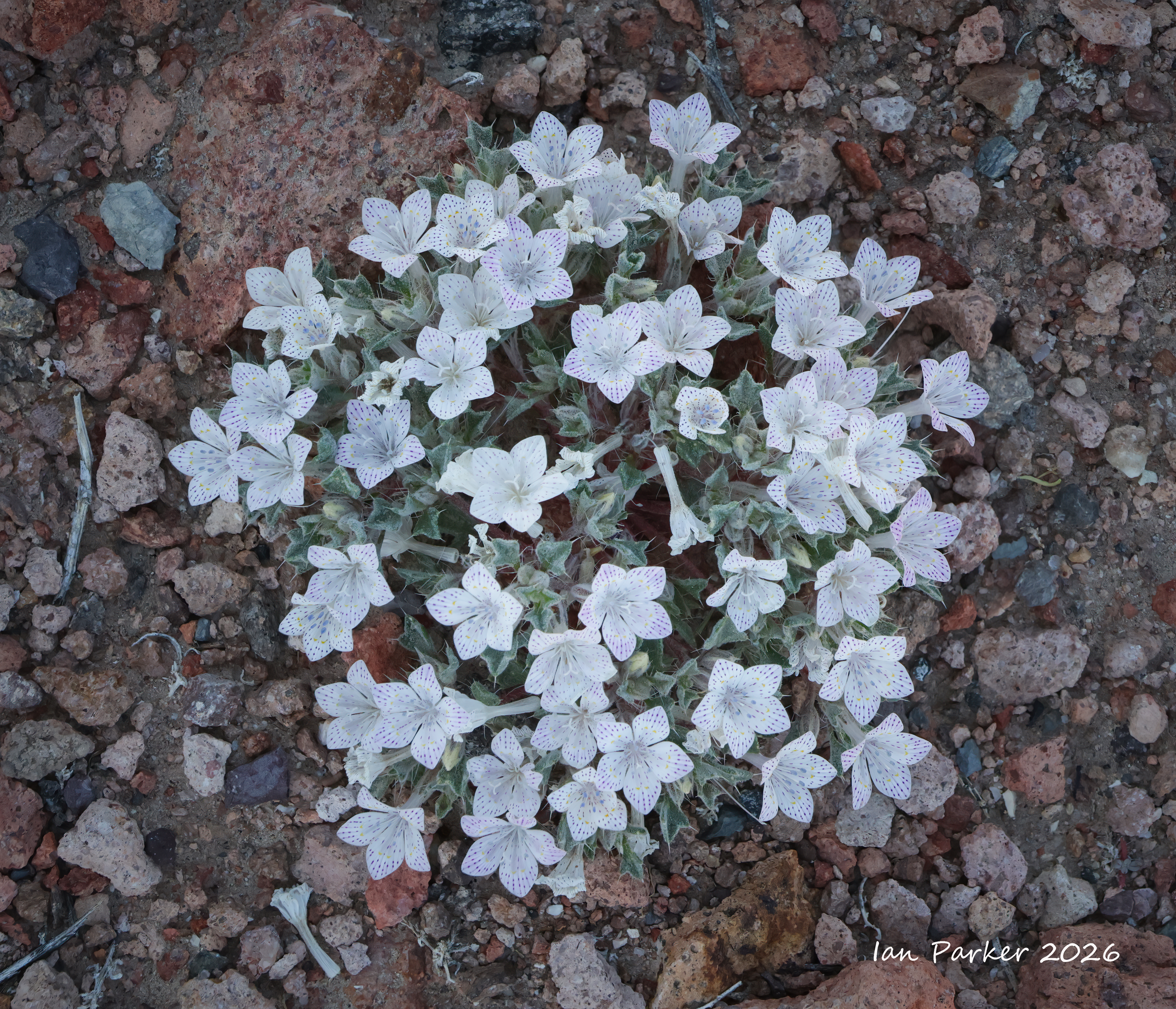
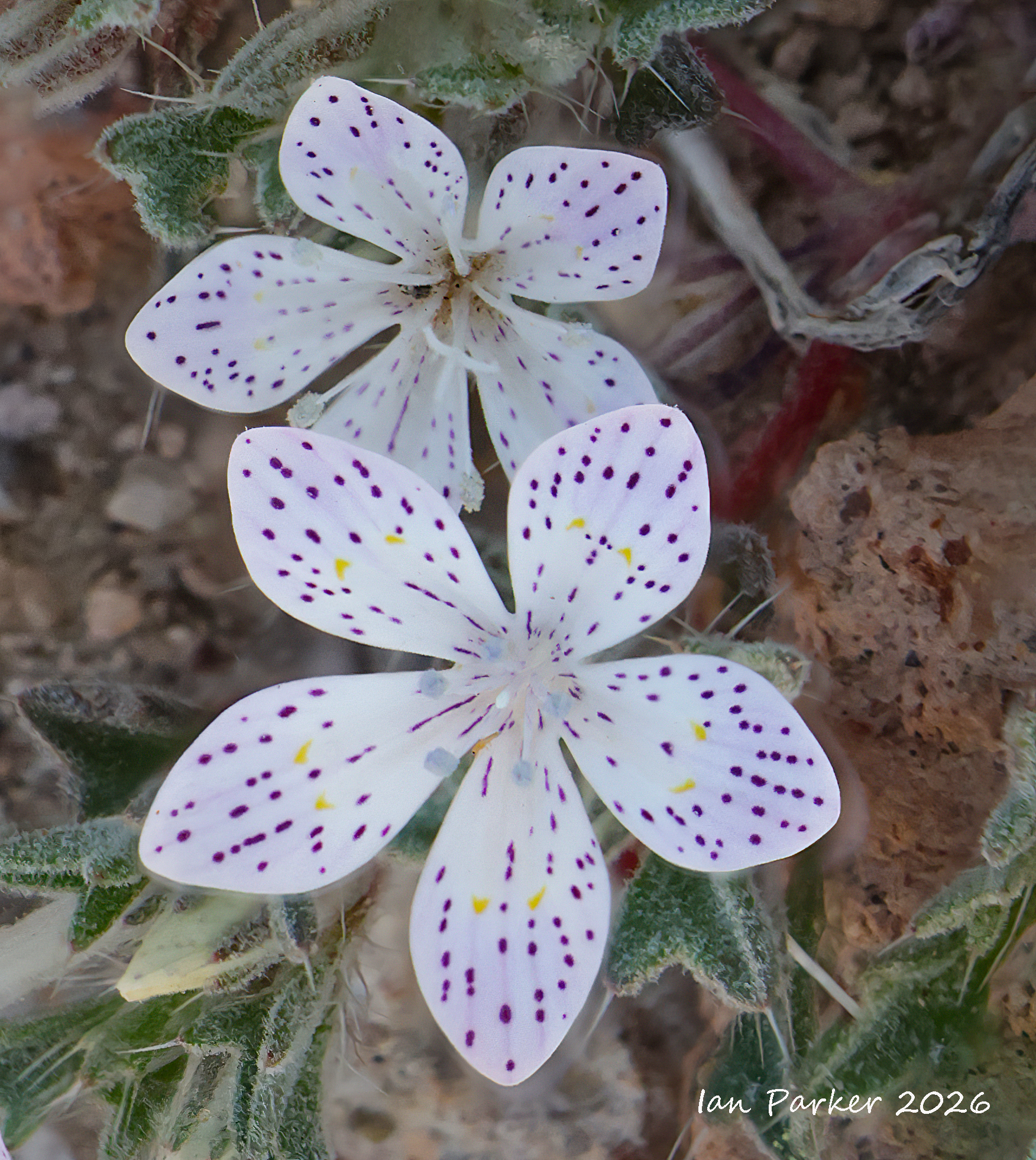
May 14-16.
Birds, butterflies and bugs at the J.C. Campbell Folk School
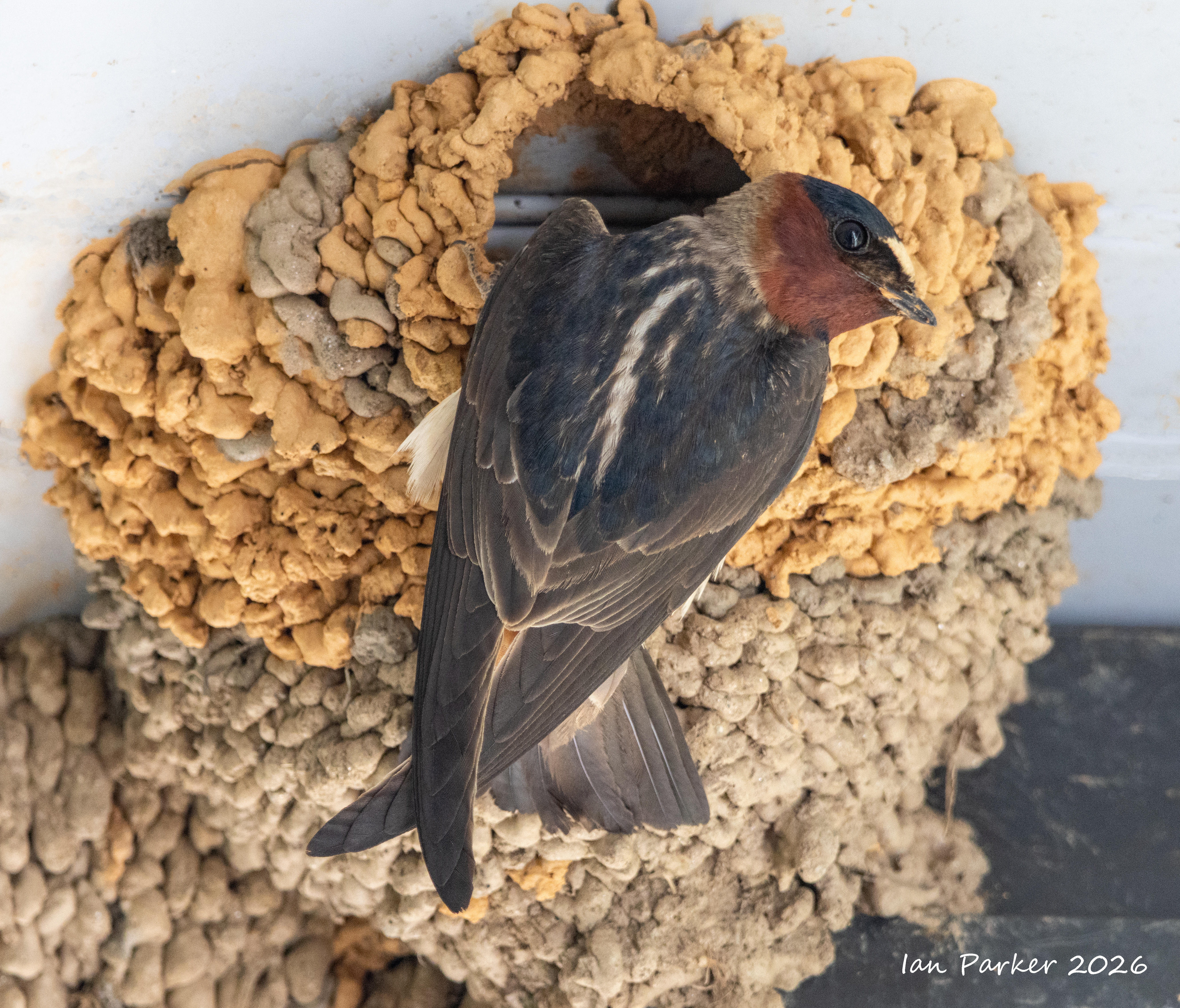
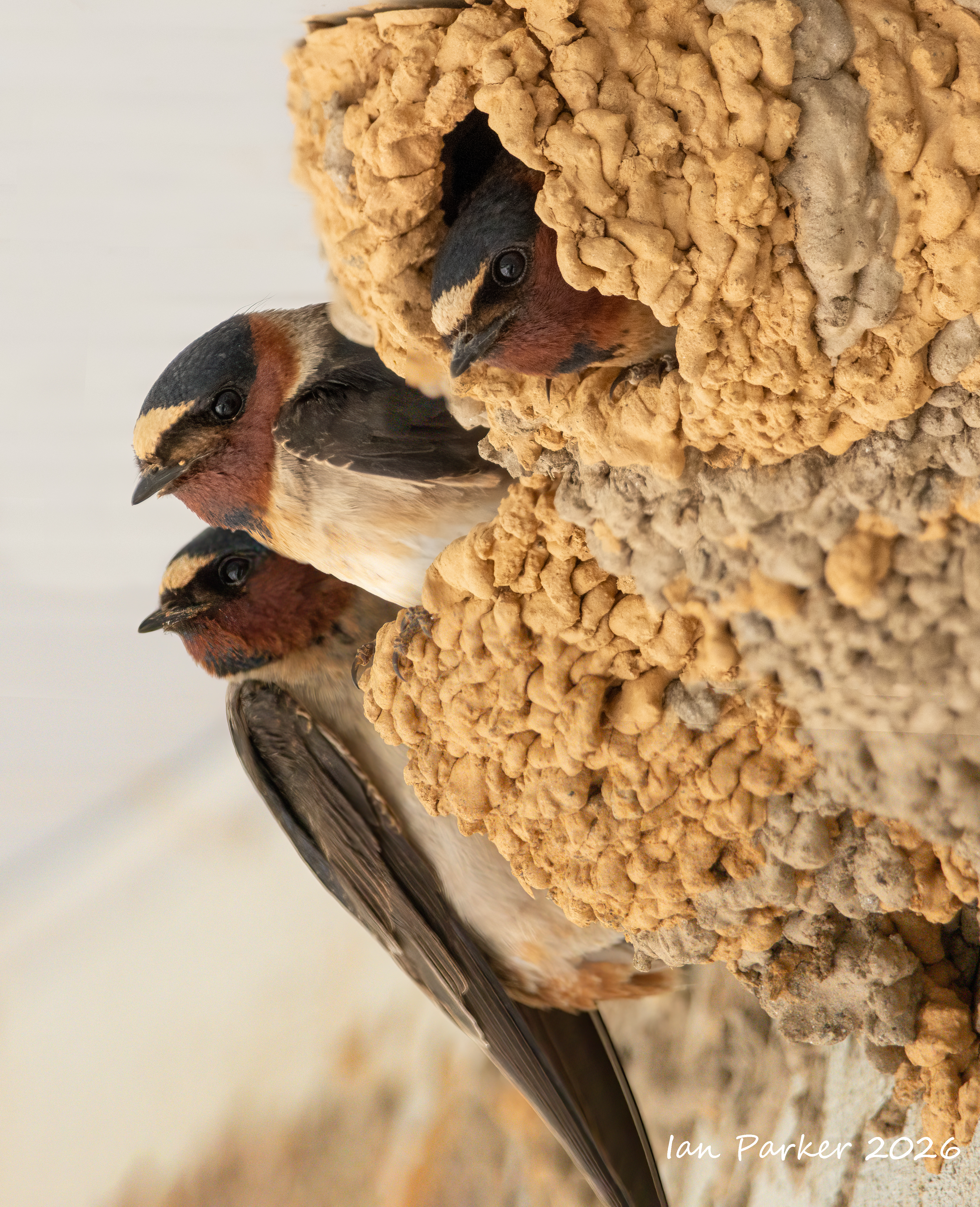
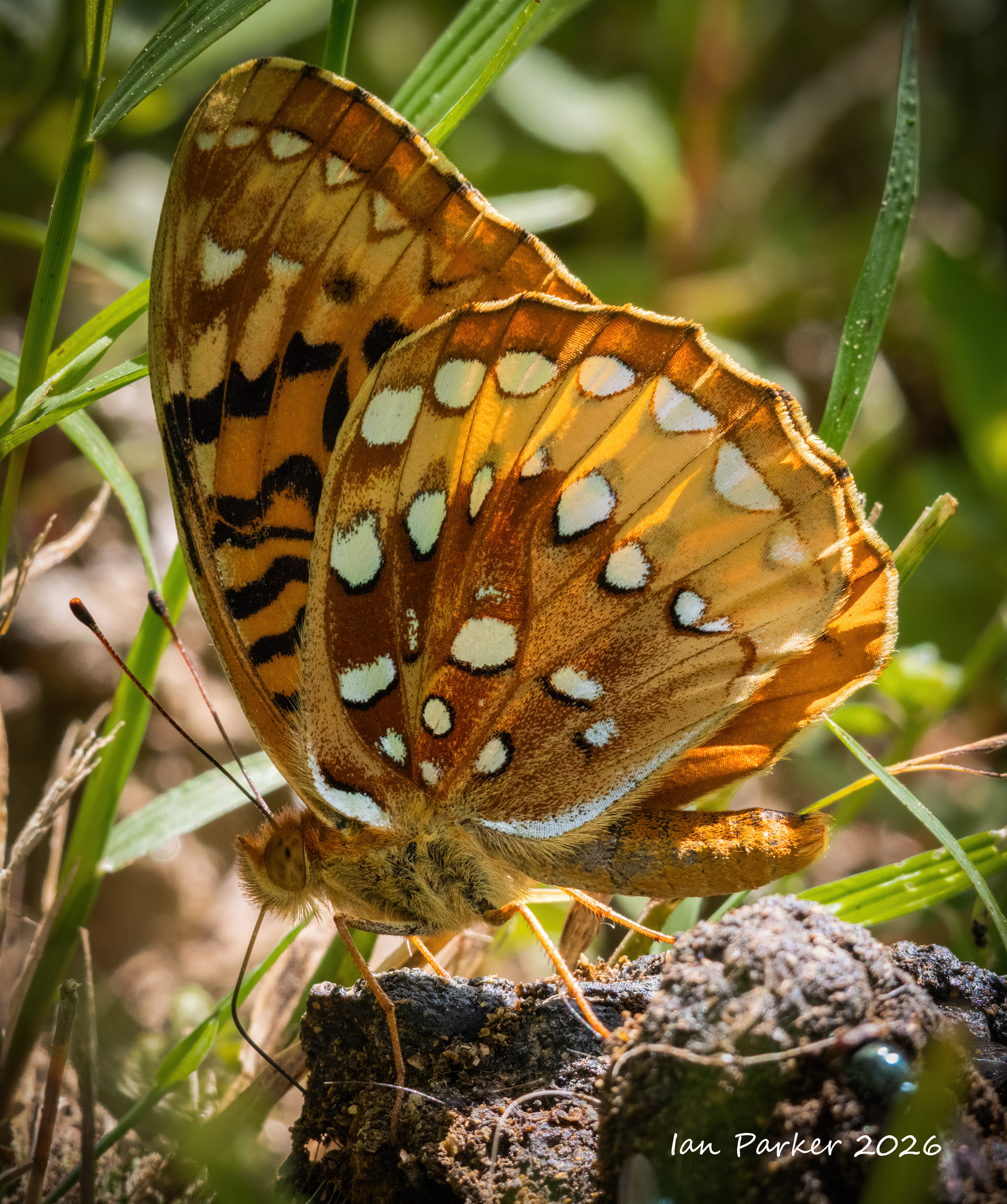
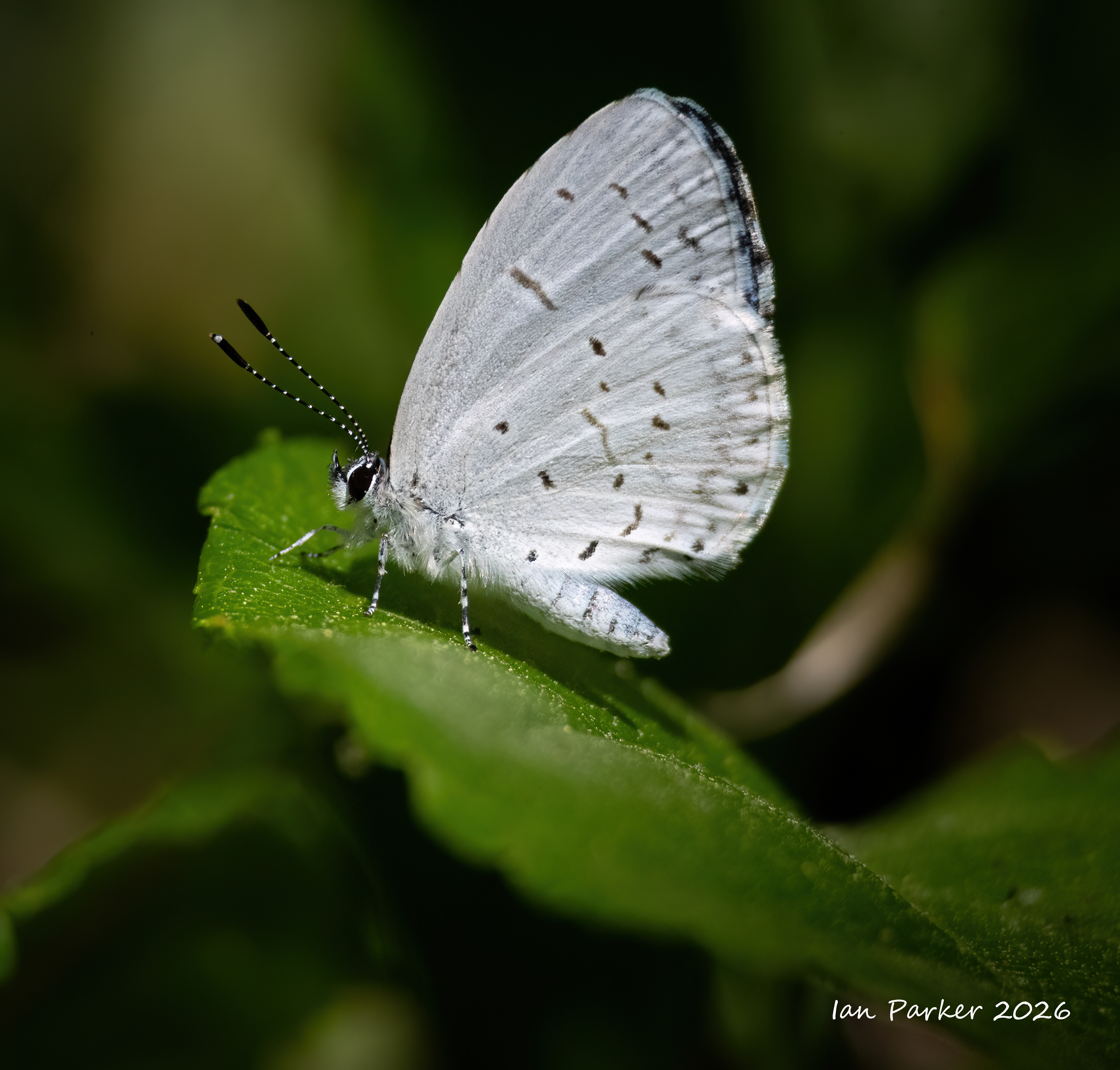
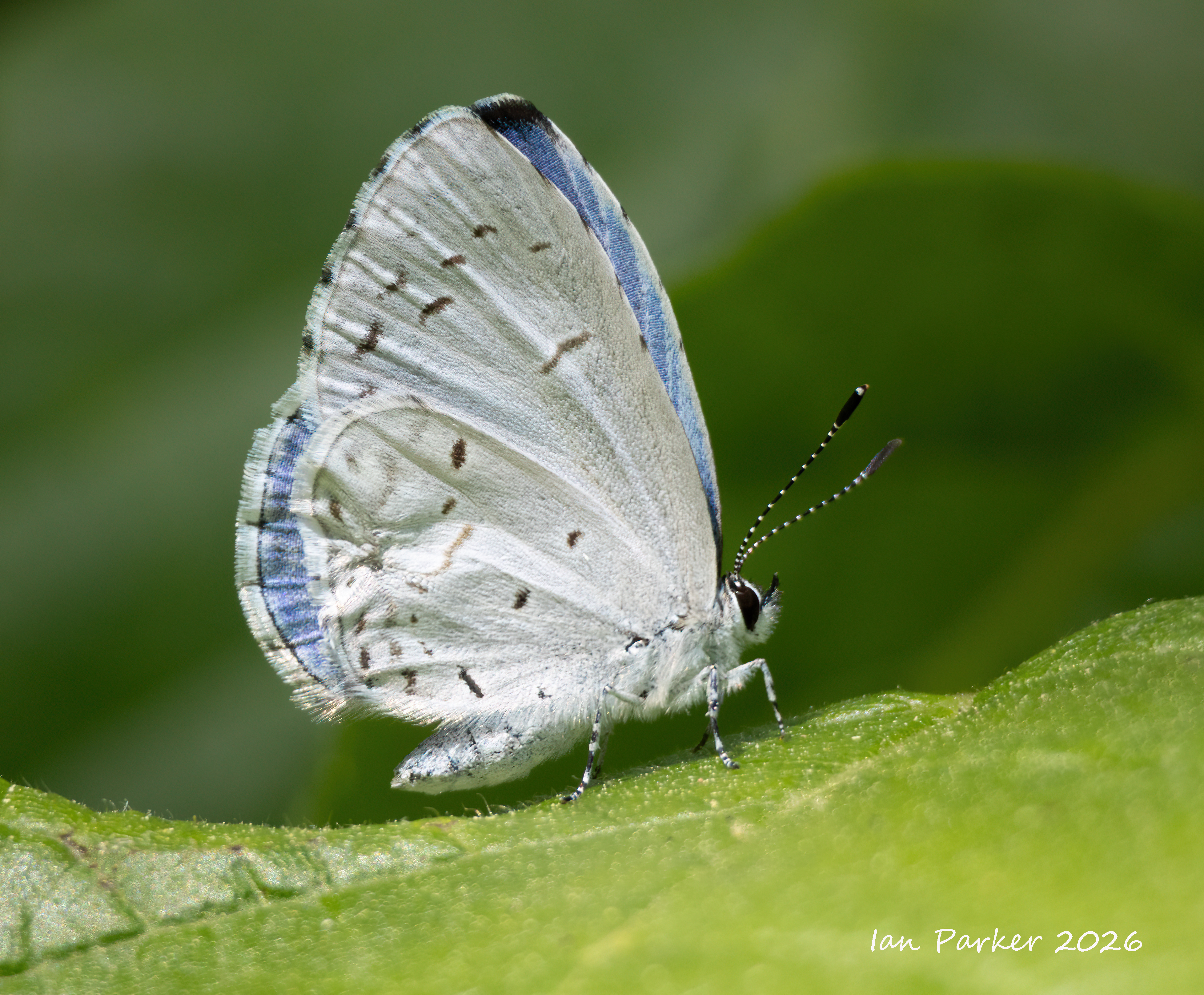
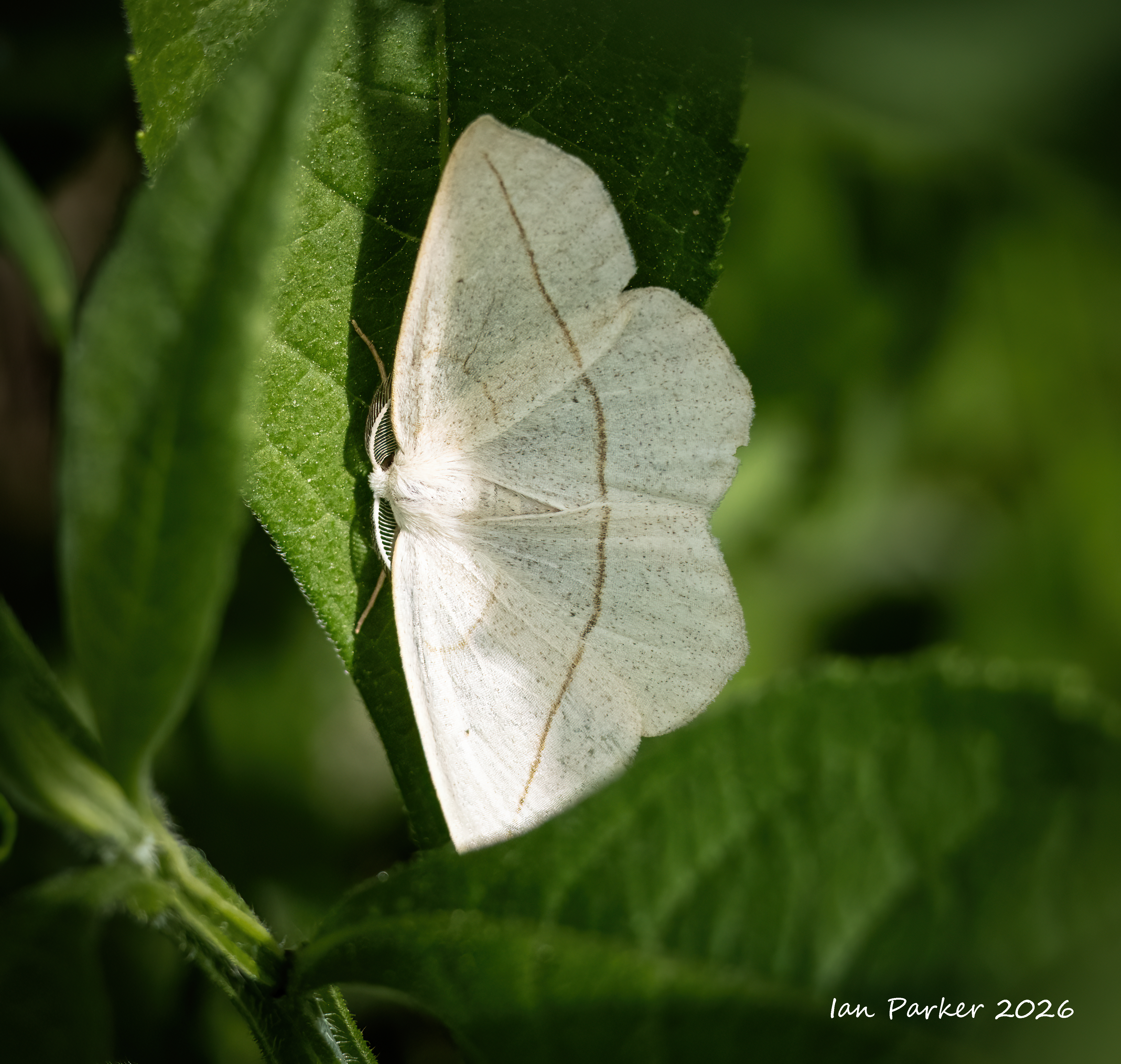
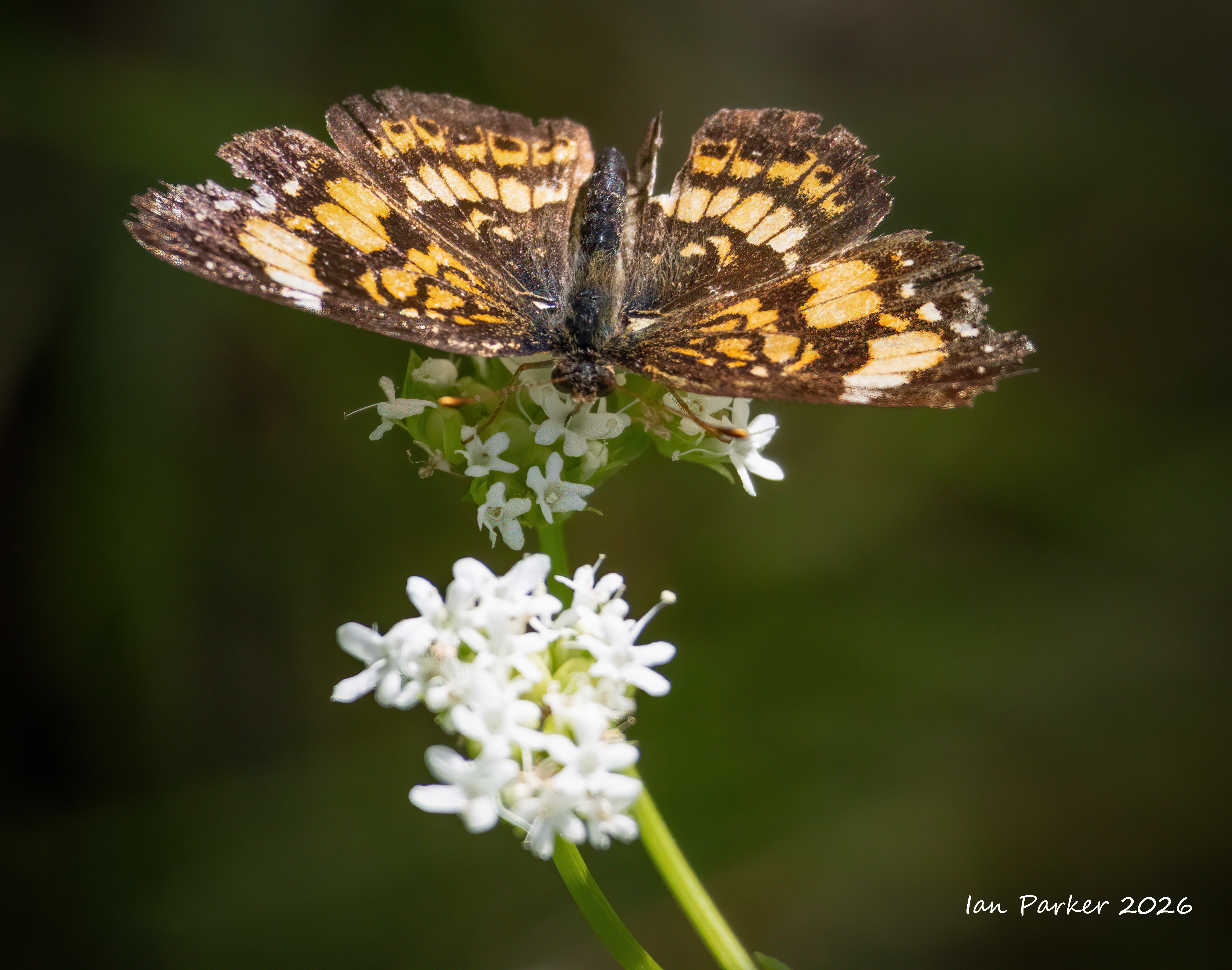
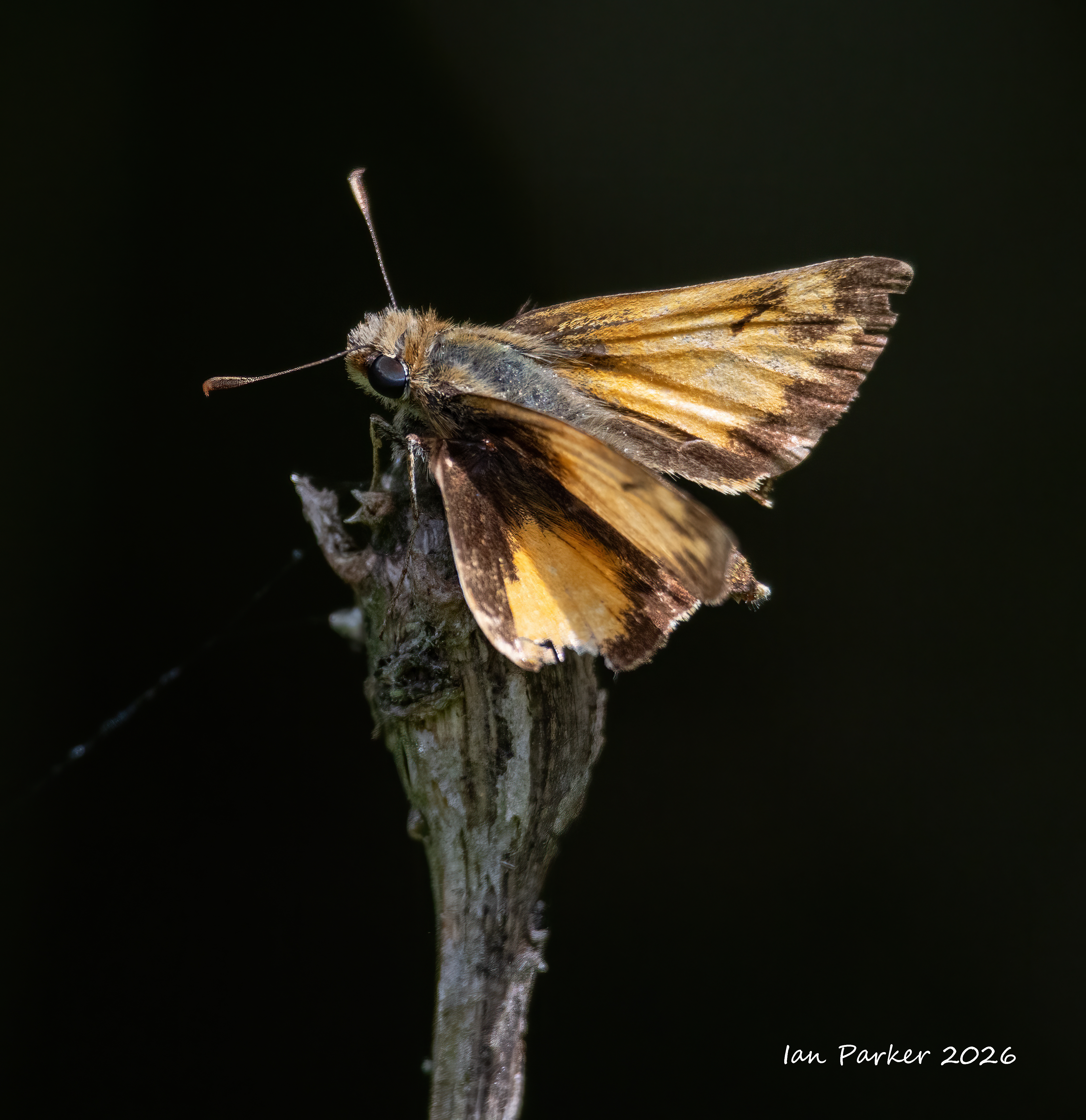
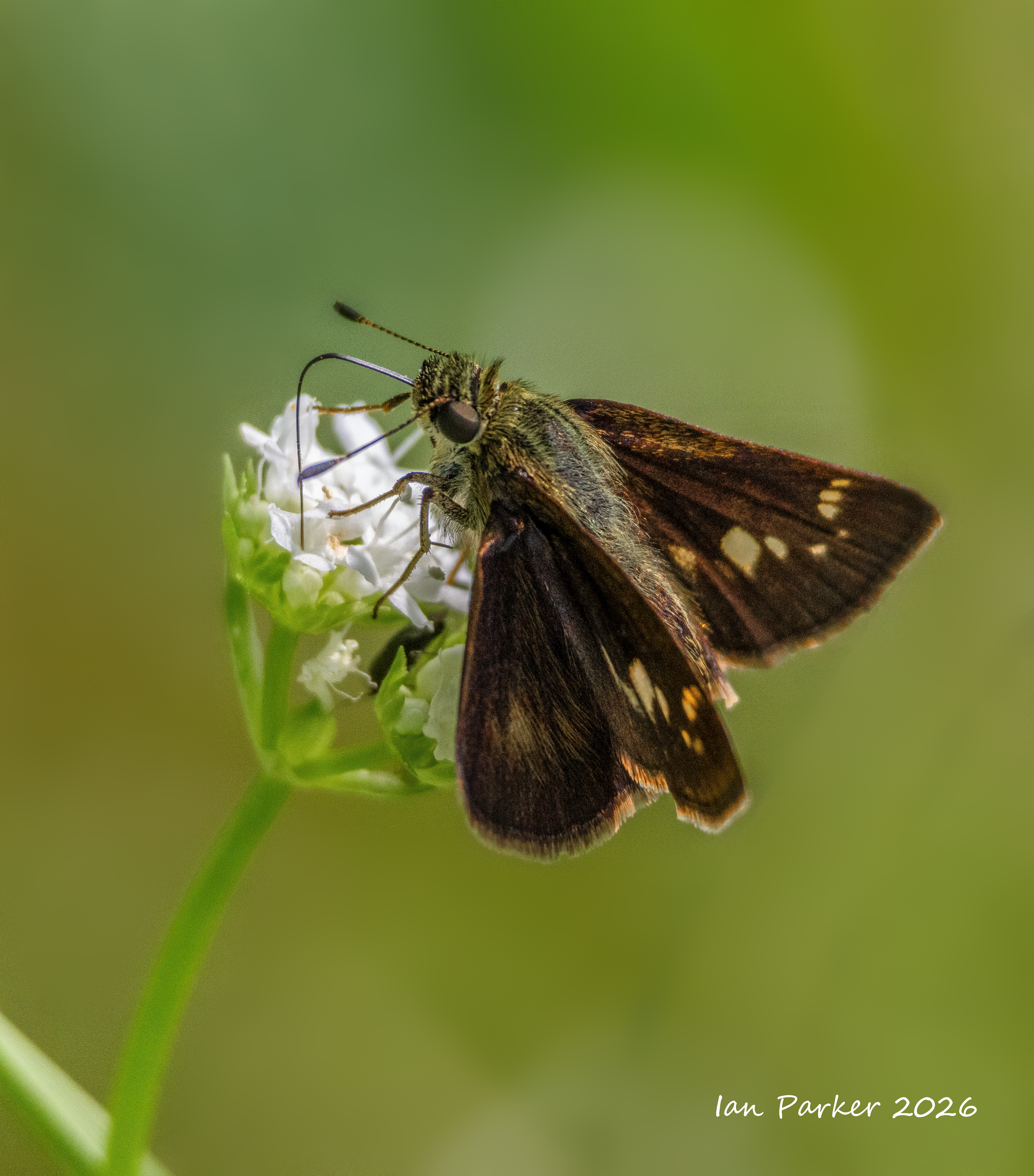
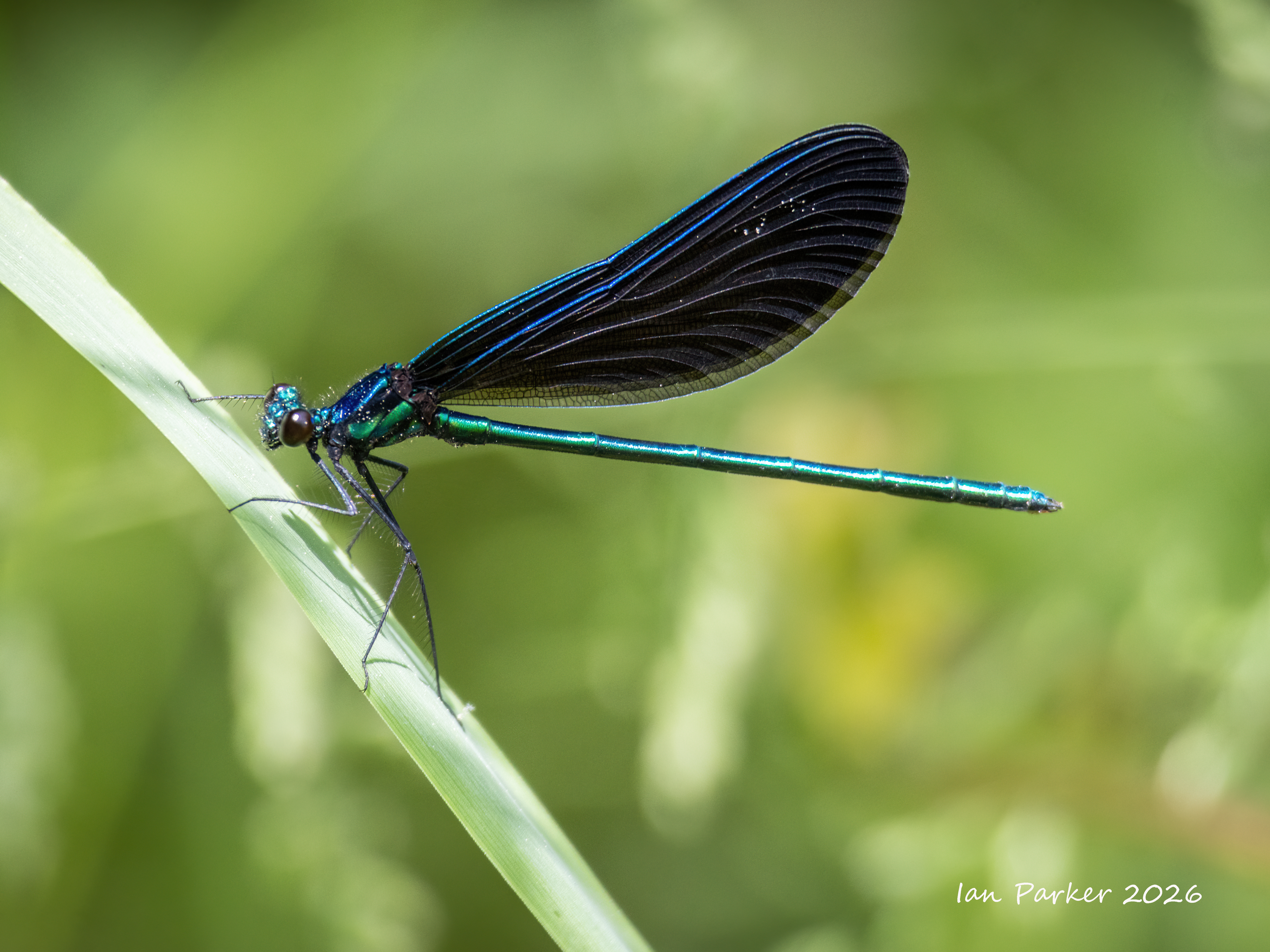
For a second time, the photography class I was enrolled in at the John C. Campbell Folk School was cancelled. But the School is a beautiful and peaceful place to spend a few days, so I was again thinking about possible things on the school grounds to photograph on my own. Seeking inspiration I walked down to the Rivercane Trail, a scenic loop trail running through woodlands, which features exhibits and sculptures by regional artists that honor local Cherokee heritage and the native rivercane ecosystem alongside Little Brasstown Creek. At first, I wasn’t finding anything. Woodlands always appear as a confusing chaos of trees and dense vegetation. Fortuitously, a lone butterfly introduced me to my theme for the next few days. It alighted in tall grass by the path and flew off before I could get my camera focused. But looking more closely into the grasses I could see different tiny insects. They could be my new theme!



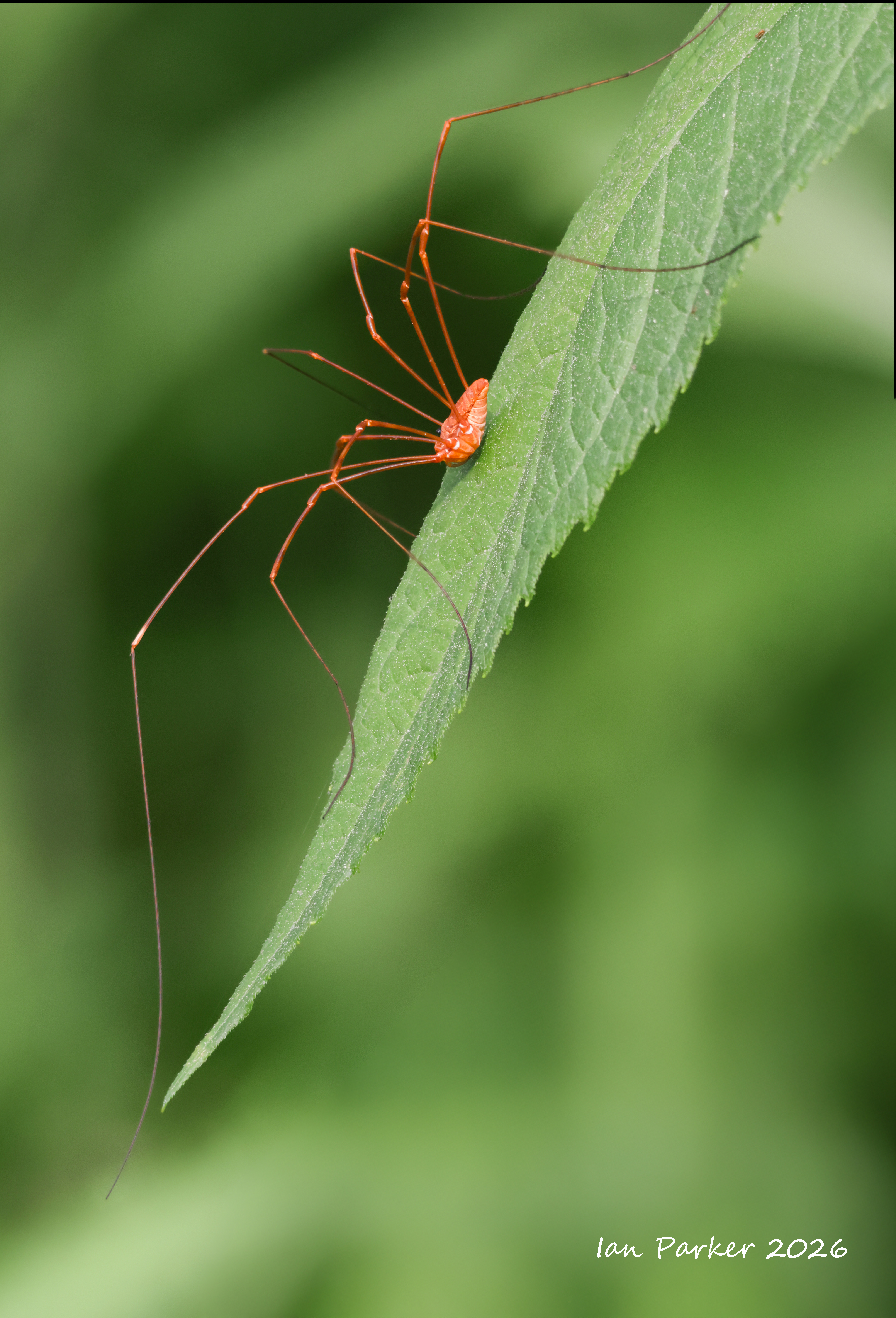

April 18, 19. Salton Sea Ultramarathon
Photos are HERE
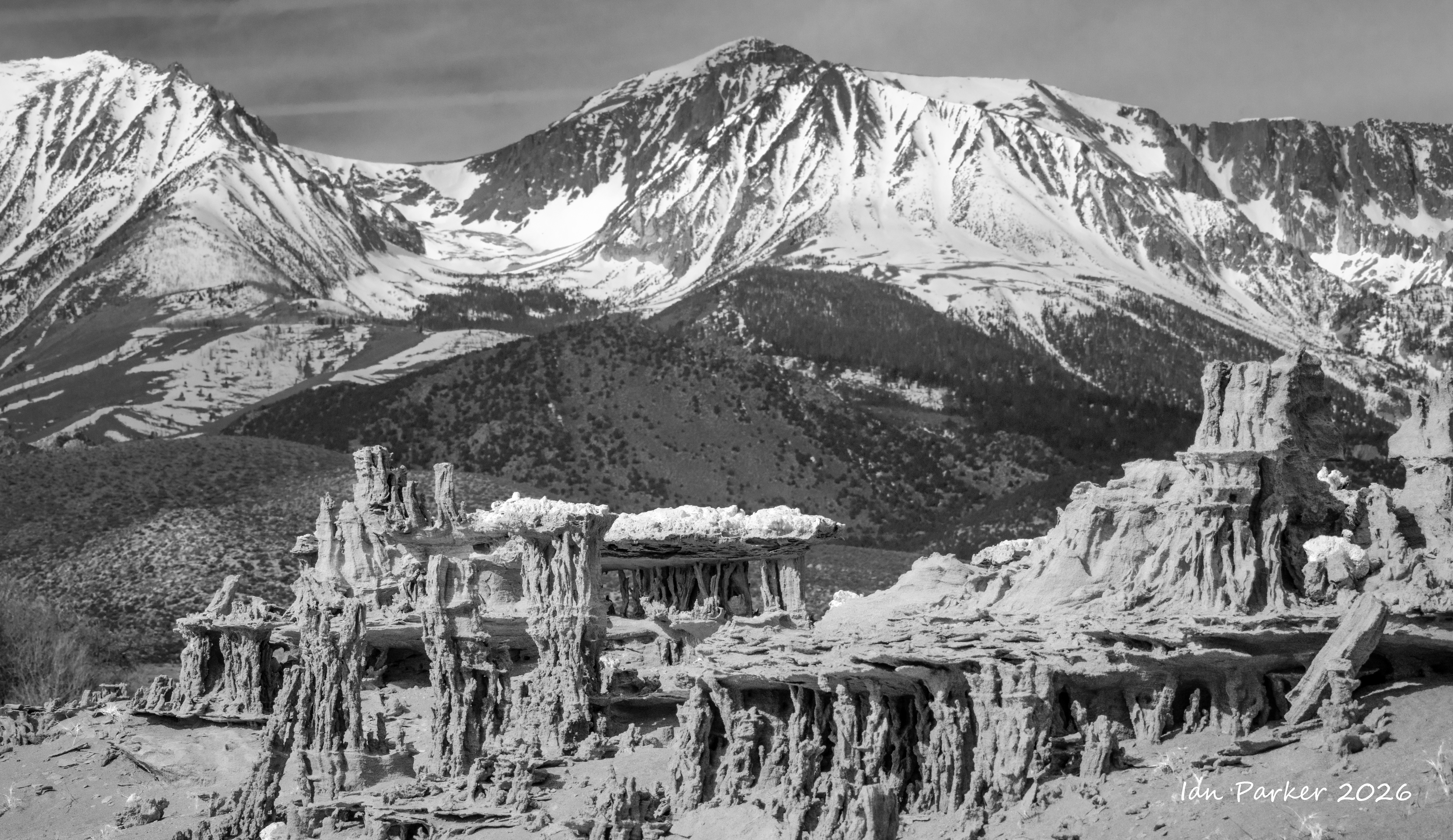
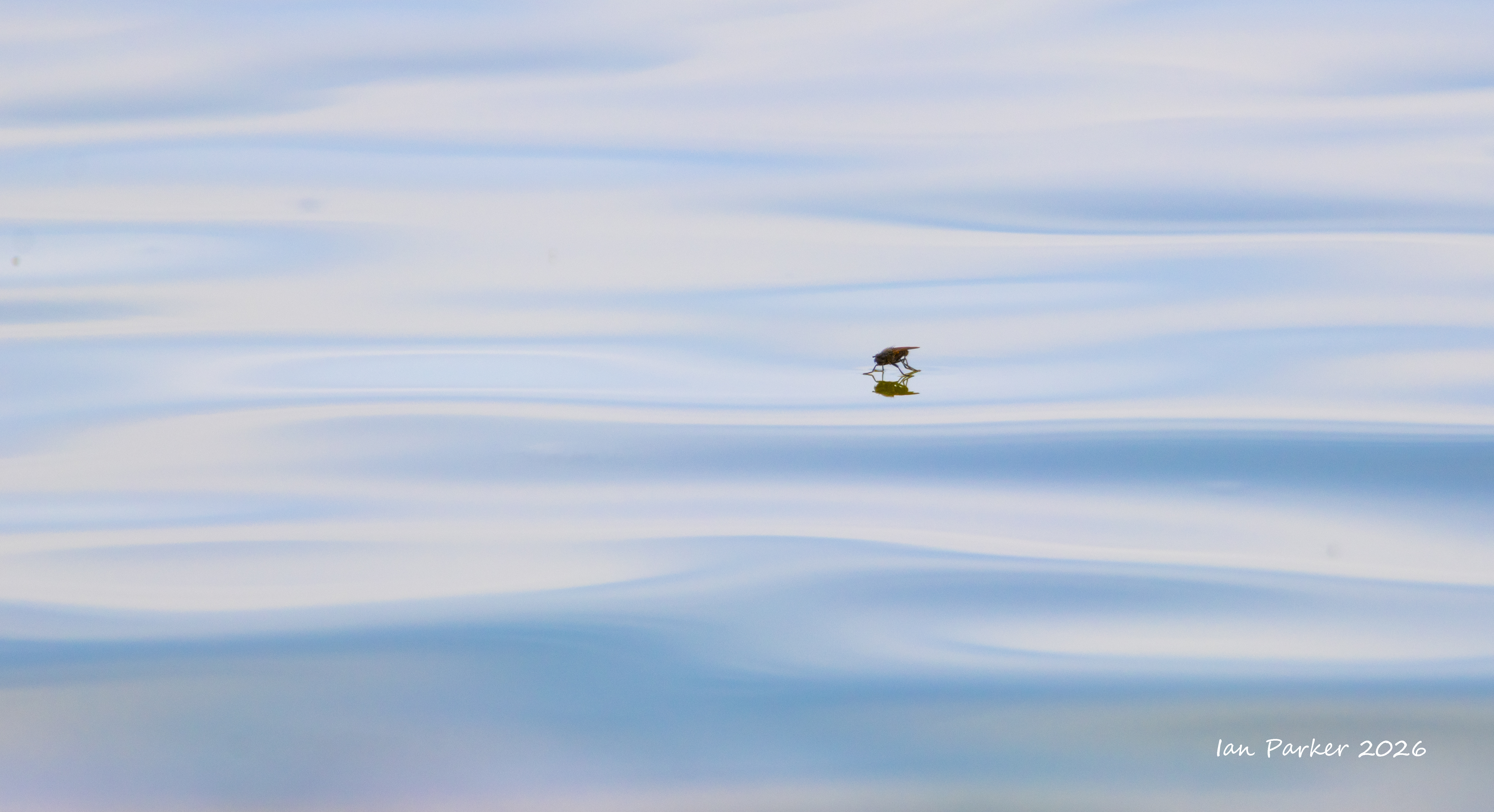
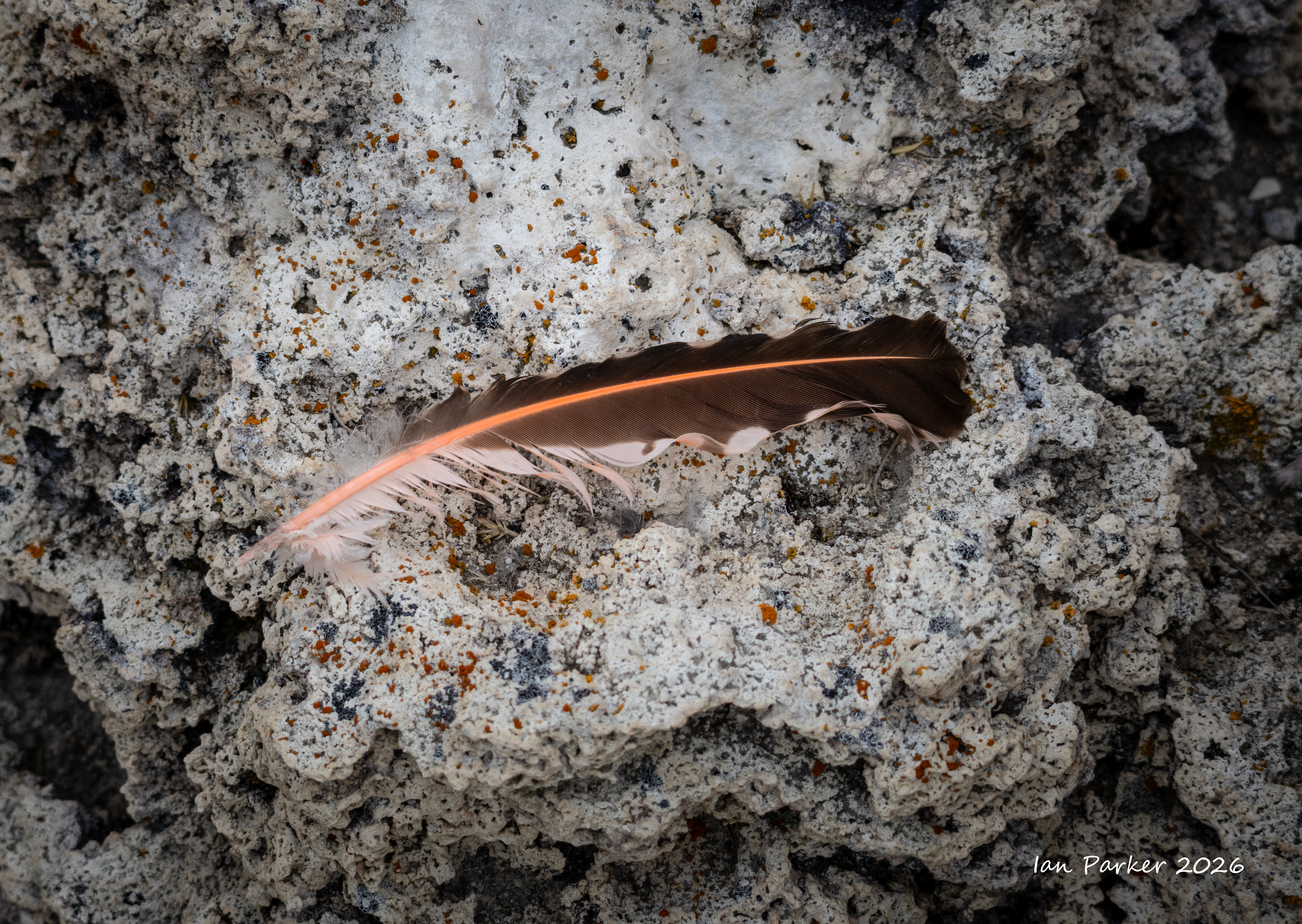
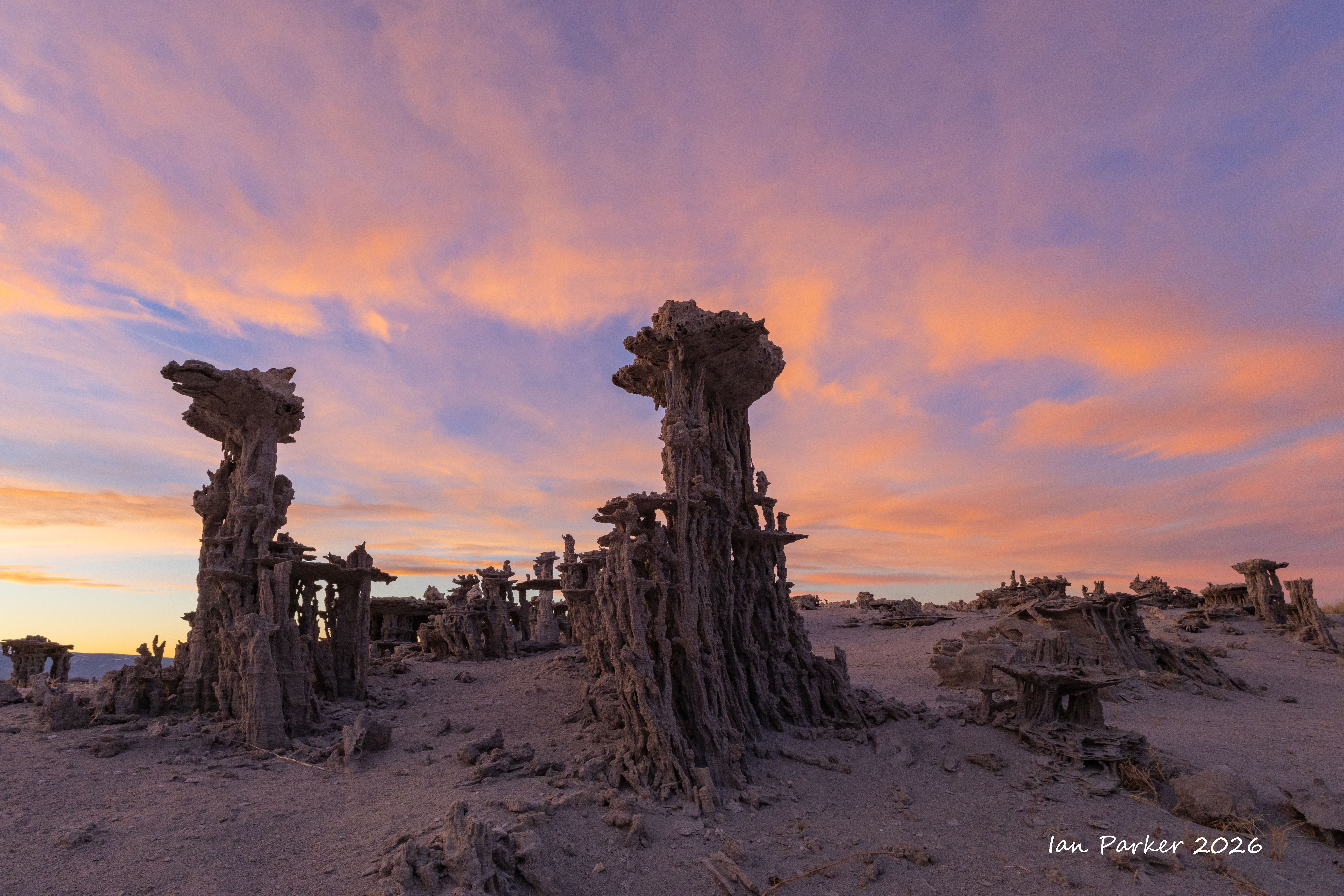
March 3-6 Mono Lake
This trip started in Carrizo Plain. There had been quite a lot of rain over the winter, so we were hoping for a good display of wildflowers, though not anticipating a true superbloom. The reality was a little disappointing, There were some expanses of yellows and some purples, but nothing to compare to the displays of 2023, 2019 and 2017
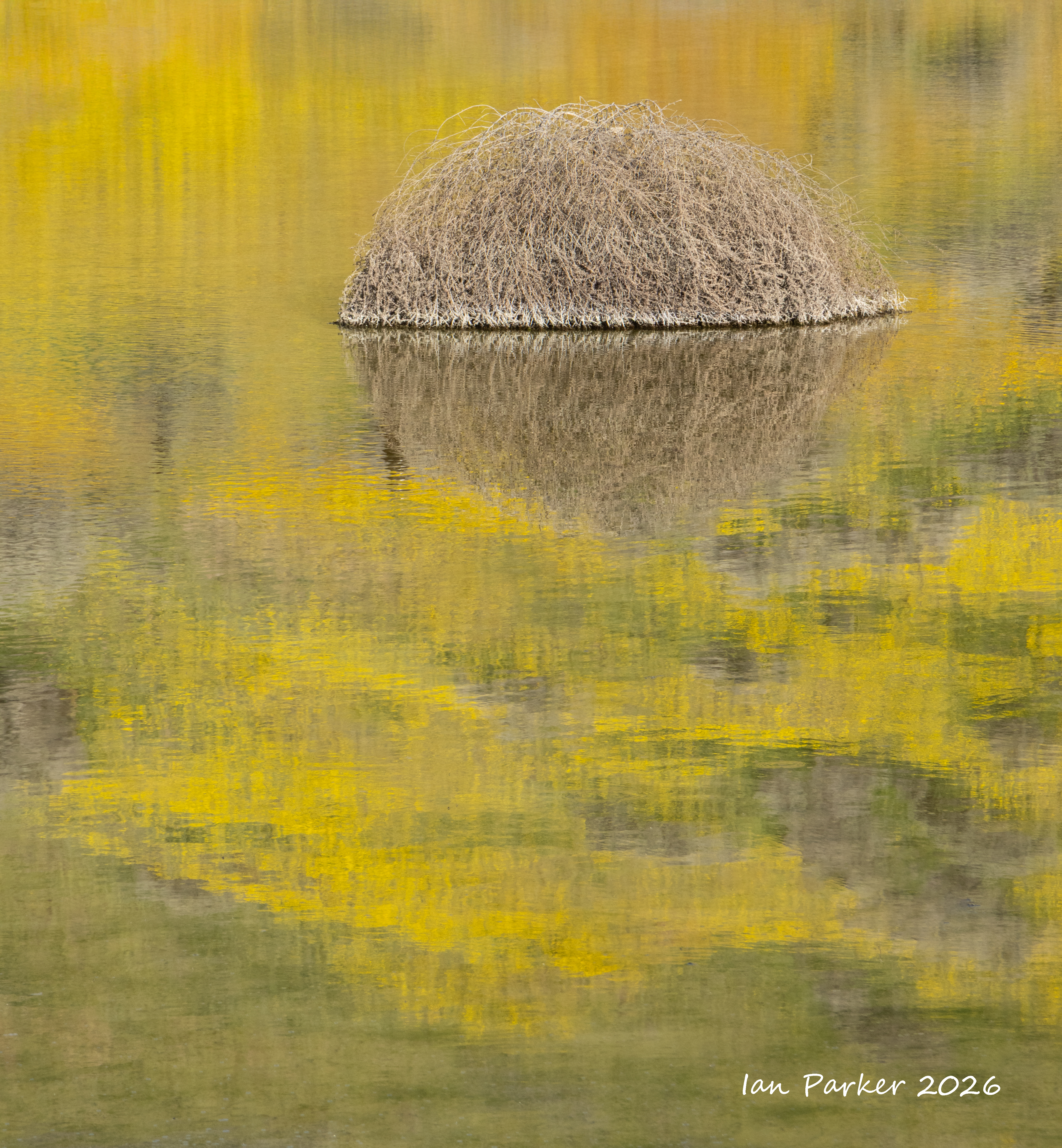
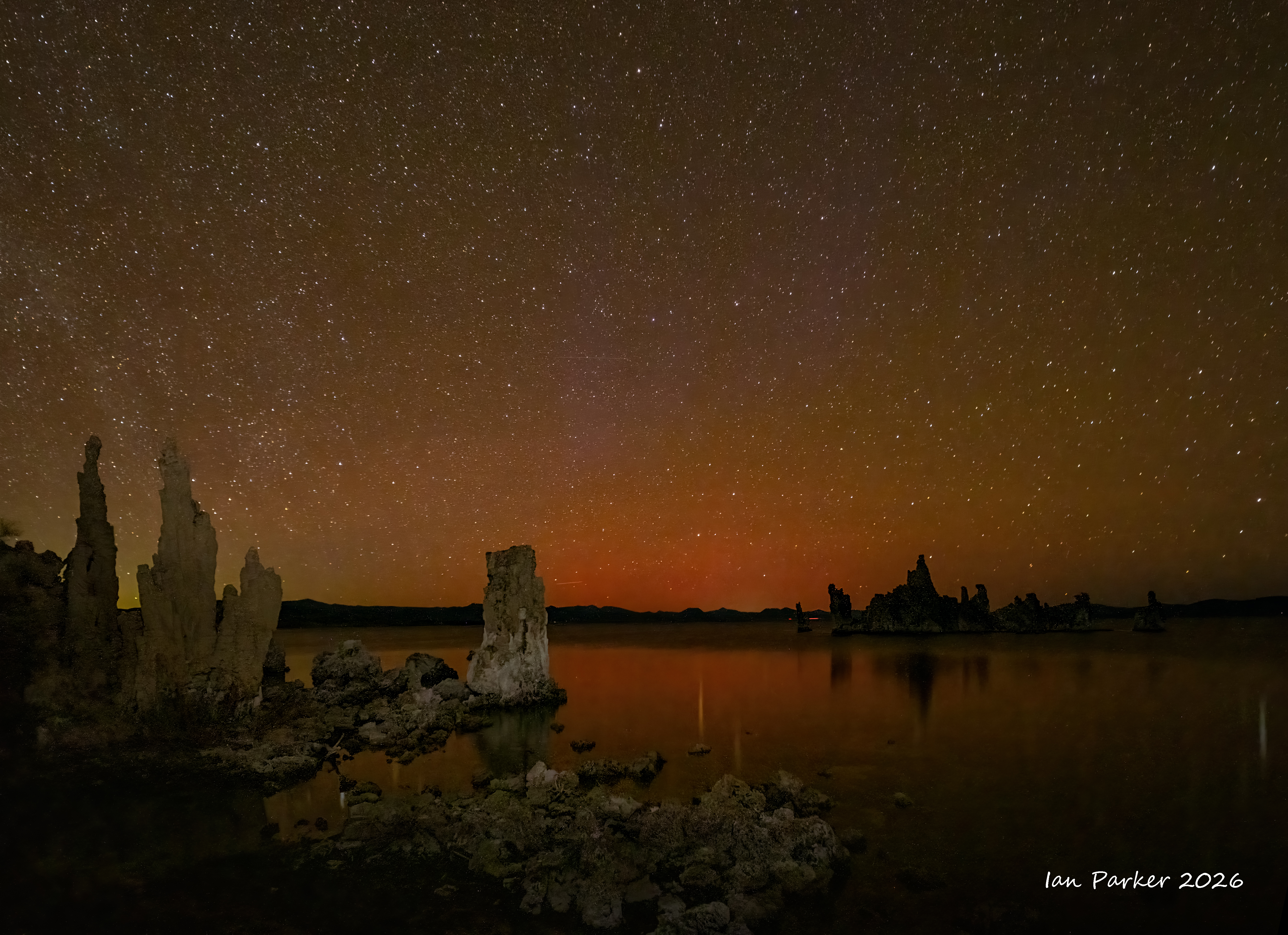
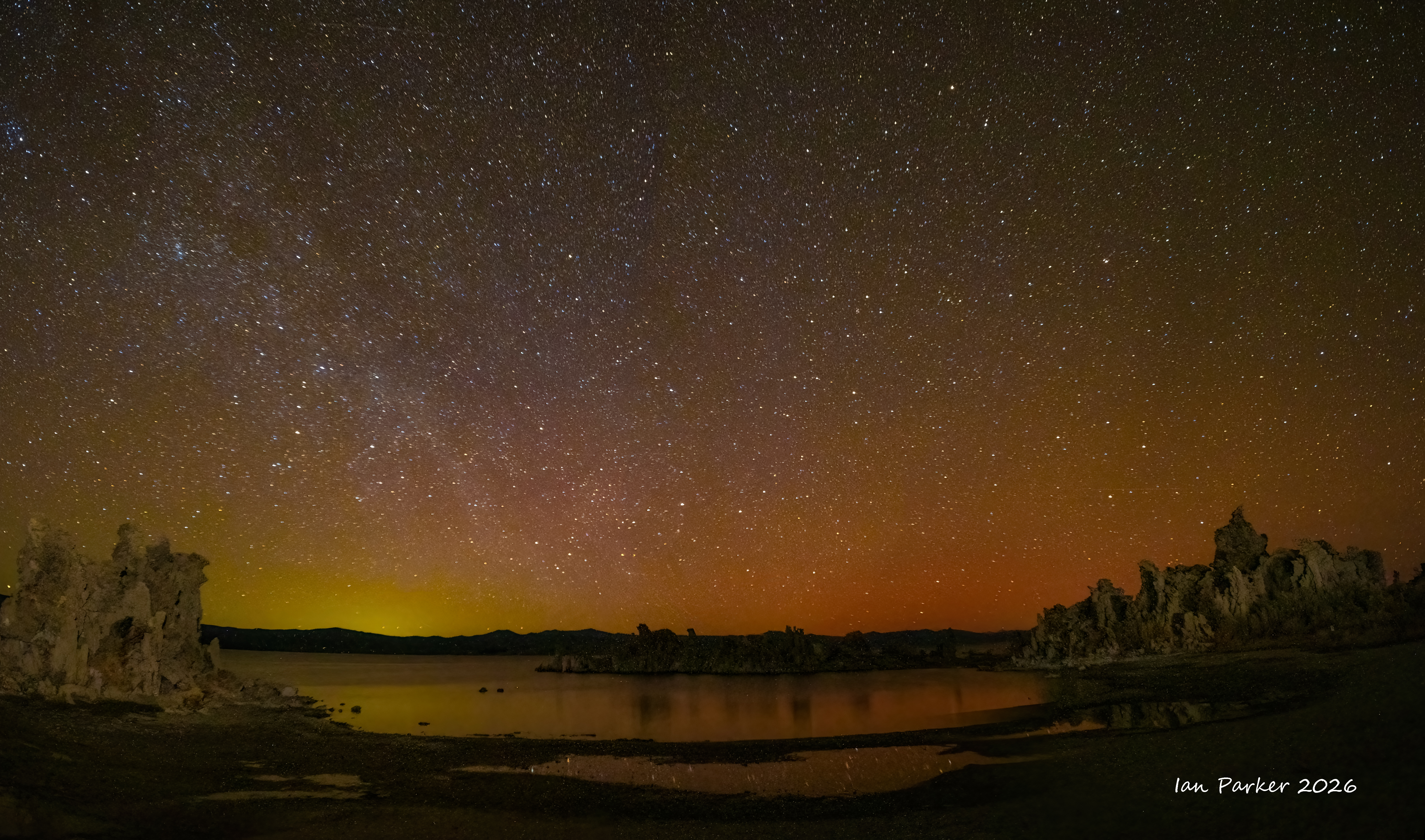

February 14 - March 5 2026: A trip to the Arctic - Senja and Lofoten Islands, Lapland
Feb 24 - A stopover in Narvik to break the long journey from Finland to the Lofoten Islands
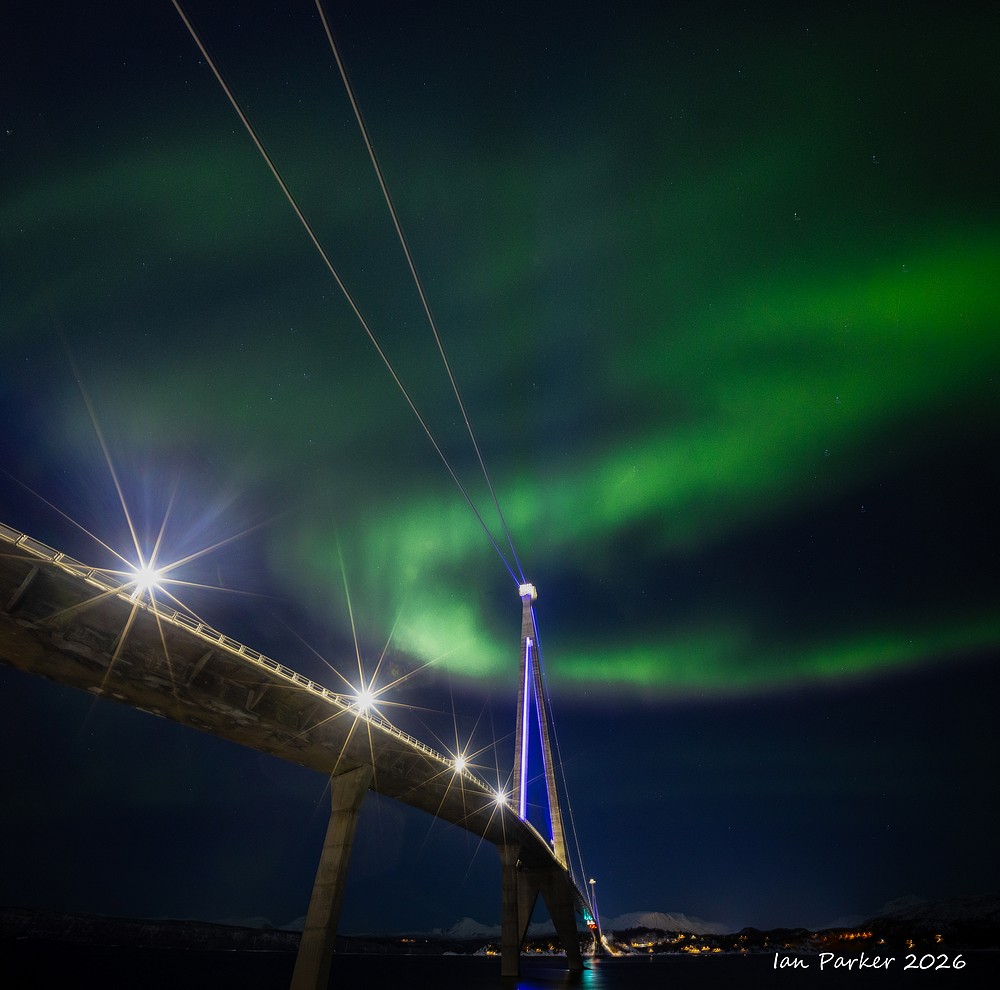
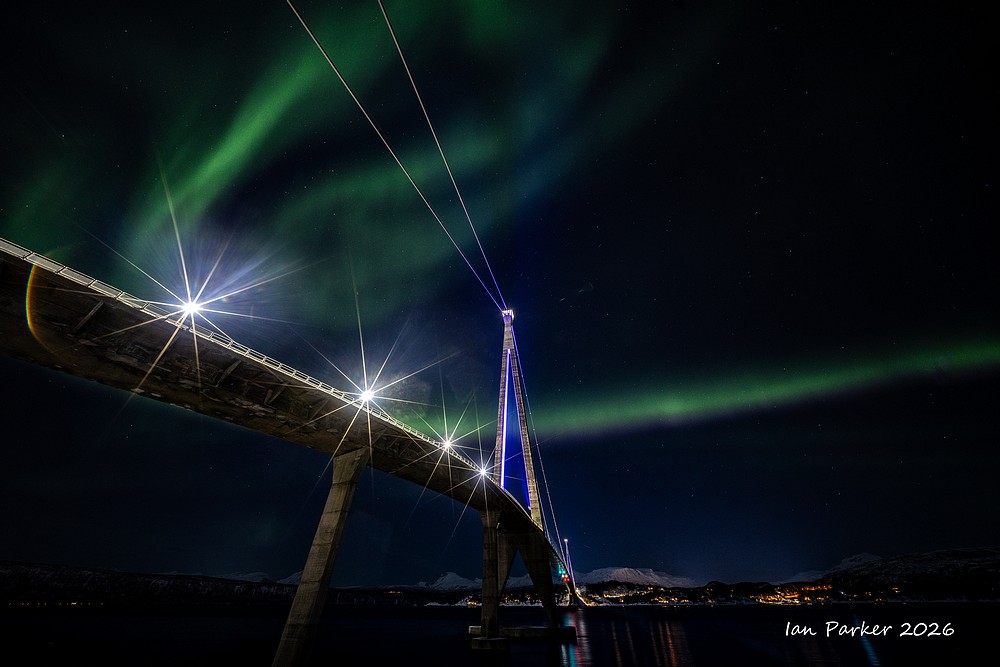
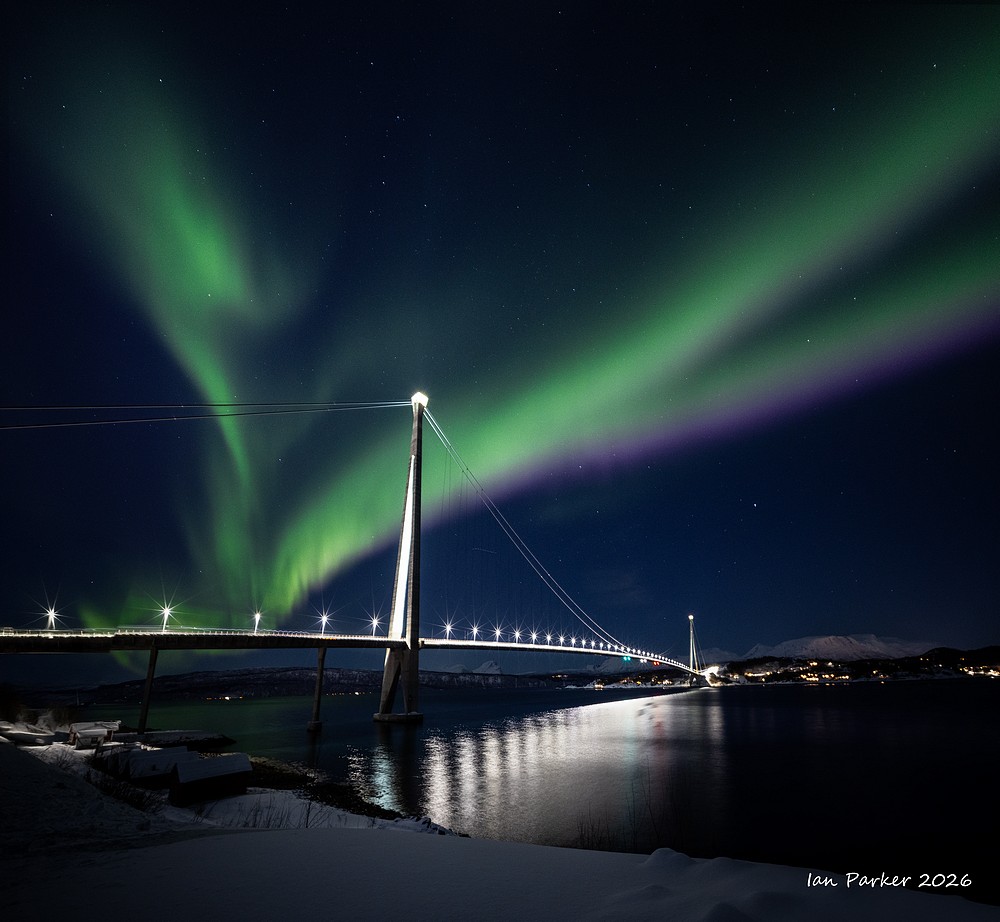
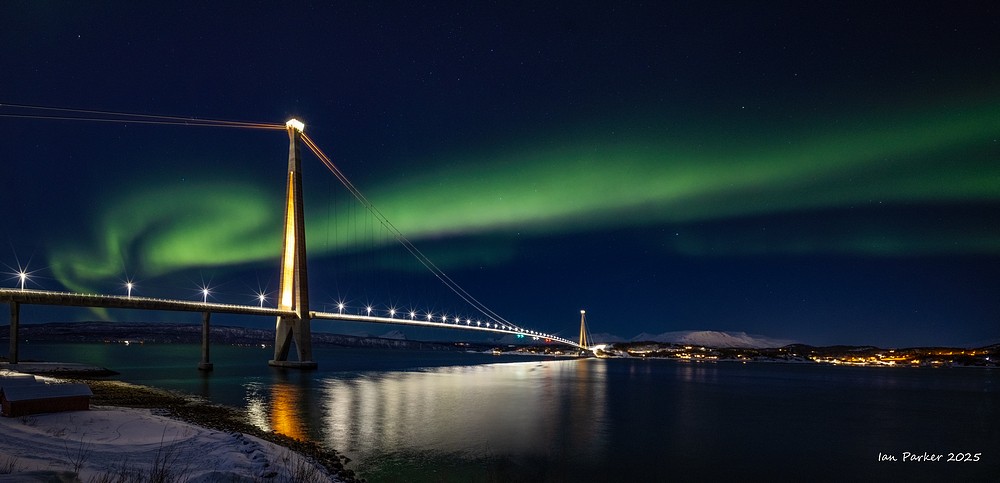
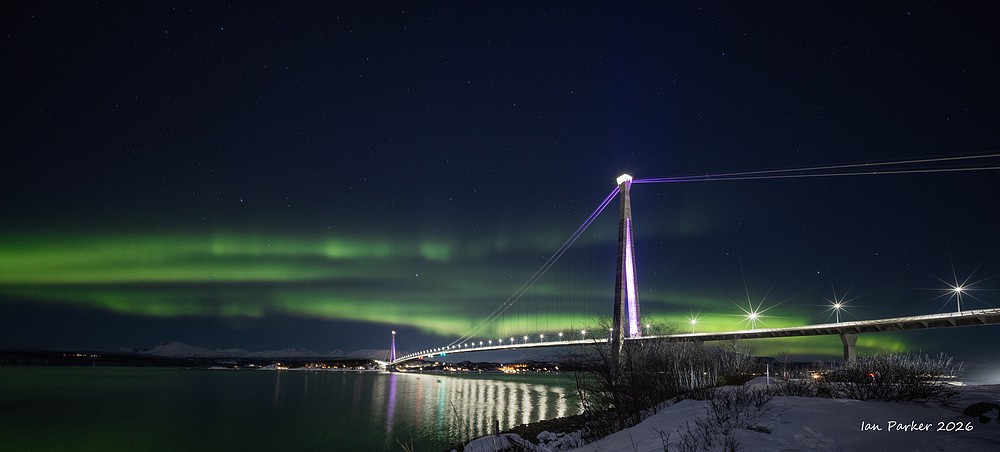
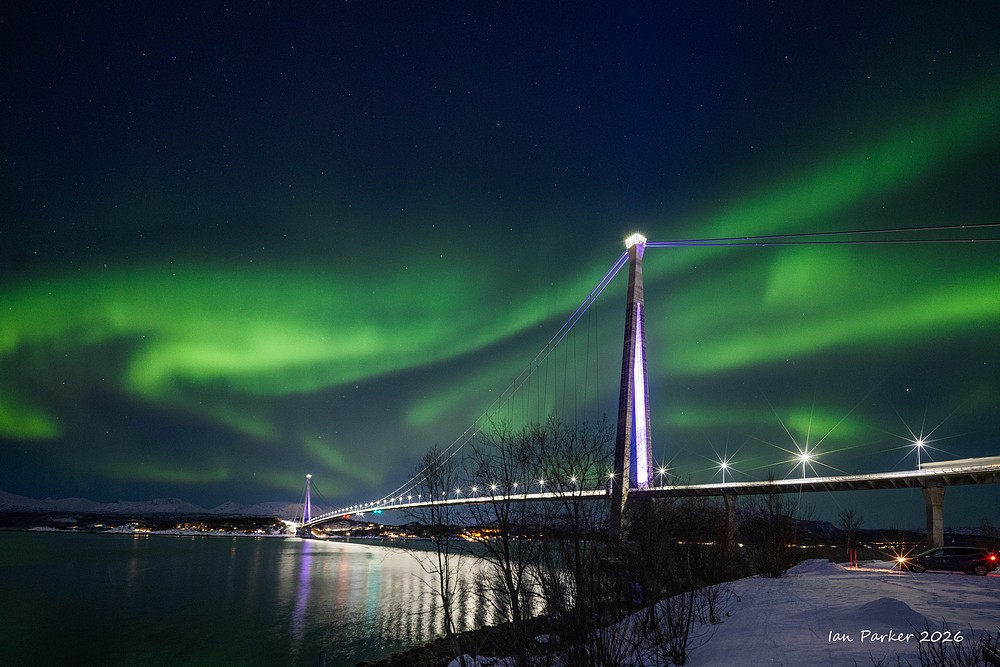
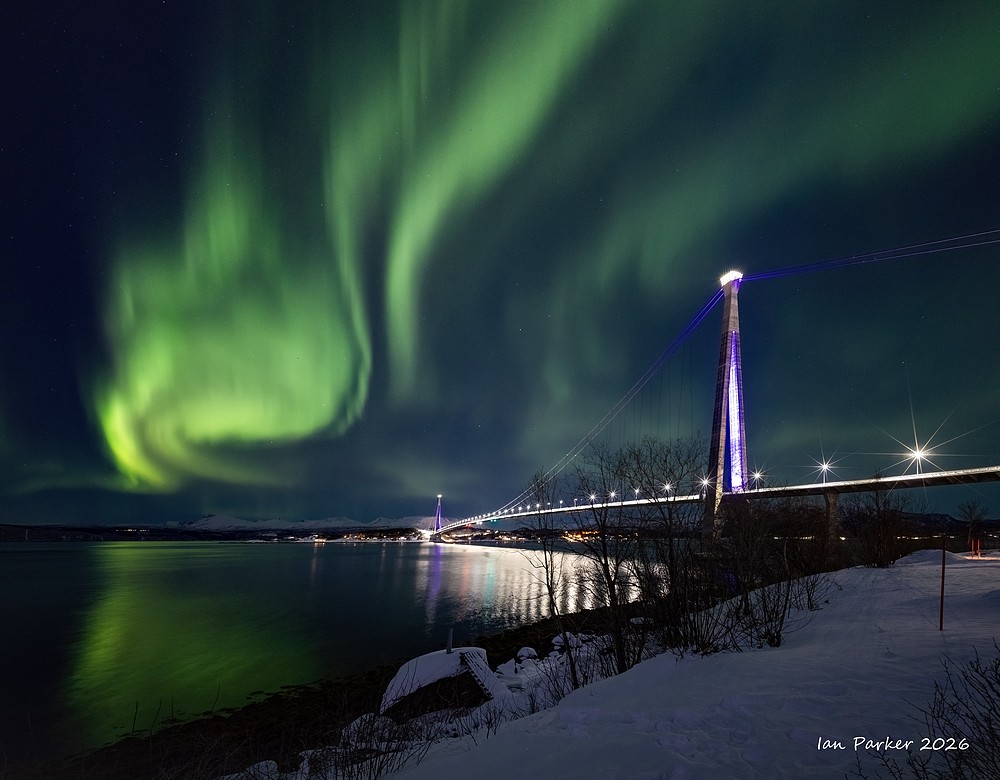
After an excellend dinner at the Fiskehallen, the sky was clear. I thought the bridge across the Fjord to Narvik would mage a good foreground to photograph aurora.

The Hålogaland suspension bridge, opened in 2018, is the longest bridge in the Arctic (second longest in Norway), and was built to shorten the driving distance around the Rombaks fjord to the north of Norway. The old road along the shore of the fjord now doubles back underneath the bridge, providing just a few clear views between trees and bilboards to capture the bridge against auroral displays to the north.
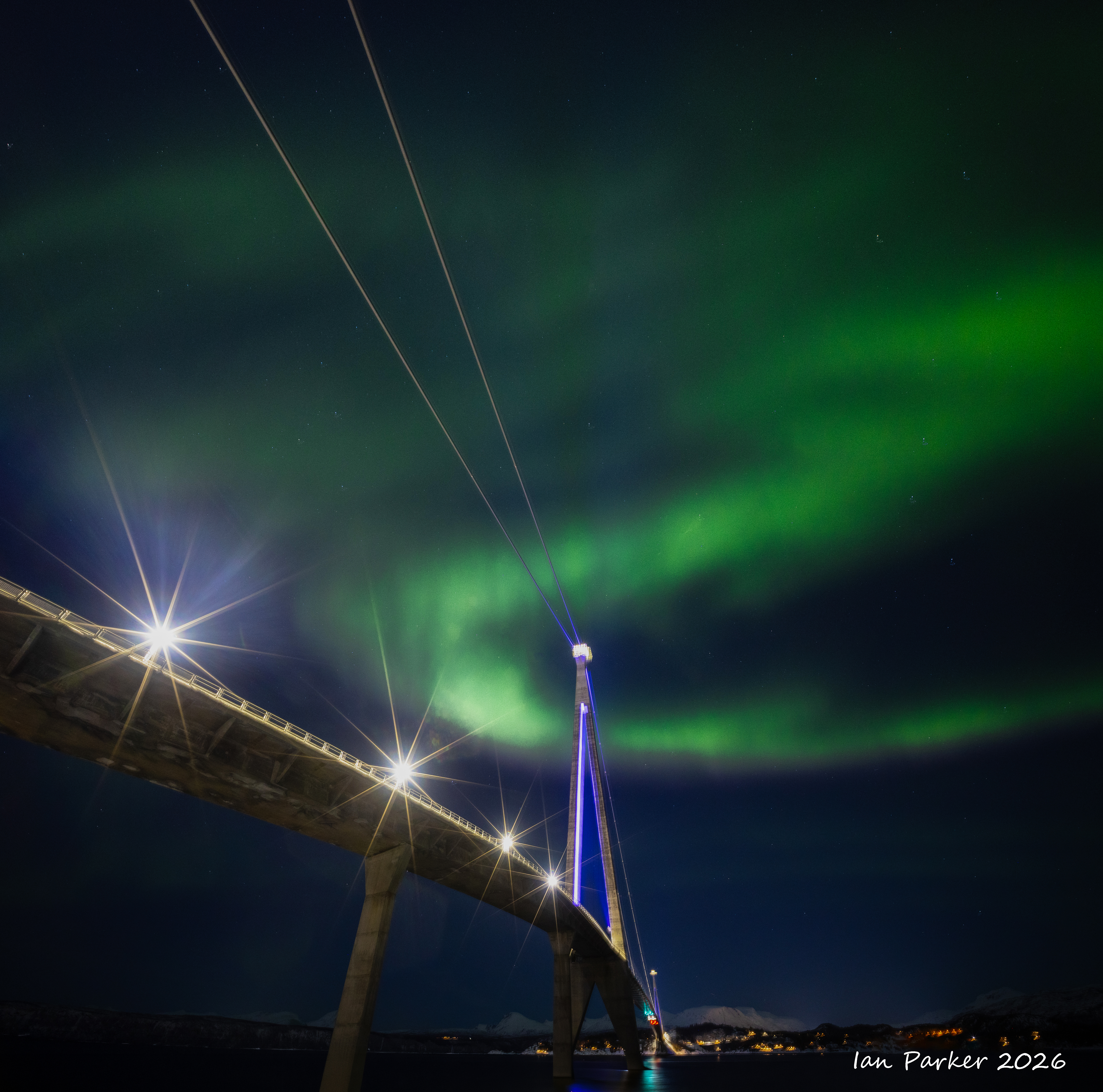
The ultrawide Laowa lens I use for aurora photography has an unusual 5-bladed aperture; an odd number that produces sun-stars with 10 spikes. To enhance this effect I stopped down the aperture to f4.
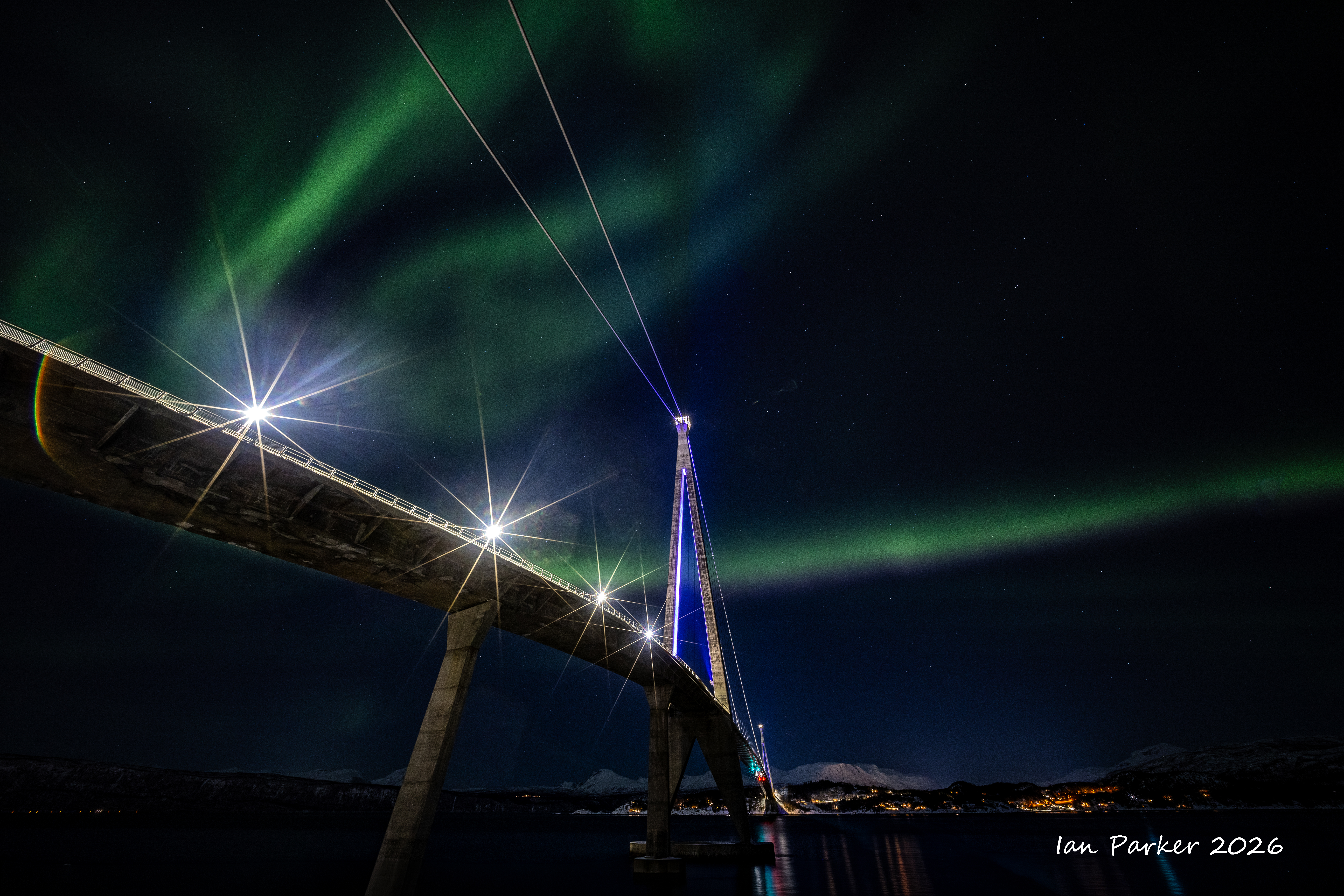
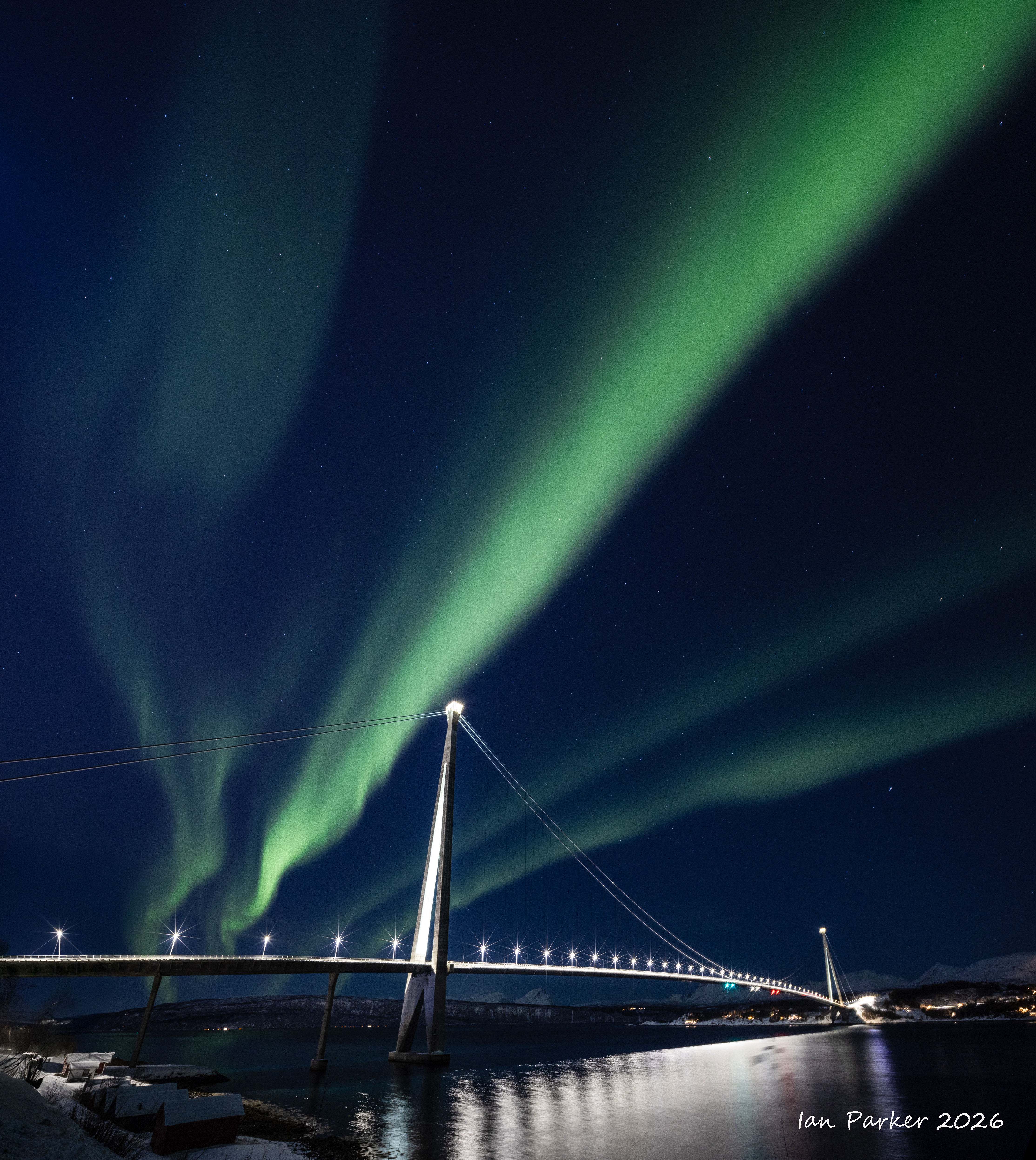
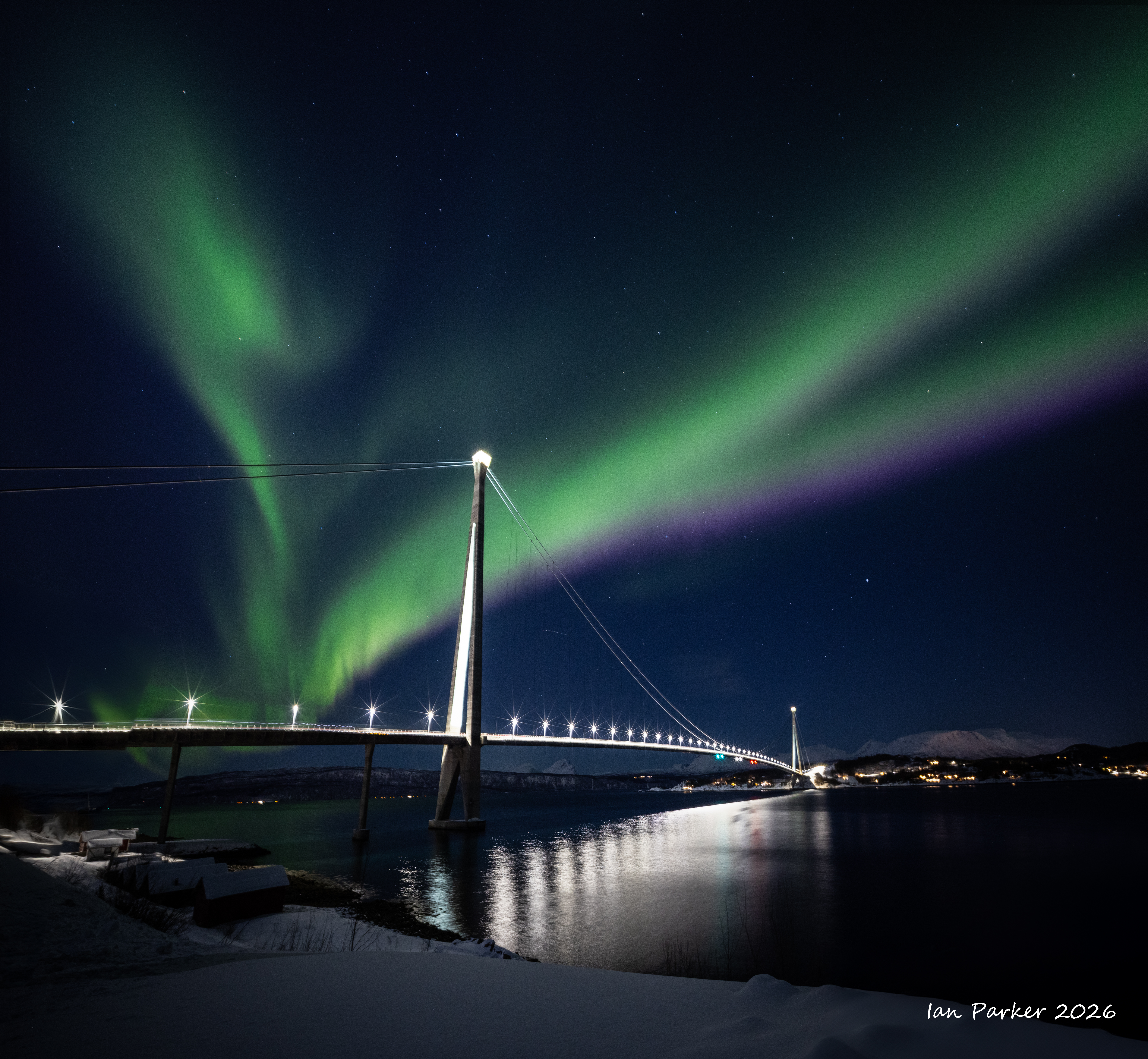
Capturing an aurora when it sweeps high in the sky involves tilting the camera upwards - which strongly distorts the perspective and makes the bridge towers appear to lean in toward each other. But when the aurora was lower to the horizon I could keep the camera level.
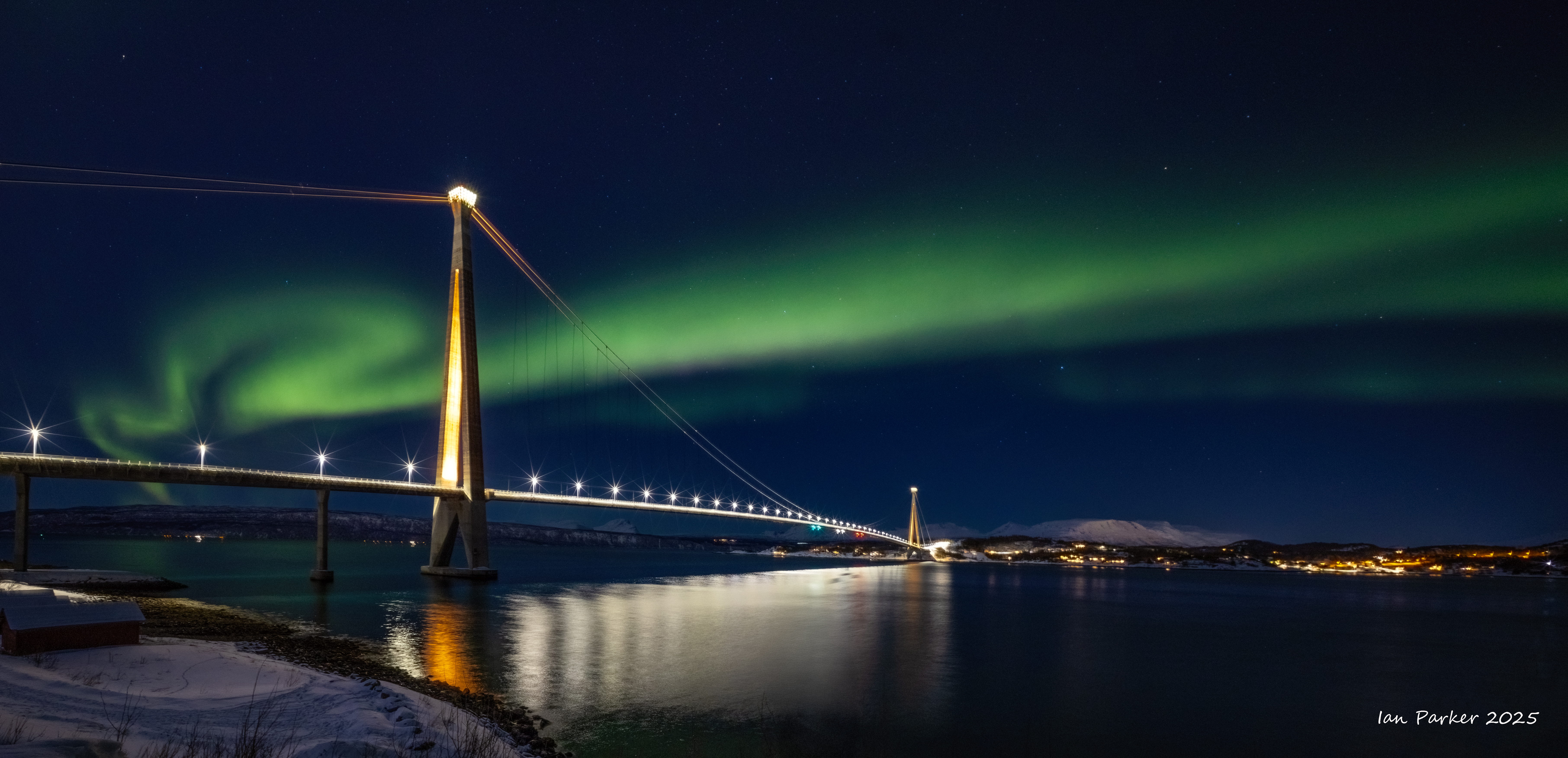
The photographs below were taken from the Veterans Memorial commemorating Norwegian and French forces who re-took Narvik from the Germans in WW2. This location provides unobstructed views from the other (western) side of the bridge.
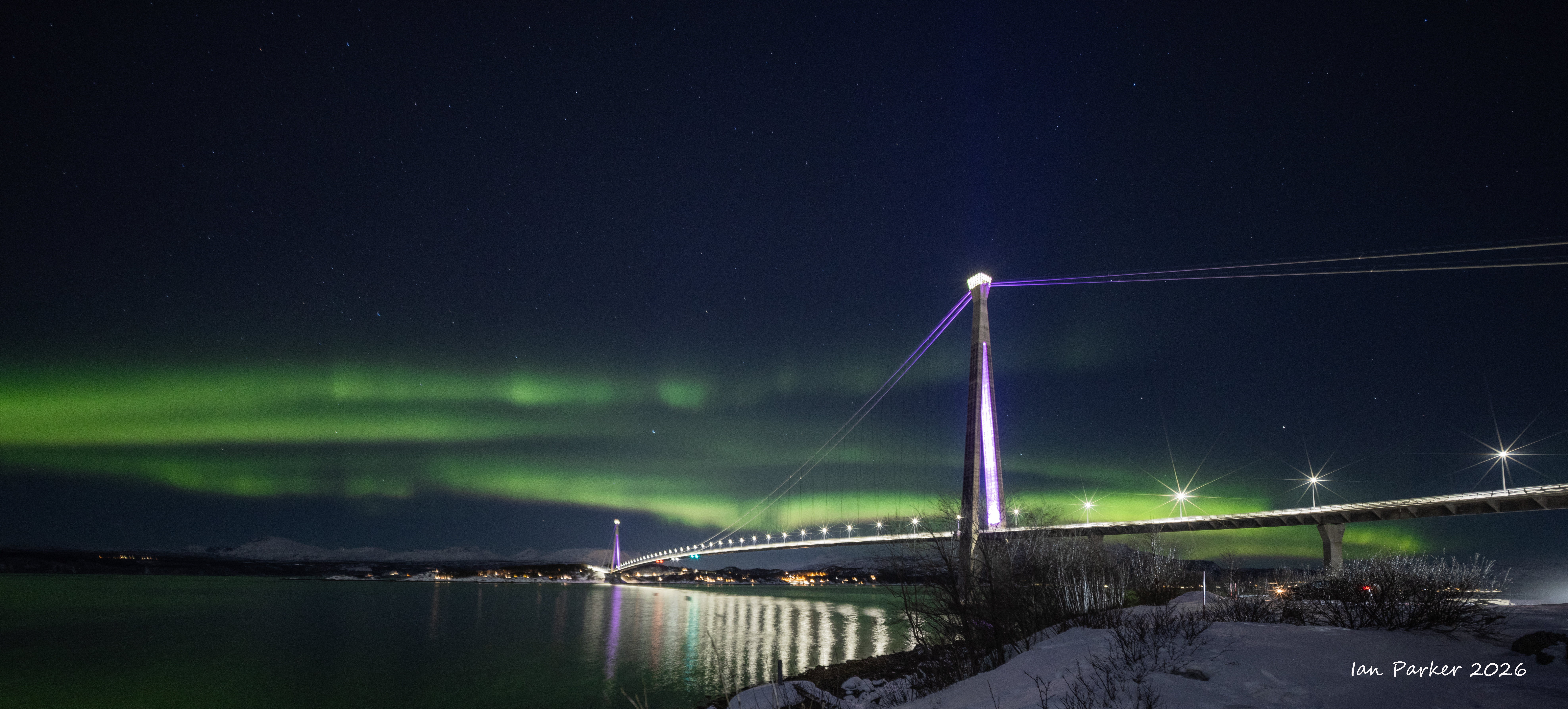
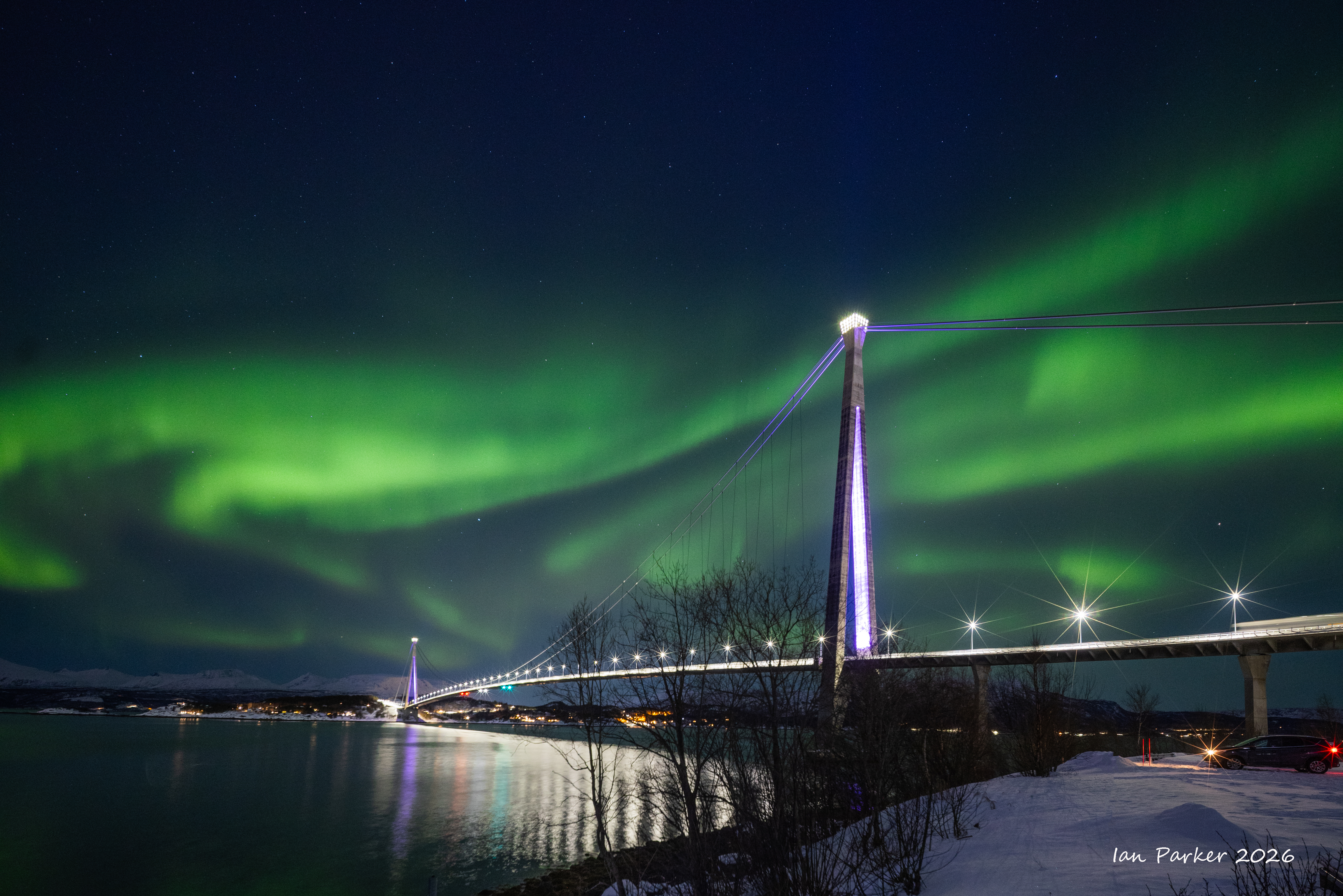
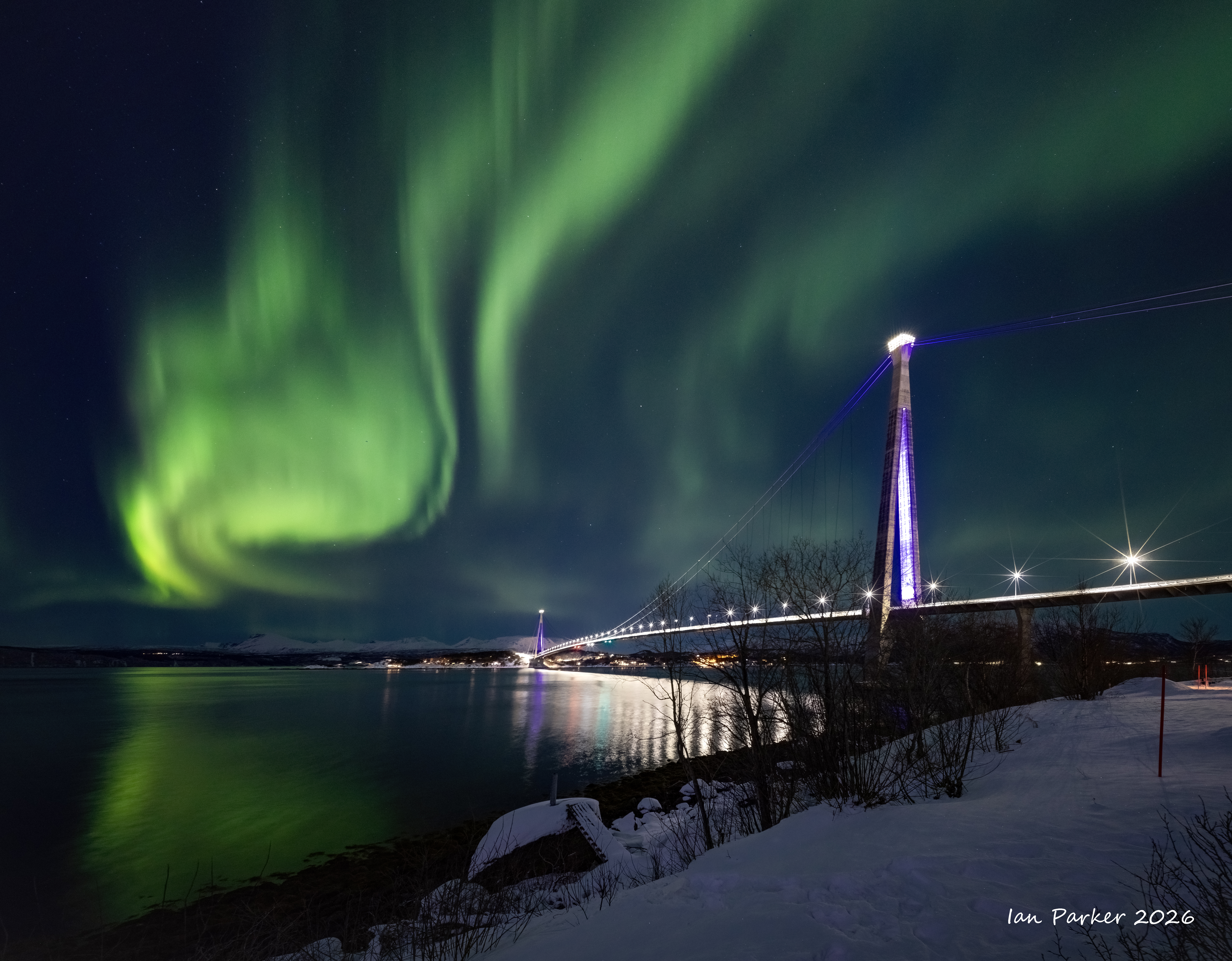
This photo was the kast aurora we saw during our Scandinavian trip in February/March. Our final days in the Lofoten Islands were marked by cloudy skies and more rain than snow.
Feb. 22-24 - A detour into Lapland for auroras and frozen snow-covered trees
Evening light over trees and frozen lake at Nivunki Village
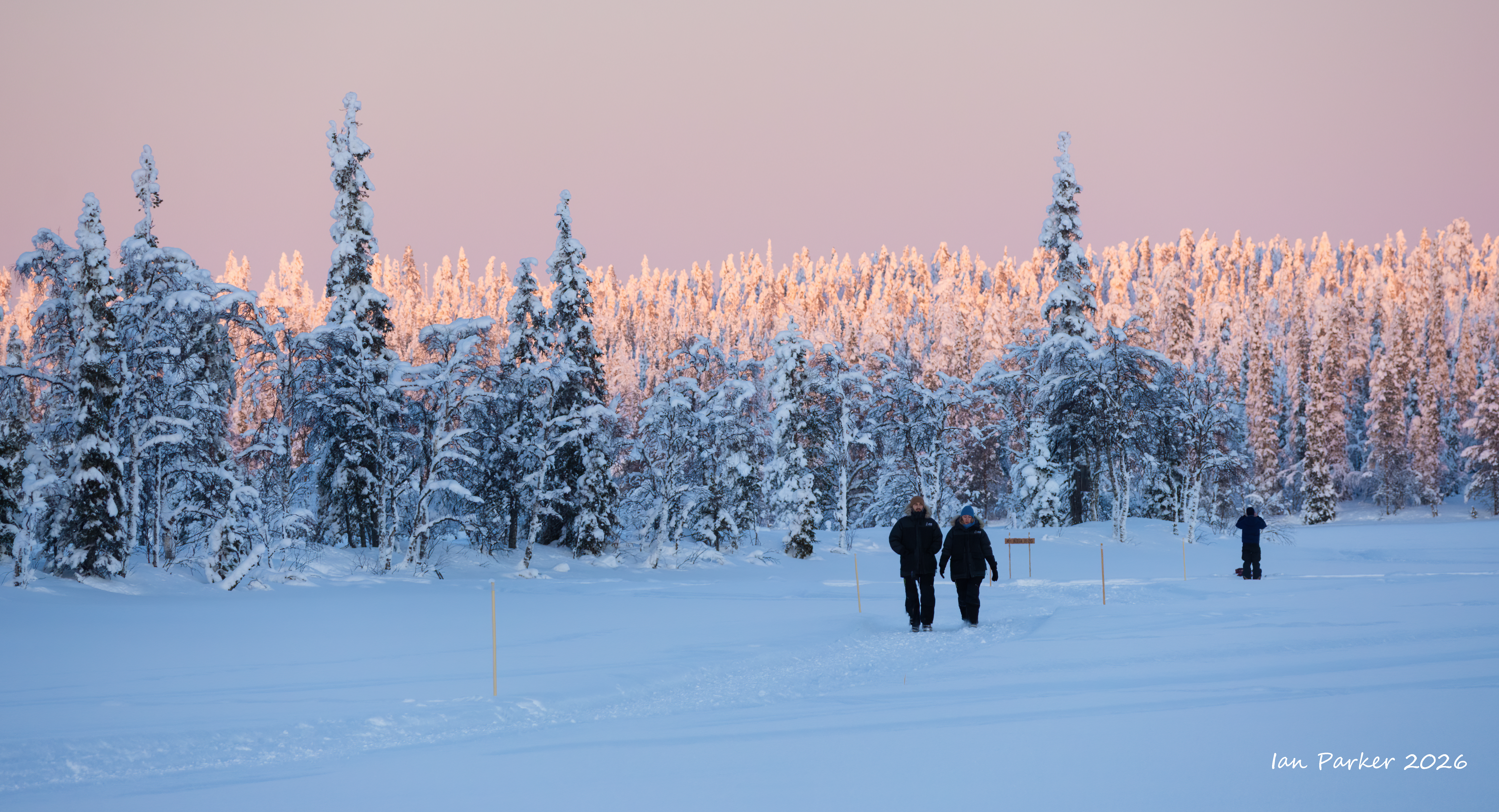
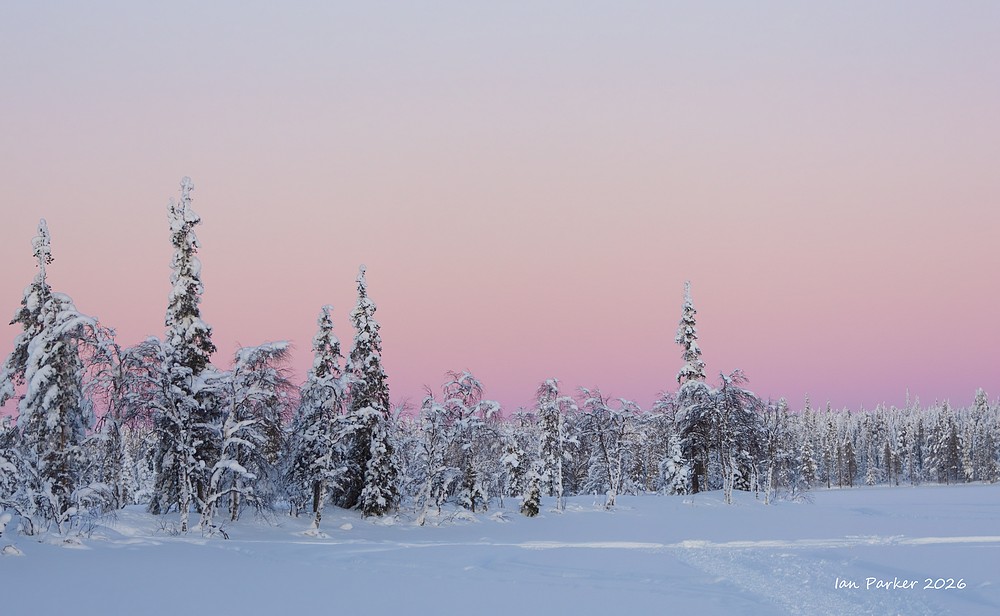 Belt of Venus above snow-draped trees; Nivunki Village, Lapland Belt of Venus above snow-draped trees; Nivunki Village, Lapland |
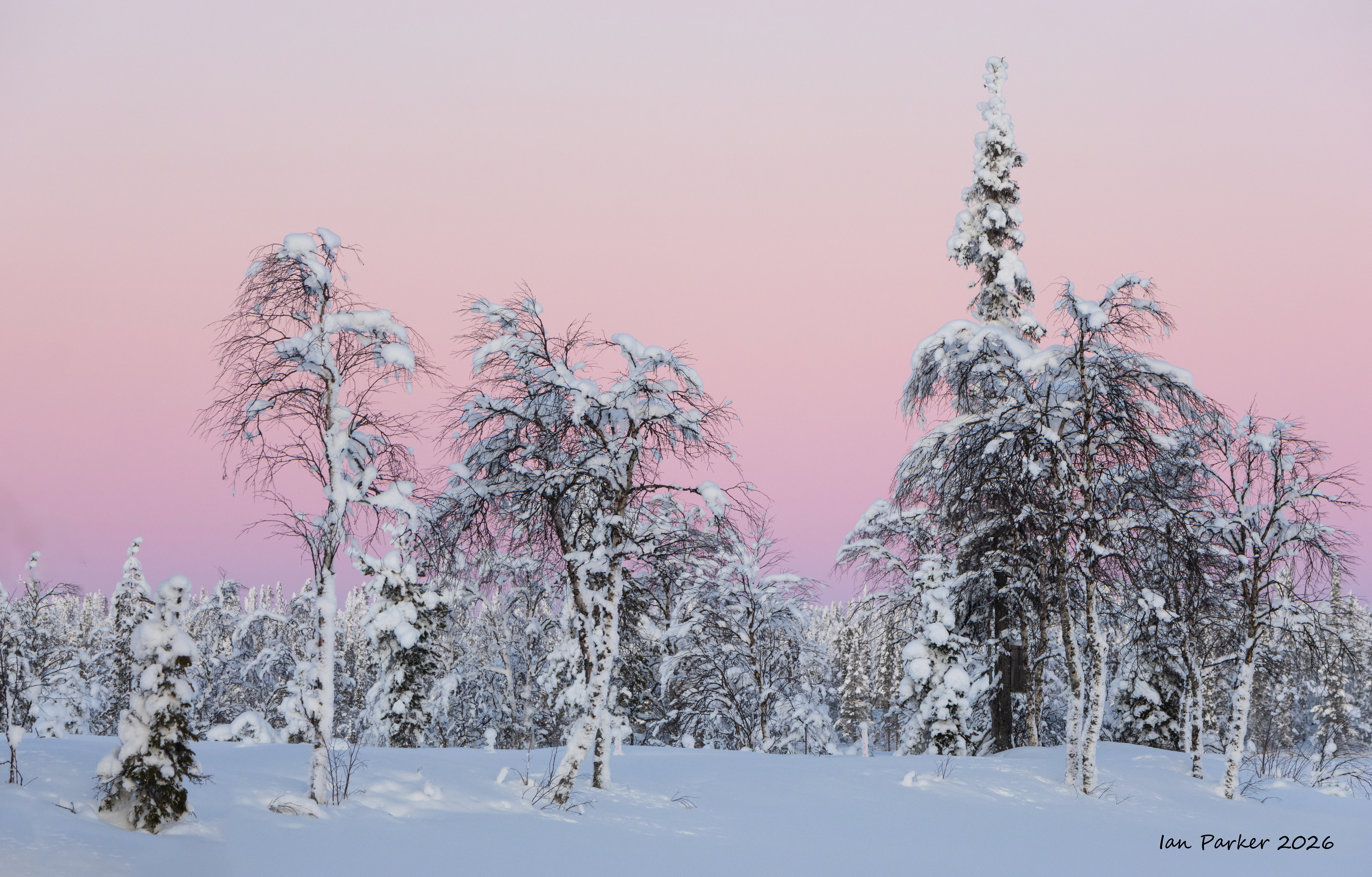 Belt of Venus against foreground trees; Nivunki Village, Lapland |
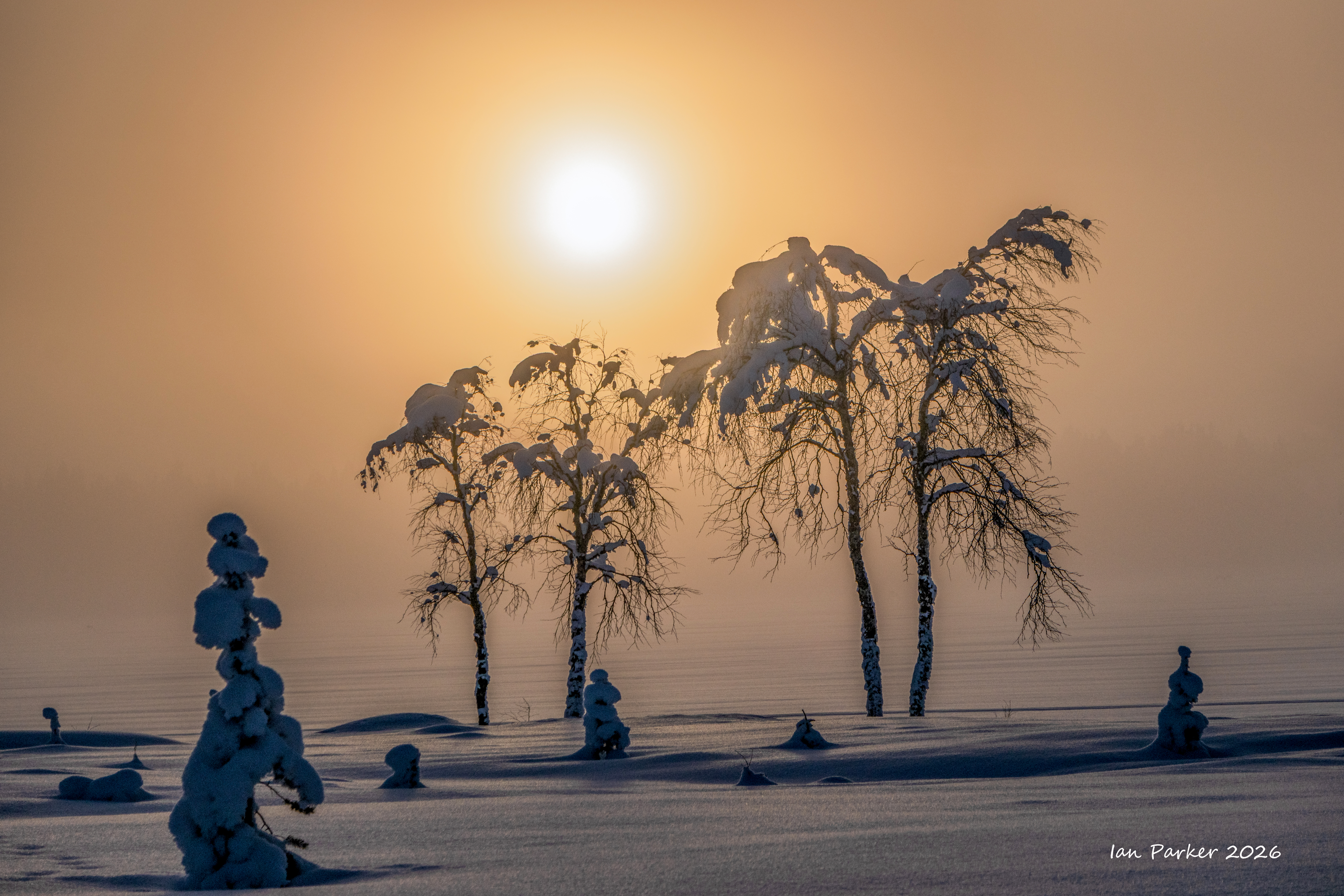
Changing light and mists on a very cold morning
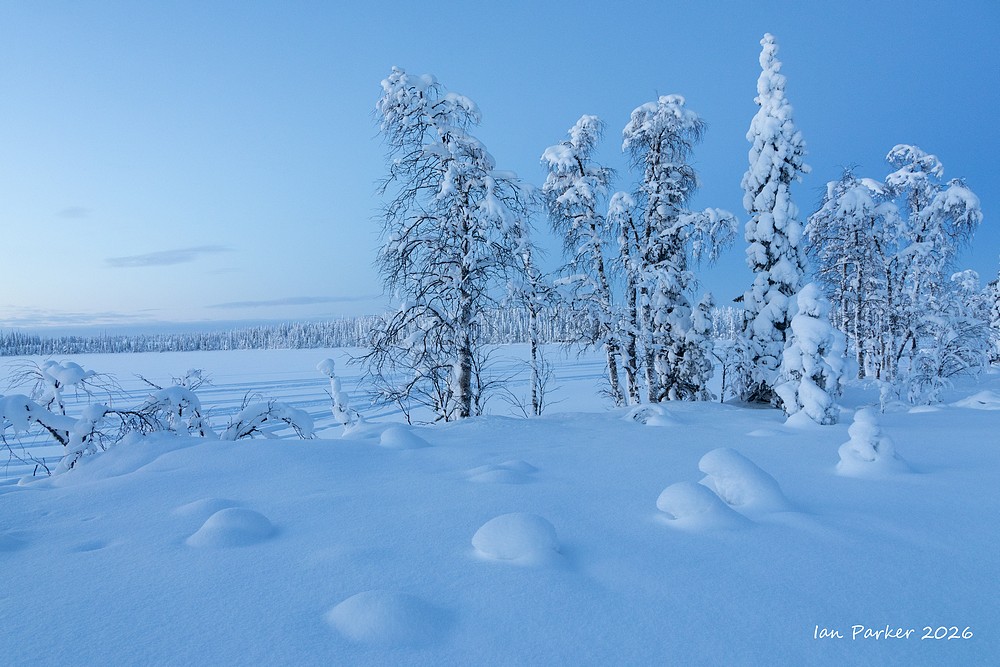 Blue hour before sunrise - trees and bumps in the snow; Nivunki Village, Lapland |
The temperature on our second morning at Ninunki dropped to -29oC (52oF) below freezing. This created a low cloud bank of tiny ice crystals (diamond dust) above the frozen lake, making for some nice atmospheric photography.
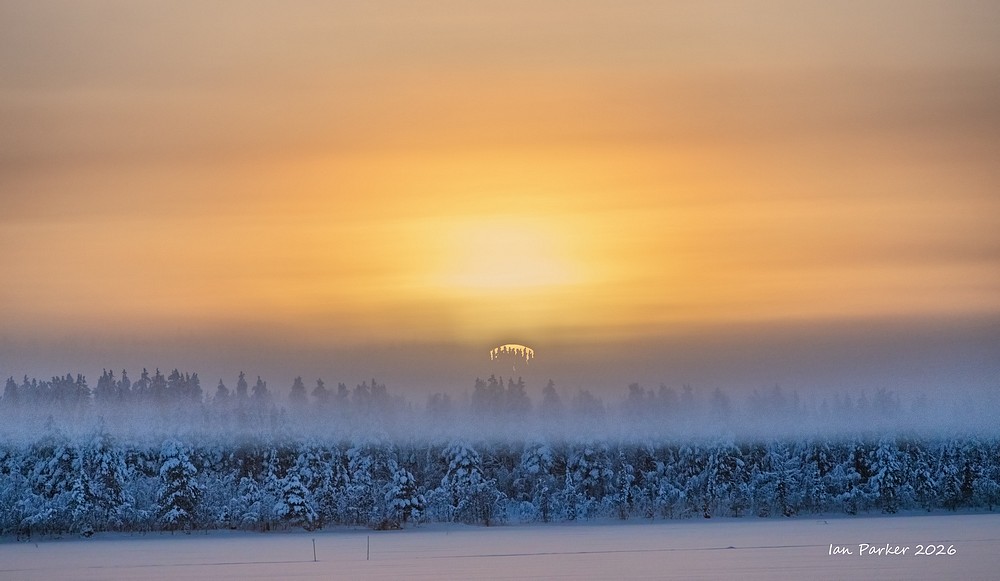 First glimpse of the sun over bank of ice ice mist; Nivunki Village, Lapland |
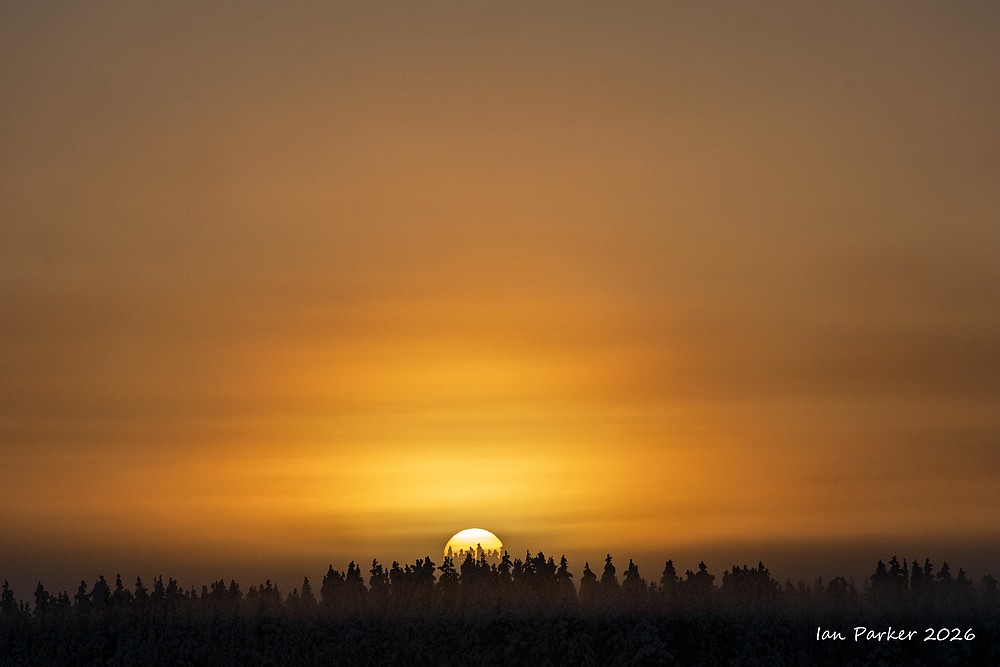
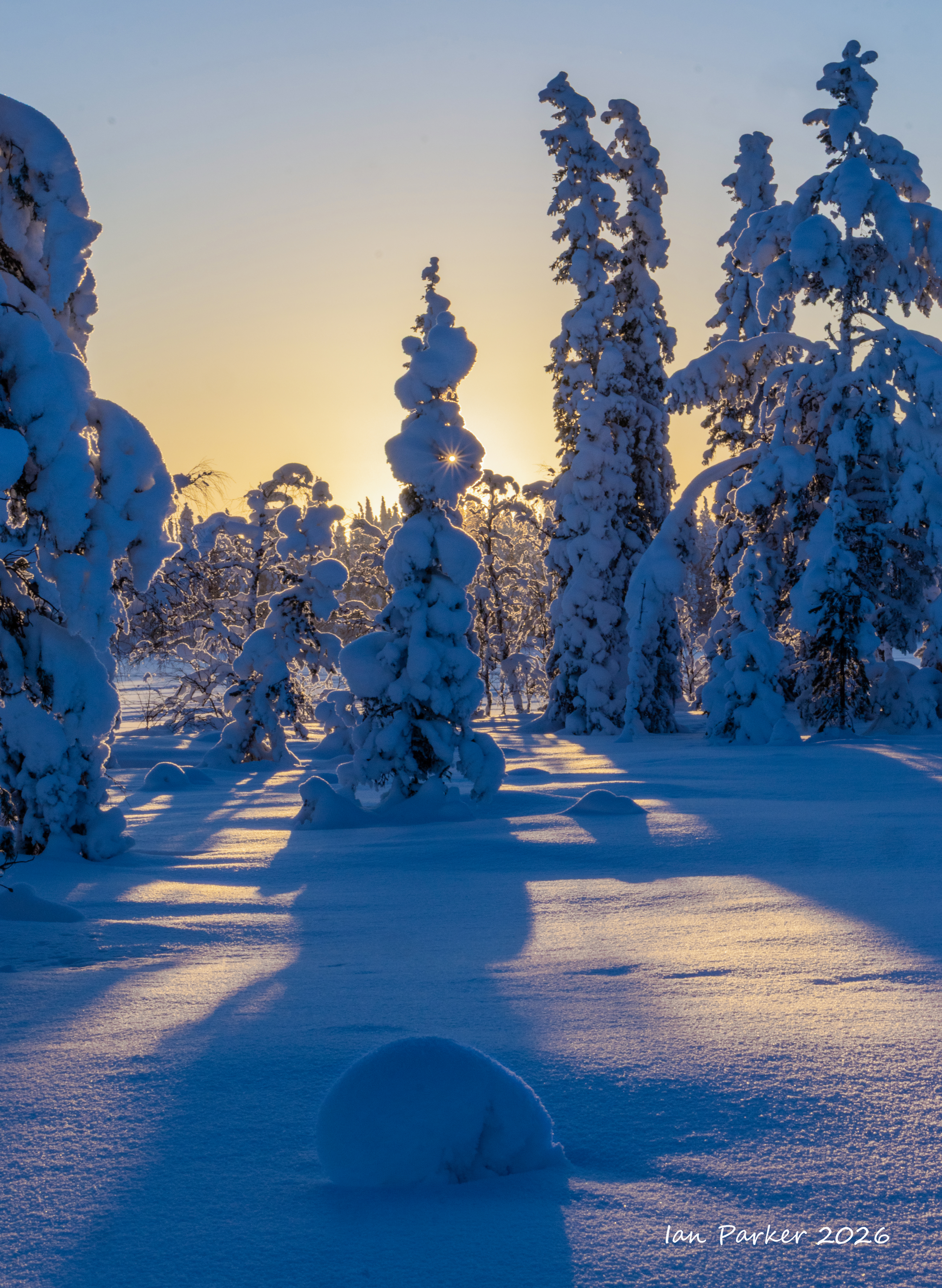
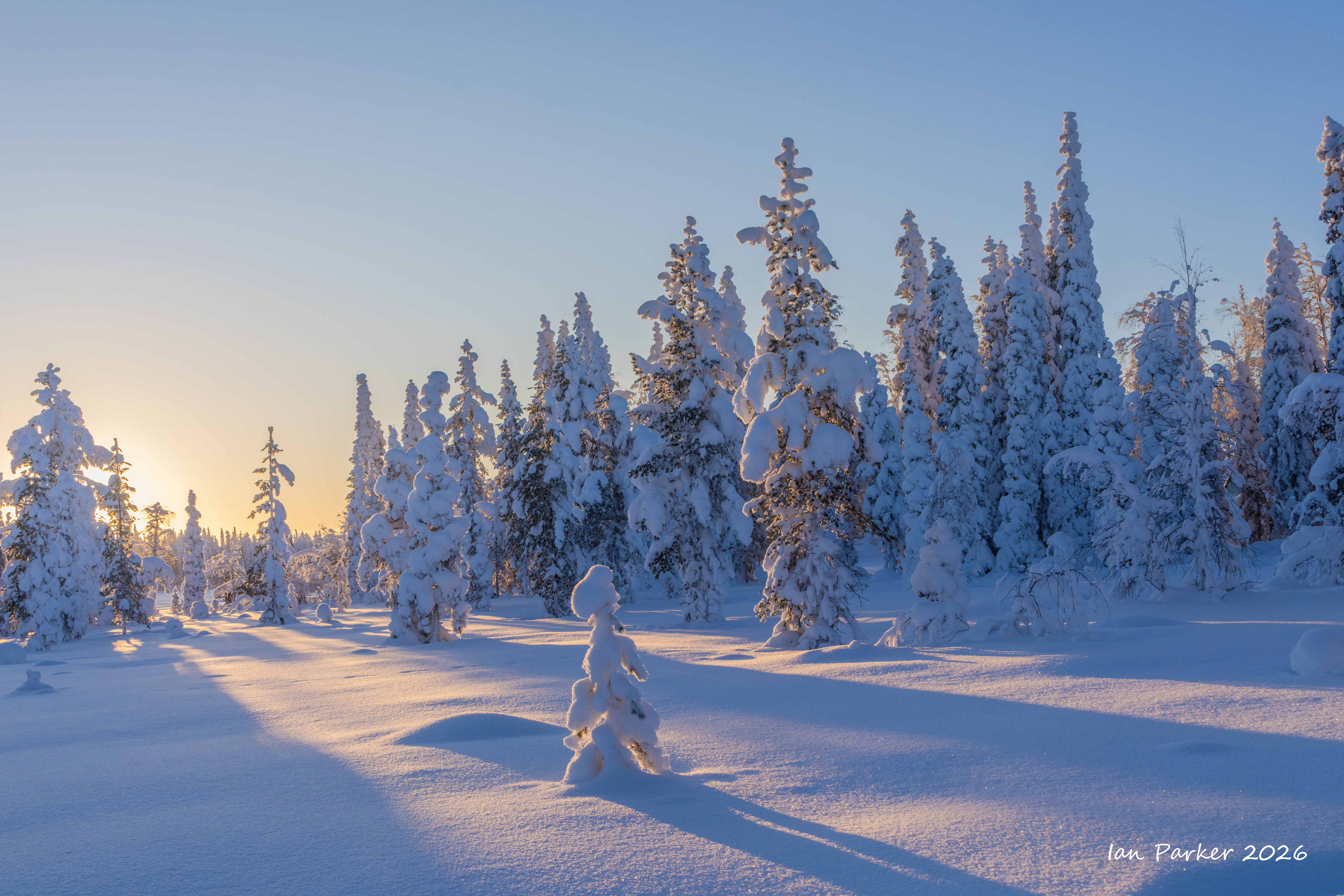
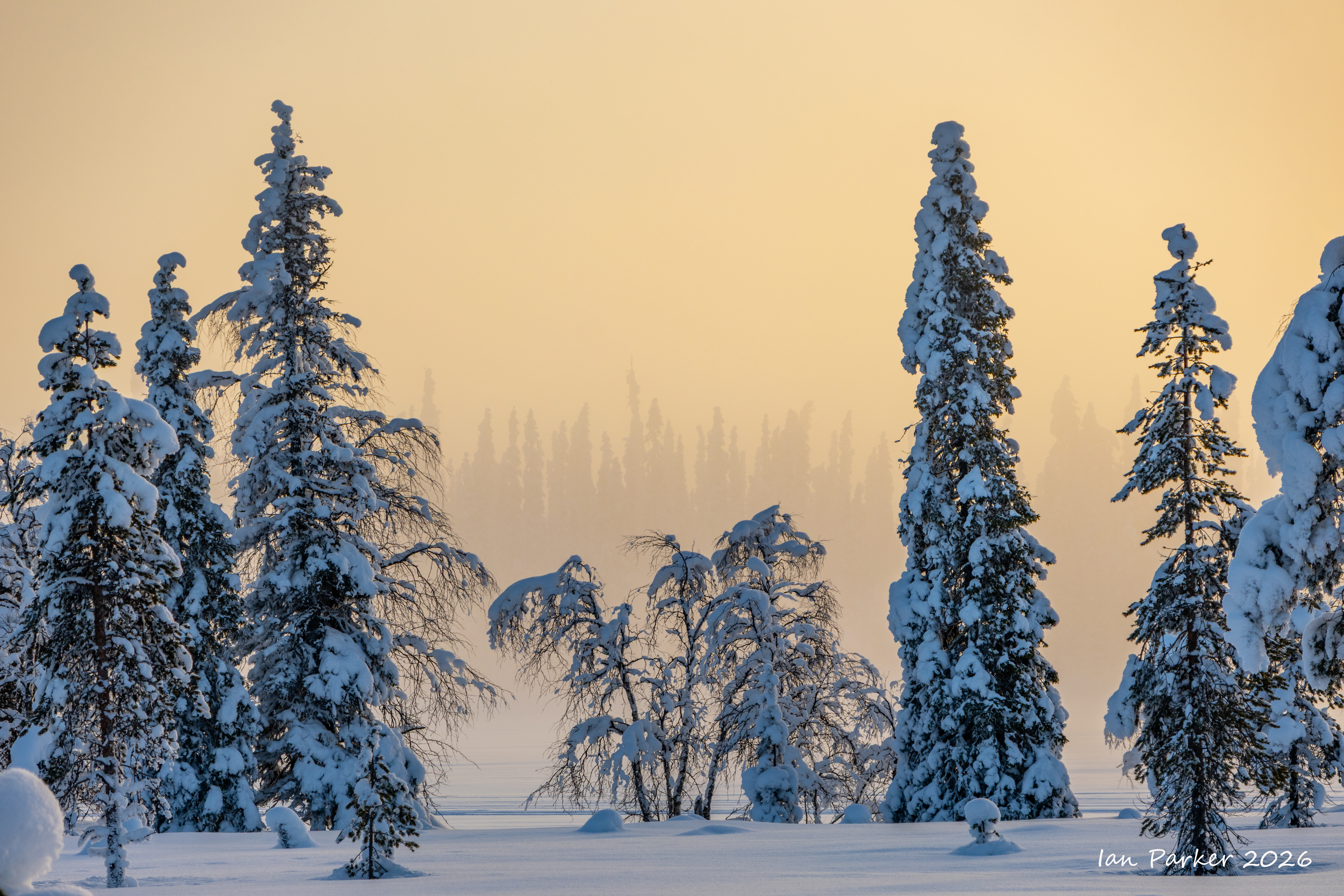
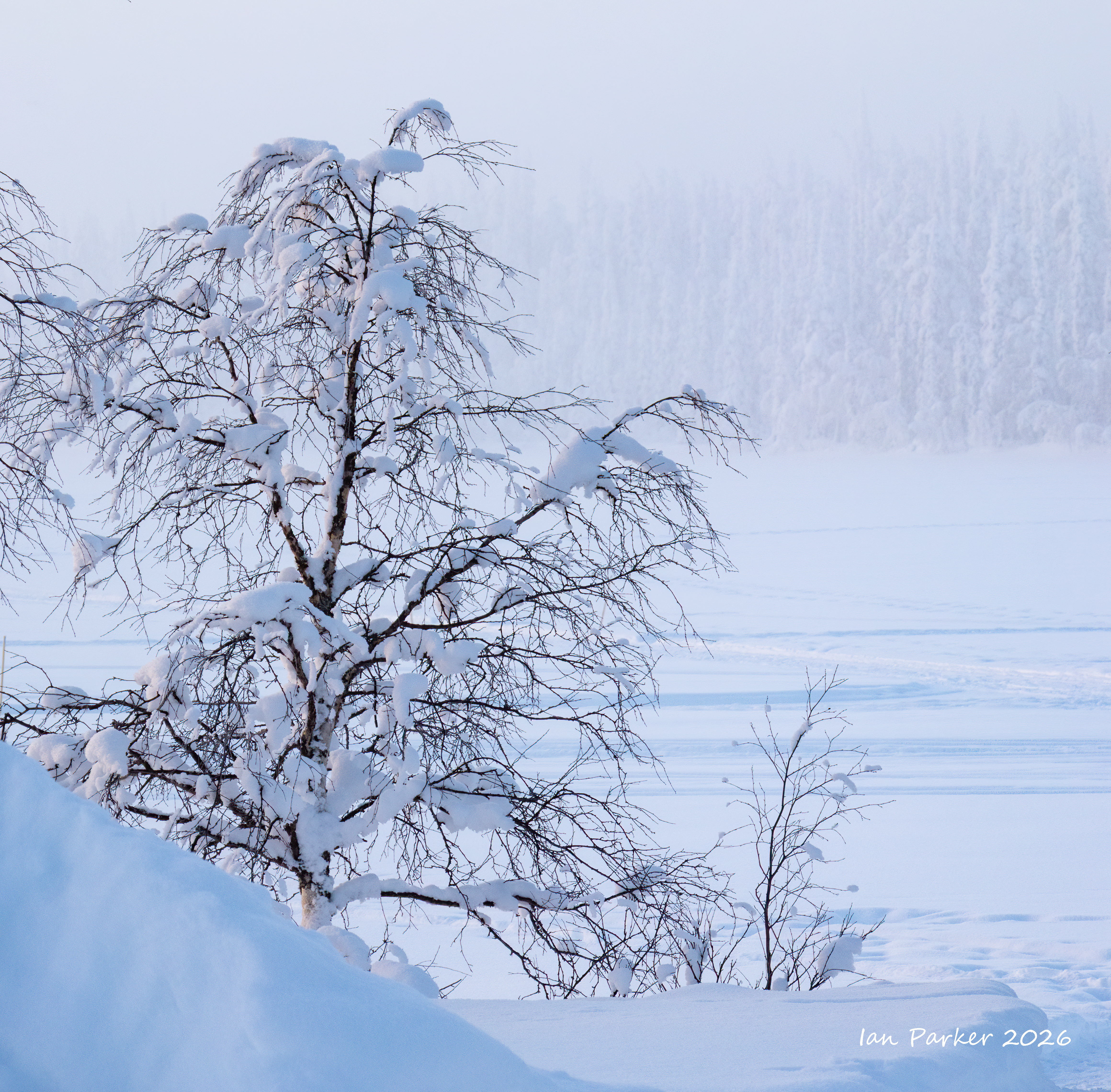
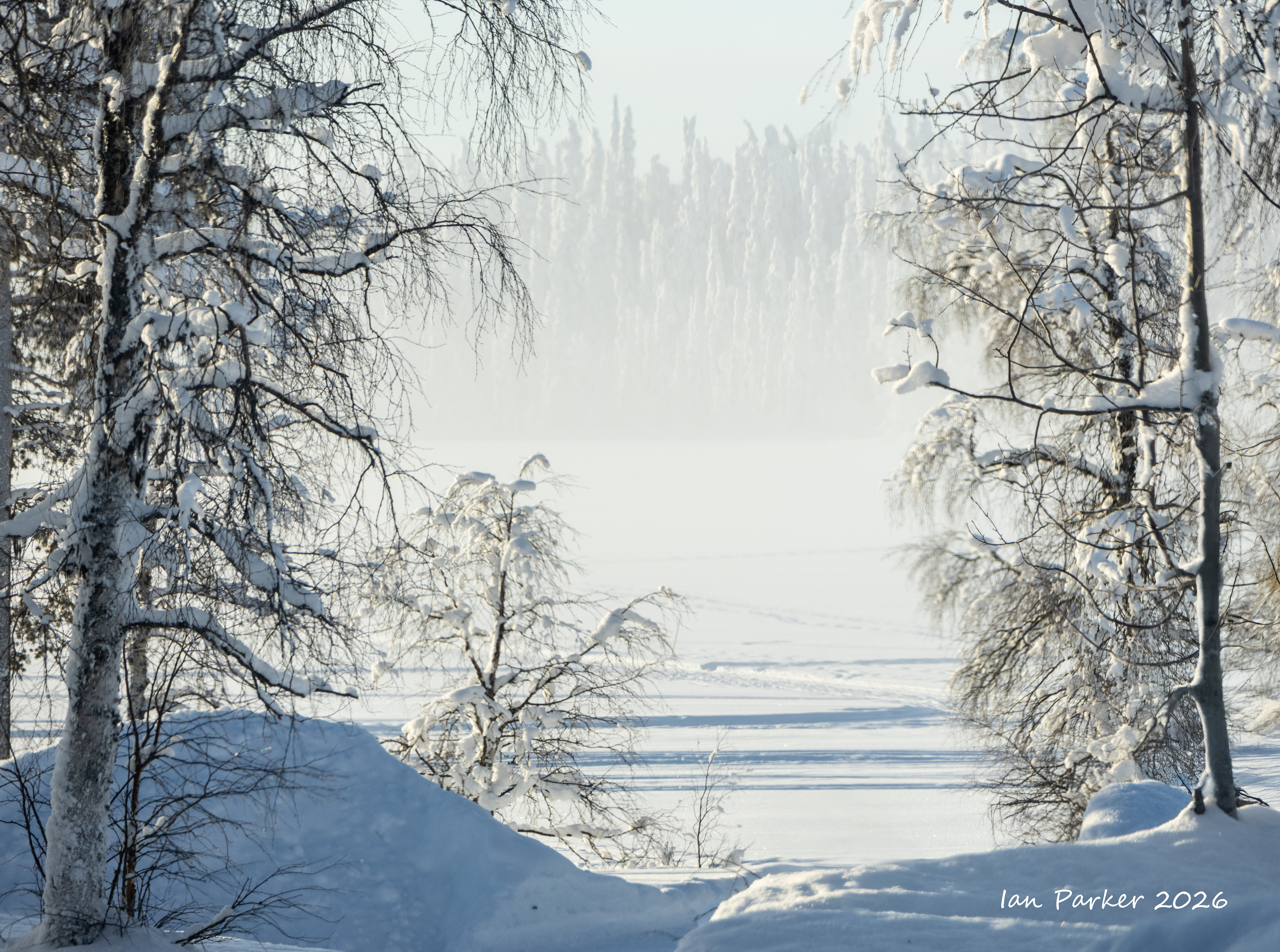
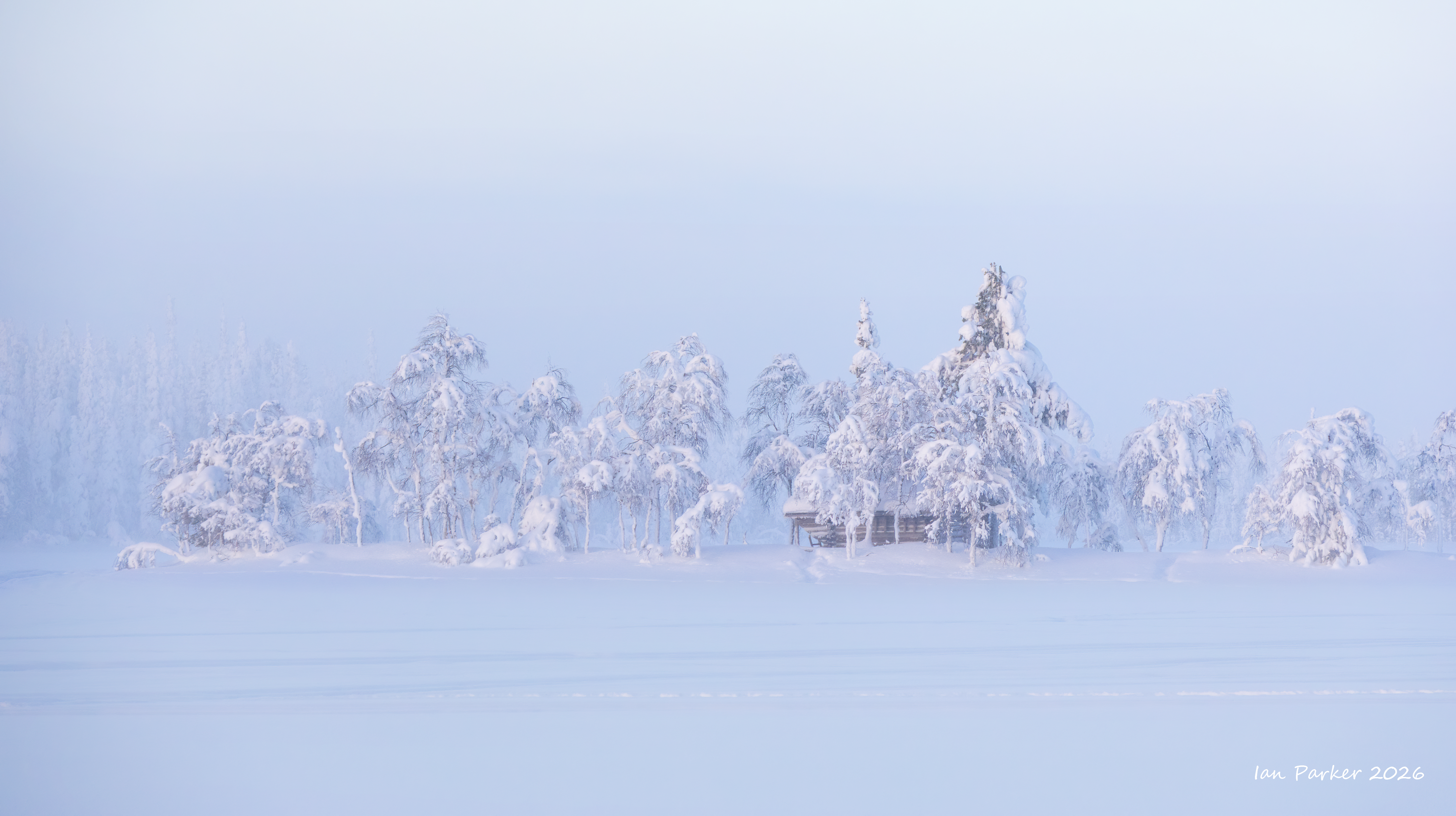 Hut and trees across the frozen lake; Nivunki Village, Lapland |
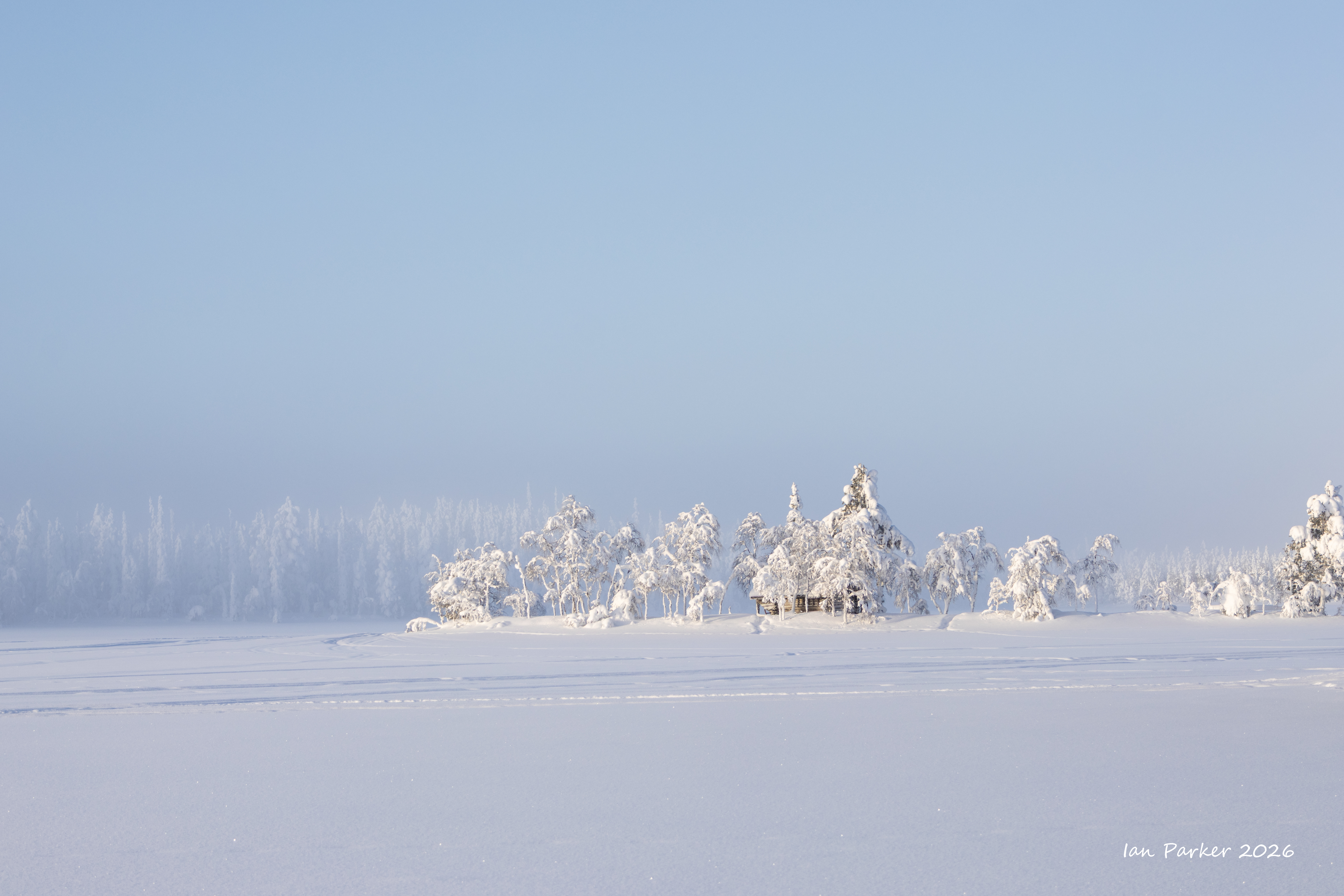
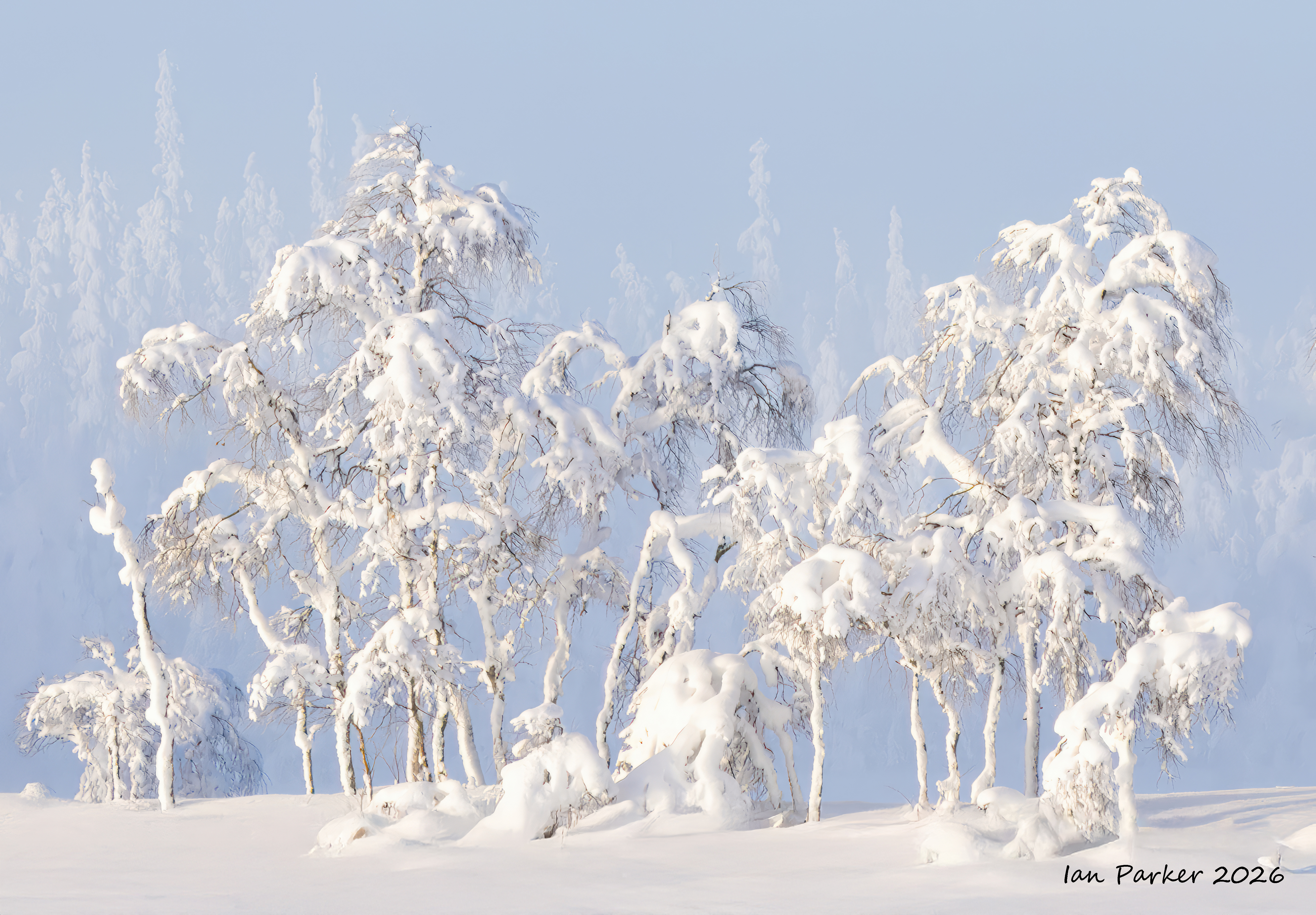
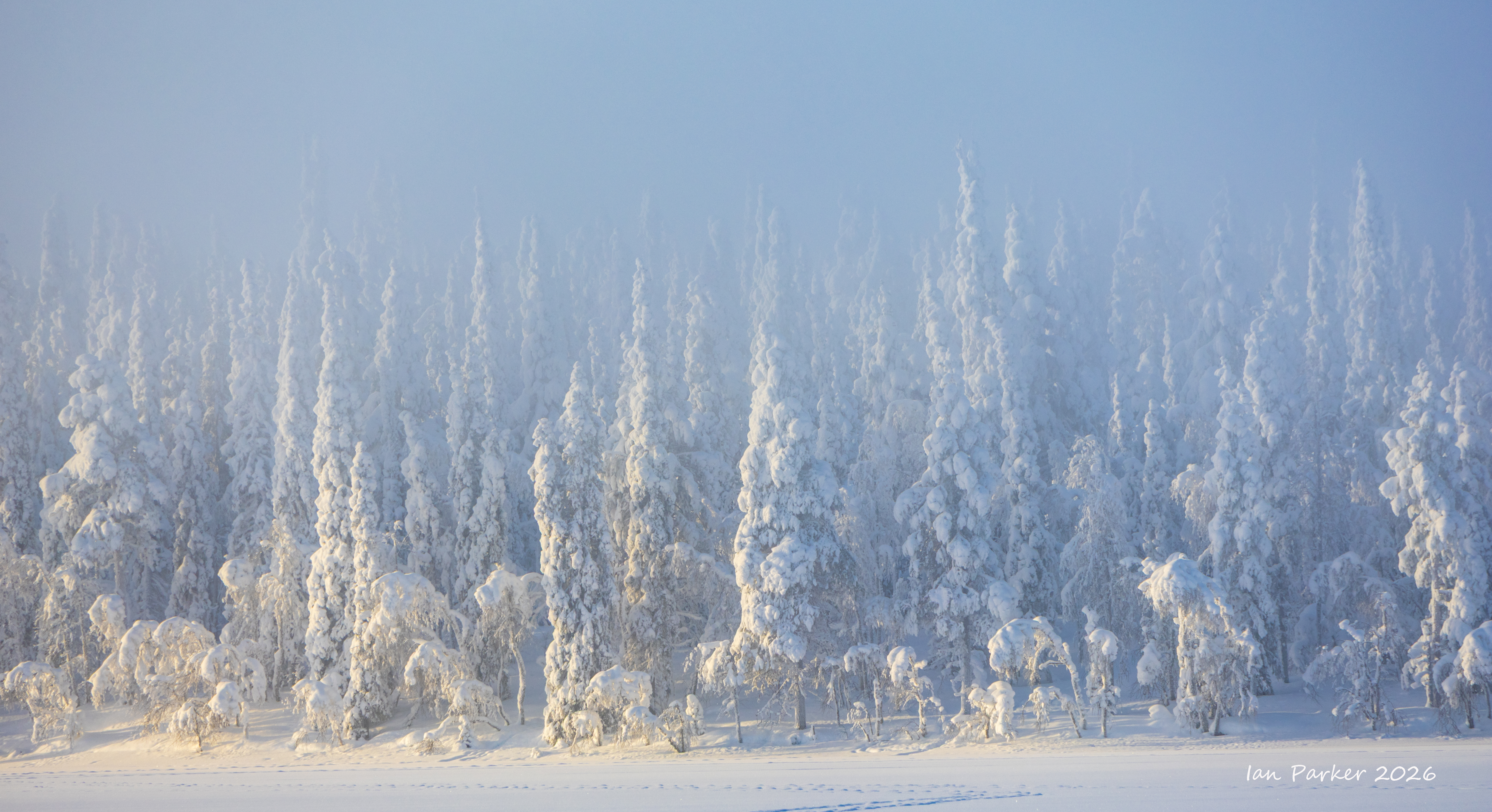
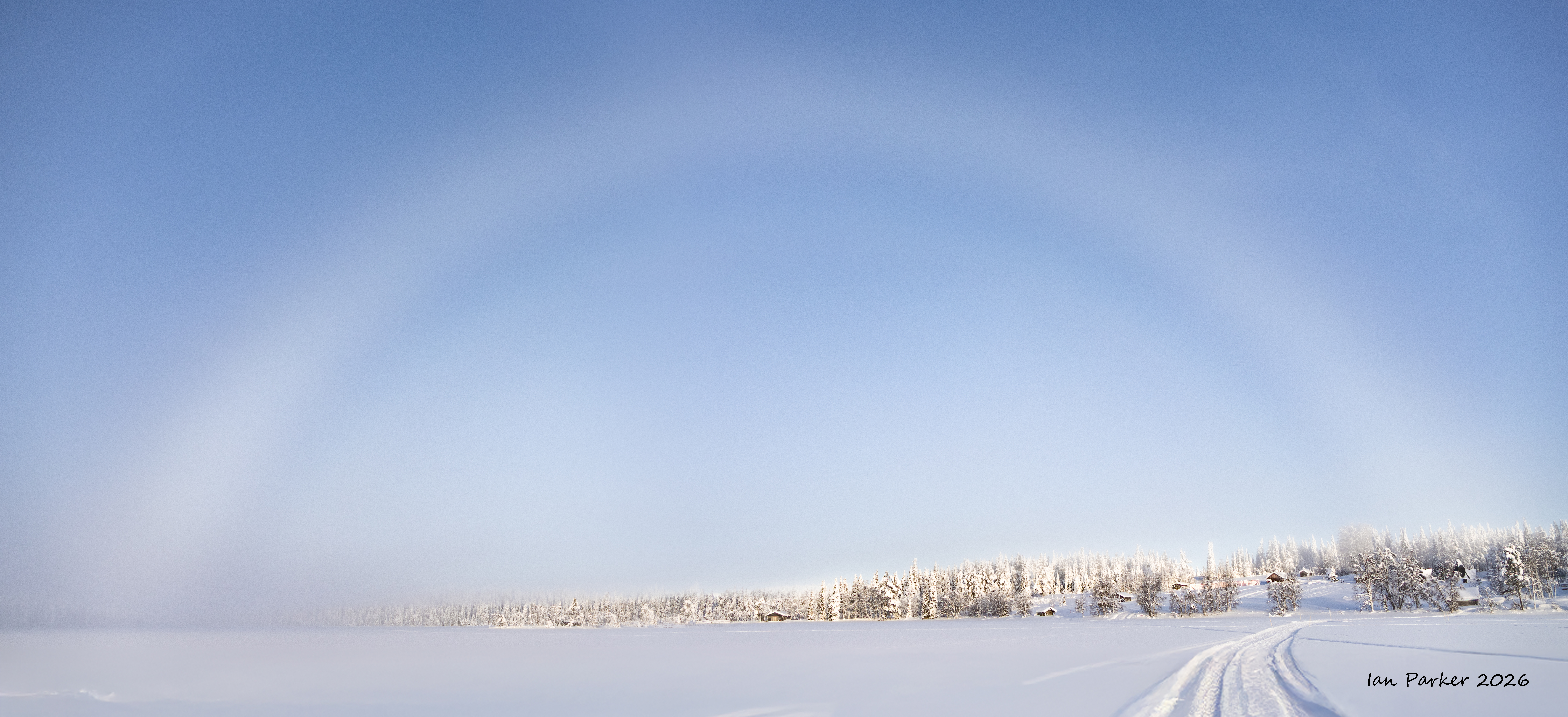
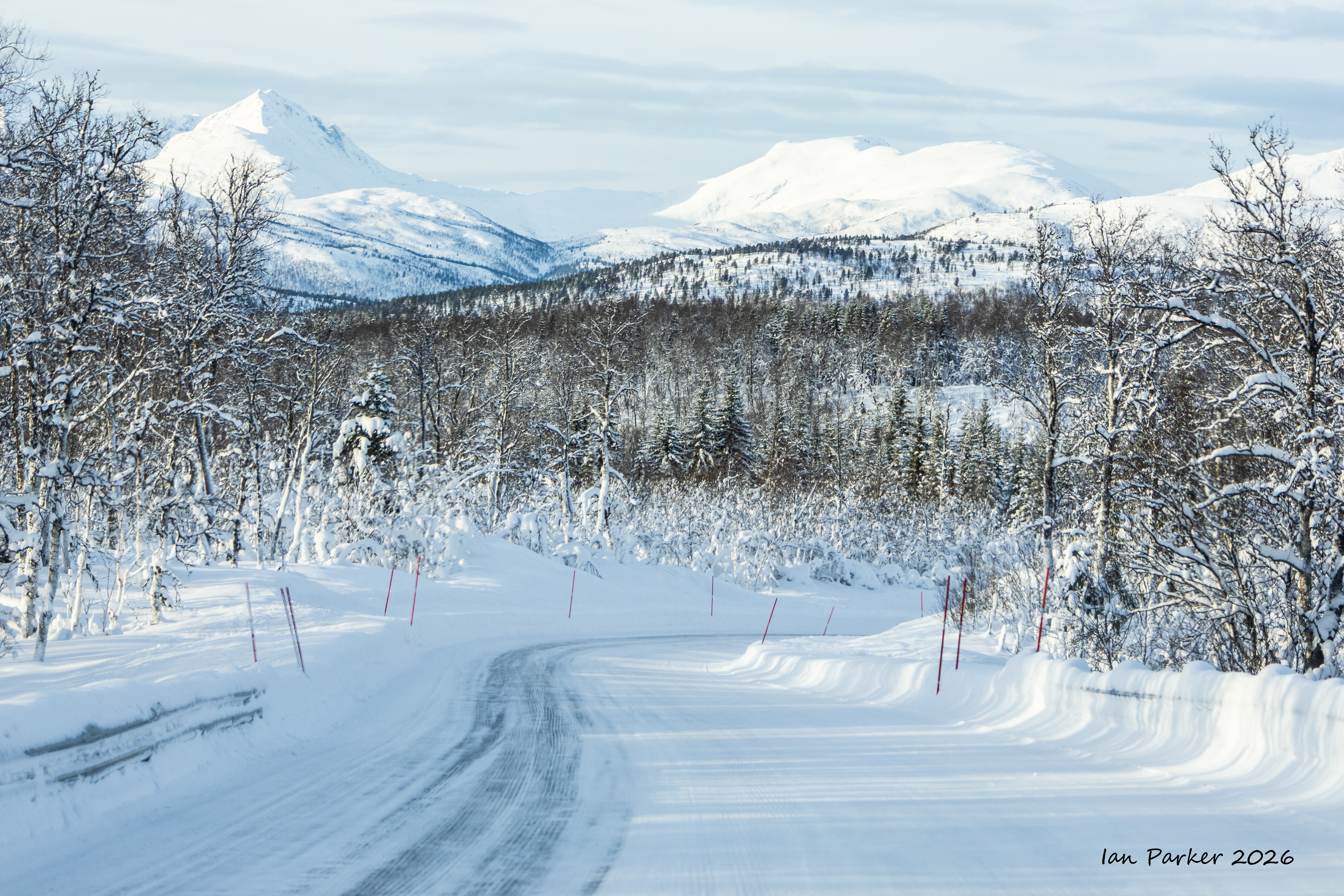
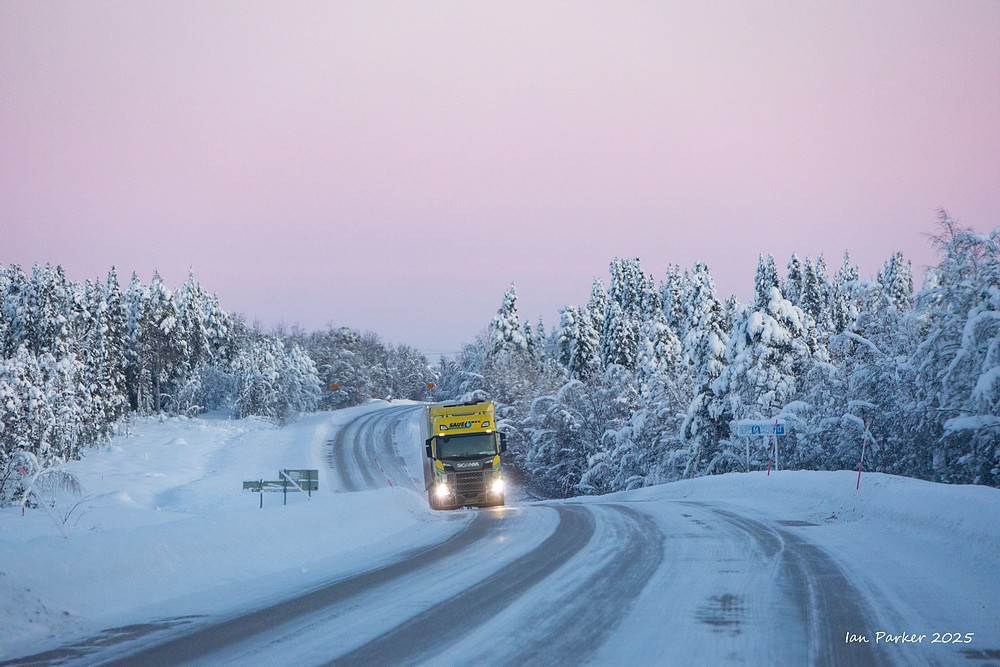
Driving south on the E8 after crossing from Norway into Finland we had nice evening light approaching our destination at Nivunki village.
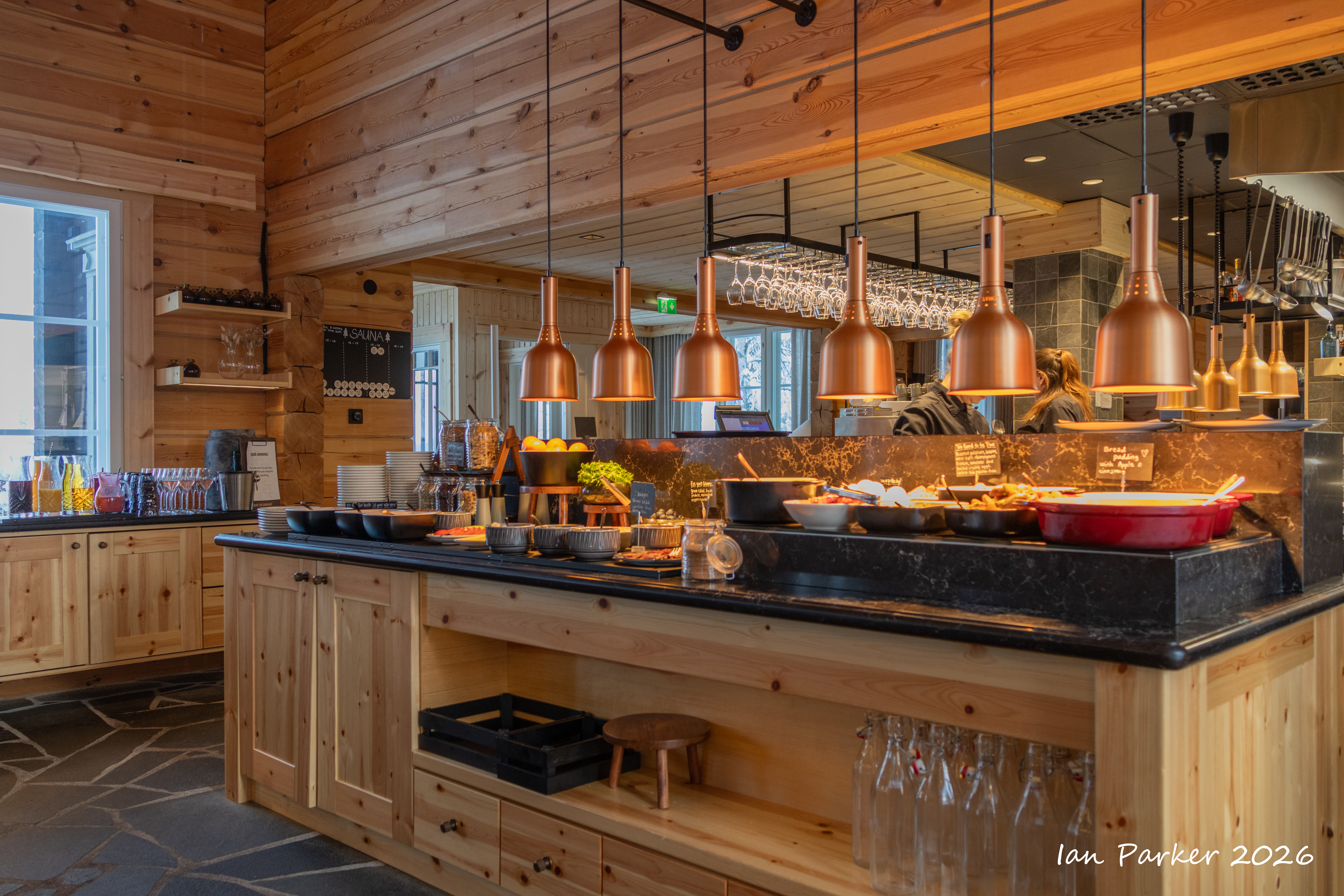
We stayed for two nights at Nivunki Village resort, set in a remote area at the edge of a (frozen) lake amid snow covered trees. Beyond the skies and landscapes at Nivunki, highlights of our stay included wonderful dinners featuring Lappish cuisine.
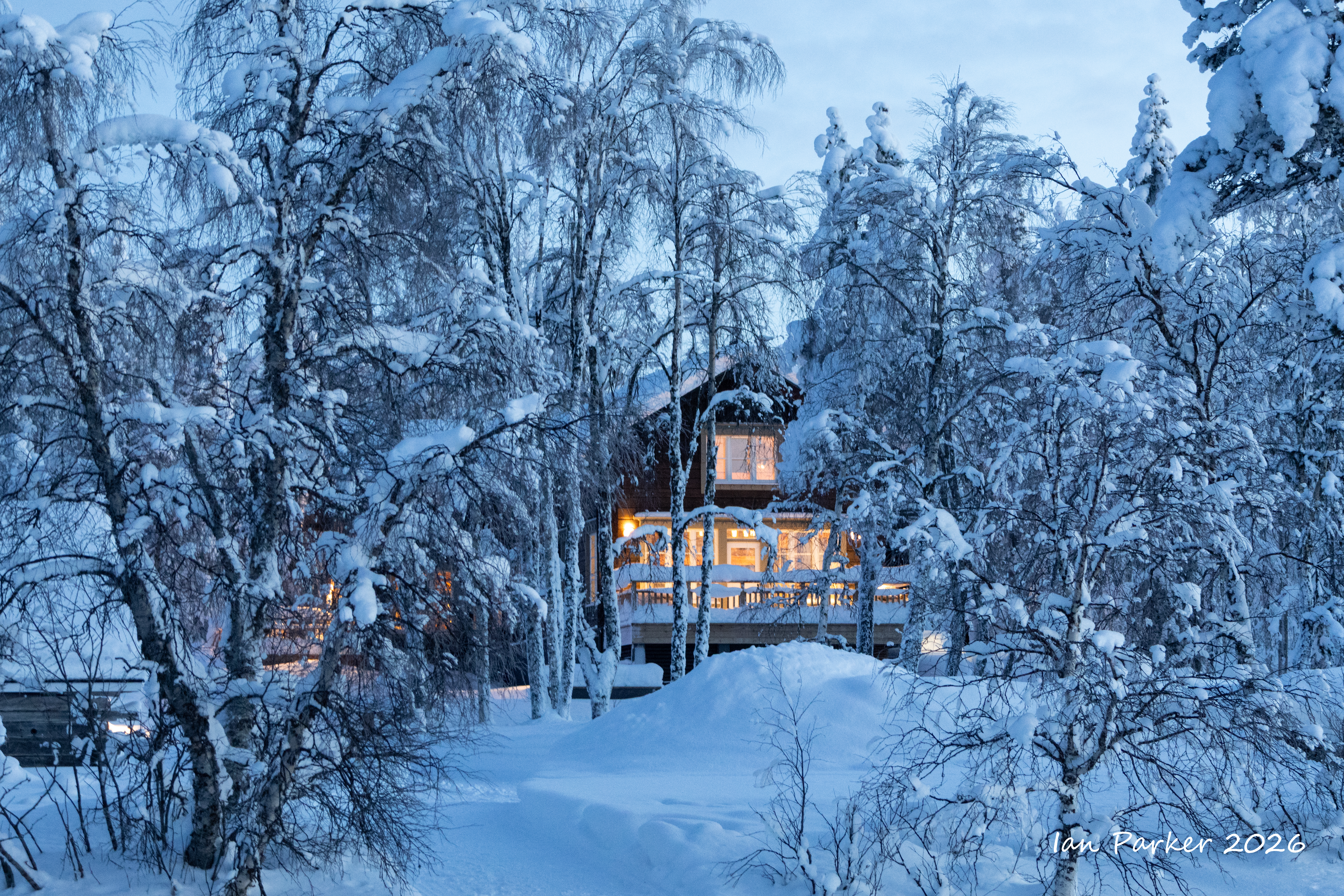
The accomodation at Nivunki is in glass-fronted huts; looking something of a cross between a hut and a wigwam, but much more luxurious than that description might imply.
Glass windows across one side allowed us to fall asleep, warm in a comfortable bed while watching the northern lights.
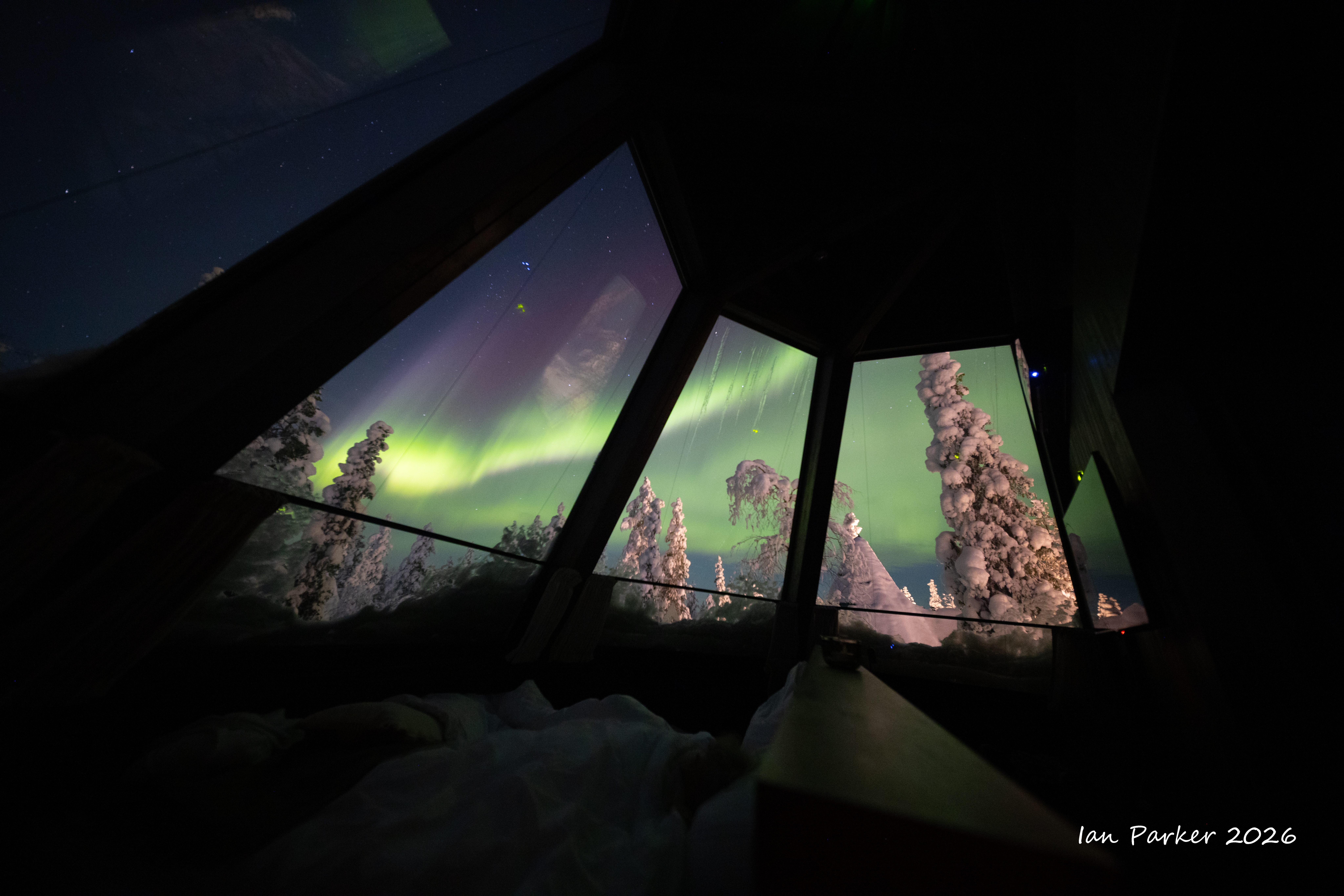
A "kill-switch" at the bedside allowed all interior lights to be quenched, but photography was still difficult through the thick, triple-glazed windows. Better to don arctic clothing and brave outside temperatures as low as -29oC.
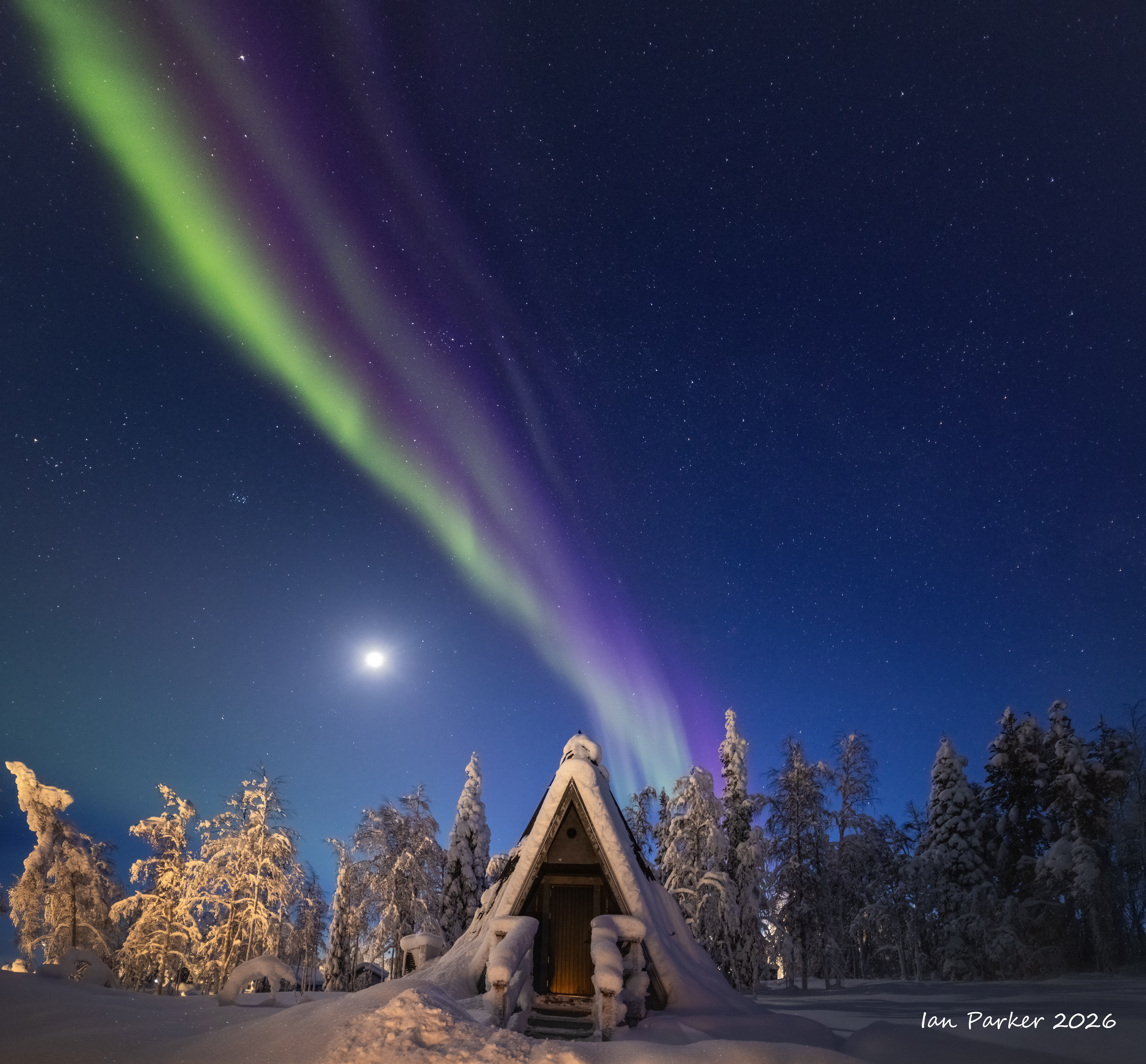
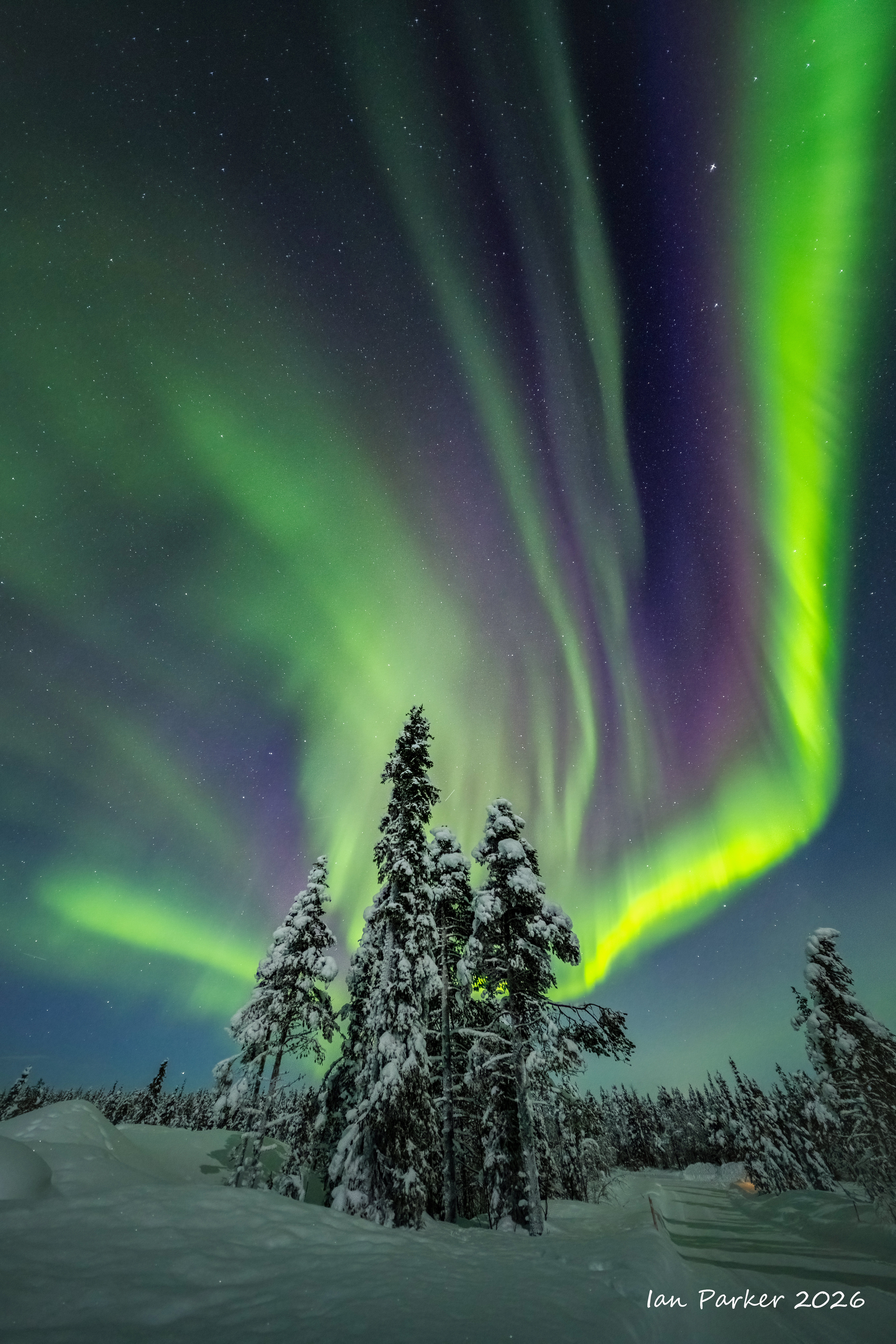
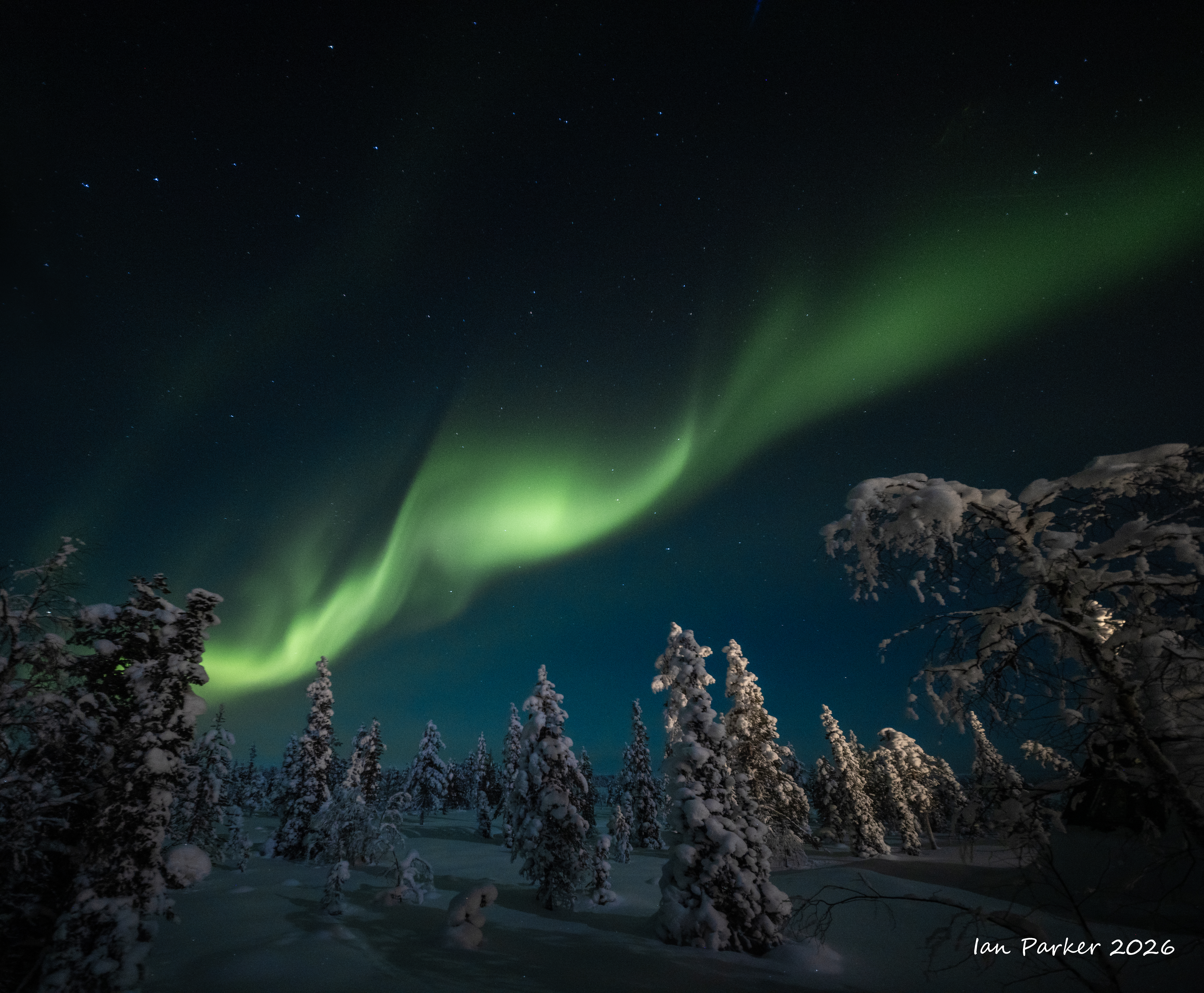
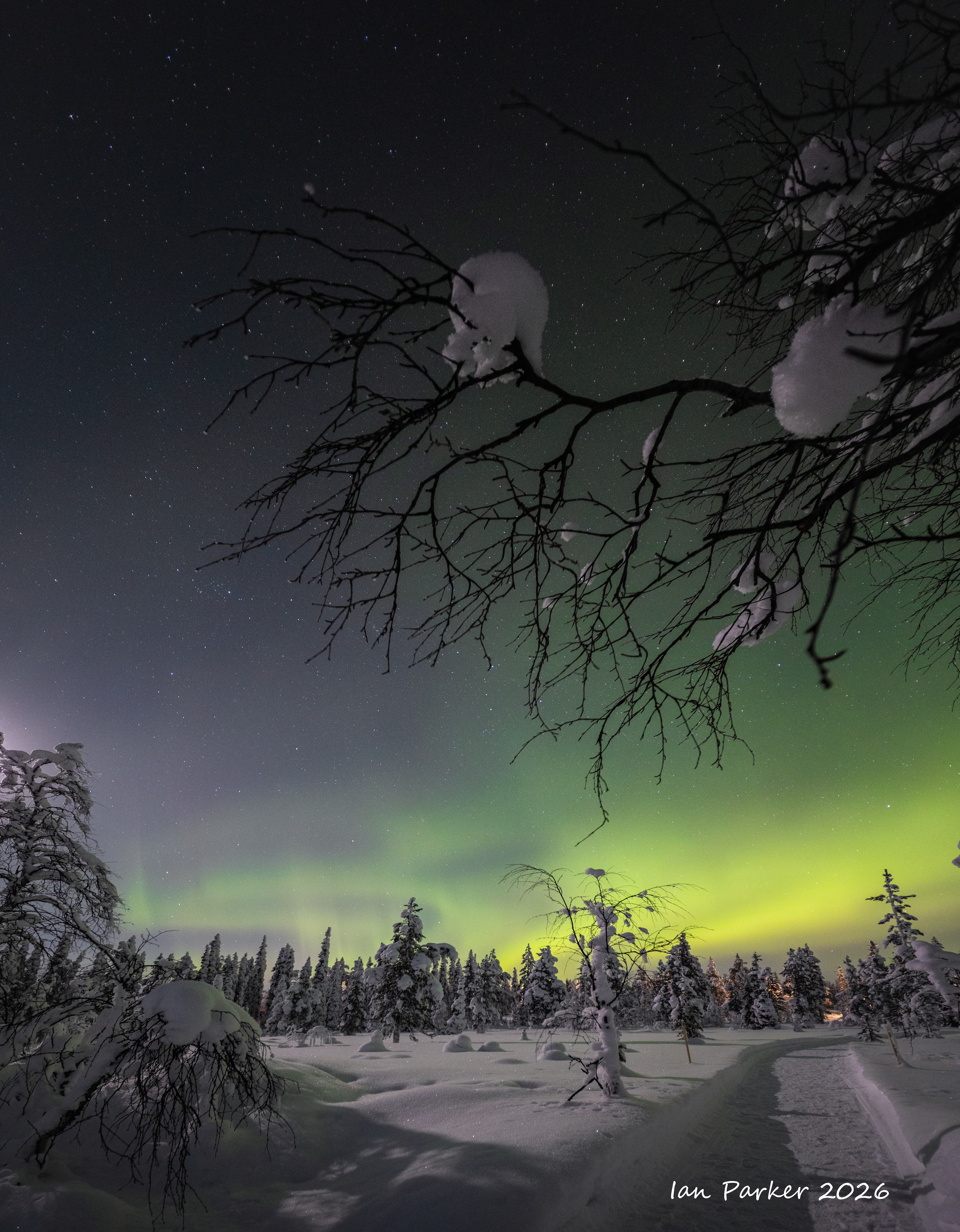
The skies were clear and the auroras consistently active during our two nights at Nivunki.
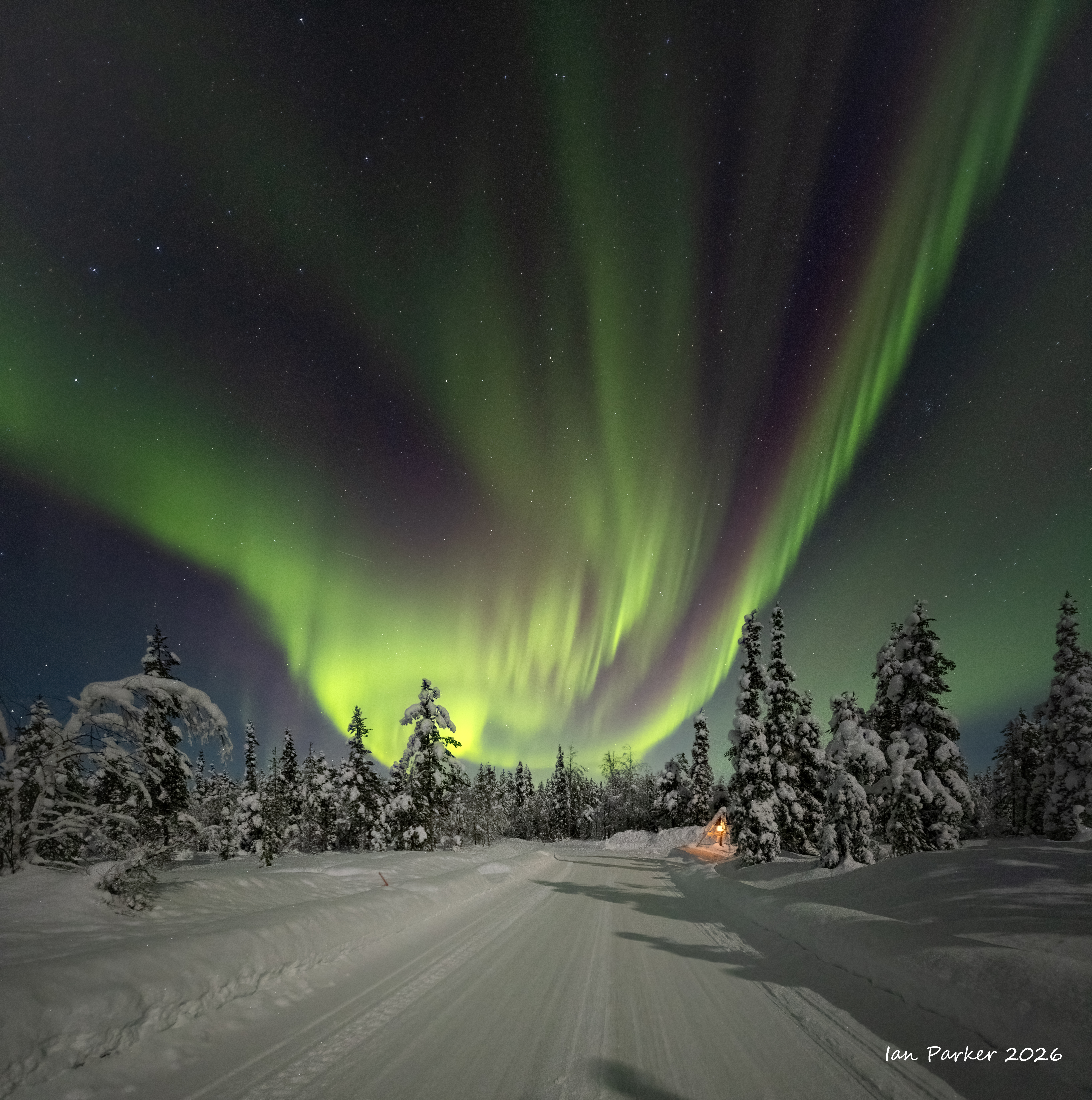
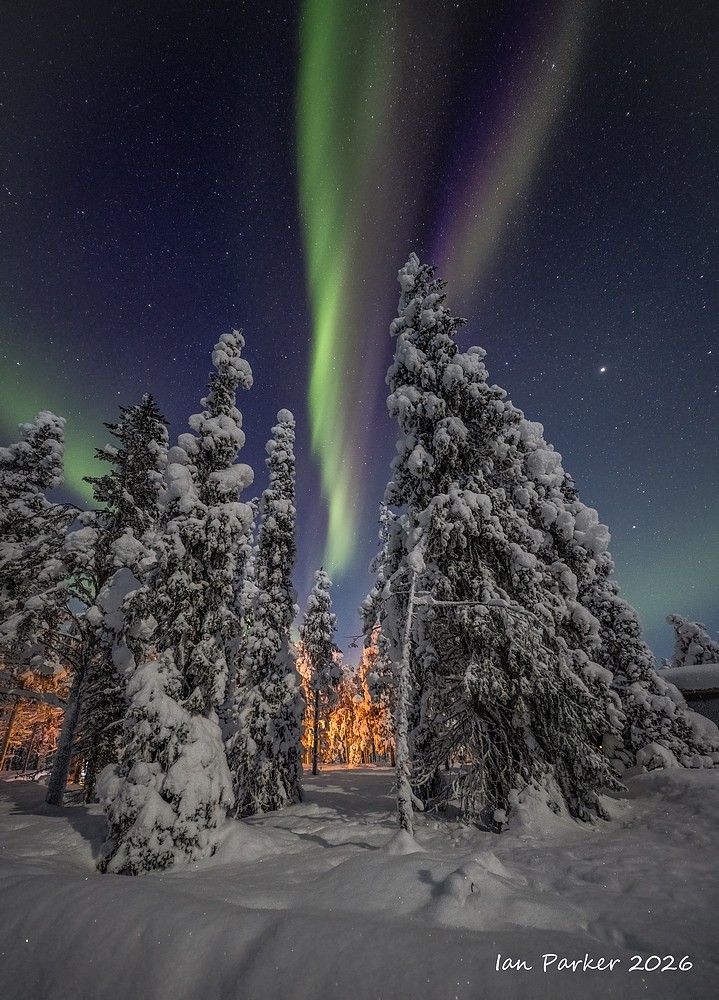
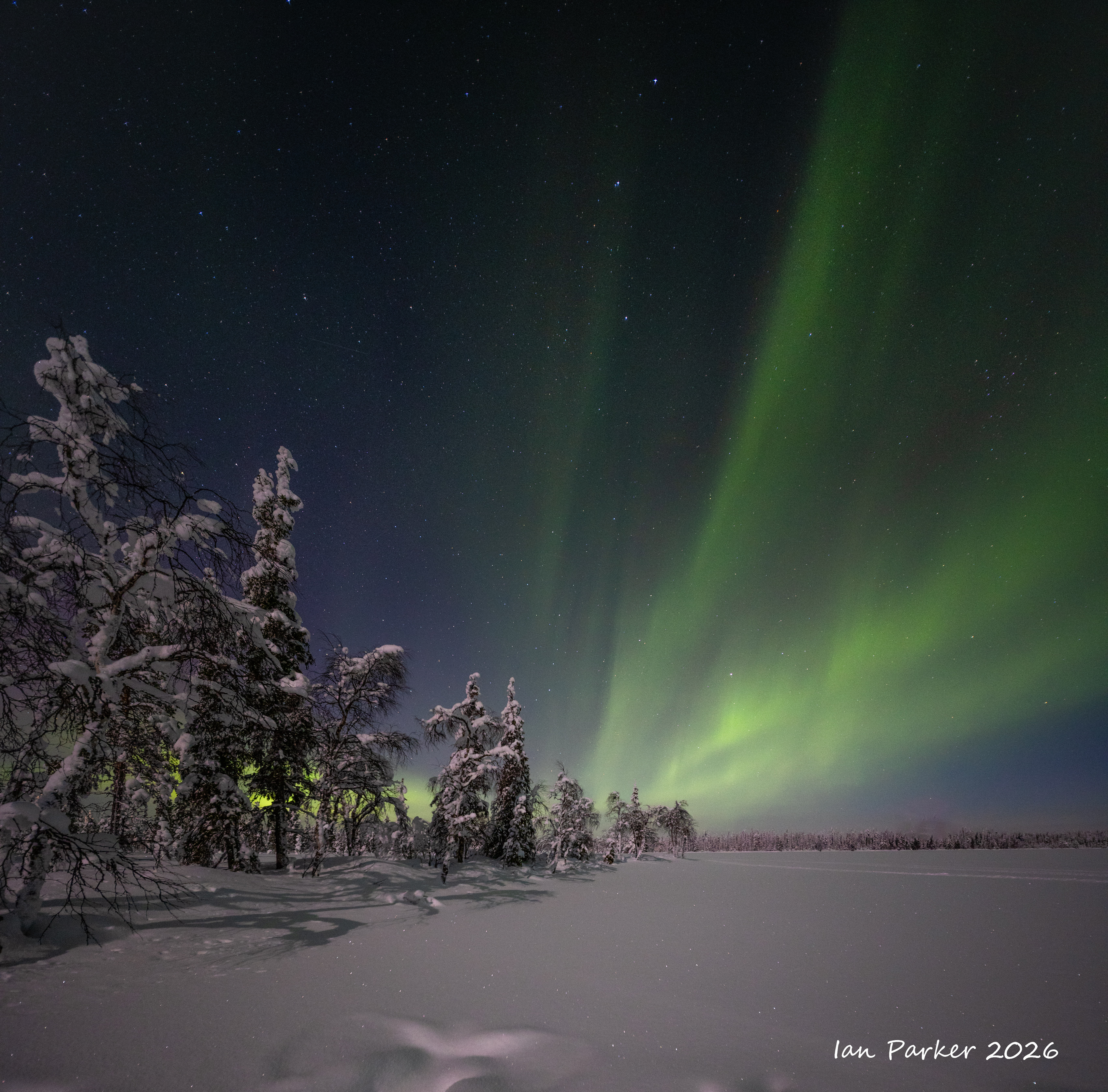
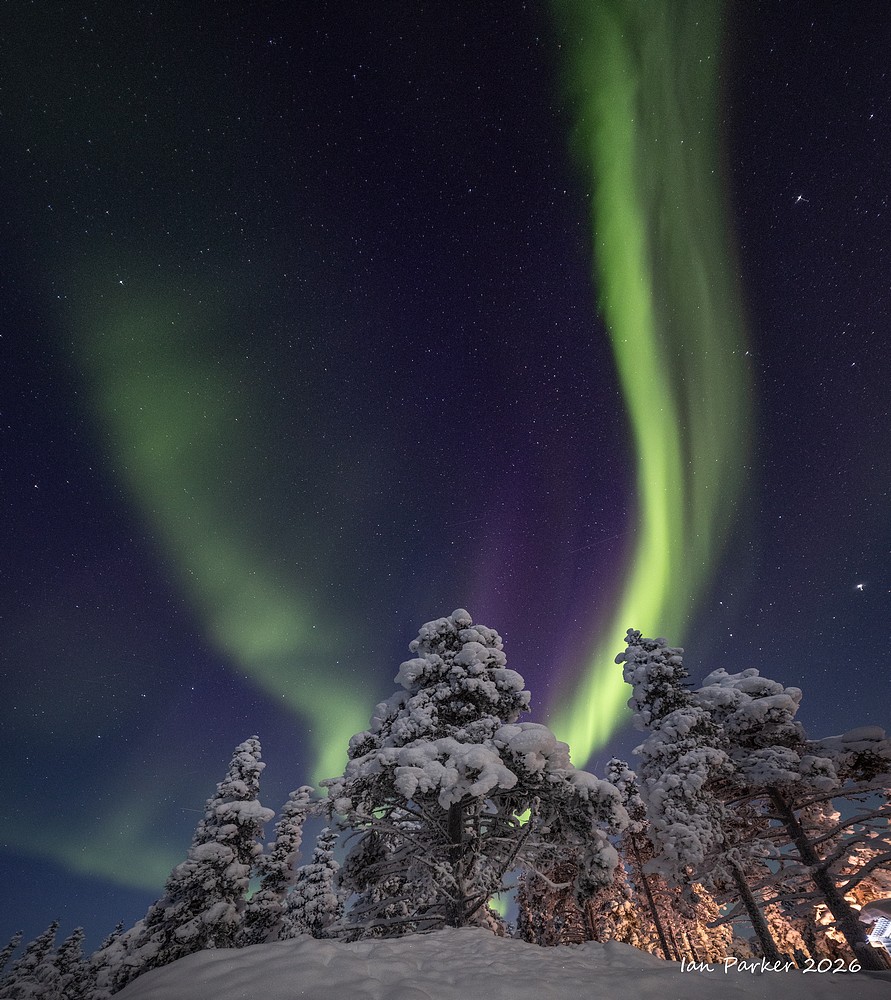 Aurora behind snow covered trees; Nivunki Village, LaplandLapland |
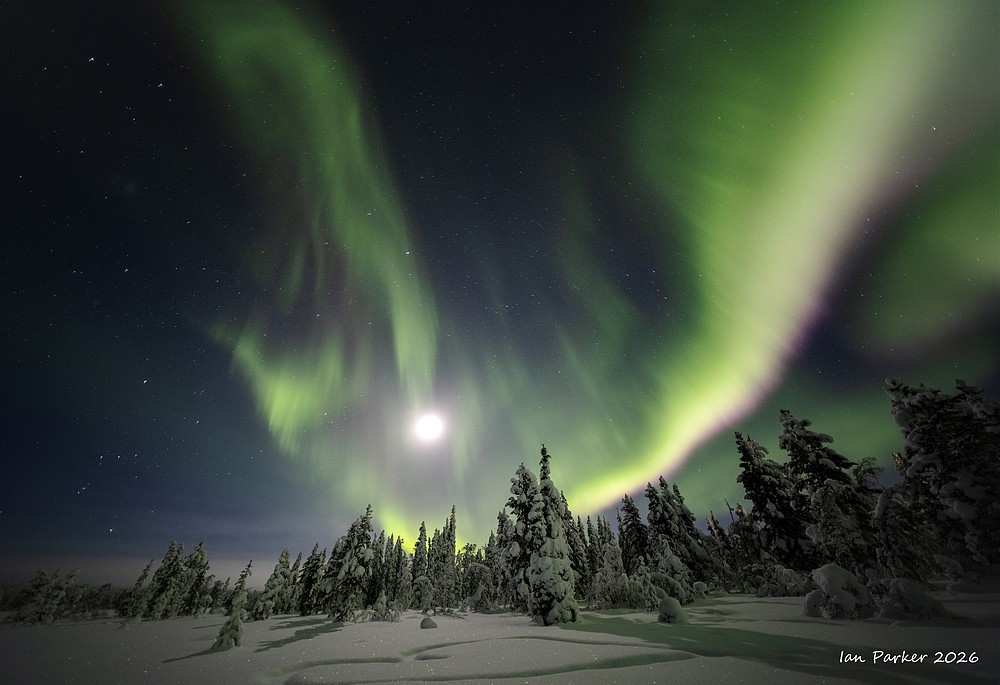
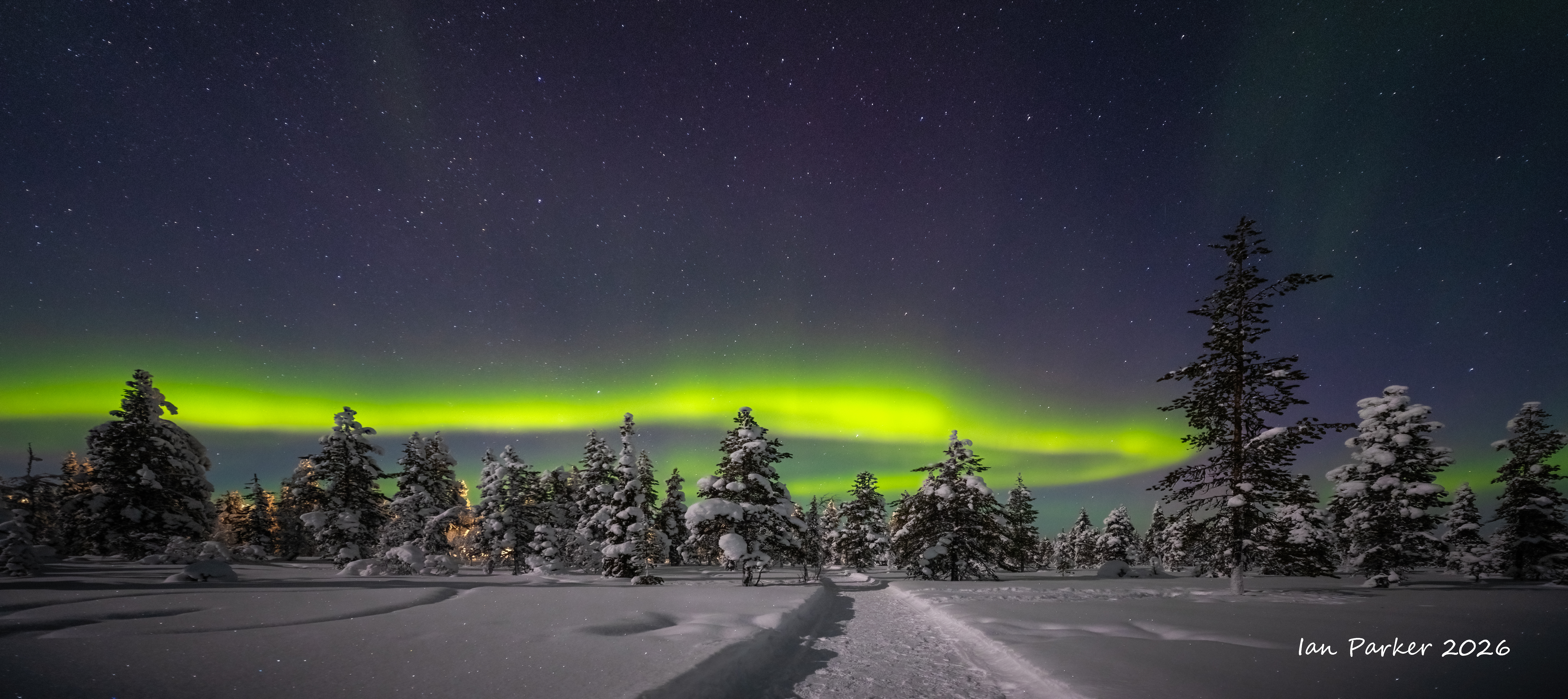
Although we were there at the time af a nearly full moon, the auroras were bright enough not to be overwhelmed, and the moonlight illuminated the landscape where trees would otherwise have appeared as dark silhouettes.
Daytime photos from Senja Island
The lighthouse at Norwegian Wild on Senja. Our home for three nights
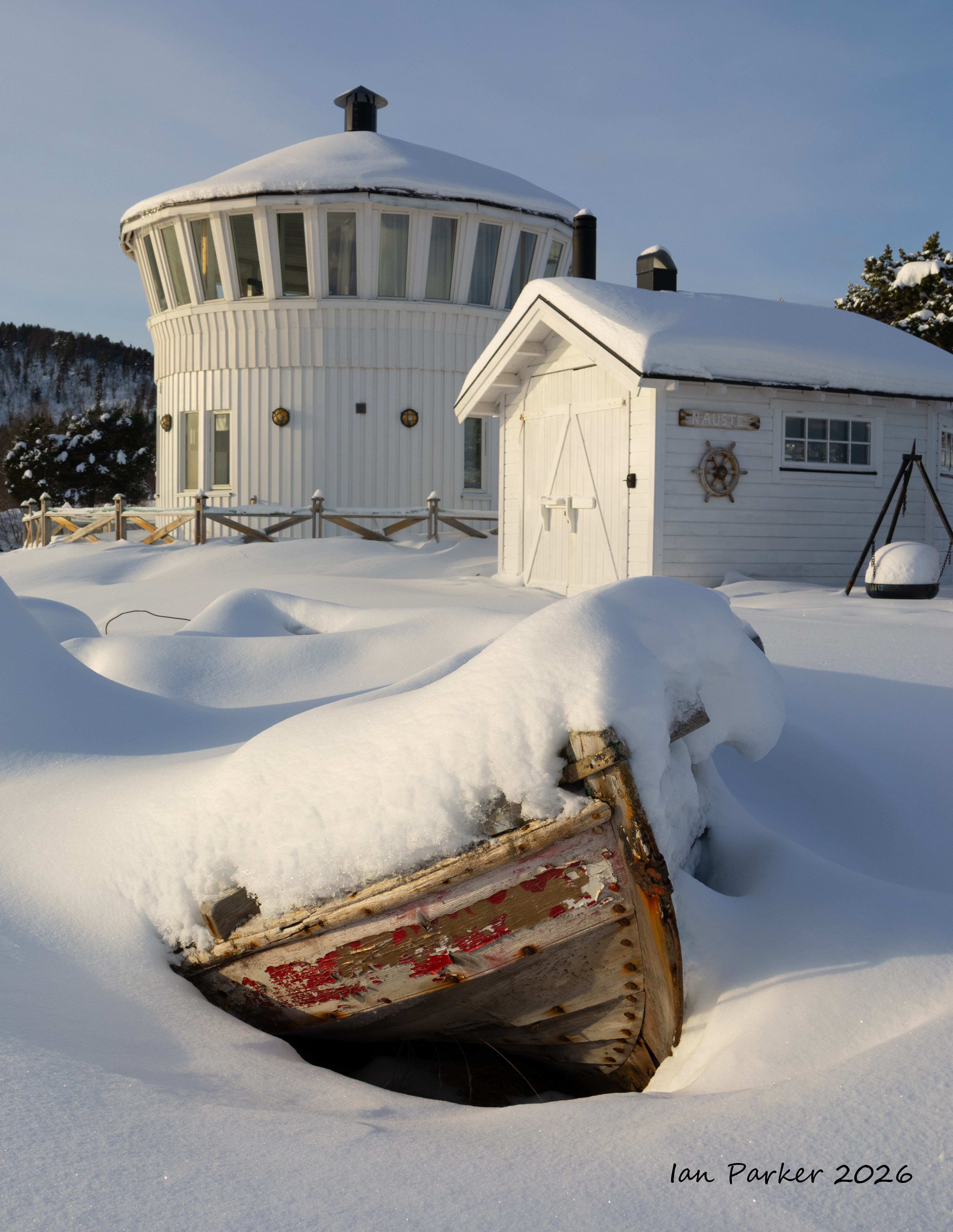 Wrecked boat and lighthouse; Senja Island There was much more snow than when we were here at the same time of year in 2015 - compare with this photo. |
Views of Okshornan mountain range ("The Devil's Teeth") from Tungeneset Peninsula
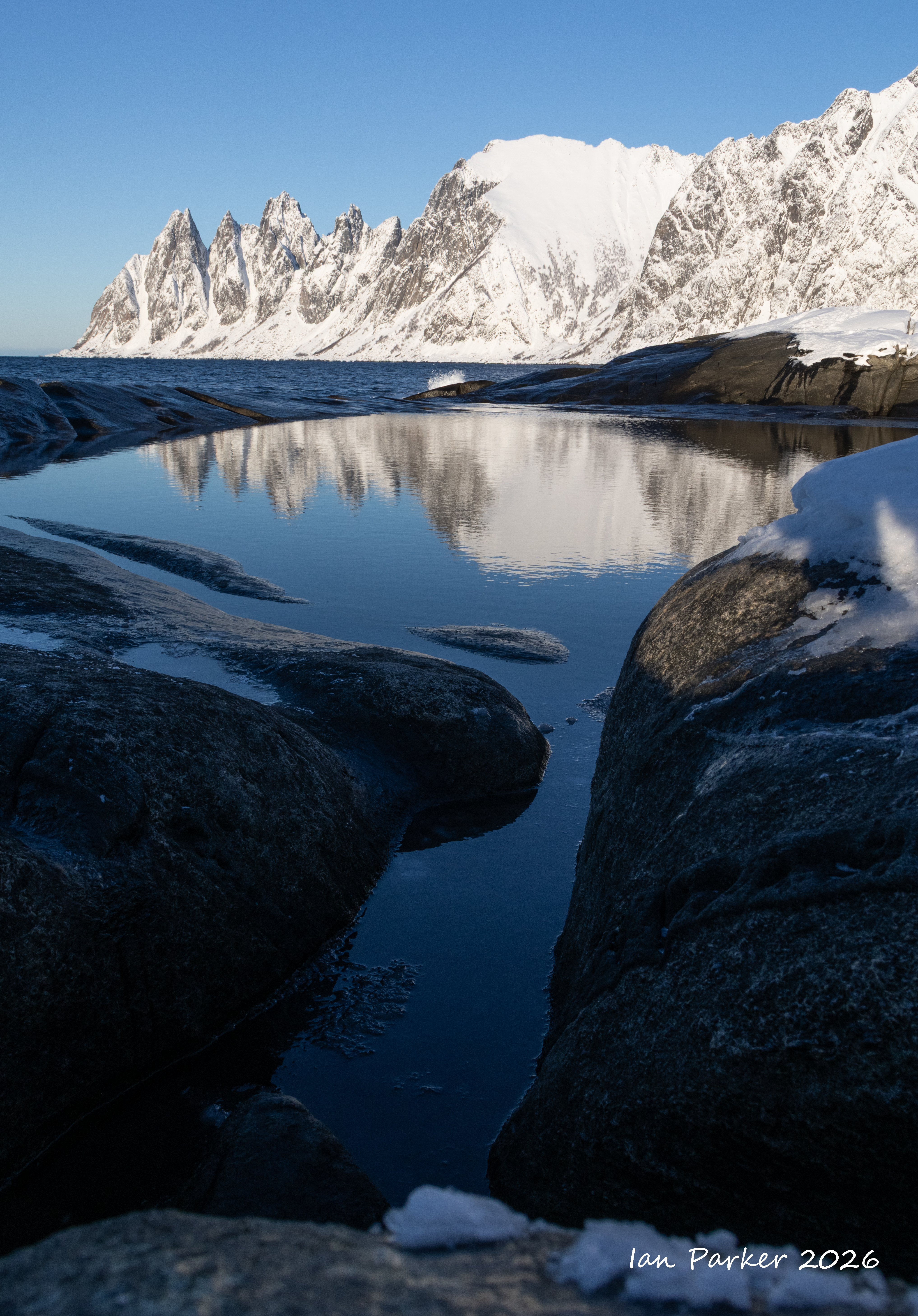
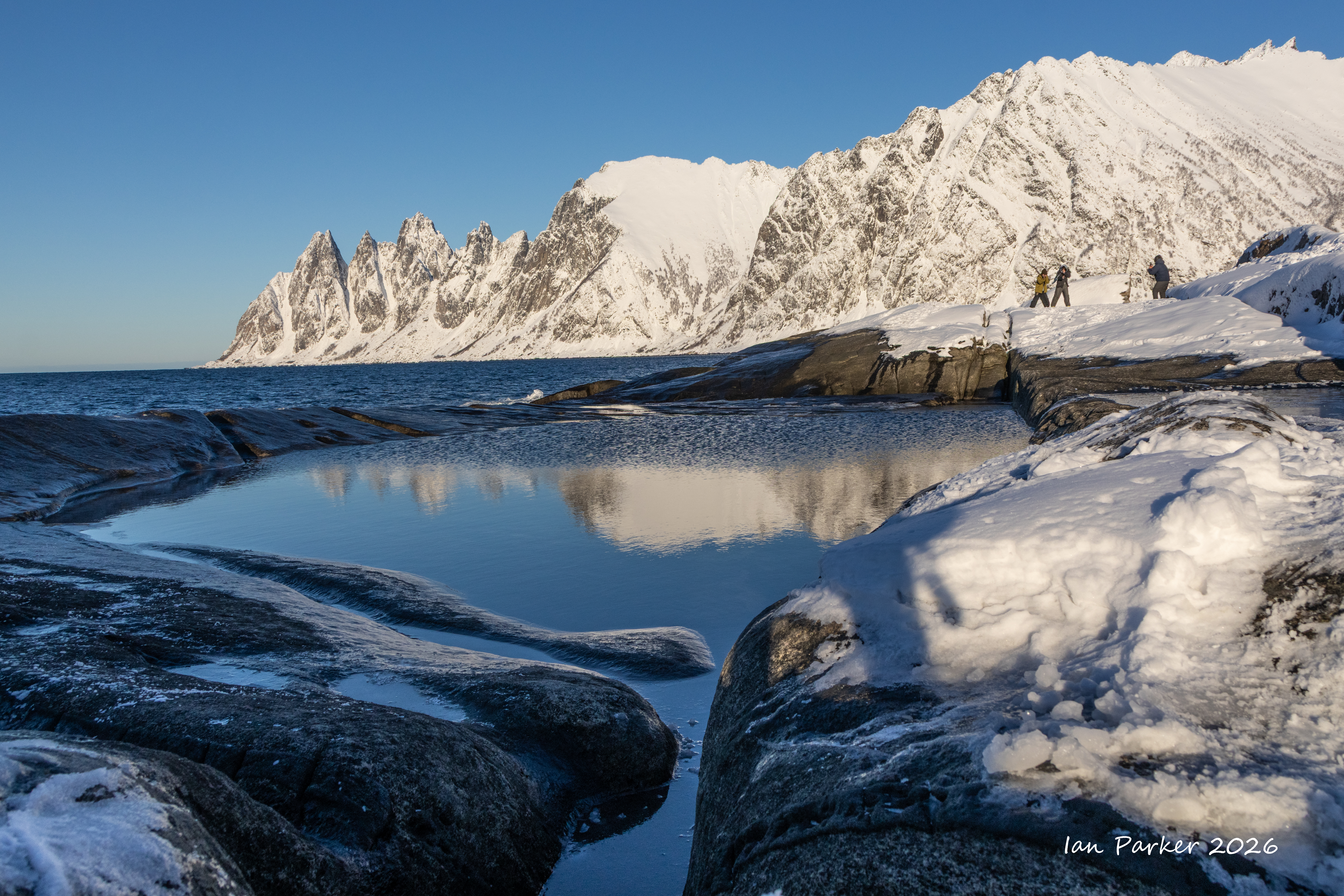
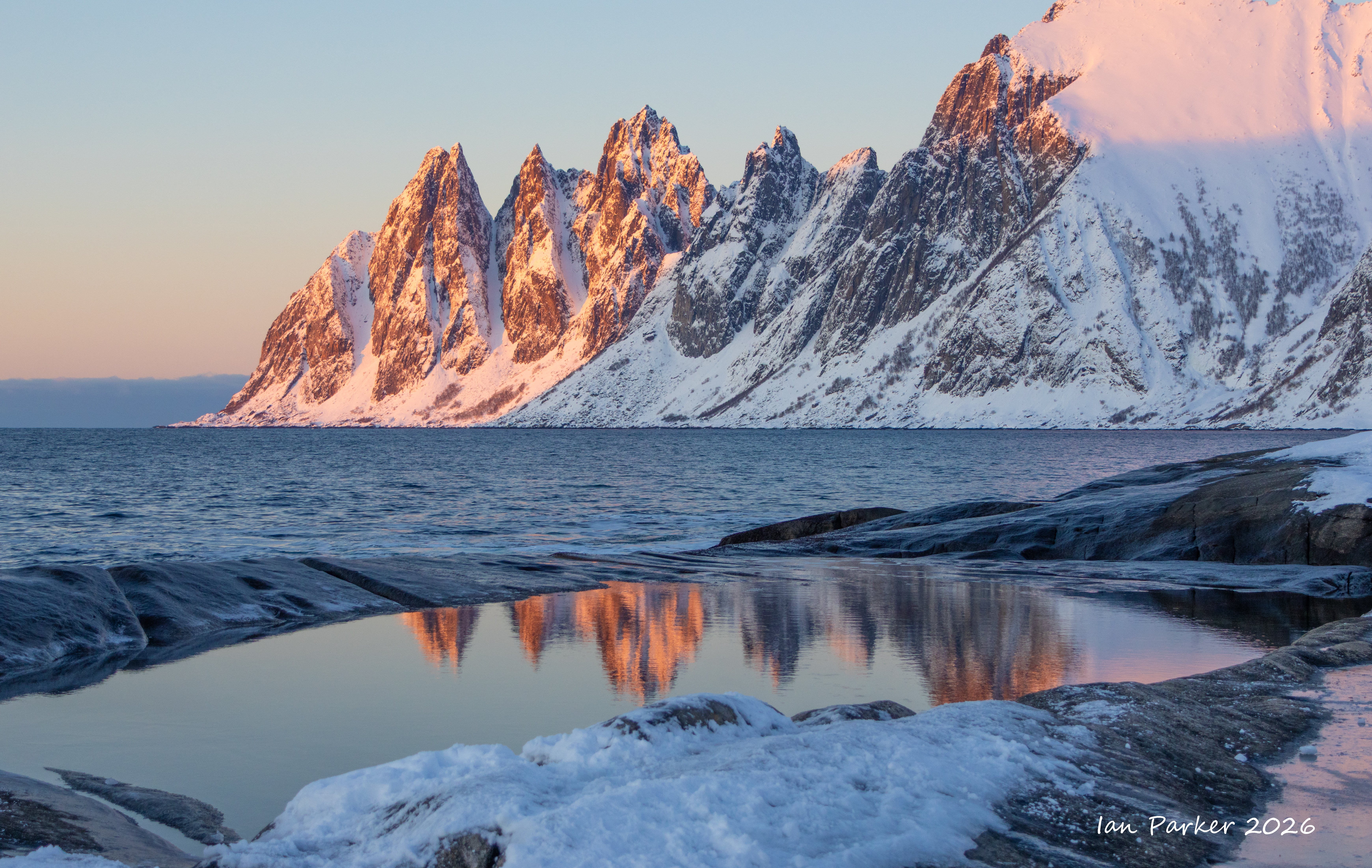
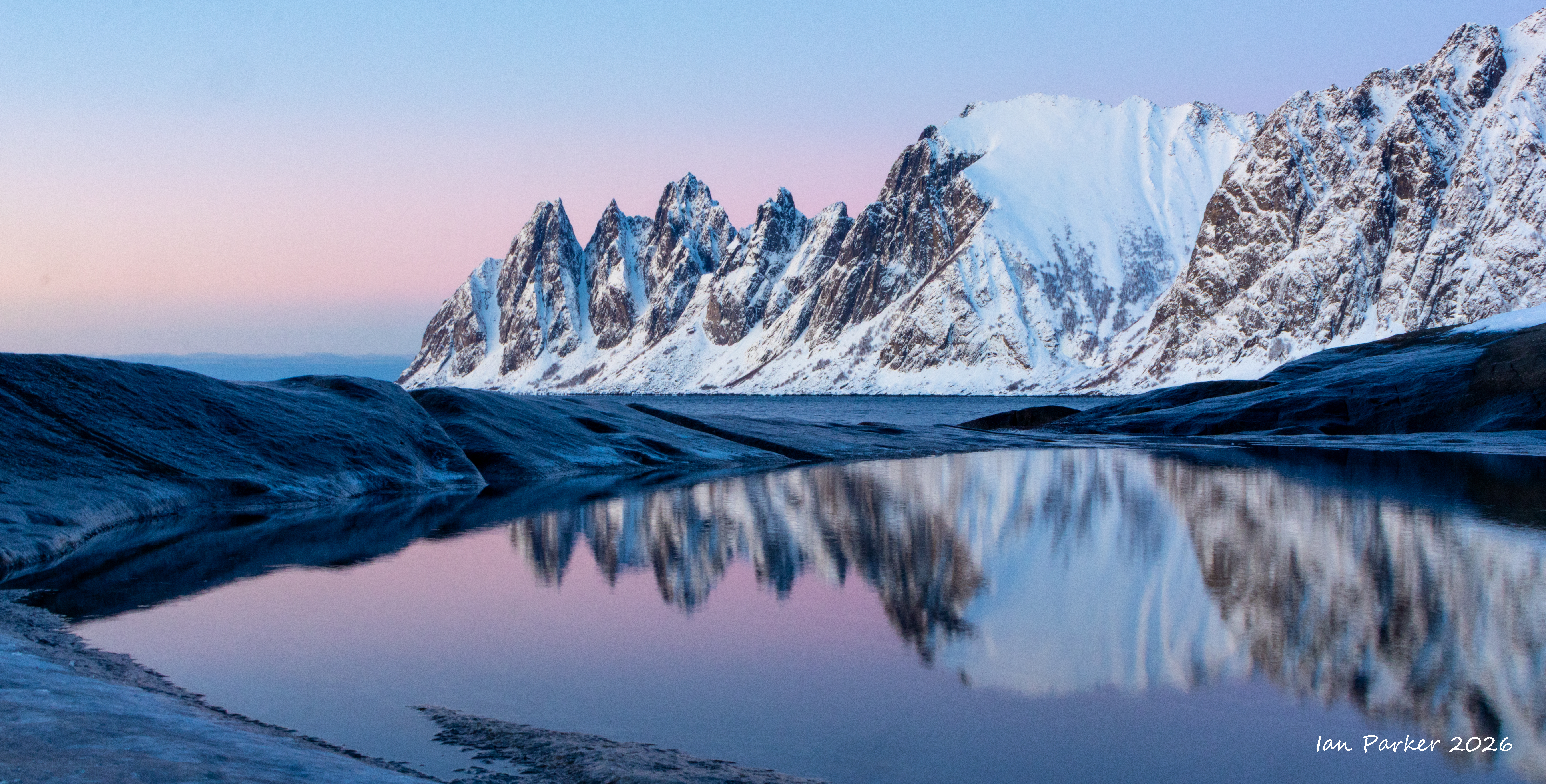
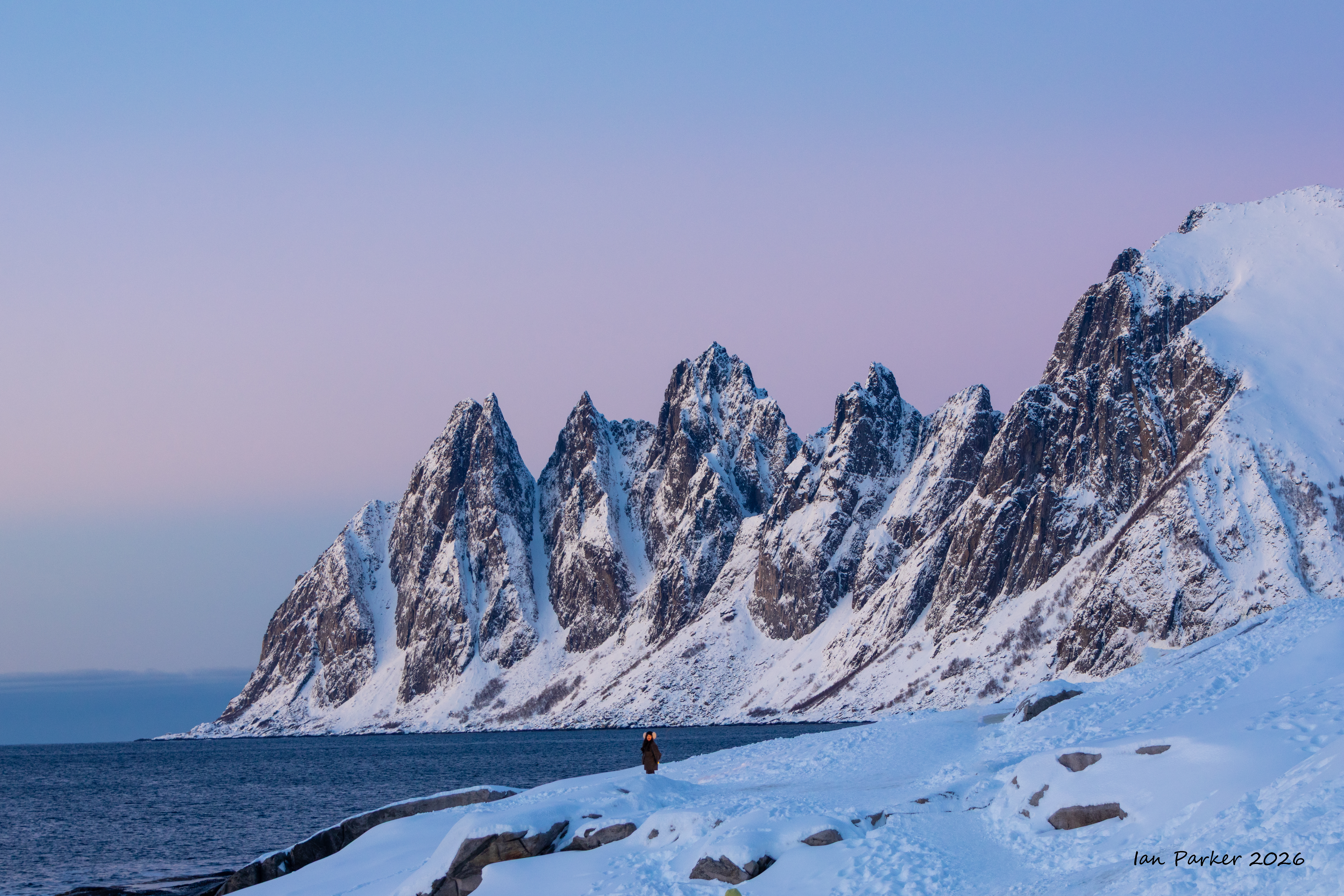
Skrolsvik Fort
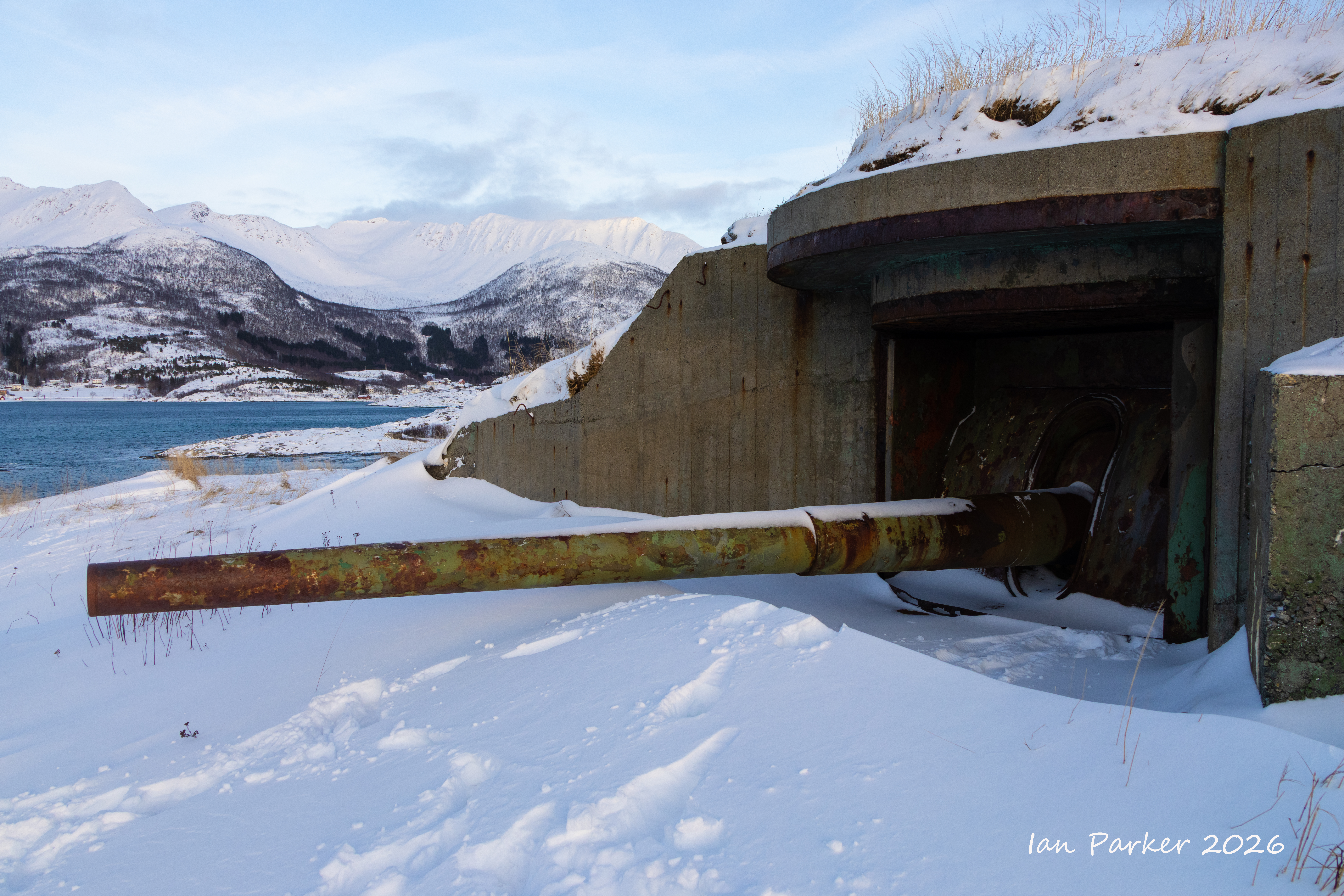
Skrolsvik Fort at the southwest tip of Senja was built during World War II by the occupying Germans. After the war, the Norwegian Navy took over the fort, and it became part of the fortifications under the Coastal Artillery . In 1989, the fort was closed down, along with many other forts in the same area. Large parts of the fort are still intact, both with bunkers and prepared/established permanent positions. Notably, the four German 15 cm guns are still intact.
After the closure, the Senjehesten Coastal Defence Museum took over the facilities, and the properties were put up for sale. The site has variously functioned as a campsite, hotel, and museum' but now is open to freely wander in its decaying state. On our visit this year the skies weere clear, but photography was made difficult by a bitingly cold strong wind.
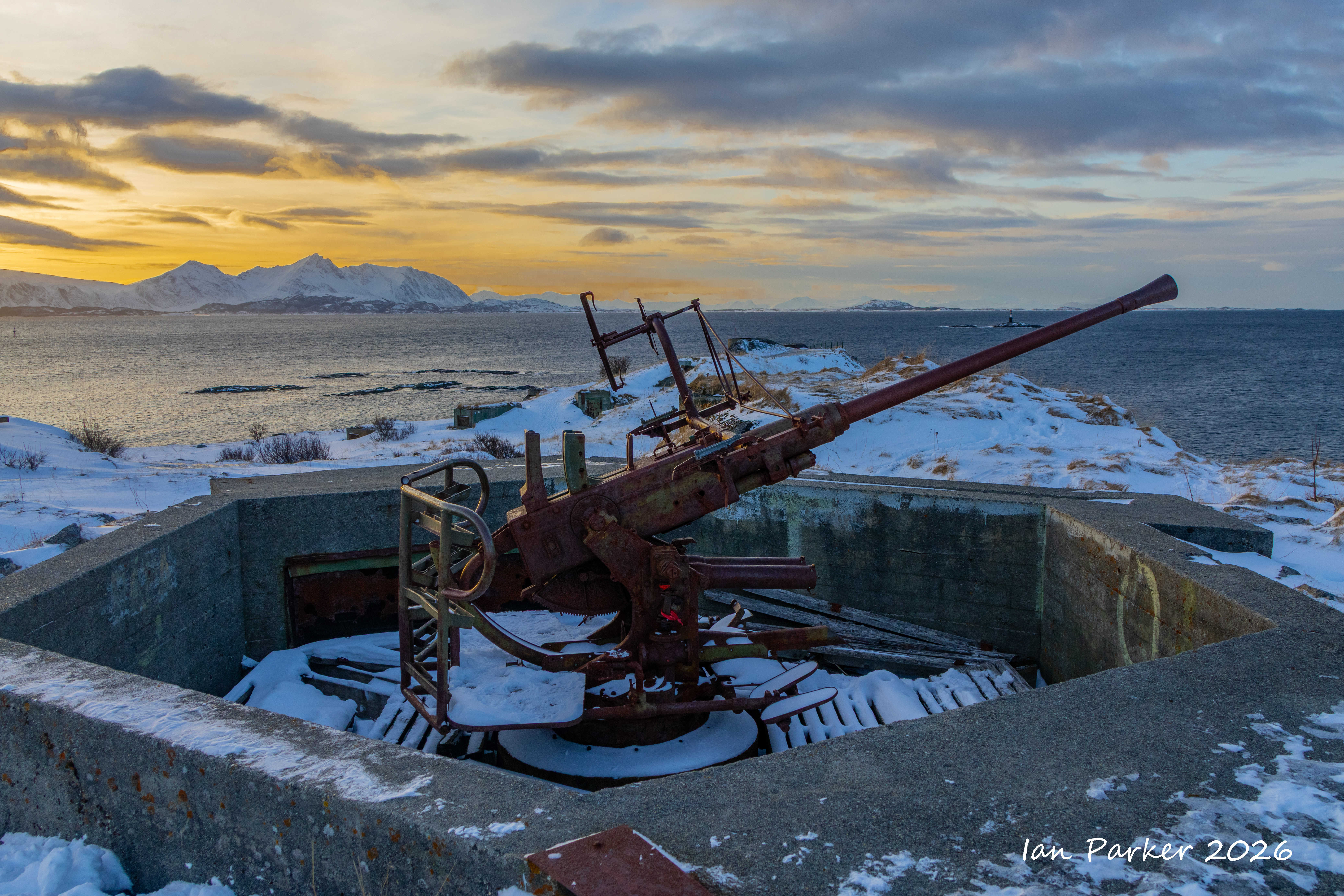
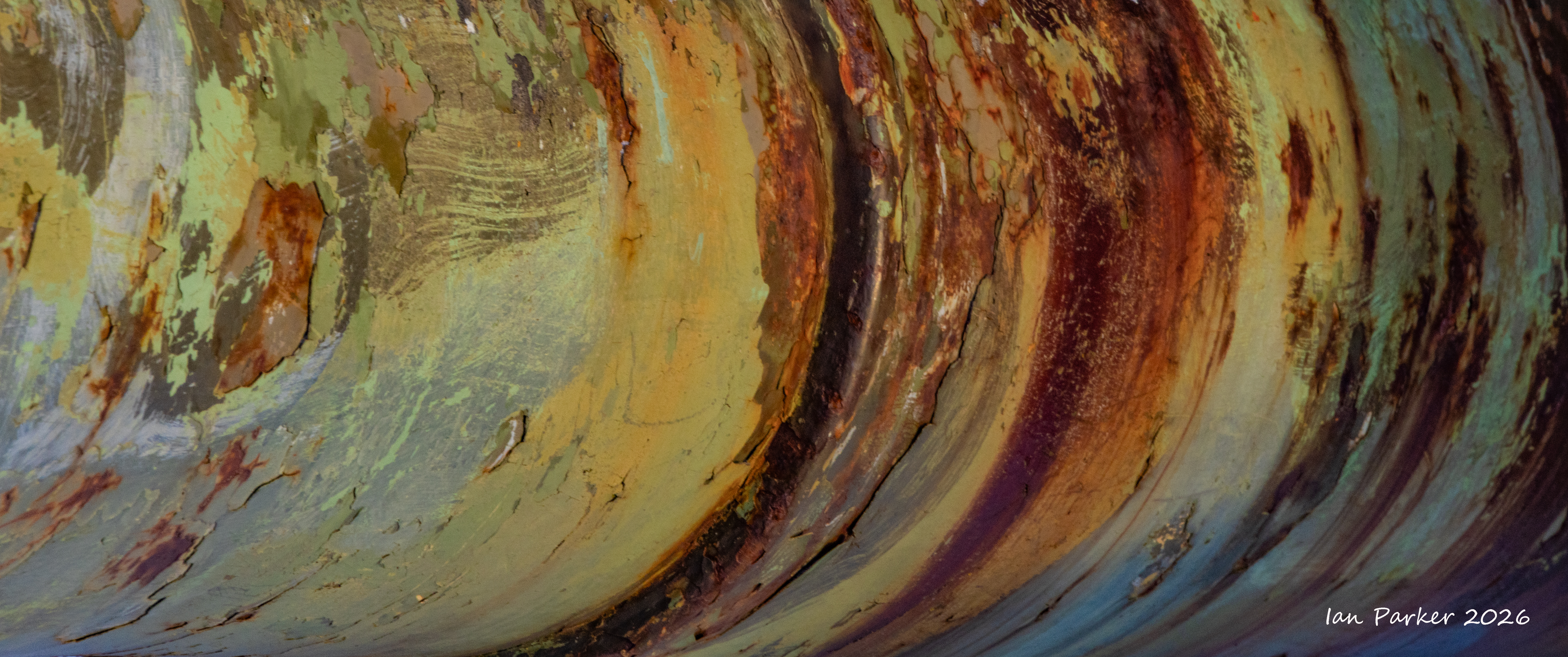
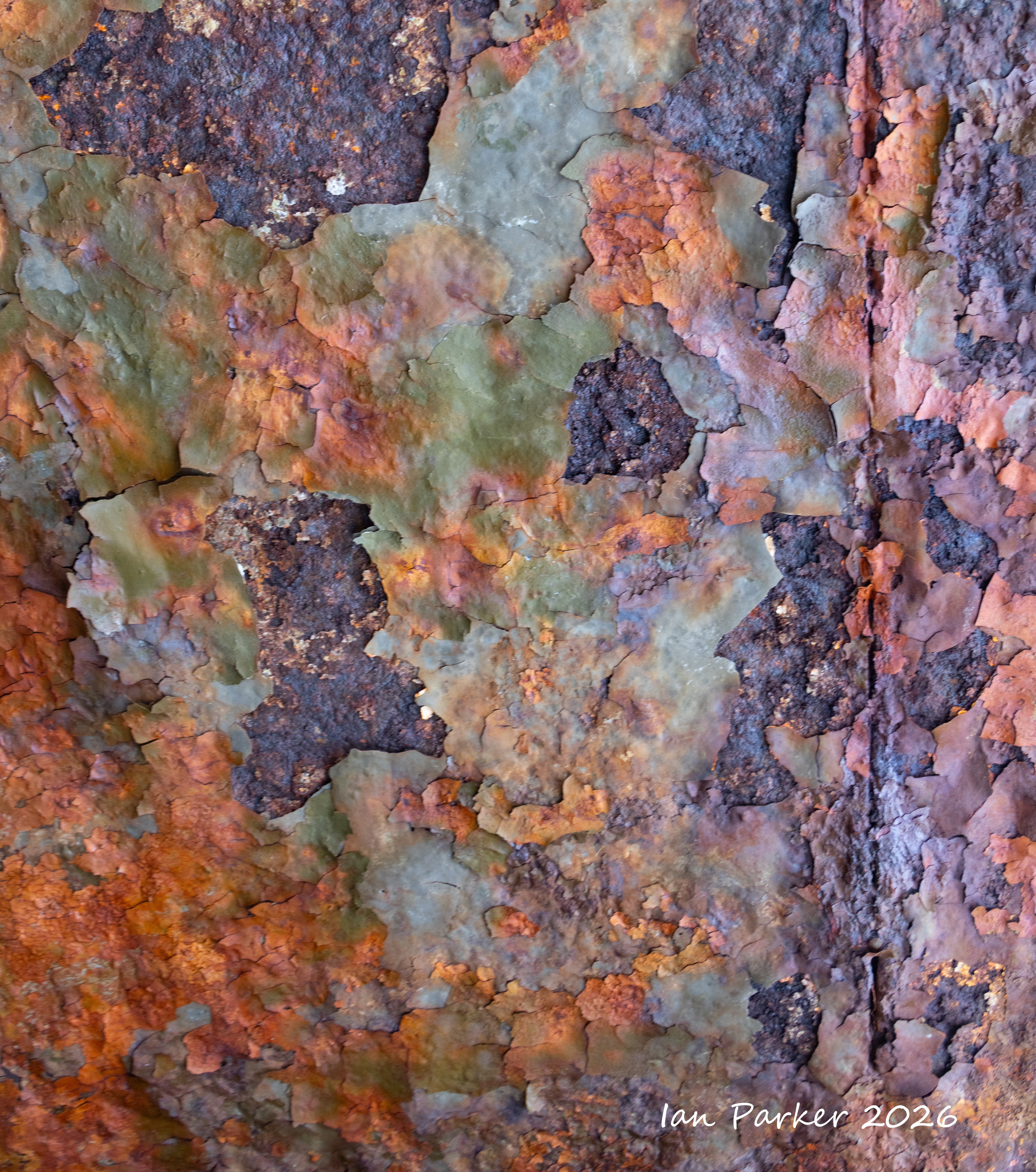
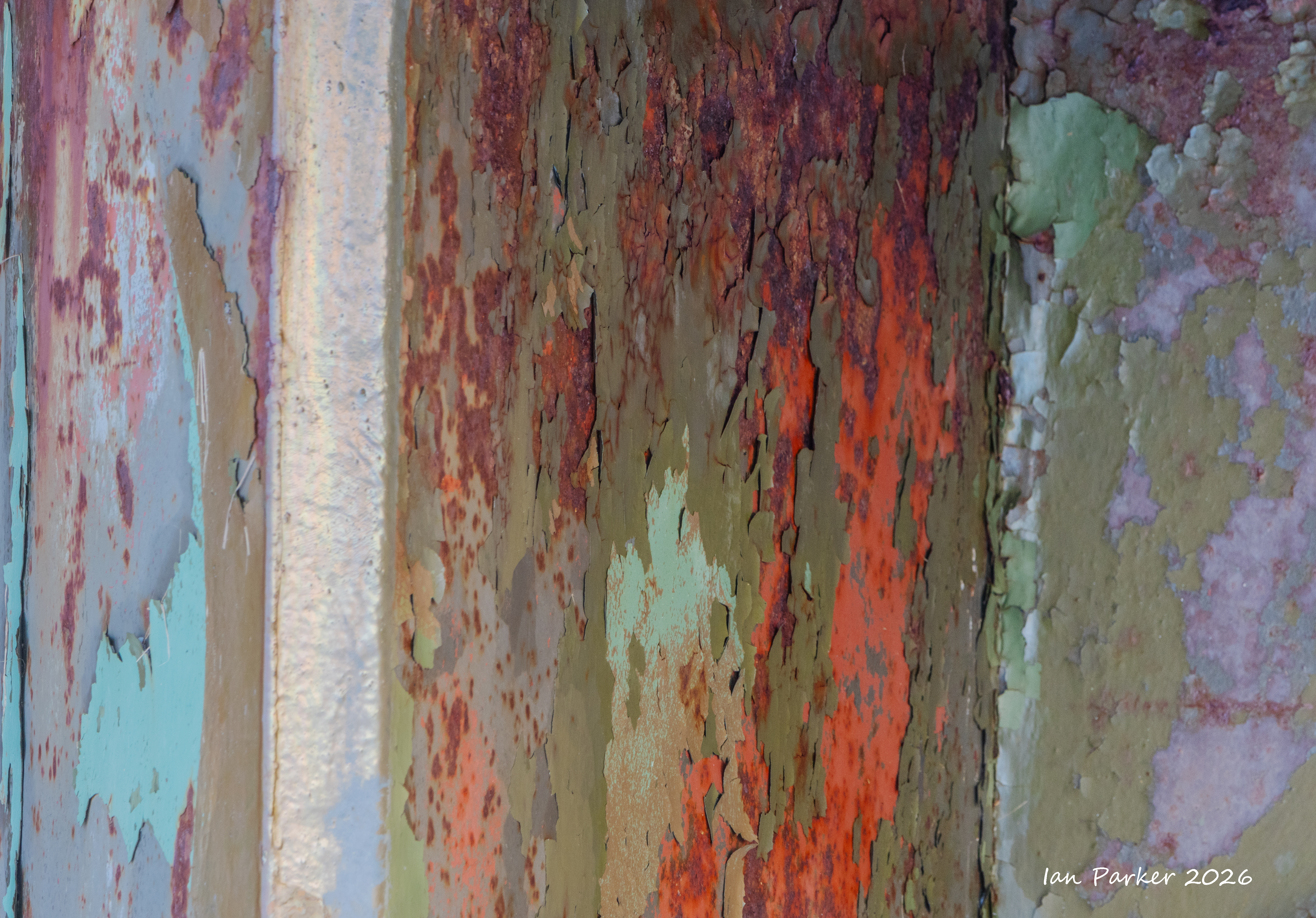
Rust patterns on the guns
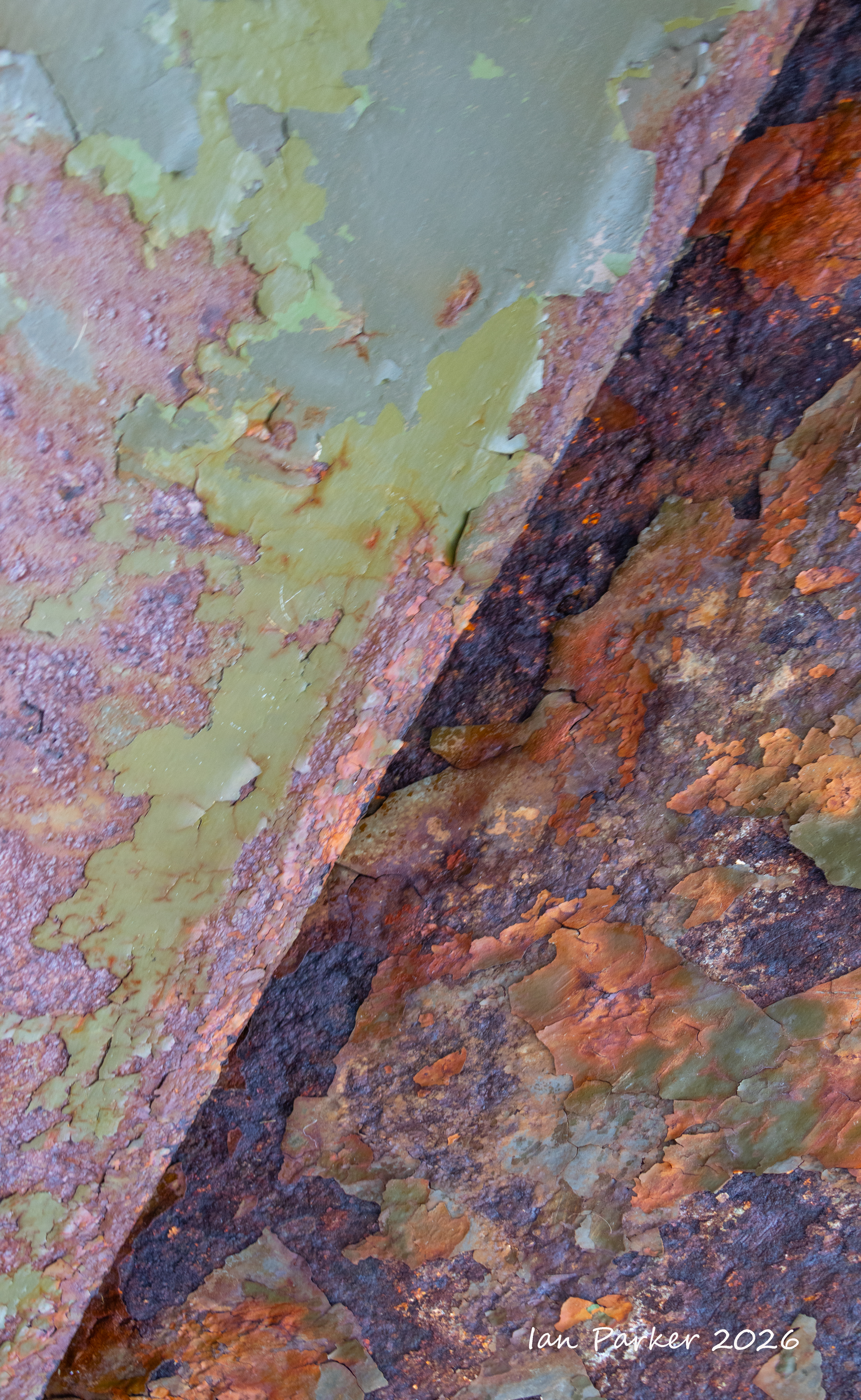
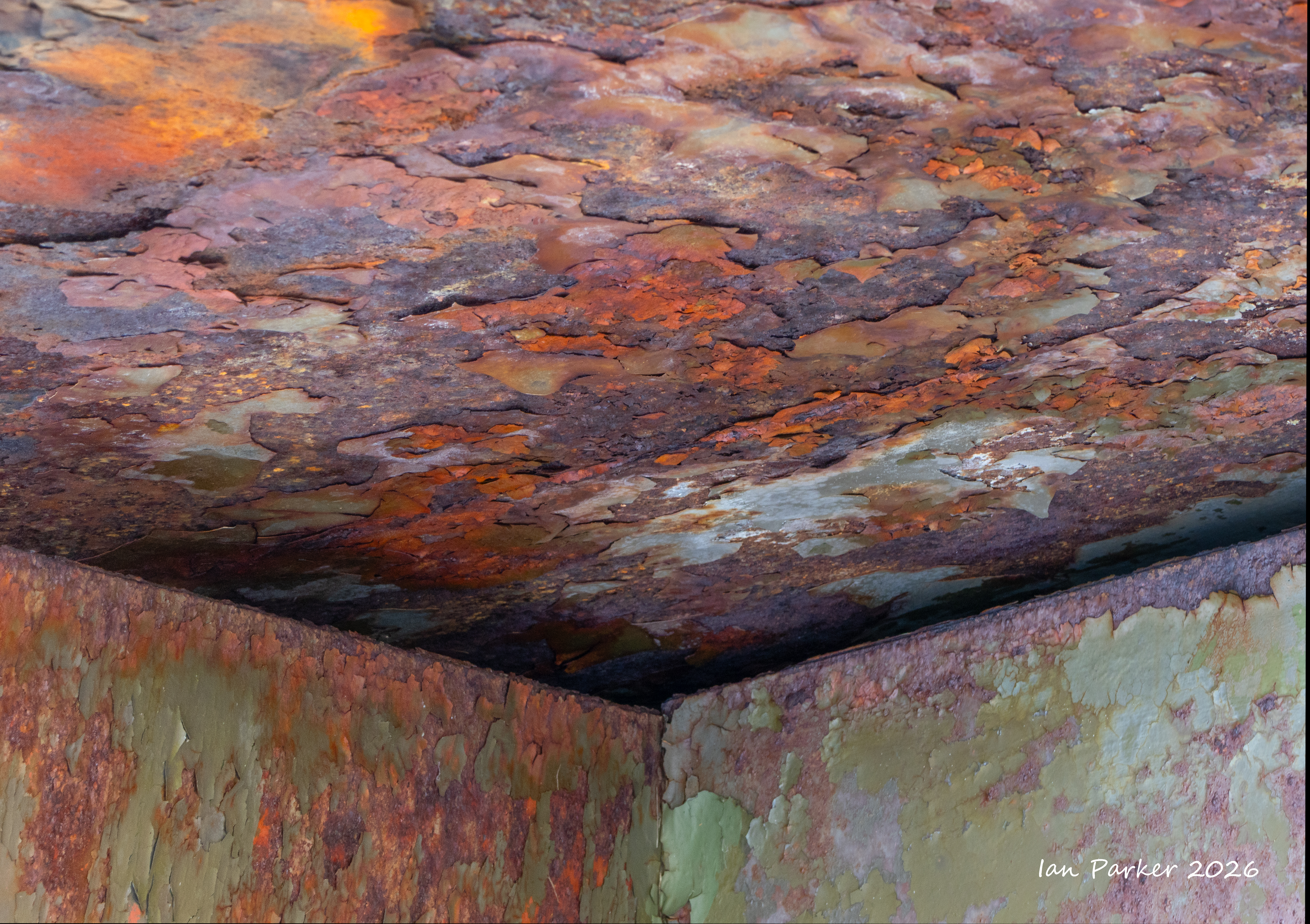
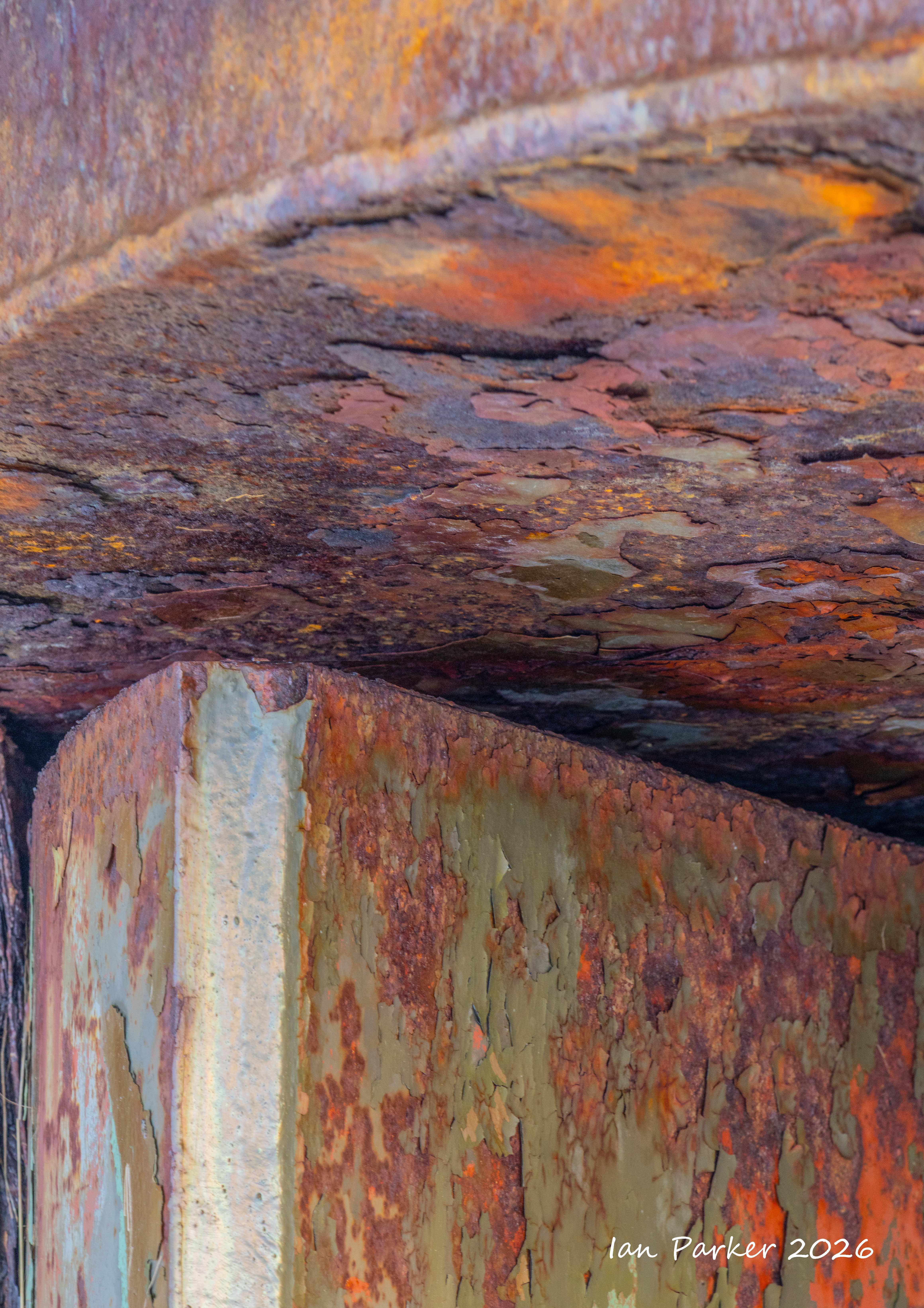
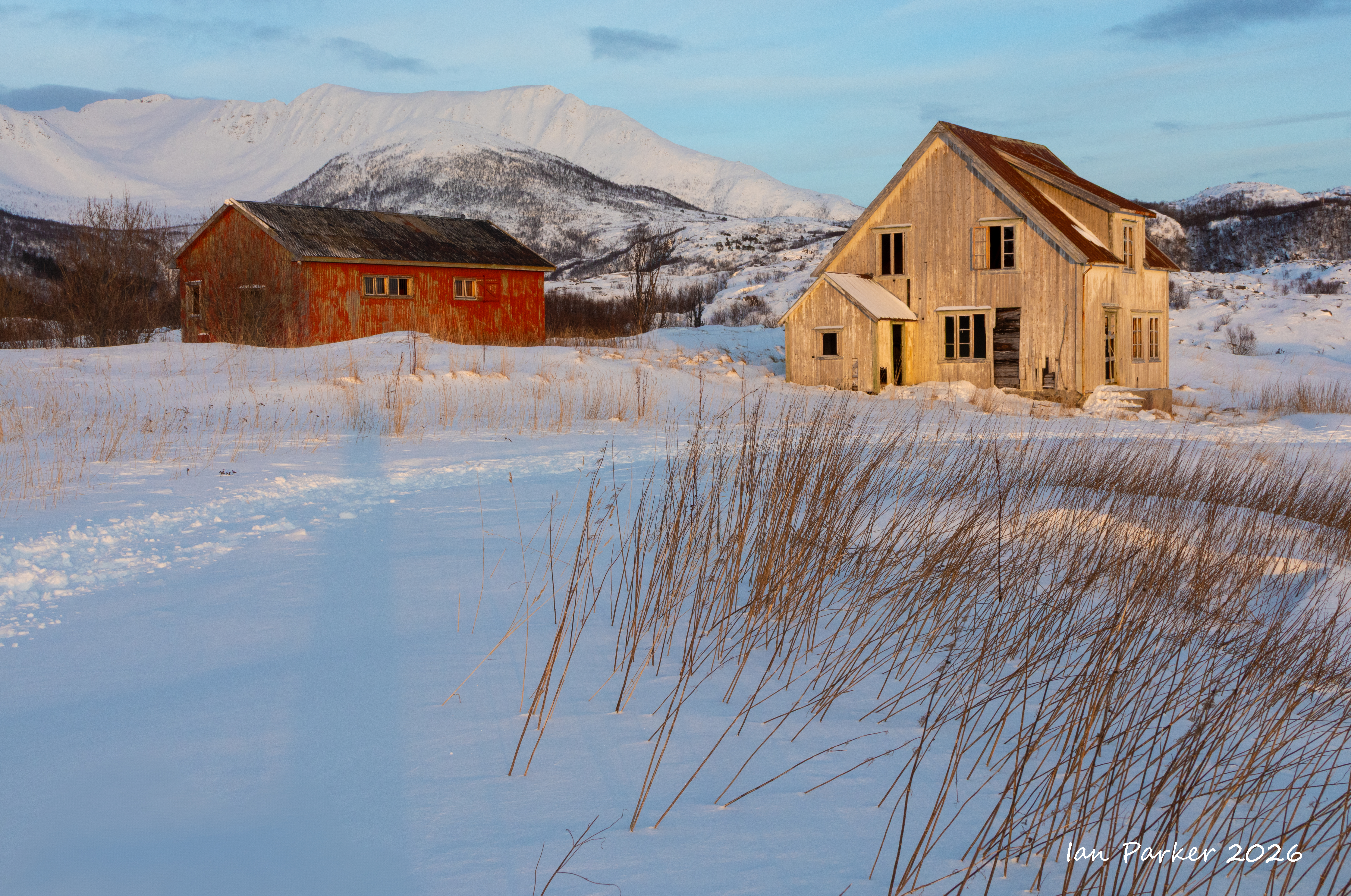
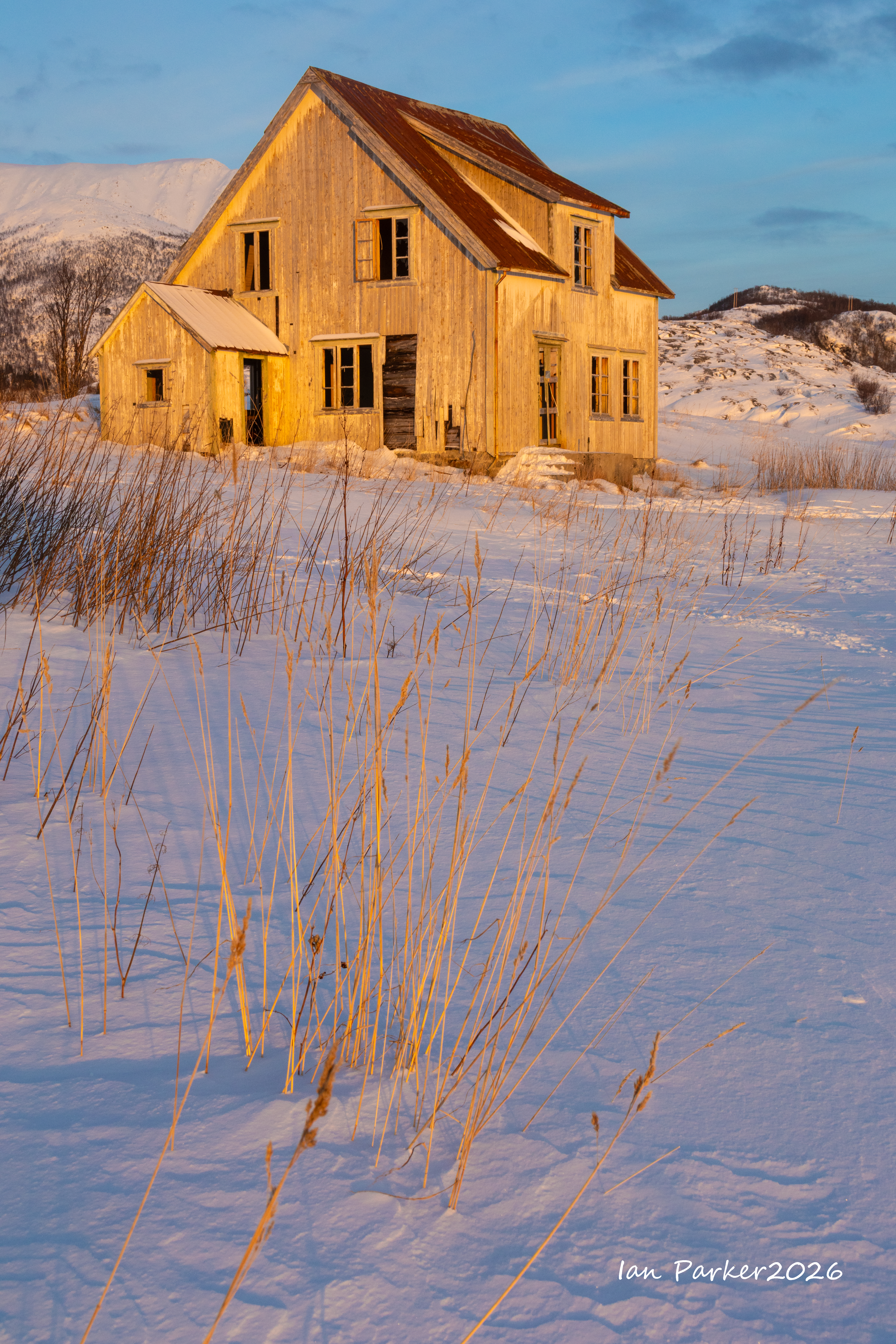
Abandoned house near Skrolsvik Fort
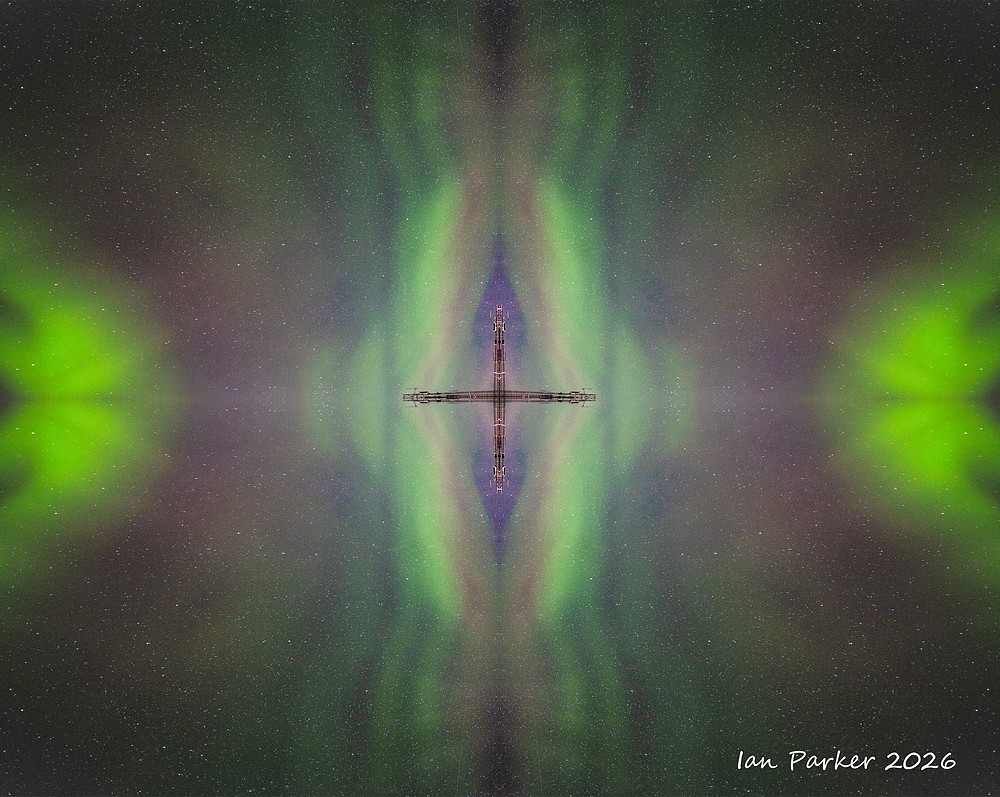
Experiments in Photoshop by mirroring some aurora photos
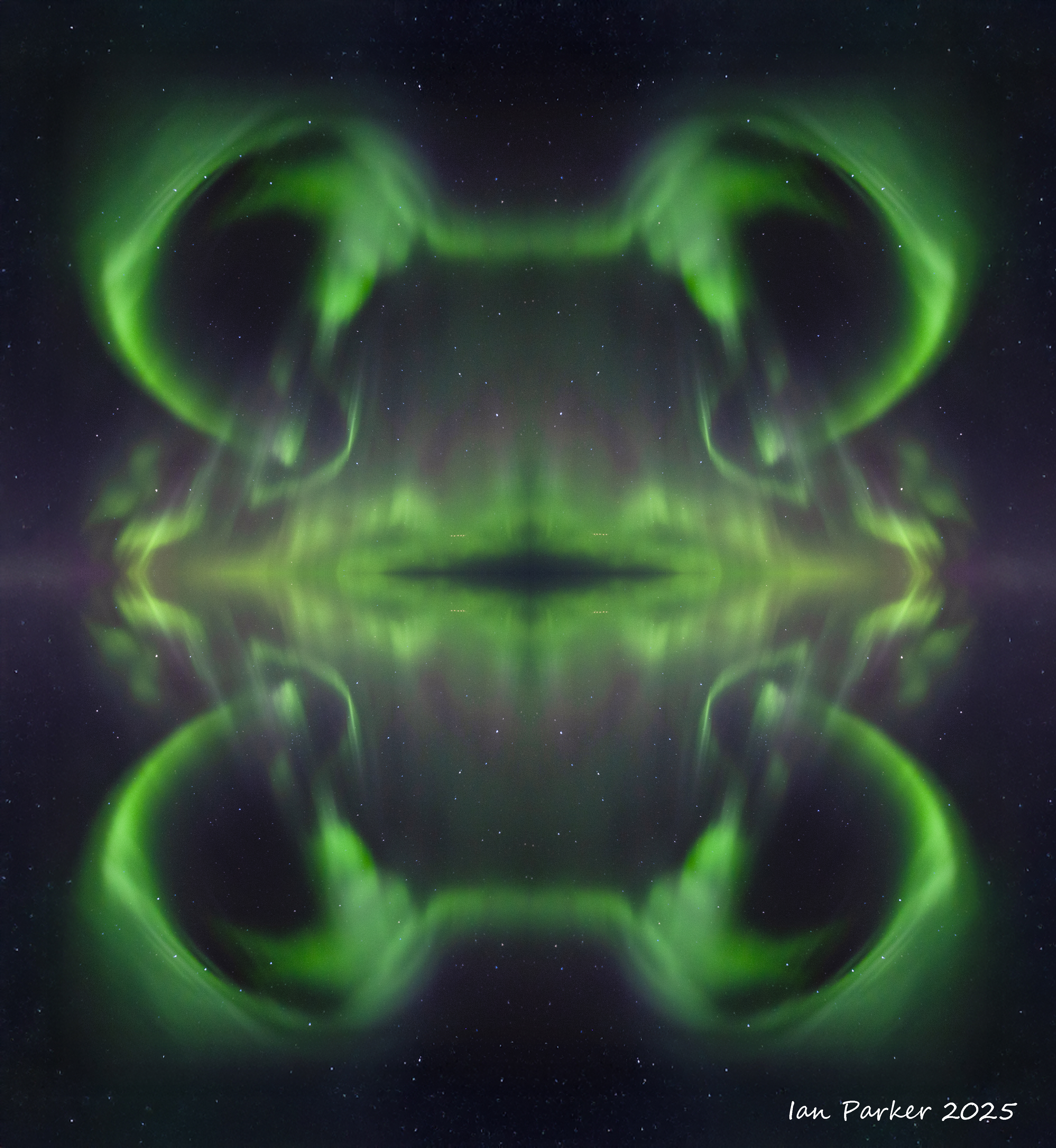
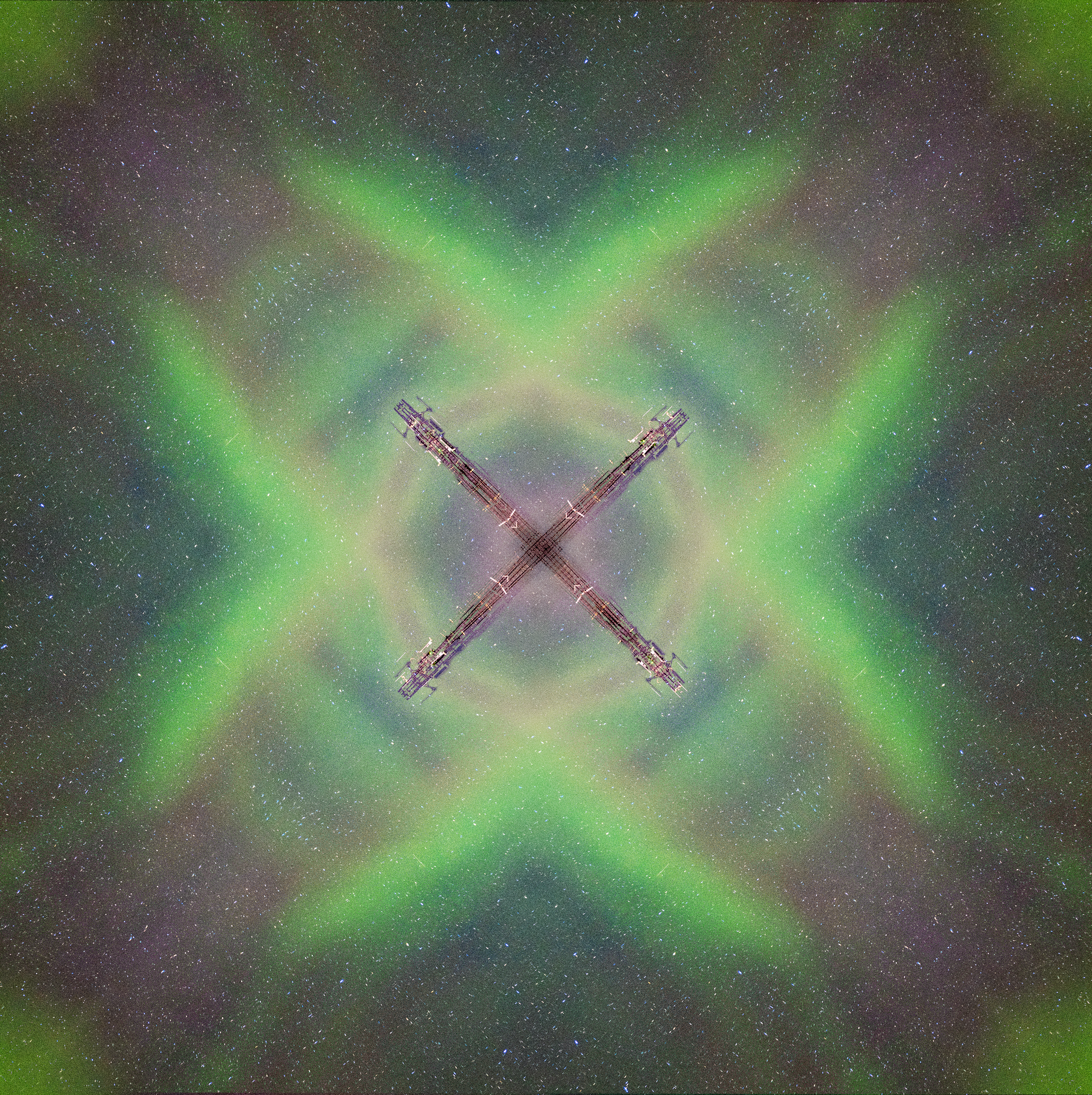
Auroras during our first few days in Northern Norway


Auroras over the lighthouse at Norwegian Wild on Senja Island


The Bergsbotn viewing platform on Norway's Senja island offers a 44-meter-long platform providing panoramic, dramatic views of the Bergsfjord, surrounding peaks, and the coastal village of Bergsbotn. Situated high above the ocean on a 180-degree turn in the road, it offers sweeping, open vistas of the coastal landscape. We were fortunate this year to have clear skies and active aurora from the viewpoint


Aurora from Tungeneset viewpoint


When photographing it's a good idea to occasionally turn around and see what might be happening behind you. Looking back from the dramatic aurora arcing over the shark;s teeth mountains I found a more subtle bu colorful display around the radio mast on the hillside above the rocks.


December 23-26 2025: Bosque del Apache and Bernardo Wildlife Refuges


Sandhill crane pair dance sequence


Dec. 22,23: Two nights in Bluff on a trip through Utah
Under the direction of John Taylor, Silas S. Smith and Danish settler Jens Nielson led about 230 Mormons on an expedition to start a farming community in southeastern Utah. After forging about 200 miles (320 kilometers) of their own trail over difficult terrain, the settlers arrived on the site of Bluff in April 1880.[7] (The trail followed went over and down the "Hole in the Rock", which now opens into one of the tributaries of Lake Powell.) The town was named for the bluffs near the town site.[8] The town's population had declined to seventy by 1930[citation needed] but rebounded during a uranium prospecting boom in the 1950s.[7] With the uranium decline in the 1970s, Bluff again declined and now remains a small town with about 200 residents. [Wikipedia]


Bluff Fort
Bluff Fort Historic Site commemorates the original pioneer town founded by Mormon missionaries at the end of their expedition to settle the San Juan area in 1880. Featuring recreations of the town, complete with meetinghouse and cabins decked with some original furnishings provided by local families, Bluff Fort offers an interactive historical experience.


Pioneer Houses, Bluff


Old Cars, Bluff


October 27,28; Grebes on Mono Lake
A night by Mono lake for dark sky astrophotography, and an evening and morning by the lakeshore for bird photography.
Mono Lake is a crucial fall staging ground for vast numbers of Eared Grebes,\. They gather by the hundreds of thousands (sometimes millions) to fattun up on brine shrimp and alkali flies from late summer through fall (July-November) before heading south to breeding grounds. Here they more than double their weight, and the sizes of their muscles and organs change. The pectoral (chest) muscles shrink to the point of flightlessness and the digestive organs grow significantly. Before departure for the wintering grounds, the process reverses; the digestive organs shrink back to about one-fourth their peak size, and the heart and pectoral muscles grow quickly to allow for flight.


October 12-17: Butterflies at the John C. Campbell Folk School
I had been signed up for a photography class at the Folk School, but this was cancelled. There were no other classes available that appealed to me, so I was looking for my own photographic project that would keep me profitably occupied for the week. Walking past the School gardens I noticed there were many butterflies flitting around the flowers...

Eleven species of butterflies around the Folk School gardens


More butterfly portraits


September 23-30; A roundtrip drive along highway 395 to visit family in Redding - with stops outbound and on the return to photograph fall colors in the Eastern Sierras.
On the return journey colors were most prominent at lower elevations.
McGee Creek Canyon


Convict Lake


Gull Lake

Silver Lake


On the outward journey north along highway 395 we camped at Dunderberg Meadows and Mono Lake, with a side-trip up to Sagehen Meadow. An unexpected bonus was encountering a herd of wild mustangs near Mono Lake.


 Red aspen among yellow; E. Sierra Fall Colors 2025 |


 Single backlit aspen leaf; E. Sierra Fall Colors 2025 |

Driving back along highway 120 from Sagehen to Mono Lake we found a group of maybe 50 wild mustangs from the Montgomery Pass herd grazing on a wide meadow.


A ReturnVisit to Obsidian Dome; August 2025
On a second visit to the Obsidian Dome I used a colorful deflated beach ball to generate a wider color palette of obsidian reflections.


From Fossil falls through Mazourka Canyon to Obsidian Dome; August 21-22, 2025
Fossil Falls


Weathered rocks and lichen on the summit of Mazourka Peak


Obsidian Dome
Having acquired a new hobby of astrophotography, Anne and I have been taking regular excursions around the time of the new moon to dark sky locations far from the marine layer that obscures our view of the stars at home. The Mojave desert is a good place for reliable dark and clear skies, but in summer it gets forbiddingly hot once the sun has risen. Thus, we have been venturing further afield to higher and cooler elevations, driving up highway 395 through Owen’s valley toward Mono Lake. For astrophotography this area boasts Bortl1 skies, about as dark as it is possible to find in the lower 48 states. Moreover, the Mono basin holds many interesting locations for daytime landscape photography. One that I had not previously explored is marked by a highway sign a few miles south of Mono Lake pointing to a dirt road leading to Obsidian Dome.
The name “dome” conjures up an image of a rounded, compact dome of obsidian. However, arriving there we foundsomething rather different; tObsidian Dome is actually a 400ft high chaotic mass of volcanic rocks, created by eruptions as recently as 600 years ago, and extending over 5 square miles. The dirt road continues around the perimeter of the dome, where massive blocks of obsidian overhang the steep escarpment, from which large boulders have tumbled down to the forest floor. We parked at a shady clearing between the trees, and I wandered around the base of the dome. At first glance there did not seem to be much photographic promise,

But a closer look among the ankle-twisting jumble of rocks revealed hidden gems...
Unlike most rocks that take thousands (or even millions) of years to form, obsidian is created in the blink of a geological eye from lava that cooled so fast that it did not have time to form crystals. It is famous for its jet-black appearance but, despite its dark color, obsidian catches and reflects light in a way that adds depth and intrigue to its appearance. When polished, obsidian achieves a mirror-like finish, and polished obsidian stones (Scrying Mirrors} were used as divination tools by priests and shamans In Mesoamerican cultures for rituals communicating with spirits.
Even in their natural state many of the obsidian boulders at the base of the dome appeared polished and highly reflective, glinting brightly in the sunlight. The sun reflections were too bright and contrasty to photograph, so I crouched down and sought out polished areas on the shaded side of the boulders. There, the obsidian reflected the blue sky in wonderfully varied patterns, determined by the topography the glass surface as it cooled. Unexpectedly, I could also see patches of red interleaved among the blue! Fortuitously, I happened to be wearing a red T shirt that day which, catching the sunlight, threw a bright illumination on the obsidian. The interleaved patterns of red and blue reflections changed kaleidoscopically as I altered my viewpoint, and as I moved to reposition the light source from my T shirt.
The Aztecs believed that the reflections from obsidian mirrors had the power to reveal hidden truths, communicate with the spirit world, and foretell the future. While I don't believe that the images I show here posess such powers, it does seem that I may have stumbled on a unique new niche of abstract photography; Google searches have not pulled up similar images.


The area around Obsidian Dome has been well picked over by rockhounders, and I was not able to find any small pieces of obsidian among the large, immovable blocks. However, after a strenuous hike to a more remote location at the top of the Mono/Inyo craters I did find a fist-sized chunk of obsidian that evoked some beautiful faceted reflections.

Black Mirror
- Obsidian T shirt reflection #1
Volcanic Crater and Cinder Cone
Panum Crater, Mono Lake, August 2025
My new interest in astrophotography has taken us to visit dark sky sites, most recently to the area around Mono Lake. Looking for things to do and photograph in the daytime around the lake I discovered an unexpected new interest in things volcanic. Mono Lake is located at the north end of the Mono-Inyo Craters volcanic chain, a 25-mile-long series of volcanoes in eastern California that includes two volcanic islands in the lake, Paoha and Negit, as well as a cinder cone on its shore. This volcanic field is still considered active, and the most recent eruptions in the lake occurred only 400 years ago, forming the islands. The USGS monitors this area for potential future explosive activity. A well-trodden trail gives access into Panum Crater. A steep climb from the parking lot leads up to the rim, from where there are two alternative paths. One circumnavigates the rim, while the other drops down before climbing up to the central, jagged dome. However, neither really gives a good impression of the structure of the crater. You have to mentally piece together views from different sections of the trails to get an appreciation of how it would look from the air.
After taking this photo I estimated it would be about a half hour before sunrise, too long to keep the drone in the air without depleting the battery, so I brought it back home, changed to a fresh battery and waited to take off again until a few minutes before sunrise. This time I flew the drone over to the north side of Panum Crater, capturing the photo below while the light was still diffuse just before sunrise, looking across to the chain of the much larger Mono Craters.
Finally, as the sun’s rays first illuminated the crater, I swung the drone around to the east, to align it with the shadow cast toward the Sierra Nevada mountains. I have made a mental note to come back and shoot this scene in winter, when the Sierras are snow covered, and perhaps when snow may also enhance the topography of the crater. |


Cinder Cone (Red Hill), along Highway 395
Drone shots at sunrise.


Badwater 135 Ultramarathon; : July 7-9th 2025
This was my 18th year at the Badwater Ultramarathon, the "World's toughest footrace"; eleven years as a runner or pacer, and six helping on the race staff and as a photographer. My approach the first year I came to photograph the race was from the perspective of a landscape photographer, aiming to place the runners in context of the spectacular scenery of Death Valley and the Eastern Sierras. This year I shifted gears, and also took on the mindset of a 'street'/portrait photographer, concentrating on the runners and their support crews. Badwater offers a photographic challenge of capturing the emotions of a group of very special people pushing themselves to the limit in an extreme environment. Moreover, the runners and their support crews are friendly, like having their pictures taken, and in any case have all signed waivers permitting the taking and publishing of photos!
The images below are a selection from many hundreds of shots. Click HERE for the race website which includes links to many ofther photos and full race results.
Start line at Badwater Basin for the 8:00pm wave
 |
 |
 |
 |
 |
 |
 |
 |
 |
 |
 |
 |
 |
 |
 |
 |
Start line at Badwater Basin for the 8:00pm wave
 |
 |
 |
 |
Morning, July 8: Climbing out of Death Valley over Towne Pass
 |
 |
 |
 |
 |
 |
 |
 |
 |
The Oasis at mile 51
 |
 |
 |
 |
 |
 |
 |
 |
 |
 |
 |
 |
 |
 |
 |
 |
 |
 |
 |
 |
 |
 |
 |
 |
 |
 |
 |
 |
Descending Towne Pass into Panamint Valley
 |
 |
 |
 |
The climb out of Panamint Valley up to Father Crowley's Point
 |
 |
 |
 |
 |
 |
 |
 |
|

 |
 |
 |
Leaving Death Valley National Park
 |
 |
 |
Highway 136 along Owens Lake
 |
 |
 |
 |
Ascending the Portal Road
 |
 |
 |
 |
 |
 |
 |
 |
 |
 |
 |
|
 |
Finish line at Whitney Portal
 |
 |
 |
 |
 |
 |
 |
 |
 |
 |
 |
 |
 |
 |
 |
 |
 |
The New Bentonite Hills, Hanksville, Utah - May 23,24
The Bentonite Hills in Utah are a unique geological formations, primarily composed of bentonite clay. This type of clay, known for its exceptional swelling properties and plasticity, gives the hills their distinct appearance and character. Formed from volcanic ash deposits undergoing weathering over millions of years, bentonite clay primarily consists of montmorillonite, along with other minerals like quartz, iron oxides, manganese and feldspar imparting their rich pigments to the soil and rock formations. Due to the diverse mineral composition the Bentonite Hills appear in colors, ranging from shades of red and orange to earthy browns, yellows and sometimes even blue - depending on the lighting and time of the day. The view is otherworldly…like something you might see on Mars Perhaps that’s why they built the Mars Desert Research Station” (MDRS) less than a mile away.
However, arriving in the middle of the day and stepping out of the car it was apparent that regular landscape photography approaches would not do a good job of capturing all this. One problem was that of perspective. The contorted ovals and concentric colored rings of the bentonite domes are not readily apparent from ground level. That had a ready solution, as I had brought my drone and the location is Federal land administered by the BLM (Bureau of Land Management), which allows the use of drones. A second problem was that the colors of the bentonite appeared rather brown and dull in full sunlight. The lighting at dawn and dusk gave an improvement, but I thought there was still more to be extracted.
My photos below thus show the results of applying progressively increasing levels of saturation to my drone shots. These do not depict false colors, or the hallucinations of AI, but reveal natural colors that are actually present, but are normally too subtle to be visible by eye.


Drainage Patterns


 Cracked mud patternsBentonite Hills, Hanksville, Utah |
Abstracts


Other observations near the Bentonite Hills


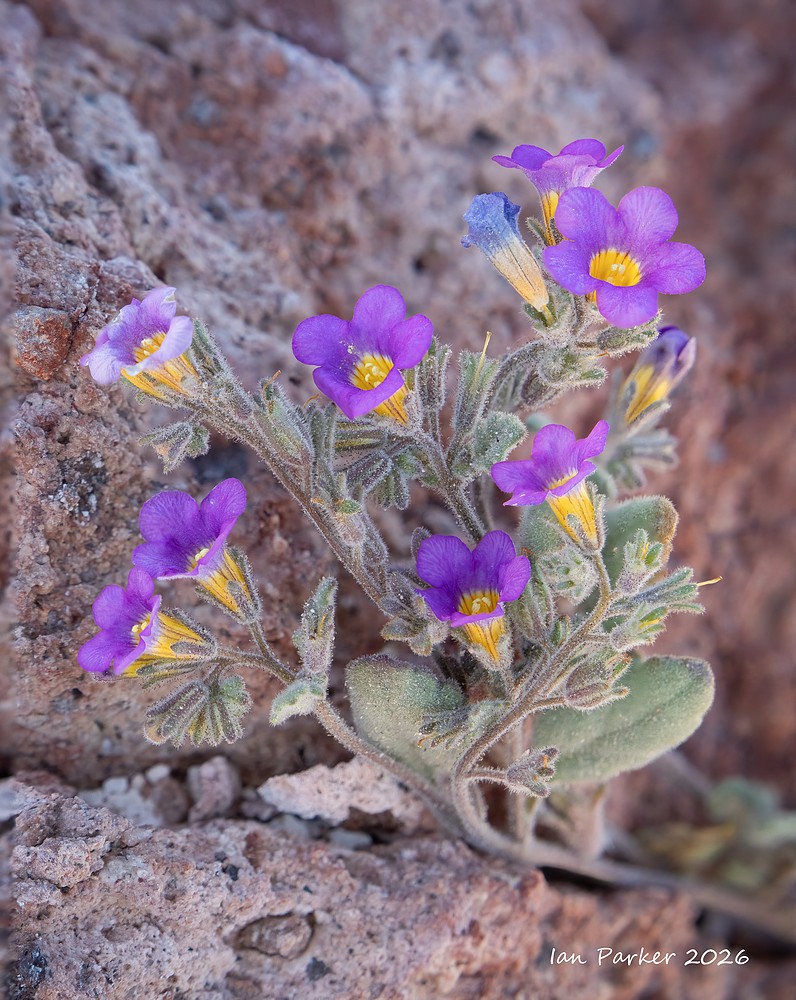
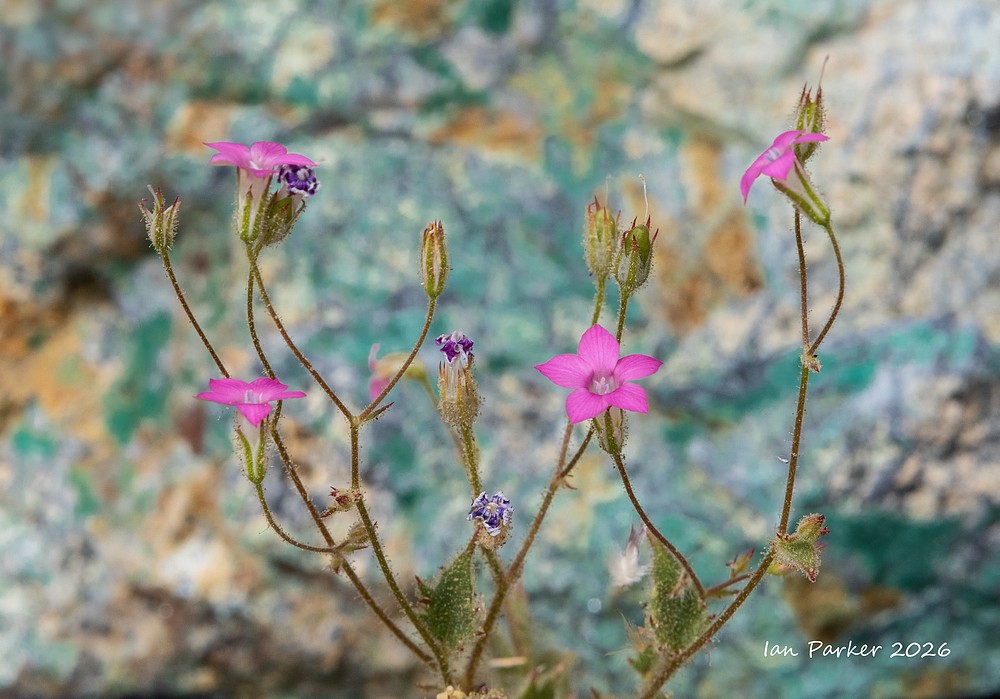
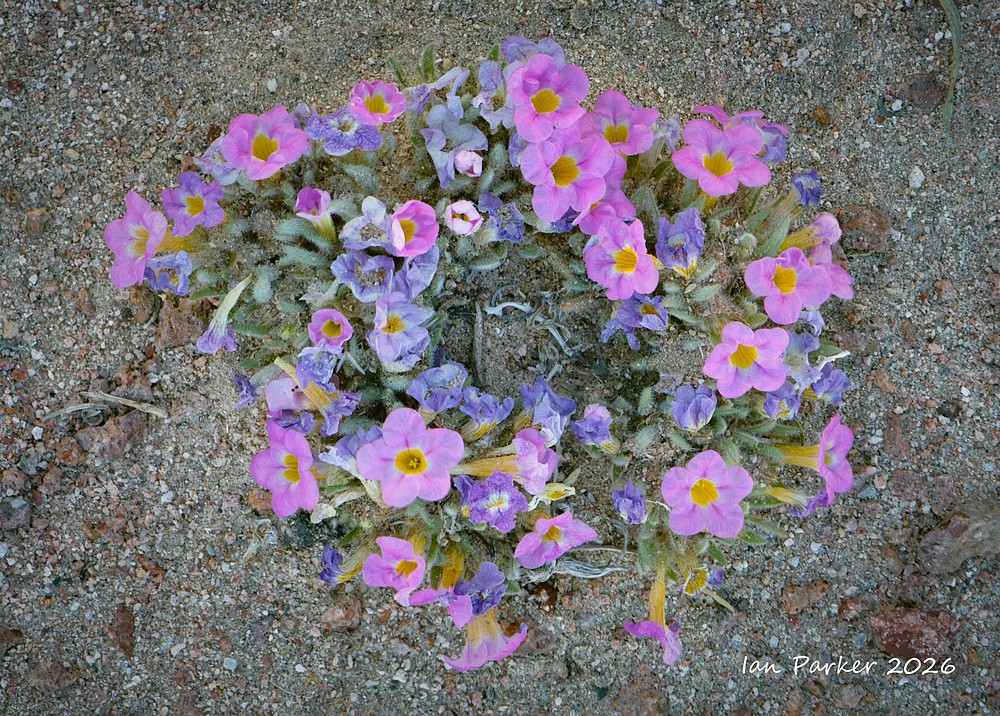
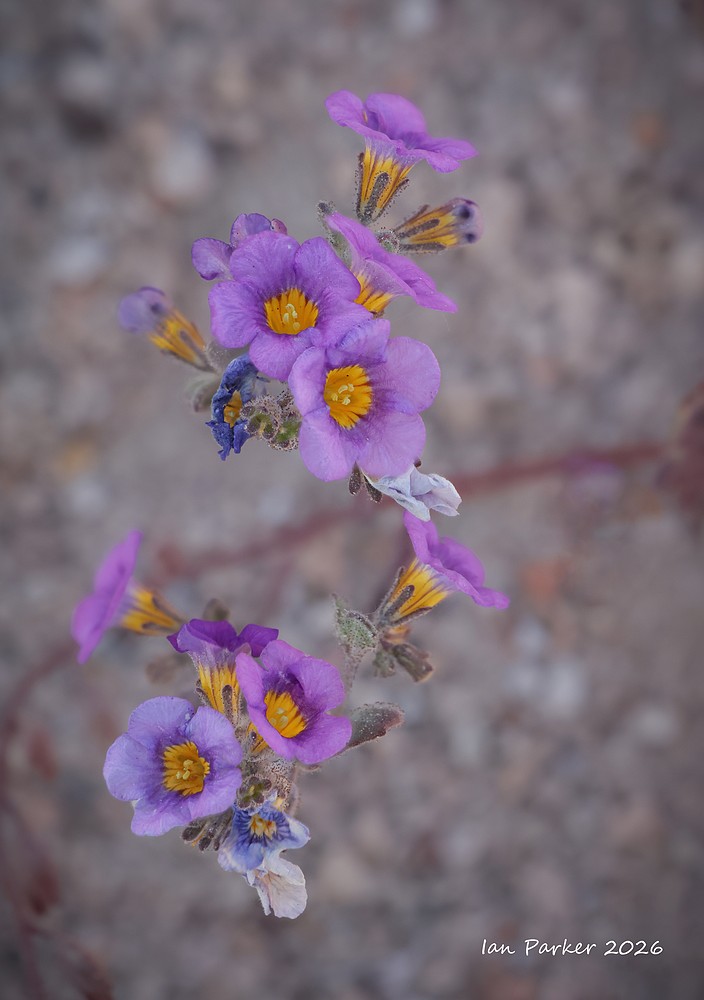


Salton Sea Ultramarathon - April 26
Aselection of photos below. Click HERE for more.
 |
 |
 |
Miles 2-6; Running through Salton City
 |
 |
 |
 |
 |
 |
 |
 |
Mile 6.5; The culvert under highway 86
 |
 |
Mile 8; A first sandstorm heading to Anza Borrego
 |
 |
Mile 10.5; Climbing the first hill
 |
 |
The microwave tower (mile 14, checkpoint #1) is a landmark visible for many miles along the course of the race
 |
Miles 15-23; Through the desert
 |
 |
 |
 |
 |
 |
Mile 24; Another sandstorm at the turnoff to Font's Point
 |
 |
Mile 31; Approaching Borrego Springs
 |
Mile 40; Hellhole Canyon - checkpoint #3
 |
 |
 |
 |
 |
 |
Miles 40-41; Setting out on the hiking and riding trail
 |
 |
Atmospheric phenomena while we detoured back to camp overnight in the warm, dry desert (while, the runners continued through the night at higher elevations in cold, wet and misty conditions.)
 |
 |
 |
Mile 45; Culp Vally, checkpoint #4
 |
 |
Miles 70-81; Climbing in mist and rain up the East Grade Road to the finish atop Palomar Mountain
 |
 |
 |
 |
 |
 |
 |
 Bob Becker - new record oldest finisher at age 80! |
| IanParker 1146 McGaugh Hall University of California, Irvine, CA 92697 |
Please send enquiries to |
BACK TO > |